
19 min 23 sec
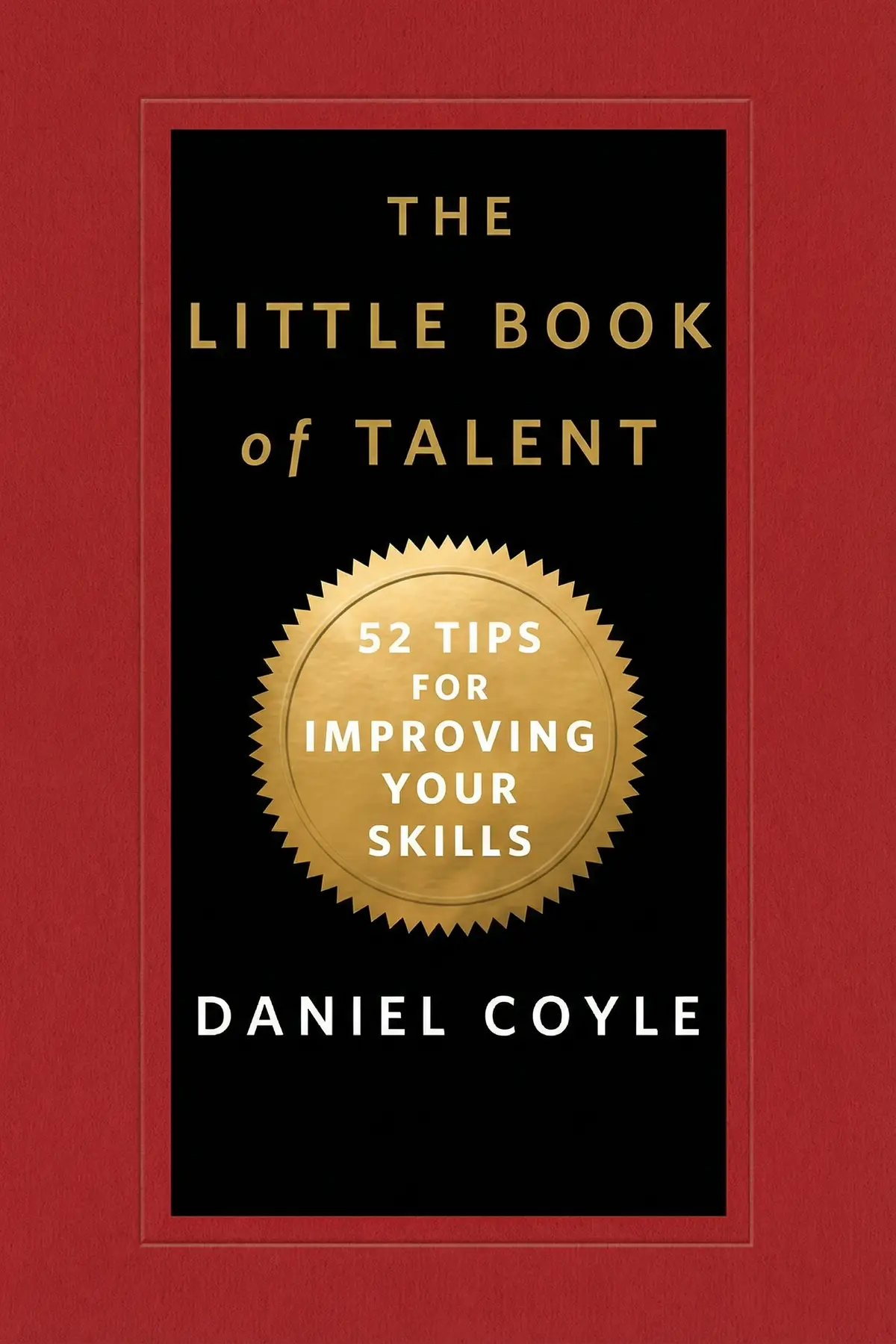
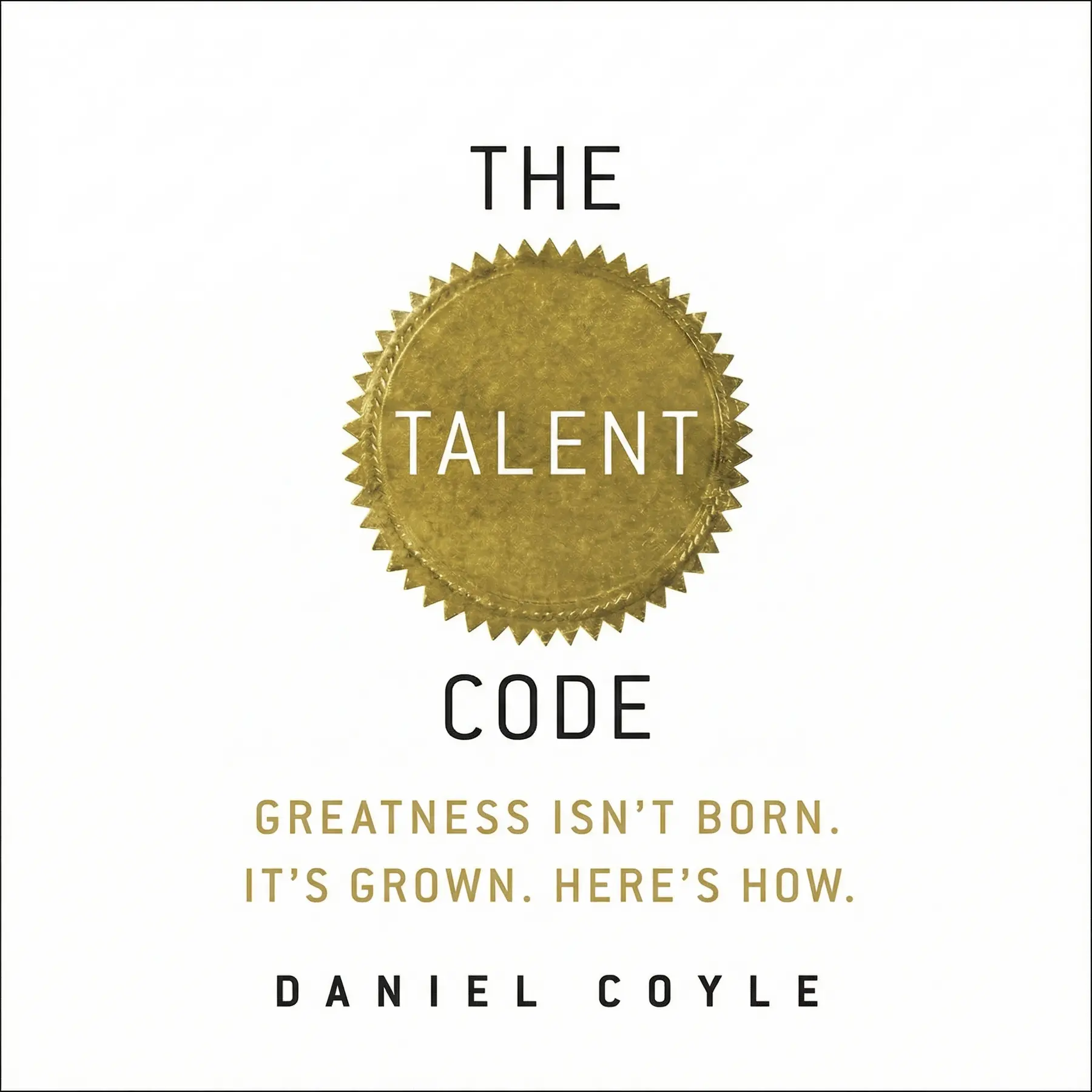
The Talent Code: Greatness Isn’t Born. It’s Grown. Here’s How.
By Daniel Coyle
Discover why greatness isn’t a genetic gift but a biological process. Learn how deep practice, targeted motivation, and expert coaching work together to build world-class skills in any field or discipline.
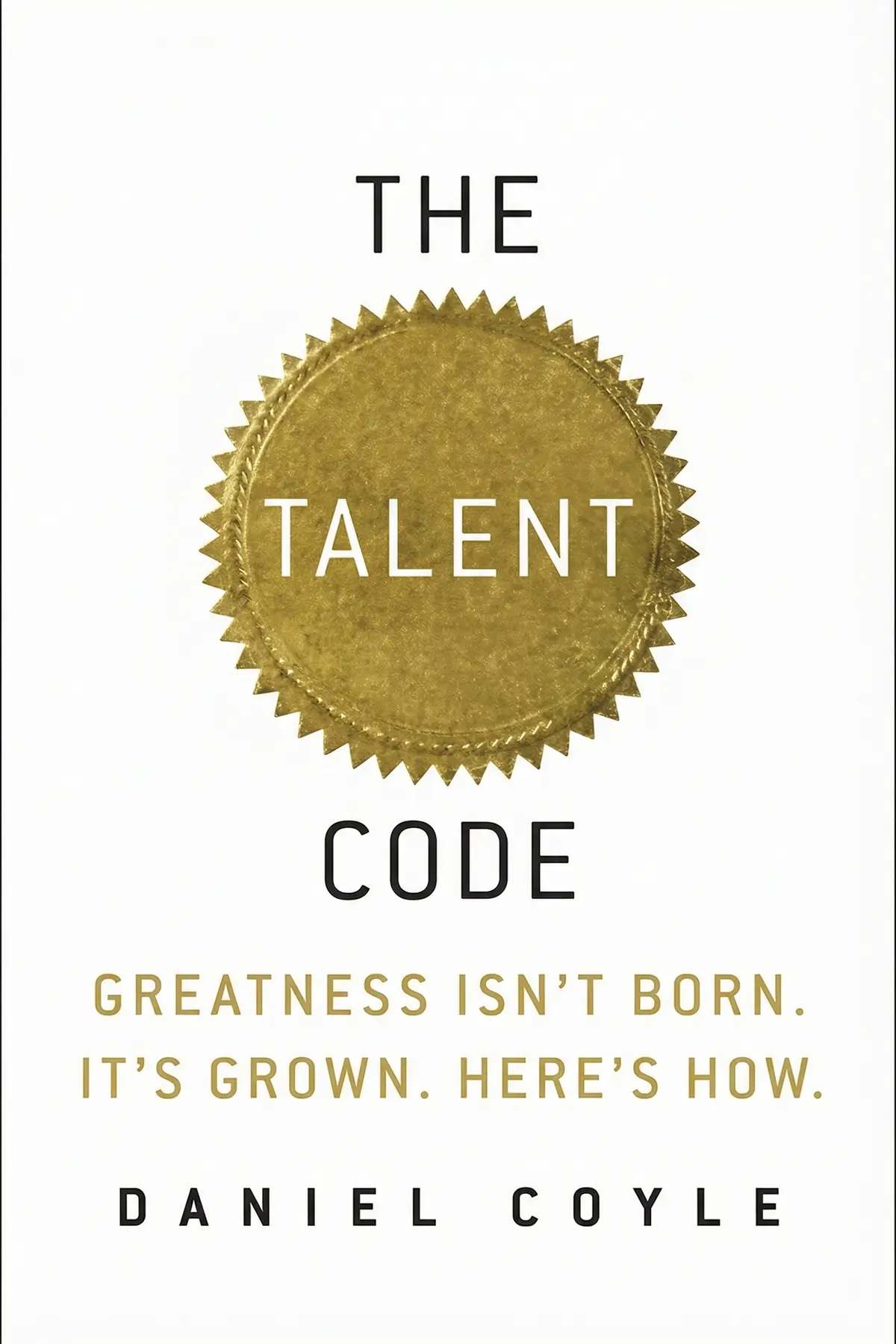
Table of Content
1. Introduction
2 min 02 sec
When we look at world-class athletes, virtuoso musicians, or groundbreaking scientists, we often fall into the trap of thinking they are fundamentally different from the rest of us. We use words like ‘prodigy’ or ‘natural’ to explain away their brilliance. It’s a comfortable narrative because it lets us off the hook—if greatness is a genetic lottery, then there’s no point in feeling bad about our own average performance. But what if that narrative is fundamentally wrong? What if the secret to talent isn’t hidden in our DNA, but in a very specific, repeatable process that happens inside our brains?
In the following minutes, we are going to explore a concept that shifts the conversation from ‘who you are’ to ‘how you grow.’ This is the core premise of Daniel Coyle’s work. Through extensive research into neurological science and visits to the world’s most successful training grounds, a clear pattern emerges. Talent is not an accident. It is a biological product. It is something that is built, layer by layer, through a precise combination of focused effort and environmental triggers.
We will move past the old debate of nature versus nurture and look at the third factor: the talent code. This code is built on three essential pillars: deep practice, ignition, and master coaching. Each of these elements plays a vital role in transforming a raw beginner into a master. We’ll see how a humble substance in the brain called myelin acts as the insulation for our neural circuits, and how we can actually encourage its growth.
Whether you are a parent looking to help your child, a professional aiming for the top of your field, or simply someone who wants to learn a new hobby more effectively, this journey will provide you with the tools to rethink everything you know about skill. We’re going to uncover why making mistakes is actually the fastest way to get better, why some people are more motivated than others, and how the right kind of teacher can make all the difference. By the end, you’ll see that the path to greatness isn’t a mysterious secret—it’s a map that anyone can learn to read.
2. The Biological Foundation of Skill
2 min 22 sec
Delve into the fascinating world of neurology to understand how a substance called myelin acts as the physical architecture of talent, turning slow thoughts into lightning-fast actions.
3. The Power of Deep Practice
2 min 22 sec
Learn why the most effective way to improve isn’t by doing things perfectly, but by operating at the edge of your ability where errors are frequent and informative.
4. Reevaluating the History of Genius
2 min 05 sec
Challenge the idea that masterpieces are the result of sudden inspiration by looking at the rigorous, step-by-step systems used by history’s greatest creators.
5. Learning from Talent Hotbeds
2 min 06 sec
Explore why certain small locations, like Brazil for soccer, produce so many elites and learn how their unconventional training methods can be applied to anything.
6. The Art of Chunking and Slowing Down
2 min 25 sec
Discover the tactical steps of deep practice, including how to break complex skills into tiny pieces and practice them at a snail’s pace to ensure perfect myelination.
7. Ignition: The Spark of Motivation
2 min 13 sec
Uncover why skill building isn’t just about discipline, but about the social and emotional triggers that convince our brains that a certain goal is worth the intense effort.
8. The Master Coach as a Talent Whisperer
1 min 59 sec
Learn to distinguish between flashy ‘pep talk’ coaches and the true masters who provide the precise, clinical feedback necessary to build high-level neural pathways.
9. Conclusion
1 min 49 sec
As we wrap up our look into the talent code, the most important takeaway is a sense of profound agency. The idea that talent is a mysterious gift reserved for a lucky few is a myth that limits our potential. The reality is that our brains are built to grow. We have the biological machinery—the myelin—to transform ourselves into masters of almost any craft, provided we are willing to engage in the right process.
Remember the throughline: greatness isn’t born, it’s grown. It grows when you step into the ‘sweet spot’ of deep practice, where you aren’t afraid to stumble and correct yourself. It grows when you find the ‘ignition’ to keep your motivation burning through the long hours of repetition. And it grows when you seek out the ‘master coaching’ that provides the precise feedback you need to refine your neural circuits.
So, how can you apply this starting today? First, pick a skill you’ve always wanted to improve and find its smallest ‘chunks.’ Don’t try to master the whole thing at once. Second, slow down. Way down. Practice at a pace where you can literally feel the movements or thoughts taking shape. Third, welcome the mistakes. When you hit a snag, don’t get frustrated; recognize it as the moment your brain is getting the signal to grow more myelin.
This isn’t a quick fix, and it isn’t easy. But it is a reliable, scientific path toward excellence. Whether you’re aiming for the concert stage, the boardroom, or the playing field, the code is the same. Stop looking for shortcuts and start building your circuits. Your potential is not a fixed number—it’s a living structure that you have the power to build, one layer of myelin at a time. Go out there, find your reach, embrace the struggle, and start growing your talent.
About this book
What is this book about?
Have you ever wondered why certain small pockets of the world produce a disproportionate number of superstars? Whether it is Brazilian soccer players or classical musicians from a specific neighborhood, these talent hotbeds seem to defy the laws of probability. Most people assume these individuals are simply born with better genes or raised in perfect environments, but the truth is much more empowering. This summary breaks down the revolutionary idea that talent is grown through a specific biological process involving a substance in the brain called myelin. By exploring the three pillars of skill development—deep practice, ignition, and master coaching—you will see how the brain actually rewires itself to achieve mastery. This isn't about working harder; it is about working smarter in a very specific way. You will learn how to identify the sweet spot of learning, how to trigger long-term motivation, and what to look for in a mentor. Ultimately, this provides a blueprint for anyone looking to bridge the gap between their current abilities and their highest potential, proving that excellence is within reach for everyone.
Book Information
About the Author
Daniel Coyle
Daniel Coyle is an acclaimed journalist and bestselling author known for his deep dives into the mechanics of high performance and human potential. He has written several influential books, including the award-winning Lance Armstrong: Tour de Force and The Secret Race, which explores the hidden complexities of the Tour de France. A seasoned storyteller, Coyle is a regular contributor to prominent publications like The New York Times Magazine and Sports Illustrated. He also serves as a contributing editor to Outside magazine, bringing his expertise in athletic and professional excellence to a wide audience.
Ratings & Reviews
Ratings at a glance
What people think
Listeners find this work captivating and skillfully composed, offering actionable tips for enhancing learning methods and grasping the brain science of skill acquisition. The content is extraordinary and will remain significant for years to come, and listeners call it life-changing and deeply reflective, featuring lucid instructions throughout. They value its perspective on cultivating talent, especially regarding the role of Myelin, and view it as a revolutionary volume full of profound concepts.
Top reviews
Tun
Finally got around to reading this, and it’s a total game-changer for anyone interested in self-improvement. The concept of Myelin as a neural insulator that increases our 'bandwidth' for skill is explained with such clarity that it sticks with you forever. I loved the deep dives into 'talent hotbeds' where world-class performers are minted in seemingly mediocre environments. It completely shifts the perspective from 'you're born with it' to 'you build it' through specific, targeted struggle. Truthfully, the section on 'ignition' gave me the boost I needed to restart my piano practice after years of stagnation. It is a remarkably well-written guide that makes complex neuroscience feel practical and attainable for the average person. Anyone looking to unlock their potential should have this on their shelf.
Show moreSook
This book is a total myth-buster that destroys the dangerous belief that talent is something you are just born with. Labeling someone as 'naturally gifted' is often just an excuse for our own laziness, and Coyle proves it with fascinating research. He explains that the difference between mediocrity and greatness is just layers of Myelin wrapped around your neural circuits. The more you fire those neurons through focused practice, the faster and more fluid your skills become over time. I found the concept of 'ignition'—that initial spark of motivation—to be incredibly thought-provoking and relevant to my own career path. It has helped shore up my belief that intelligence and skill are tied more to self-discipline than to an IQ score. Truly a must-read for parents and educators alike!
Show moreBenjamin
Truth is, we've all been lied to about what it takes to be great, and this book finally sets the record straight. Coyle explains that prodigies like Mozart or Da Vinci weren't just lucky; they simply knew how to enter the zone of deep practice deliberately. This book makes you believe that if something is humanly possible, it is within your reach as well if you follow the code. The connection between physical repetition and the growth of myelin sheaths is a remarkably relevant discovery for the modern era. I’ve recommended this to my entire team because it changes the way you look at mistakes and feedback. It isn't just a sports book; it’s a manual for human potential and excellence. Simply put, this is one of the most impactful things I have read in years.
Show moreYaowaluk
The chapter on 'Deep Practice' alone makes this worth the price of admission for a struggling student or athlete. Instead of advocating for mindless repetition, Coyle argues for breaking tasks down into tiny, manageable components and repeating them until they are perfectly ingrained. You are essentially wrapping your neurons in a magical insulator that speeds up the electrical signals in your brain. It’s about the productive struggle, not the ease of execution. While some chapters feel a bit repetitive, the core message is incredibly empowering for those of us stuck in a learning plateau. I found the stories about the Brazilian soccer players particularly enlightening regarding how environment shapes skill, specifically how those small-sided games allow for more touches on the ball and faster feedback loops. It is not just about working hard; it’s about working in that sweet spot where you are constantly on the edge of your ability.
Show morePete
As a coach, I find Coyle’s insights into 'Master Coaches' to be the most valuable part of the entire narrative. He highlights how the best teachers aren't necessarily the most charismatic ones, but those who provide short, targeted bursts of feedback. This book looks at talent development through a lens that feels both scientific and deeply human. My only gripe is that it occasionally feels a bit like a rehash of 'The Culture Code,' which I actually liked better. However, the focus on the biological basis of skill—the myelin sheath—adds a layer of credibility that other 'grit' books lack. The information is relevant and should stay that way for many years to come. It’s a solid 4-star read for anyone in a leadership or teaching position.
Show morePakinee
Ever wonder why certain tiny spots in the world produce all the stars while others with better facilities fail? Coyle explores these 'talent hotbeds' and discovers that it isn't about the weather or the money, but the way they practice. The book provides clear guidance on how to enter the zone of accelerated learning where you retain information much faster than normal. I appreciated how he broke down the mechanics of the brain without making it feel like a dry textbook. Myelin is the secret sauce here, and understanding how to build it is a life-altering realization for a slow learner like me. The writing is engaging and the stories move quickly. It’s a very practical look at how mastery is actually achieved in the real world.
Show moreThawee
Picked this up because I wanted to improve my golf game, and the results have been surprisingly tangible so far. The book emphasizes that failure is a teacher and a friend, rather than something to be feared or avoided during training sessions. By aiming to correct one mistake at a time, you build the 'bandwidth' necessary for high-level performance under pressure. Not gonna lie, some of the scientific claims seem a bit over-the-top, but the practical advice on learning techniques is solid gold. The idea of 'slow practice' was particularly helpful for me. I’ve stopped rushing through drills and started focusing on the specific feel of each movement. It’s a game-changing book with profound ideas that you can apply to almost any hobby or profession.
Show moreHang
Wow, I didn't expect to be so fascinated by a book about brain insulation and neural circuits. Coyle has a knack for taking complex topics and making them feel like a page-turning mystery story. He visits these seemingly random places—like a rundown tennis club in Russia—and shows how they are outperforming the rest of the world combined. The emphasis on 'deep practice' and having the right 'triggers' for motivation really resonated with my own experiences in music school. While I think he oversimplifies the role of genetics a bit, his message that anyone can improve with the right system is vital. It’s a life-changing perspective for anyone who has ever felt like they just 'didn't have the genes' for a certain skill.
Show moreWipawan
To be fair, Coyle is an excellent writer, but much of this felt like a rehash of other growth mindset books I’ve already finished. If you’ve read anything by Carol Dweck or Angela Duckworth, you’re going to find a lot of familiar territory here. The idea that talent is grown rather than born isn't exactly a new revelation in the self-help genre anymore. I did enjoy the specific examples of the tennis academies and music schools, yet I couldn't help but feel like the 'science' was a bit stretched to fit the anecdotes. It is a totally forgettable read if you're already well-versed in deliberative practice. That said, it’s a decent entry point for someone who is just starting to question the myth of the 'natural' prodigy.
Show moreChan
After hearing a lot of hype, I found this to be largely a collection of cherry-picked anecdotes masquerading as hard science. Coyle relies heavily on the term 'hotbeds' to explain away complex sociological phenomena, ignoring variables that don't fit his specific narrative. The way he co-opts the Tom Sawyer story felt particularly like reaching for straws, and the whole 'myelin' explanation feels like a gross oversimplification of neurology. Frankly, it’s a sports writer trying to play neuroscientist, and the logic fallacies are rampant throughout the text. If you have already read Gladwell or any other pop-psychology book from the last decade, you’ve likely seen these themes handled with more nuance elsewhere. It is frustrating to see people buy into this kind of pseudo-theory without questioning the lack of rigorous data behind the catchy slogans.
Show moreFeatured in
Readers also enjoyed
AUDIO SUMMARY AVAILABLE
Listen to The Talent Code in 15 minutes
Get the key ideas from The Talent Code by Daniel Coyle, plus 5,000+ more titles in English and Thai.
- 5,000+ titles
- Listen as much as you want
- 7-day free trial
- Cancel anytime







