
19 min 33 sec
The Unbearable Lightness of Being: Embark on an Incredible Journey Through the Complexities of Love
By Milan Kundera
Explore the profound intersections of love, destiny, and political turmoil in this philosophical exploration of human existence, centered on the lives of four individuals navigating the complexities of the 1968 Prague Spring.
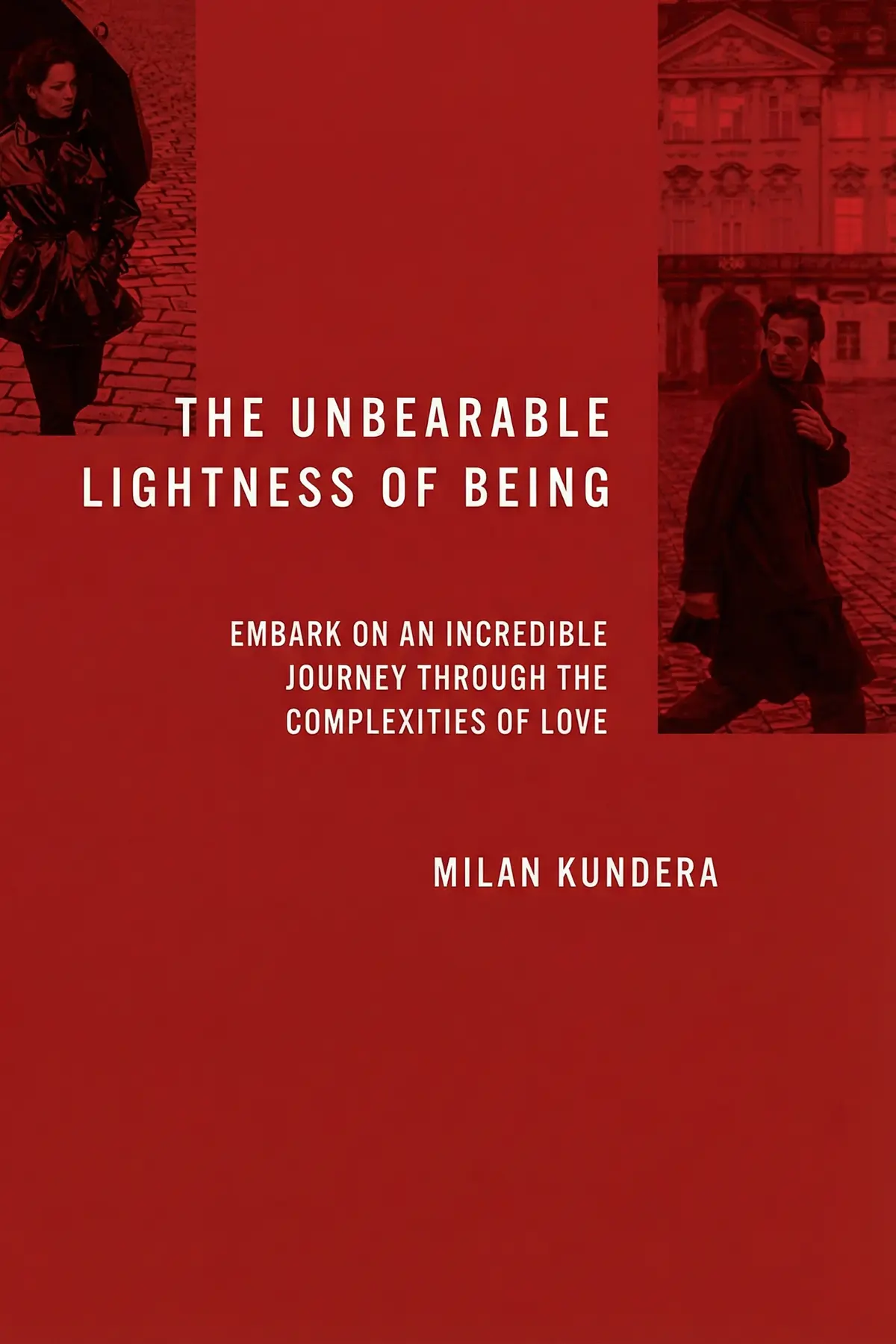
Table of Content
1. Introduction
1 min 41 sec
Have you ever paused to consider the true gravity of your daily choices? We often find ourselves caught in a tug-of-war between two very different ways of existing. On one side, there is the desire for total freedom—a life that feels as light as a breeze, unburdened by the expectations of others or the permanence of our own actions. On the other side, there is the pull of commitment, the heavy sense of responsibility we feel toward the people we love and the causes we believe in. This tension isn’t just a personal struggle; it is the very fabric of the human experience.
In this exploration of Milan Kundera’s celebrated work, we delve into a world where these philosophical questions are not just abstract ideas, but lived realities. Set against the backdrop of the Soviet occupation of Czechoslovakia, the narrative follows four individuals whose lives intersect in ways that force them to confront the essence of their own being. It’s a story written by a man who knew the cost of these choices firsthand. Milan Kundera wrote this while in exile, having been cast out of his homeland for his refusal to conform to a restrictive government.
Through the throughline of ‘lightness’ versus ‘weight,’ we will see how personal relationships, artistic expression, and political resistance are all different ways of grappling with the same fundamental question: what makes a life worth living? As we move through the experiences of Tomas, Tereza, Sabina, and Franz, we’ll see how their search for meaning mirrors our own. We’ll examine the price of freedom, the pain of jealousy, and the inevitable intersection of our private lives with the grand movements of history. So, as we begin, I invite you to keep one question in your mind: if you could choose, would you rather your life be light and free, or heavy and meaningful?
2. The Conflict of Lightness and Weight
3 min 31 sec
What happens when two people with completely different views on emotional commitment try to build a life together amidst a world in chaos?
3. The Rebellion Against Kitsch and Conformity
3 min 27 sec
Discover how an artist’s disdain for the ‘fake’ and the ‘sentimental’ drives her to live a life of constant betrayal and self-imposed exile.
4. The Intersections of the Personal and Political
3 min 01 sec
How does a single satirical article change the course of a man’s life, turning a respected surgeon into a window washer overnight?
5. Finding Meaning in the Finite
3 min 11 sec
Explore the quiet, final days of a couple who gave up everything for a simple life, only to find that peace comes with its own kind of sadness.
6. The Four Gazes and the Legacy of Being
2 min 52 sec
Which of the four categories of people do you belong to, and how does that choice determine the weight of your life’s story?
7. Conclusion
1 min 50 sec
As we conclude this journey through Milan Kundera’s masterpiece, we are left with a deeper understanding of the delicate balance that defines a human life. We’ve seen how Tomas’s pursuit of lightness led him to a place of unexpected responsibility, and how Tereza’s embrace of weight gave her the strength to survive a world that tried to erase her. We’ve explored Sabina’s rebellion against the ‘kitsch’ of conformity and Franz’s tragic search for a grand meaning that wasn’t there.
The throughline of ‘The Unbearable Lightness of Being’ is that life is a singular, one-time event. We cannot go back and test the other path; we cannot know if the choices we didn’t make would have been better. This is what makes existence ‘light’—the fact that it is fleeting and happens only once. But it is also what makes it ‘unbearable’—the realization that because we only have one life, every choice carries an immense, permanent weight.
So, what can we take away from these stories? Perhaps it’s the realization that there is no ‘correct’ way to live. Lightness offers freedom but can lead to a sense of insignificance. Weight offers meaning but can lead to crushing pain. The goal isn’t to choose one over the other, but to recognize which one we are leaning toward at any given moment.
Think about the ‘gaze’ you are living under right now. Whose approval are you seeking? Are you making choices for yourself, or for an audience that might not even be there? By being aware of the tension between lightness and weight, we can navigate our lives with a bit more clarity. We can learn to cherish the heavy moments of love and the light moments of joy, knowing that both are necessary parts of the incredible journey of being. Take a moment today to consider one ‘heavy’ commitment you’ve made—and ask yourself if it’s the anchor that keeps you steady, or a weight you’re finally ready to let go.
About this book
What is this book about?
This narrative takes listeners into the heart of Cold War-era Czechoslovakia to examine the deeply personal struggles of characters caught between two opposing ways of living: the 'lightness' of fleeting freedom and the 'weight' of meaningful commitment. Through the eyes of a womanizing surgeon, a devoted waitress, a rebellious artist, and an idealistic professor, the story unpacks how our most intimate choices are inextricably linked to the political world around us. At its core, the work promises a journey into the nature of identity and the burden of decision-making. It asks whether a life lived without permanence is truly free or merely empty, and whether the things that weigh us down—like love and duty—are actually what give our lives substance. By blending personal drama with philosophical inquiry, it offers a timeless look at how we find purpose in a world where history often feels out of our control.
Book Information
About the Author
Milan Kundera
Milan Kundera was a Czech-born French writer acclaimed for his philosophical depth and exploration of love, politics, and identity. Known for his intricate narrative style and blending of fiction with philosophy, Kundera garnered international recognition and numerous awards. His other best-selling works include The Book of Laughter and Forgetting and Slowness.
Ratings & Reviews
Ratings at a glance
What people think
Listeners find this volume to be superior to its film adaptation, highlighting the exquisite writing and stimulating philosophical inquiries. The narrative is a singularly compelling look at romance, featuring vivid characters and a genuine marriage of desire and empathy. They value its profound substance and regard it as one of the premier contemporary works concerning human affection.
Top reviews
Ana
This book somehow manages to weave complex existential philosophy into a narrative about messy, human infidelity without feeling like a dry textbook. Kundera’s exploration of 'eternal return' and the terrifying lack of weight in our choices hit me harder than I expected. To be fair, the way Tomas treats Tereza is infuriating, yet the author explores their bond with such precision that you can’t look away. It’s far more layered than the movie adaptation, capturing the interiority of the characters that film just can’t reach. I found the segments on 'Words Misunderstood' particularly haunting because they mirror real-life miscommunications perfectly. Even the small moments with Karenin the dog added a surprising emotional depth. It’s a true union of intellectual curiosity and raw, heartbreaking sentiment. This is one of the few books that actually changed how I view my own decisions.
Show moreSam
Wow. There is a specific kind of melancholy in Kundera’s writing that I haven’t found anywhere else. He takes the concept of Nietzsche’s eternal return and turns it into a domestic drama set against the backdrop of the Soviet occupation of Prague. I loved the recurring motifs, like Sabina’s bowler hat, which shifts in meaning depending on who is looking at it. The book argues that love is a battle, but also a composition of fortuitous occurrences that we choose to imbue with meaning. Not gonna lie, I was skeptical of the 'womanizing as intellectual curiosity' defense, but the writing is so persuasive I almost bought it. It’s a profound study of how our private lives are inextricably linked to the political climate around us. This is easily one of the best books I’ve read this year, offering a depth that most romance novels lack.
Show moreEvelyn
The chapter on 'Words Misunderstood' changed the way I think about my own relationships. Kundera reveals how two people can use the same vocabulary but live in completely different worlds based on their pasts. This is a brilliant exploration of the 'unbearable lightness' we feel when we realize our life choices have no rehearsal. The writing is elegant, moving effortlessly between the bedroom and the political stage of the Prague Spring. To be honest, the author’s interventions are my favorite part because they provide a bridge between the characters' struggles and universal human dilemmas. It’s a rare book that manages to be both highly erotic and deeply intellectual without sacrificing one for the other. The ending felt like a gentle, tragic lullaby. It is absolutely essential reading for anyone who enjoys fiction that challenges the brain and the heart simultaneously.
Show moreRungrat
As someone who usually avoids 'philosophical' novels, I was surprised by how much this one gripped me. The story of Tomas and Tereza is a masterclass in showing how love is a union of passion and agonizing compassion. Kundera’s writing is so fluid that even the most abstract concepts feel grounded in the physical reality of Prague’s streets. I loved how the bowler hat became a symbol of both betrayal and connection across different lives. Frankly, the last fifty pages are some of the most moving I’ve ever read in a work of fiction. It captures that specific feeling of having only one life to live and no way to know if we're making the right choices. Despite the author's occasional lecturing, the emotional core of the story remains intact. This is a true masterpiece of modern literature that stays with you long after the final page.
Show morePawinee
After hearing everyone rave about this modern classic for years, I finally sat down with it. The prose is undeniably beautiful, though Kundera’s habit of breaking the fourth wall to lecture the reader can be jarring at times. Personally, I struggled with how passive Tereza felt in the face of Tomas’s constant womanizing, but the psychological reasoning provided made it somewhat understandable. The way metaphors are used to construct their love story is genius, especially the idea that a single accident can shape a life. While the pacing is occasionally choppy due to the philosophical digressions, the ending is absolutely stunning and moved me to tears. It’s a thoughtful meditation on whether we should seek weight or lightness in our existence. Just don't expect a traditional plot where things happen in a linear, logical order.
Show moreRoydao
Picked this up before my trip to Prague and it definitely set the mood for the city's history. The way Kundera defines 'kitsch' as the absolute denial of shit is something I’ll be thinking about for a long time. Look, the characters aren’t exactly likable—Tomas is a dog and Tereza is a martyr—but they feel disturbingly real in their flaws. The book is fragmentary and stops the action constantly for essays on Beethoven or cemeteries, which might annoy some readers. However, if you stick with it, the emotional payoff in the final chapters is worth the effort. It’s less about the plot and more about the atmosphere of living under a regime that tries to crush your spirit. A very unique reading experience that lives up to the hype without being perfect. It is certainly better than the film which missed all the nuance.
Show moreChee
Ever wonder why certain coincidences stick with us forever? Kundera argues that our lives are composed like music, and we turn random events into recurring motifs to give our existence meaning. This book is a beautiful, if occasionally frustrating, look at the weight of those meanings. I loved the contrast between the heaviness of Tereza’s soul and the lightness of Sabina’s lifestyle. The depiction of the Russian invasion provides a stark, oppressive background that makes the personal dramas feel even more fragile. Gotta say, the narrator can be a bit of a know-it-all, but his observations about the human condition are often spot-on. It’s much deeper than the film version, which focused too much on the sex and not enough on the 'why' behind the characters' actions. A solid four stars for the intellectual stimulation and the beautiful prose.
Show moreEnd
Finally got around to this after seeing it on every 'must-read' list for years. The truth is, it’s a difficult book to like but an easy one to admire. The characters are frequently frustrating—especially the way they sabotage their own happiness—but their search for a 'perfect place' is deeply relatable. I found myself most moved by the relationship with Karenin the dog toward the end. Kundera uses the animal to highlight the purity of a love that doesn't expect anything in return, which stands in sharp contrast to the human characters' messiness. Some parts felt a bit pretentious, particularly the sections where the author defends his own writing style. Nevertheless, the central question of whether weight or lightness is better remains unresolved in a way that is hauntingly beautiful. It’s a book that demands your full attention to appreciate the layers.
Show moreGun
Not what I expected, to be honest. I came for a story about the Soviet occupation and got a long lecture on why man can’t be happy because human time runs in a straight line. The prose is undeniably top-tier, yet the author’s ego seems to fill every page, constantly reminding us that these characters are just figments of his imagination. While I appreciated the insights into jealousy and the 'vertigo' of freedom, I found the constant focus on Tomas’s infidelities to be repetitive. It felt a bit like the emperor has no clothes at certain points, especially when the philosophy felt a bit thin or forced. Still, there are some gorgeous lines that I had to underline and save for later. It’s a decent read if you like postmodernism, but it’s definitely not for everyone. I prefer books where I can actually identify with the protagonists.
Show moreSomrutai
Maybe I’m just not the target audience for pretentious philosophical ramblings disguised as a novel. Frankly, I found Tomas to be a boring, one-dimensional buffoon who uses 'intellectual curiosity' as a pathetic excuse for his lack of loyalty. The way he manipulates Tereza’s dreams and controls her sleep patterns made my skin crawl. Kundera seems more interested in hearing his own voice than in developing characters I can actually care about. The narrative structure is a mess, jumping around in time just to prove how clever the author thinks he is. Even the dog subplot, which everyone seems to love, felt like a cheap emotional ploy to make the protagonists seem human. I don’t understand why this is considered a masterpiece when it’s mostly just chicken soup for lonely pseudo-intellectuals. One star for the writing style, but zero for the story.
Show moreReaders also enjoyed
A Higher Loyalty: Truth, Lies and Leadership
James Comey
A Splendid Exchange: How Trade Shaped the World
William J. Bernstein
AUDIO SUMMARY AVAILABLE
Listen to The Unbearable Lightness of Being in 15 minutes
Get the key ideas from The Unbearable Lightness of Being by Milan Kundera — plus 5,000+ more titles. In English and Thai.
✓ 5,000+ titles
✓ Listen as much as you want
✓ English & Thai
✓ Cancel anytime







