
A River in Darkness: One Man’s Escape from North Korea
Masaji Ishikawa
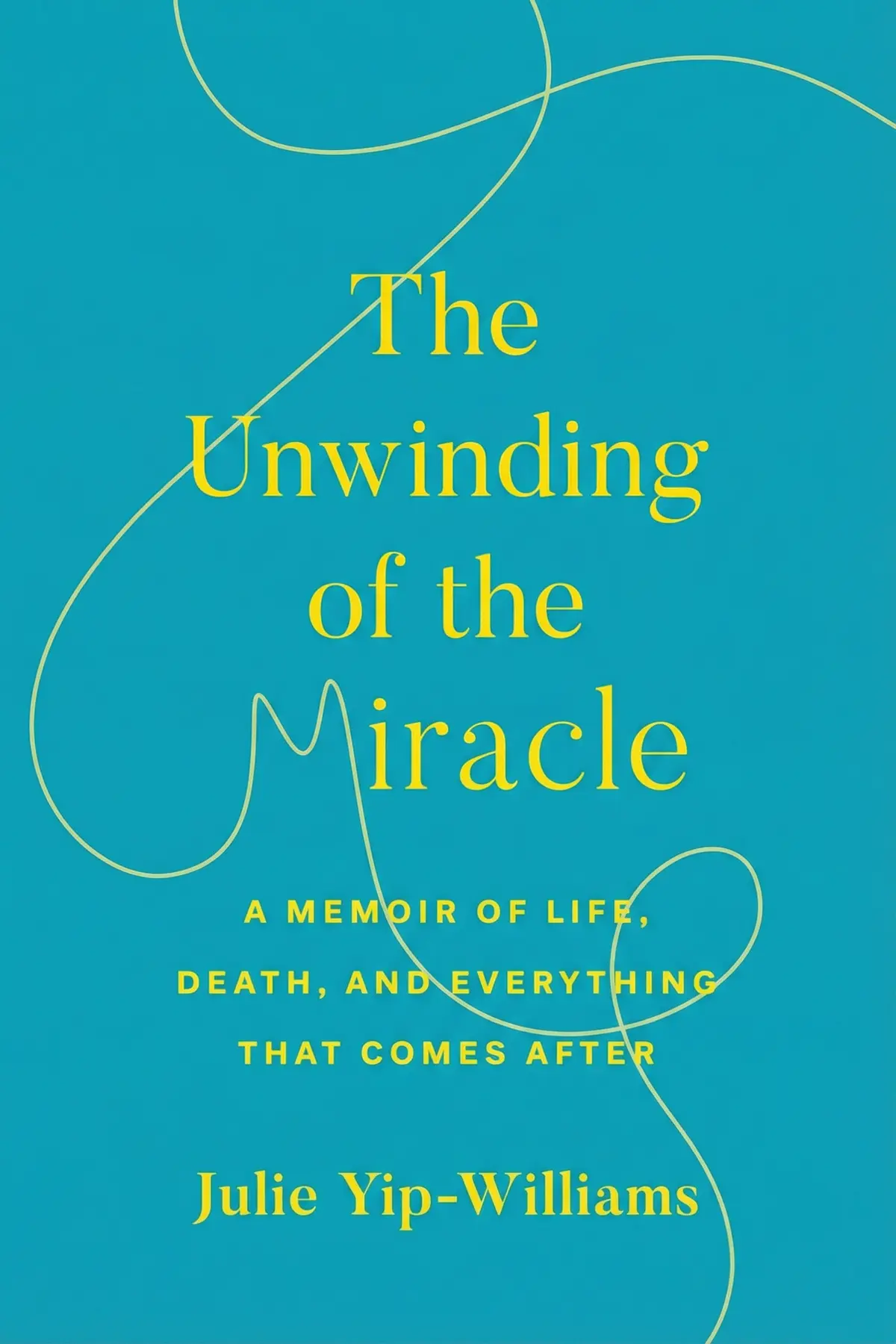
A profound memoir exploring the life of Julie Yip-Williams, from her survival of a dark childhood in Vietnam to her courageous confrontation with a terminal cancer diagnosis at thirty-seven.
2 min 11 sec
Every life is a series of interconnected events, some so improbable that they feel like divine intervention, while others are so tragic they seem to defy reason. We often hear stories of people overcoming the most staggering odds, rising from the ashes of poverty or disability to achieve greatness. But what happens when that trajectory of triumph suddenly reverses? What happens when the very miracle of your existence begins to unravel before your eyes? This is the central question at the heart of the story of Julie Yip-Williams.
Julie’s journey was one of extreme contrasts. Born into the chaos of post-war Vietnam and marked by a physical disability that nearly cost her her life, she eventually found herself at the pinnacle of American success. She was a Harvard-educated lawyer, a wife, and a mother living in the vibrant heart of New York City. Her life was, by any objective measure, a miracle. Yet, at the age of thirty-seven, she received a diagnosis that would set in motion the slow and painful process of that miracle’s end.
In this exploration of her memoir, we aren’t just looking at a medical history or a tragic ending. Instead, we are invited to witness a powerful throughline: the idea that life is not just about the heights we reach, but how we handle the descent. We will look at how her early struggles with blindness forged a spirit of relentless determination, how her immigration to the United States opened doors that were once firmly shut, and how she navigated the complex emotional landscape of a terminal illness.
This isn’t a story that offers easy answers or comfortable platitudes about staying positive. It is a raw, honest account of a woman who refused to sugarcoat the reality of her decline. Through her eyes, we see a life that was fought for at birth and cherished until the very last breath. It is a reminder that while miracles can be unwound, the beauty of having lived them remains untouched. Let’s begin by looking at the very first miracle of Julie’s life—the miracle of simply being allowed to survive her own infancy.
2 min 48 sec
In a world where physical limitations were seen as a curse, one infant’s survival depended on a stranger’s refusal to follow a dark command. Discover the harrowing beginning of a life nearly extinguished at birth.
2 min 20 sec
A dangerous journey across the sea led a family from the remnants of war to the promise of the West, where a young girl finally saw the world in color.
2 min 11 sec
Refusing to be defined by her limitations, Julie used her legal blindness as a catalyst for academic excellence and solo adventures that spanned the globe.
2 min 03 sec
In the bustling environment of a New York law firm, Julie found both professional triumph and an unlikely love that would ground her life in family.
2 min 10 sec
A celebratory family gathering was cut short by a sudden medical crisis, marking the beginning of a relentless battle against an internal enemy.
2 min 19 sec
Confronting a terminal diagnosis, Julie challenged the typical narratives of positivity, choosing instead a raw honesty about the limits of the human body.
2 min 20 sec
When the cancer reached her lungs, the battle for survival shifted into a search for meaning amidst the profound darkness of a terminal reality.
2 min 15 sec
In her final days, Julie took control of her departure, turning the process of dying into a final act of love and dignity for her family.
2 min 04 sec
The life of Julie Yip-Williams serves as a profound meditation on the nature of existence. Her story reminds us that the value of a life cannot be measured by its duration, but rather by the depth of the experiences and the strength of the spirit that inhabits it. She lived a biography that was filled with more drama, triumph, and tragedy than most could imagine in several lifetimes. From the precarious days of her infancy in Vietnam to the heights of legal success in New York, she was a woman who consistently defied the expectations of a world that often saw her as ‘less than’ because of her disability.
Her final journey through terminal cancer provides a raw and necessary counter-narrative to the polished, often superficial way our culture talks about death. By refusing to hide her anger, her fear, and her grief, Julie gave us a more honest look at what it means to be human. She taught us that it is possible to be both terrified of the end and deeply grateful for the middle. Her conclusion that her cancer was the ‘unwinding’ of a miracle is a powerful framing of mortality. It suggests that death is not a failure, but the natural completion of a remarkable cycle.
As we reflect on her words and her path, the actionable lesson is clear: we must embrace the reality of our own fragility. We are encouraged to live with the same fiery determination she showed in her youth, to travel, to love, and to build, but also to possess the courage to face the inevitable end of our own ‘miracles’ with honesty. Julie’s legacy is a call to stop waiting for a distant future and to inhabit the present, even when that present is painful. In the end, her life was not defined by the cancer that took her, but by the miraculous spirit that refused to be silenced until the very last moment. She showed us that while we cannot control the length of our lives, we can control the honesty with which we live them.
The Unwinding of the Miracle is a deeply moving exploration of a life defined by improbable survival and inevitable loss. It begins with the story of a young girl born blind in post-war Vietnam, narrowly escaping a family plot against her life, and follows her journey to America, where she achieves academic and professional heights at Harvard and in the New York legal world. Just as she finds domestic bliss with a husband and two young daughters, the narrative takes a sharp turn into the reality of a terminal Stage IV colon cancer diagnosis. This summary provides a meditation on the human condition, challenging conventional notions of hope and the 'battle' against illness. It promises to guide listeners through the psychological and physical tolls of a terminal diagnosis while offering a raw, honest look at what it means to prepare for the end. It is a story of a life that was, in every sense, a miracle, and the gradual, painful process of that miracle coming to a close.
Julie Yip-Williams was born Diep Ly Thanh in Vietnam and later emigrated to the United States as a young child. She overcame legal blindness to graduate from Harvard Law School and establish a successful career as a lawyer in New York City. After her diagnosis with colon cancer, she became a prominent writer through her online blog, where she chronicled her experiences with illness and her reflections on life. She passed away in 2018.
Listeners find this memoir to be skillfully written and stimulating, with one listener noting how it resonates with compassion. This work is remarkably candid; one listener characterizes the writing as "brutally yet altogether poignantly honest." Listeners describe the story as poignant and immensely moving, touching listeners on a profound level. Although some listeners claim the book isn't depressing, others find it heartbreakingly sad.
This book is a gut-punch that refuses to offer the easy comfort of a typical "cancer journey" narrative. Julie Yip-Williams provides a brutally yet altogether poignantly honest account of what it means to die while you are still very much in the middle of living. The story of her survival in Vietnam, from the grandmother who wanted her euthanized to the herbalist who refused, is almost mythic. It serves as a stark contrast to the clinical, often grueling details of her Stage IV colon cancer battle. She doesn't sugarcoat the rage or the jealousy she feels toward those who will outlive her, specifically her biting comments about a "slutty second wife." It is rare to find a memoir so stripped of artifice. Her refusal to adopt a "warrior" persona makes her story feel more human and, ultimately, more heartbreaking. I found myself weeping by the end, not just for her, but for the clarity she found in the face of the inevitable.
Show moreI wasn't prepared for how much this memoir would make me reevaluate my own life. Julie’s voice is so distinct—analytical, fierce, and devoid of the toxic positivity that often plagues books about illness. She doesn't want your pity; she wants you to see the reality of the "miracle" being unwound. The descriptions of her childhood cataracts and the surgery that gave her partial sight were fascinating and helped me understand her fierce independence. She traveled to seven continents and built a high-powered career, only to be stopped by a random mutation in her cells. This is a story about the unfairness of the universe. To be fair, some readers might find her anger toward her future replacement—the "slutty second wife"—to be off-putting, but I found it refreshing. Why should she be graceful about her own erasure? It’s a profoundly moving book that demands you look at death without blinking. I will be thinking about Julie and her two daughters for a very long time.
Show moreRarely do you find a writer so willing to be unlikable in the pursuit of truth. Julie Yip-Williams doesn't care if you like her; she cares if you hear her. This book is an explosion of life and death, jumping between her childhood in poverty and her adulthood in Manhattan. The scene where her family takes her to the herbalist to be killed stayed with me for days. It’s such a sharp contrast to the high-tech medical world she later inhabited. The writing is vivid and often poetic, capturing the "miracle" of her existence even as it's being taken away. I loved her "no bullshit" mantra. She challenges us to mock the probabilities and live fully, which is a powerful message coming from someone who knew exactly when her time was up. This is a book that touches your soul and forces you to confront your own mortality. It’s heartbreakingly sad but also remarkably full of a strange, fierce joy. Julie's voice is a gift to everyone who reads this.
Show moreThe way Julie describes her early years in Vietnam is almost cinematic, filled with the sights and sounds of a world she couldn't even see. Her resilience is staggering. From the moment she survived the herbalist’s refusal to kill her, she was a survivor. This book isn't just about cancer; it's about the sheer audacity of being alive. She writes about her legal career and her travels with a sense of wonder that makes her eventual diagnosis even more devastating. The honesty here is staggering—she talks about the rages she felt and the moments she nearly broke her family. It’s not a polished, pretty story, and that’s why it works. It feels authentic. She captures the "multiple, messy aspects of the human experience" perfectly. If you are looking for a book that will make you feel everything from anger to inspiration, this is it. It’s a goddamn miracle she wrote this for us. Focus on the life she lived, not just the way she died.
Show moreJulie Yip-Williams had a life that felt like a series of impossible escapes, and this book captures that spirit perfectly. Starting with her childhood blindness and her family’s harrowing journey from Vietnam to the US, the first half is absolutely gripping. The transition into her cancer diagnosis is jarring, reflecting how a terminal illness interrupts the momentum of a successful life. As a Harvard Law graduate and a mother, Julie had so much to lose, and she writes about that loss with a searing intensity. Personally, I appreciated the deep dive into her medical treatments—the scans, the CEA levels, and the clinical trials—because it demystifies the reality of being a patient. It isn’t always a pretty or inspiring read, but it is deeply thought-provoking. Her husband’s epilogue is the perfect, somber finishing touch to a life that was lived with incredible, albeit often angry, passion. It’s a reminder to stop sweating the small stuff and just live.
Show moreAfter finishing the epilogue written by her husband, I sat in silence for a long time. This memoir is a heavy experience, but a necessary one for anyone who wants to understand the true weight of grief. Julie’s journey from a blind baby in Vietnam to a successful lawyer in New York is the stuff of movies, yet she grounds it in the messy, painful reality of her final years. The way she describes her children watching documentaries of animals killing each other or plane crashes was a bit disturbing, but it reflects her philosophy: life is beautiful and life is cruel. She didn't want to protect her girls from the truth of her death, which is a controversial but bold choice. Look, if you want a feel-good book, this isn't it. But if you want a meditation on what it means to absorb the lessons of a life, regardless of how many years you get, this is it. It resonates with compassion for the human condition while remaining brutally honest about the physical toll of the disease.
Show moreThe sheer medical density here might be too much for some readers, but I found it fascinating. Julie details every PET scan and MRI with the precision of the lawyer she was. It makes the reader a partner in her treatment. Beyond the science, the emotional core of the book is her struggle to accept her fate. Her story is a goddamn miracle, as she says, starting from her survival in a boat leaving Vietnam. It’s a bit repetitive in places, especially when she loops back to her grandmother's cruelty, but that repetition feels like a woman trying to make sense of her past before she runs out of future. I did find the "Slutty Second Wife" comments a bit much, but maybe that's just her way of screaming at the void. It’s a poignant, well-written account of a life cut short. She lived more in 42 years than most people do in 80. Definitely worth the read, even if it leaves you feeling a bit drained.
Show morePicking this up was a choice to look death in the face. Julie’s story is incredible—born blind, nearly killed by her own family, then rising to the top of her field at Harvard. The cancer diagnosis at 37 feels like a cruel joke from the universe. I’ll be honest, the blog-style format meant there was some clichéd writing and some disjointed transitions that took me out of the moment. However, the emotional honesty more than makes up for the lack of a traditional structure. Her anger is palpable. She rages against the disease, against her husband's future, and against the unfairness of leaving her daughters behind. It’s a very different kind of cancer memoir because it doesn't try to find a silver lining. The silver lining is simply that she existed at all. It’s a reminder that life is messy and complicated. It’s a tough read, but it’s profoundly moving and serves as a lasting tribute to a woman who refused to be defined by her limitations, whether they were her eyes or her colon.
Show moreWhile the prose is undeniably powerful and the author's life is a testament to resilience, I found the book's structure quite difficult to navigate. Because it was compiled from a series of blog posts, the narrative feels disjointed and frequently repetitive. Julie tells the story of her childhood in Vietnam several times, which makes the pacing feel sluggish in the middle sections. I also struggled with the tone at times; her bitterness toward others who are "happily ensconced" in their health felt a bit uncharitable, even given her tragic circumstances. The chapter on Roger Federer felt entirely out of place in a memoir about mortality. Truth is, a tighter edit from a ghostwriter could have helped streamline the timeline and reduce the clichéd writing that occasionally crops up. It’s an important story, but the execution left me wanting a more cohesive reading experience. I admire her honesty, but the "no bullshit" attitude sometimes veered into a territory that felt unnecessarily hostile toward the family she would eventually leave behind.
Show moreIs it wrong to say I struggled with this author's personality despite her tragic situation? I picked this up expecting an inspirational memoir about overcoming the odds, but instead found a narrative fueled by a level of bitterness that was hard to digest. Her repeated references to a potential "Slutty Second Wife" were particularly jarring and felt like a cruel legacy to leave for her husband and young daughters. While I can’t imagine the pain of a Stage IV diagnosis at 37, the way she lashed out at friends and strangers for having "unblemished lives" felt incredibly presumptive. No one has a perfect life, and her constant judgment of others' happiness was exhausting. The book also suffers from a lack of chronological flow because it’s just a collection of blog posts. Some sections are beautiful, but others are just lists of cancer drugs and rage-filled rants that felt too private to be published. It’s raw, yes, but perhaps too raw for a general audience to find any real solace in.
Show moreMasaji Ishikawa
Ben Macintyre
James Shapiro

Ben Macintyre
Jacinda Ardern
Ron Chernow
AUDIO SUMMARY AVAILABLE
Get the key ideas from The Unwinding of the Miracle by Julie Yip-Williams, plus 5,000+ more titles in English and Thai.







