
22 min 08 sec
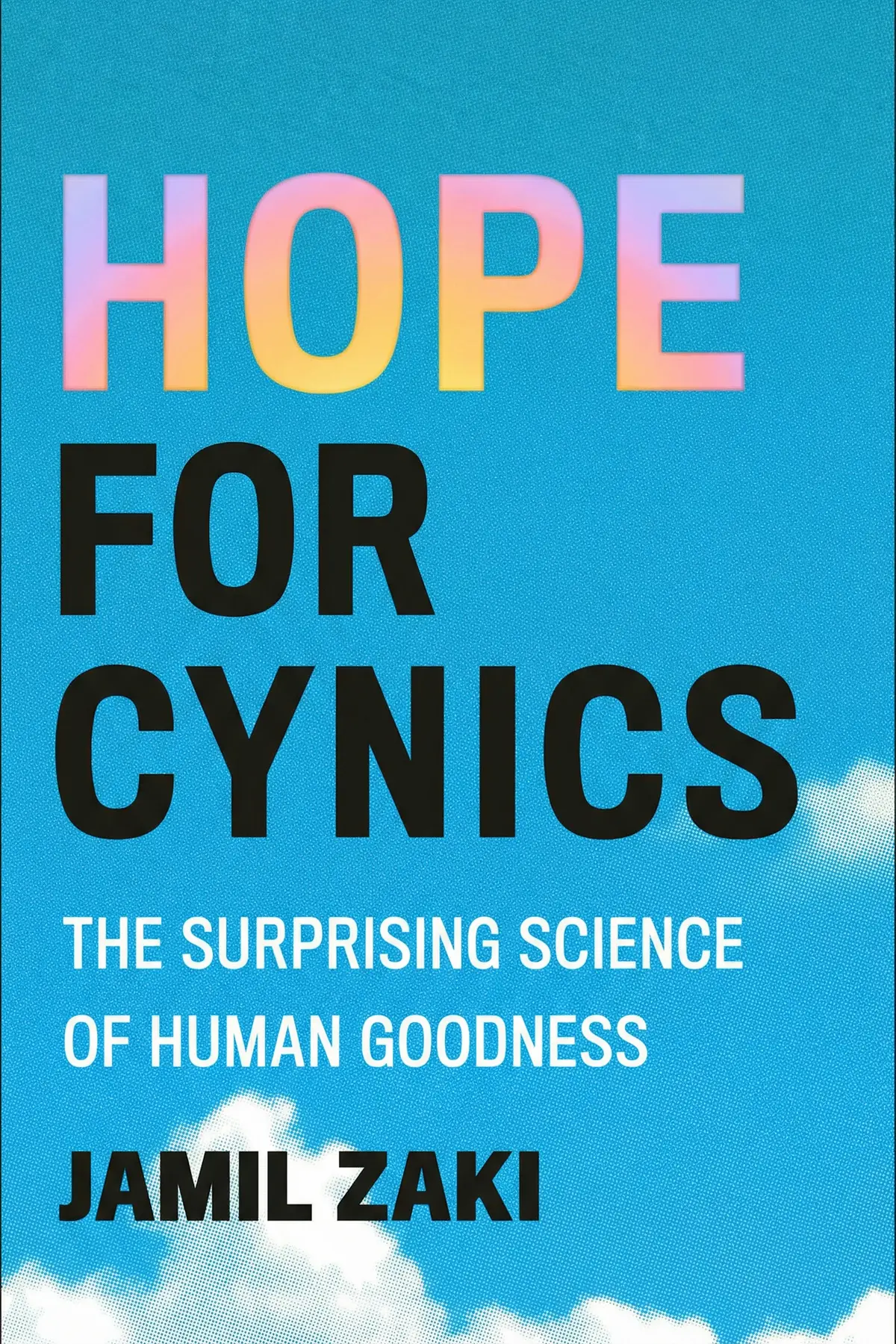
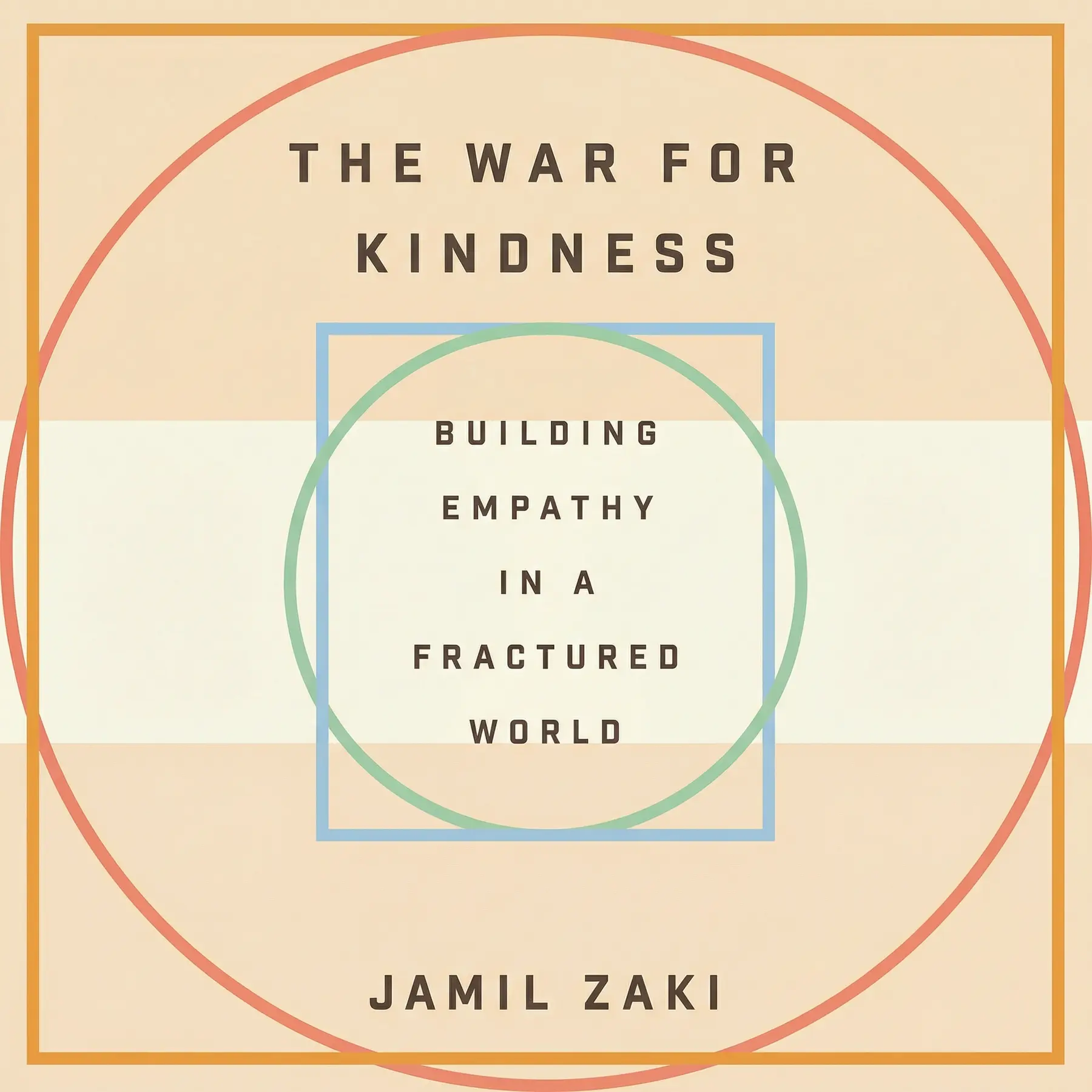
The War For Kindness: Building Empathy in a Fractured World
By Jamil Zaki
Psychologist Jamil Zaki reveals that empathy isn’t a fixed trait but a skill we can grow. Learn how to strengthen your compassion to heal divides and build a kinder world.
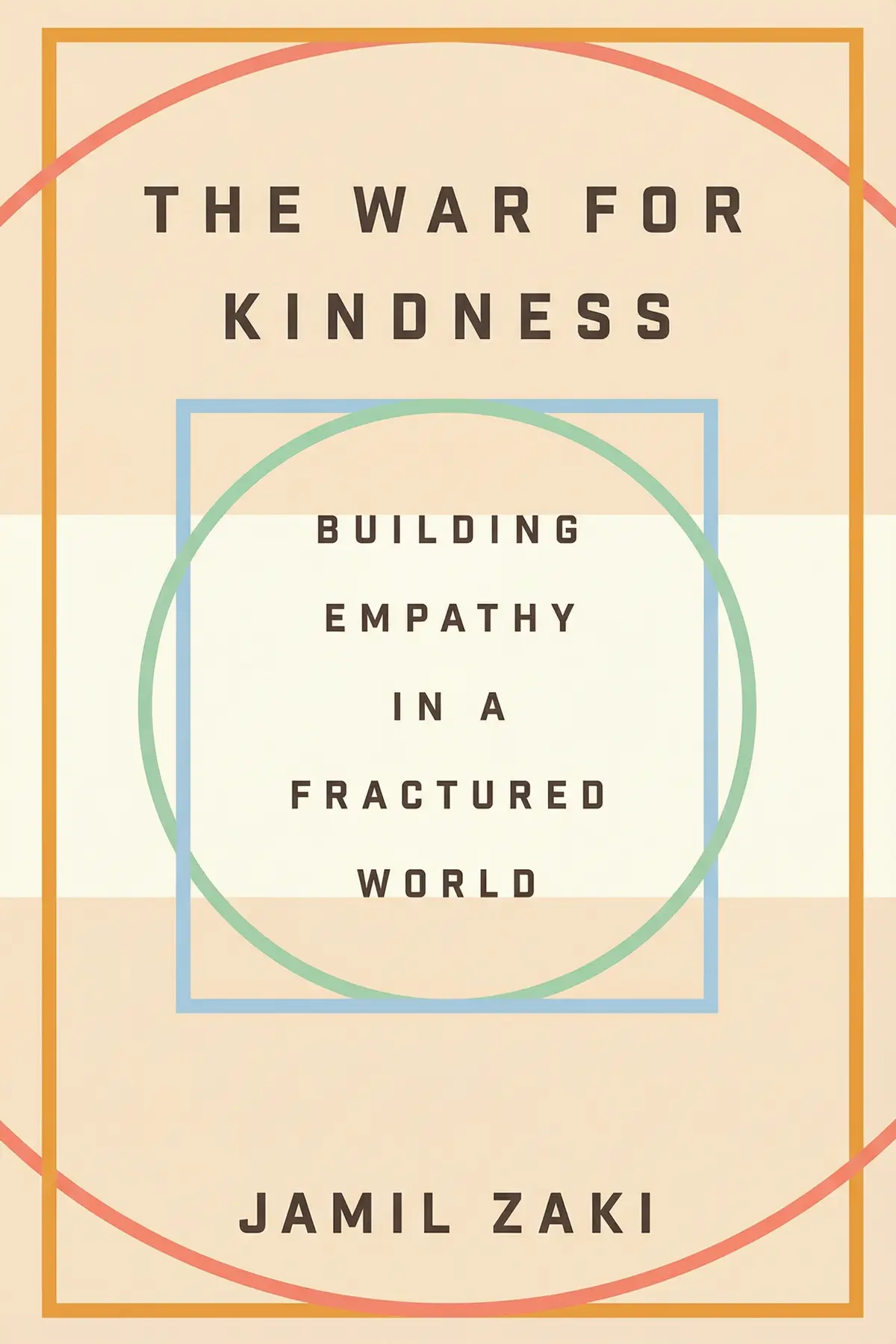
Table of Content
1. Introduction
2 min 01 sec
In our fast-paced, often divided world, we frequently find ourselves at a psychological crossroads. Think about the daily choices you make regarding your health. If you’re standing in a cafeteria line, you might see a vibrant, nutrient-dense salad sitting right next to a greasy, double-patty cheeseburger. Even though you know the salad is the choice that will make you feel better in the long run, the immediate gratification of the burger is incredibly tempting. It’s easier, it’s more immediate, and it requires less willpower in the moment.
Surprisingly, our emotional lives function in a very similar way. When we encounter someone else’s suffering or see a group of people who are fundamentally different from us, we face a choice between empathy and apathy. Empathy is the salad—it’s the choice that leads to a healthier social life, deeper connections, and a more resilient mind. But apathy is the cheeseburger. It’s often easier to look away, to remain indifferent, or to shut down our emotions because engaging with someone else’s pain takes work. It requires an investment of our time and our emotional energy.
This is the central challenge explored in The War For Kindness. We often view empathy as an automatic reflex—something you either have or you don’t. But what if kindness is actually a skill? What if it’s a muscle that we can train, stretch, and grow? Today, we’re going to explore how empathy functions not as a fixed personality trait, but as a dynamic capacity. We’ll look at why choosing empathy is worth the effort, from its ability to combat loneliness and depression to its power to bridge the deepest political and social divides. We will walk through the science of how our brains change when we practice kindness and discover the practical tools—from literature to technology—that can help us reclaim our humanity in a world that often feels like it’s pulling us apart. This isn’t just about being ‘nice’; it’s about a deliberate, courageous effort to build a better version of ourselves and our society.
2. The Malleability of Character
2 min 42 sec
Is your level of kindness set in stone? Discover the scientific shift from fixism to mobilism and how your beliefs about growth can actually change your brain.
3. The Power of Intentional Perspective
2 min 44 sec
Empathy isn’t always a reflex; it’s often a choice. Explore how small behavioral nudges and dedicated mental training can reshape our emotional reactions.
4. Bridges Across the Social Divide
2 min 45 sec
How do we find common ground with those we’ve been taught to hate? Learn the secrets of contact theory and the role of self-compassion in overcoming prejudice.
5. Fiction as a Moral Flight Simulator
2 min 24 sec
Can reading a novel actually make you a better person? Discover how stories of loss and redemption serve as a powerful tool for social reintegration and national healing.
6. The Sustainable Heart
2 min 31 sec
Is it possible to care too much? Learn the critical difference between empathetic distress and empathetic concern to avoid burnout in a demanding world.
7. Engineering a Kinder Society
2 min 38 sec
Individual effort isn’t always enough. Discover how changing the ‘rules’ in schools and police departments can create a culture where empathy is the new norm.
8. The Digital Compass
2 min 24 sec
Is the internet destroying our ability to care? Explore the dark side of digital life and the surprising ways technology might actually be used to save our empathy.
9. Conclusion
1 min 59 sec
As we conclude this journey through the science and practice of empathy, it’s clear that the ‘war for kindness’ is not a battle we fight against others, but a struggle we engage in within ourselves. We have seen that empathy is not a static trait, but a dynamic skill that responds to our beliefs and our training. We’ve explored how we can protect ourselves from burnout by shifting from distress to concern, and how we can use everything from ancient meditation to cutting-edge virtual reality to expand our circles of care.
The most important takeaway is that empathy is a choice. It is a commitment to seeing the humanity in others, even when it’s difficult—and perhaps *especially* when it’s difficult. But how do you start? One of the most effective ways to build your empathetic capacity is to work on your ’emotional granularity.’ This simply means getting better at identifying and naming your own feelings. When we are better at understanding the nuances of our own internal world, we become much more adept at reading the emotions of others.
Here is a simple, actionable challenge: For the next two weeks, keep a daily emotional diary. Each night, take five minutes to write about your most intense emotional experience of the day. Don’t just say you felt ‘bad’ or ‘good.’ Try to be as specific as possible. Were you frustrated, or were you actually feeling overlooked? Were you happy, or were you feeling a sense of relief? By sharpening your own emotional vocabulary, you are laying the foundation for deeper connections with everyone you meet.
Building a kinder world doesn’t require a miracle; it requires a million small, intentional acts of perspective-taking. It requires us to build better systems, tell better stories, and most importantly, to believe that we are capable of growth. The evidence is clear: we have the tools to reclaim our compassion. Now, the choice is ours to make.
About this book
What is this book about?
The War For Kindness addresses the growing crisis of isolation and animosity in our modern world. In an era defined by political polarization, digital vitriol, and emotional burnout, empathy often feels like a luxury we can’t afford. However, Stanford psychologist Jamil Zaki argues that kindness is not an innate gift given to a lucky few; rather, it is a psychological muscle that can be strengthened through intentional practice and systemic change. Drawing on cutting-edge neuroscience and social psychology, this exploration shows how we can expand our circles of concern. From the way we train police officers to the stories we read to our children, the book provides a roadmap for rebuilding the social fabric. By understanding that our capacity for care is flexible, we can move beyond apathy and exhaustion, creating a more resilient and connected society where empathy is a proactive choice rather than a fleeting emotion.
Book Information
About the Author
Jamil Zaki
Jamil Zaki is a professor of psychology and has served as the director of the Stanford Social Neuroscience Lab since 2012. His academic work is centered on the study of empathy and social cognition. The War For Kindness represents his debut into book-length writing, translating his years of lab research into a guide for public life.
Ratings & Reviews
Ratings at a glance
What people think
Listeners find the writing to be captivating and expertly crafted, presenting profound insights that are backed by rigorous science. They value the author’s inclusion of powerful narratives, and one listener points out that the research is seamlessly blended with interviews. The book’s take on empathy is widely appreciated; one listener remarks on how it provides hope for humanity, and another emphasizes its merit as a how-to manual for communities.
Top reviews
Jib
The chapter on the neonatal emergency unit absolutely wrecked me. Zaki doesn't just present dry data from his Stanford lab; he weaves these gut-wrenching human stories into the very fabric of his scientific arguments. To be fair, I went in expecting a self-help manual, but what I got was a profound meditation on empathy as a deliberate choice rather than a fixed trait. It’s fascinating to see how he frames kindness as a "muscle" that requires constant, often uncomfortable, exercise to maintain. While some parts feel a bit heavy on the academic side, the prose remains lively and remarkably accessible for a general audience. This isn't just a book about being nice; it’s a rigorous exploration of our biological capacity for connection in an increasingly fractured world. If you've ever felt like the news is making you numb, this might be the reality check you need.
Show moreLook
Ever wonder why some people seem to have a bottomless well of compassion while others struggle to care about anyone outside their immediate circle? Jamil Zaki tackles this head-on, presenting empathy not as a fixed trait we’re born with, but as a deliberate choice we make every day. The book acts as a sort of community guide, showing how institutional changes in schools and hospitals can foster a culture of mutual care. I loved the balance between the laboratory findings and the raw, human stories that illustrate those findings in action. It’s an inspiring read that actually offers some scientific backing for why we should stay kind even when it's difficult.
Show moreBella
Picked this up during a particularly cynical week and it was exactly the antidote I needed. The core message—that we can choose to be more empathetic even toward those we view as enemies—is powerful and deeply necessary. Zaki's writing is lively and the way he interweaves his interviews with laboratory data makes the science feel incredibly personal. I particularly enjoyed the discussion on how tribal empathy can lead us astray and how we must work to expand our boundaries beyond just our "own people." It’s an engaging, thought-provoking read that gives me genuine hope that we can change the way we relate to one another.
Show morePop
As someone who works in a high-stress public sector job, the comparison between "warrior" and "guardian" policing resonated deeply with my own observations of institutional culture. Zaki brings a lot of scientific weight to the table, using his background at Stanford to explain why we burn out and how we can consciously pivot back toward compassion. I appreciate that he doesn't shy away from the darker side of empathy, like how tribalism can weaponize our care for "our own" against outsiders. The writing is incredibly relatable and moves at a brisk pace, never getting too bogged down in jargon despite the heavy reliance on field research. It’s a compelling argument for the idea that our social survival depends on our ability to broaden our circles of concern.
Show moreAstrid
Wow. I didn’t expect a book about social neuroscience to leave me feeling this hopeful about the future of humanity. Zaki manages to take complex concepts like emotional mimicry and cognitive empathy and turn them into a narrative that feels both urgent and achievable. I found the interviews with former extremists particularly powerful, as they illustrate that even the most hardened hearts can find a way back through deliberate practice. Some might find his optimistic tone a bit much given the current state of the world, but I think we need this kind of evidence-based positivity right now. It's a quick read, but the ideas stay with you long after you close the cover.
Show moreTaweesak
This book serves as a fascinating deep-dive into the malleability of the human spirit. Zaki’s central thesis—that empathy is a skill we can grow—is backed by a wealth of hard science and compelling interviews that make the data feel real. I especially liked the exploration of how social media isn't inherently an "empathy killer" but rather a tool that we’ve currently optimized for the wrong outcomes. The prose is clean, direct, and avoids the fluff often found in popular psychology. Look, it’s not going to solve every social ill overnight, but it provides a necessary framework for understanding how we might start to bridge the gaps between us. It’s a thoughtful, well-researched contribution to the conversation on how we coexist.
Show morePang
Personally, I found the section on "warrior" versus "guardian" mindsets in law enforcement to be the highlight of the entire experience. Zaki writes with a level of nuance that is often missing from our modern discourse, acknowledging that empathy can be exhausted and that burnout is a real biological phenomenon. His tone is conversational yet authoritative, bridging the gap between academic research and the lived experience of people on the front lines of social friction. While I agree with other reviewers that the ending felt a little bit disconnected from the data, the rest of the book is so strong that it’s easily overlooked. It’s a timely reminder that we aren't doomed to be enemies.
Show moreSamuel
Finally got around to Zaki’s work and I’m feeling a bit conflicted about the overall execution. Truth is, the first half of the book feels like a greatest-hits compilation of every psychology study you’ve already read if you follow this genre at all. I was waiting for the "war" part of the title—the gritty, practical strategies for actually implementing these changes in a hostile environment—but they felt a bit thin. He mentions how empathy is malleable, which is great in theory, but I wanted more of a roadmap for the everyday person. That said, the section on how technology can actually foster mutual care instead of just outrage was a refreshing take. It's a solid, engaging read, but it lacks the "how-to" punch I was hoping for.
Show moreHang
After hearing so much hype about this, I found the "muscle" metaphor to be the most helpful takeaway. I’ve always thought of empathy as something you either have or you don't, so seeing the data on how it can be trained was eye-opening. However, to be fair, the book spends a lot of time on the "why" and not quite enough on the "how." I enjoyed the stories about the police training and the neonatal units, but I felt like I was being told empathy is important without being given enough tools to practice it myself. It’s a good introductory text for someone new to social neuroscience, but seasoned readers might find it a bit repetitive in the early chapters.
Show moreSupachai
Not what I expected, and frankly, I found the conclusion to be quite a letdown. While the middle sections on school discipline and medical burnout were insightful, the final chapter regarding our duty to future generations felt unmoored from the scientific grounding of the rest of the book. It’s one thing to prove empathy can be trained in a lab, but it’s another to suggest a faith-based framework for a "greater good" that remains undefined. Zaki is clearly a talented writer, but this felt like two different books mashed together. Also, if you’ve read Paul Bloom’s work, you might find Zaki’s rebuttal a bit confusing or underdeveloped in places. I really wanted to love this, but the lack of concrete, daily strategies left me wanting more substance.
Show more
Readers also enjoyed
Age of Propaganda: The Everyday Use and Abuse of Persuasion
Anthony Pratkanis
59 Seconds: Change Your Life in Under a Minute
Richard Wiseman
A Liberated Mind: How to Pivot Toward What Matters
Steven C. Hayes
AUDIO SUMMARY AVAILABLE
Listen to The War For Kindness in 15 minutes
Get the key ideas from The War For Kindness by Jamil Zaki, plus 5,000+ more titles in English and Thai.
- 5,000+ titles
- Listen as much as you want
- 7-day free trial
- Cancel anytime







