
14 min 34 sec
Hope for Cynics: The Surprising Science of Human Goodness
By Jamil Zaki
Explore the psychological roots of modern distrust and discover why cynicism is a trap. Jamil Zaki reveals scientific evidence for human goodness and offers tools to reclaim a hopeful, evidence-based worldview.
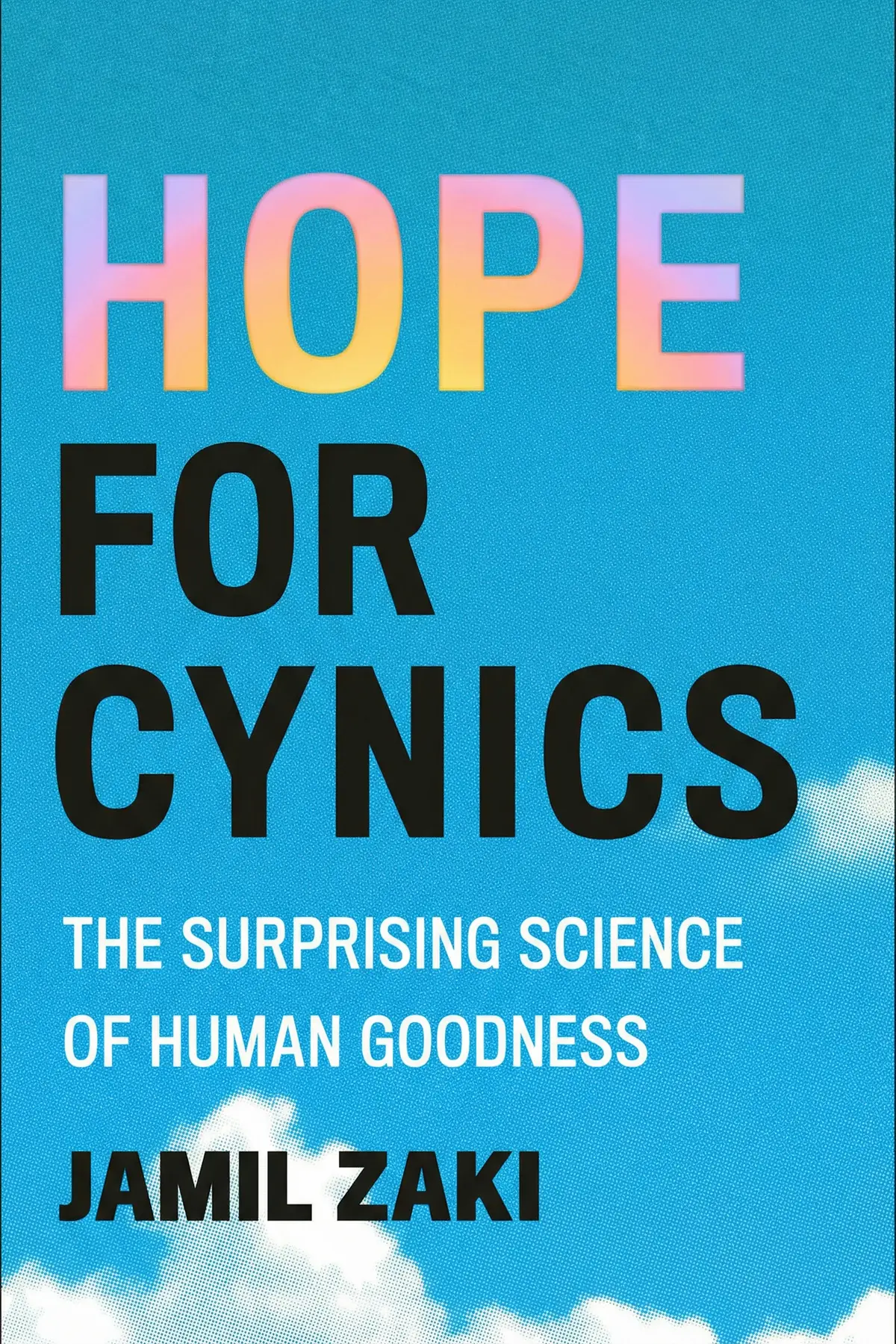
Table of Content
1. Introduction
1 min 29 sec
In our current era, it often feels like being a cynic is the only logical response to the world around us. We are constantly flooded with headlines about corruption, stories of greed, and social media feeds that seem designed to amplify our worst traits. Choosing to be hopeful can feel naive, even dangerous. We tell ourselves that by expecting the worst from people, we are staying one step ahead. We think of cynicism as a suit of armor that prevents us from being hurt or fooled.
But what if that armor is actually a cage? What if the very mindset we use to protect ourselves is actually eroding our health, our financial stability, and our ability to solve the problems we care about? In this exploration of Hope for Cynics, we are going to look at the work of psychologist Jamil Zaki to understand why our suspicions about human nature are often flat-out wrong. We’ll dive into the surprising data that shows humans are far more honest and cooperative than we give them credit for.
Through this journey, we’ll see that hope isn’t just a fuzzy feeling; it’s a rigorous, evidence-based approach to life. We will learn to distinguish between the modern brand of cynicism—which is essentially a reflexive distrust—and the ancient philosophy that bore the same name. More importantly, we’ll discover how to transition from being a cynic to being a hopeful skeptic. This doesn’t mean ignoring the bad in the world. Instead, it means opening our eyes to the reality of the good that’s already there, waiting to be acknowledged and built upon.
2. The Evolution of Cynicism from Virtue to Distrust
2 min 54 sec
Discover how an ancient philosophy focused on human potential and authenticity transformed into a modern worldview defined by suspicion and social isolation.
3. The Myth of the Intelligent Cynic
3 min 02 sec
While we often associate a dark worldview with high intelligence, research shows that cynics actually struggle more with cognitive tasks and social perception.
4. Rewiring Our Negativity Bias
2 min 42 sec
Our brains are hardwired to notice threats over kindness, but real-world data proves that human honesty is far more common than we think.
5. Breaking Out of the Political Echo Chamber
2 min 56 sec
Polarization is often driven by ‘conflict entrepreneurs’ who thrive on our misunderstandings. Learn how to bridge the gap through curiosity and storytelling.
6. Conclusion
1 min 31 sec
As we wrap up this look at the science of human goodness, the central message is clear: cynicism is not the mark of wisdom we often think it is. It is a cognitive shortcut that limits our potential and blinds us to the reality of the world. While our brains might be wired to look for the worst, the data shows that we live in a world defined by a surprising amount of honesty and cooperation. Most people want to be good, and most people are trying their best.
Moving away from cynicism doesn’t mean becoming a pushover. It means adopting a stance of hopeful skepticism. It means asking for evidence before you judge someone and being willing to be pleasantly surprised. It means recognizing that the ‘conflict entrepreneurs’ on your screen are not giving you a full picture of your neighbors.
By choosing to notice the returned wallets, by engaging in curious conversations with those we disagree with, and by understanding our own cognitive biases, we can start to rebuild the social trust that makes a society thrive. Hope is not a passive wish that things will get better; it is an active, brave choice to see the potential in ourselves and others. When we stop protecting ourselves with the shield of cynicism, we finally become free to build the kind of world we actually want to live in. Thank you for listening to this BookBits summary. If you found these ideas helpful, please consider leaving us a rating or a review—it helps us continue to bring these insights to more people. See you in the next one.
About this book
What is this book about?
In a world that feels increasingly divided and hostile, many of us have adopted cynicism as a protective shield. We assume the worst of others to avoid being disappointed or exploited. But what if this mindset is actually making us less safe, less successful, and less healthy? Hope for Cynics dives into the fascinating research of social neuroscience to challenge our deepest suspicions about humanity. Drawing on global studies, historical anecdotes, and psychological experiments, this summary explores the high cost of persistent distrust. It dismantles the popular myth that cynics are more intelligent or socially aware than their trusting peers. Instead, the book offers a roadmap for moving toward hopeful skepticism—a way of engaging with the world that remains critical and curious without losing sight of human potential. You will learn how to spot the cognitive biases that keep us trapped in negativity and how to build more meaningful, cooperative connections in your daily life and the broader community.
Book Information
About the Author
Jamil Zaki
Dr. Jamil Zaki is a psychology professor at Stanford University who directs the Stanford Social Neuroscience Lab. His research focuses on empathy, kindness, and human connection, drawing from his training at prestigious institutions like Columbia and Harvard. He is also the author of The War for Kindness.
Ratings & Reviews
Ratings at a glance
What people think
Listeners find the work to be thoroughly researched, with one listener highlighting how it supplies the scientific evidence and structural support needed for its arguments. Additionally, the book presents hope as something reachable, and listeners value the clear differentiation made between skepticism and cynicism. Nevertheless, opinions on the perspective vary; one listener characterizes the viewpoint as being rooted in reality, whereas another listener considers it to be one-sided.
Top reviews
Kamol
The 'cynicism scale' was a massive wake-up call for me. I’ve always worn my pessimism like a badge of honor, thinking it made me smarter than the 'sheep,' but Zaki proves that cynics are actually more likely to be wrong. This book offers a path toward 'hopeful skepticism' that feels earned rather than forced. I particularly appreciated the section on 'earned trust' and the Hemingway quote about trusting people to find out if they're trustworthy. It’s a terrifying prospect, but the research shows that people usually rise to the occasion. The writing zips along and keeps you engaged, even when the data gets dense. I didn't mind the personal stories about Emile; they added a human heart to what could have been a dry academic text. This isn't just fluffy 'look on the bright side' nonsense; it’s a rigorous argument for why we should give humanity another chance. Truly one of my favorite reads this year.
Show moreVipawan
Wow, this was exactly what I needed to hear. As a self-proclaimed 'well-done' cynic, I’ve spent years assuming everyone has an ulterior motive. Zaki’s research into 'negativity bias' helped me see that I’ve been fact-checking the wrong things. The story of his friend Emile was heartbreaking but served as a perfect emotional anchor for the data. I loved the idea of 'shredding the ledger' in relationships—it’s such a simple concept that makes a world of difference. The book moves fast and doesn't get bogged down in too much academic jargon, making it very accessible. It’s rare to find a social science book that feels this personal and urgent. I’ve already bought a copy for my brother, who is even more of a pessimist than I am. If you feel like the world is irredeemable, please give this a chance. It might just change your mind. Best book on psychology I've read lately.
Show moreNikolai
Gotta say, the chapter on 'earned trust' changed my entire week. I tried a small experiment at work, asking for a favor without expecting much, and was shocked when my colleague actually came through. This book is full of these little nudges that prove cynics are often just 'more wrong' than everyone else. The data about lost wallets being returned really stuck with me—it’s a tangible piece of evidence against the idea that everyone is out for themselves. Zaki’s writing style is engaging and conversational, which makes the scientific studies easy to digest. I also appreciated how he shared his own struggles with cynicism. It made the advice feel more grounded in reality rather than coming from an ivory tower. This is a must-read for anyone feeling burnt out by the constant stream of negative news. It’s hopeful, but in a way that feels intellectually honest and scientifically supported.
Show moreNew
After hearing Jamil Zaki on a podcast, I was intrigued by his take on the 'cynicism trap.' This book does a solid job of providing a scientific backbone for why we should stop assuming the worst of everyone. He distinguishes between being a cynic—which he argues makes us sicker and poorer—and being a skeptic, which is actually healthy. I loved the data on how often lost wallets actually get returned; it’s a small detail that really challenges your worldview. However, the middle sections felt a bit like a memoir about his late friend Emile. While touching, it sometimes veered away from the hard social science I was looking for. It’s a well-researched guide, though some of the advice on 'savoring' felt like standard self-help fare found in many other titles. If you’re looking for a way to retool your brain without being naive, this is a great start. It's grounded in reality but still manages to be uplifting.
Show moreBam
Finally got around to reading this after seeing the Huberman clip, and I’m mostly impressed. Zaki avoids the toxic positivity trap by grounding his arguments in real-world data and peer-reviewed studies. He makes a compelling case for why our 'default mode' of distrust is actually a logical error. The concept of 'encounter counting' was a practical tip I’ve actually started using in my daily commute. It’s helped me realize that most people are actually cooperative, not out to get me. My only gripe is that some of the chapters feel a bit 'one-sided,' ignoring the very real systemic reasons why people become cynical in the first place. Not everyone has the luxury of 'hopeful skepticism' when the system is actively working against them. Still, the science provides a much-needed backbone to the idea that we can change our mindsets. A very solid 4-star read for those needing a perspective shift.
Show moreWipada
Look, I’ve read 'The Book of Hope' and similar titles, but this adds a much-needed layer of social science to the conversation. While the 'cynicism scale' at the beginning was a cool diagnostic tool, the rest of the book felt a bit more like a series of essays. Zaki’s writing is beautiful, but the anecdotes about his friend Emile started to feel a bit heavy by the halfway point. I also felt the discussion on social media and 'negativity bias' was stuff I’d already heard a million times on various podcasts. To be fair, the book is incredibly well-researched and the distinction between a cynic and a skeptic is an important one to make. It offers hope that is actually attainable through small behavioral changes. It’s a 'nice' book that zips along, even if it feels slightly repetitive at times. Definitely worth it for the 'fact-checking your theories' exercise alone.
Show moreMoon
Picked this up because the concept of 'hopeful skepticism' sounded like a middle ground I could actually inhabit. I’m not a 'glass half full' person, but I’m tired of being angry at the world. Zaki provides the evidence needed to support a more balanced view of humanity. The chapters on increasing social interaction and 'savoring' were highlights for me, even if they felt a bit like standard self-help. I did find the focus on American partisan politics a bit distracting, as it felt like it limited the scope of his arguments to a specific demographic. However, the core message about trust as a gift that gets repaid is powerful. It’s a well-rounded look at why we think the way we do and how we can gently nudge ourselves toward a better outlook. Not a perfect book, but definitely a useful one for these polarized times. It's a quick, engaging read with some great takeaways.
Show moreLars
To be fair, I really wanted to like this, but it felt way too focused on American politics for an international reader. Large chunks of the text are dedicated to bridging the gap between Democrats and Republicans, which just isn't relevant to my life in Europe. I also found the 'revelations' about social media—like how it acts as a highlight reel—to be incredibly basic information. Is anyone actually surprised by that anymore? Zaki is clearly brilliant, but the book spends more time on anecdotes about his personal life than on defining the core mechanics of cynicism. It felt disjointed, bouncing from heavy scientific data to emotional stories about his friend who passed away. It lacked the cohesion I expected from a Stanford psychologist. If you’ve already read a lot of pop psychology, you likely won't find much new ground here. It's okay, but not the deep dive I wanted.
Show morePracha
Is it a memoir or a science book? I struggled with the tone because it felt like Zaki couldn't decide which one he wanted to write. The psychological facts are fascinating—especially the bit about how we overestimate the number of 'cheaters' in society—but they often get buried under long-winded anecdotes. I found myself skimming the parts about his friend just to get back to the actual research. Truth is, the distinction between skepticism and cynicism is brilliant, but the execution is all over the place. For a book that claims to offer hope, I actually found some of the statistics about political polarization quite depressing. It’s well-written in a technical sense, but I wouldn't call it a page-turner. It's a decent enough read if you're already interested in social behavior, but it didn't quite hit the mark for me as a cohesive survival guide. I expected more structure and less fluff.
Show moreChatri
Not what I expected at all. I was looking for a deep dive into the psychology of cynicism, but this felt more like a tribute to the author's late friend. While that's a nice sentiment, it wasn't why I bought the book. The actual science felt thin and was often replaced by anecdotes that didn't seem to lead anywhere specific. I stopped reading about a quarter of the way through because I was just bored. Look, I get that he’s a scientist, but the writing was all over the place. He never even gave a clear, concise definition of cynicism before jumping into political arguments about Democrats and Republicans. It felt like a collection of blog posts stitched together rather than a cohesive book. Save your money and just listen to his interview on the Huberman Lab; he covers all the interesting points there in about twenty minutes. Truly a disappointing and basic read for the price.
Show more
Readers also enjoyed
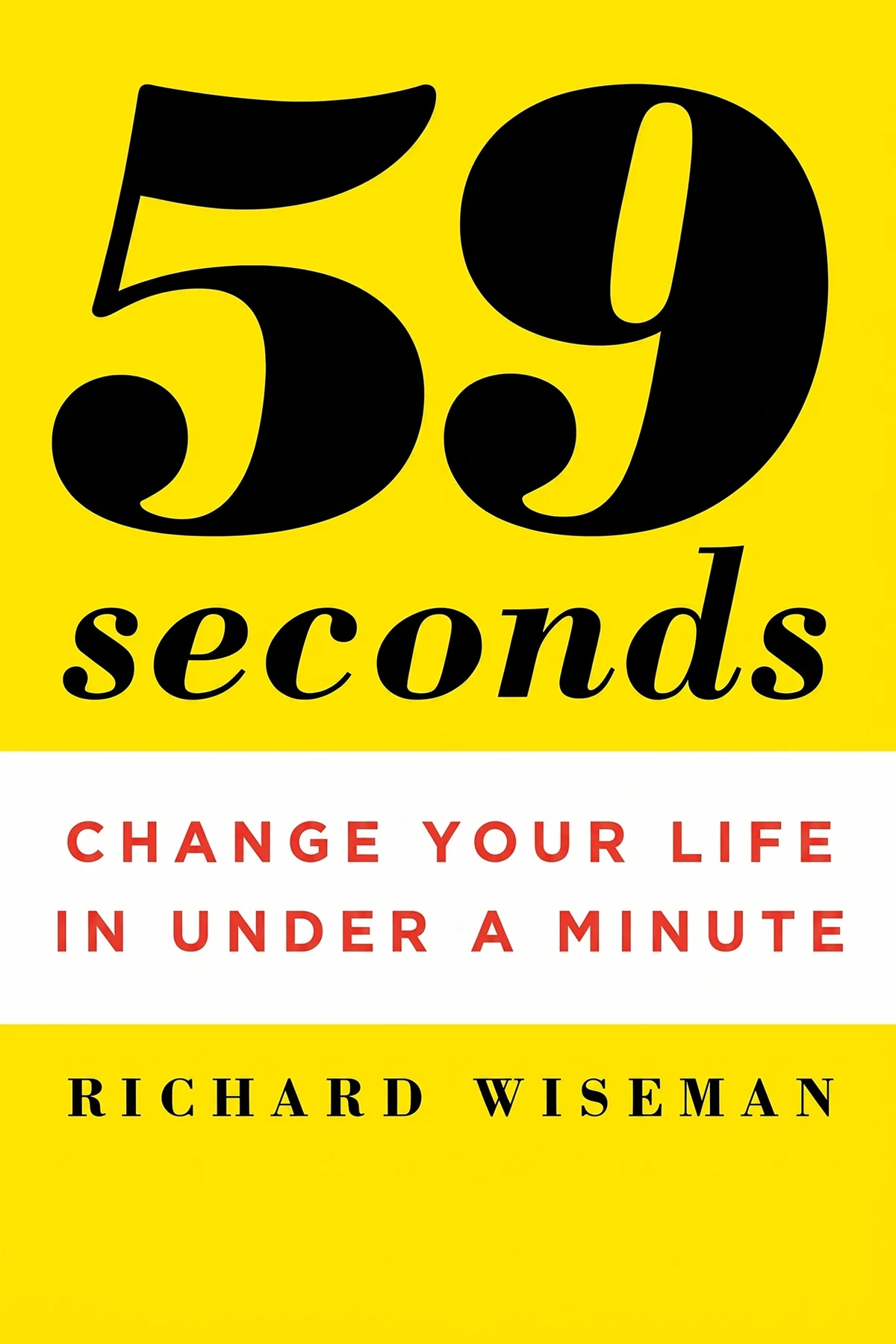
59 Seconds: Change Your Life in Under a Minute
Richard Wiseman
A Liberated Mind: How to Pivot Toward What Matters
Steven C. Hayes
Acting with Power: Why We Are More Powerful Than We Believe
Deborah Gruenfeld
Age of Propaganda: The Everyday Use and Abuse of Persuasion
Anthony Pratkanis
AUDIO SUMMARY AVAILABLE
Listen to Hope for Cynics in 15 minutes
Get the key ideas from Hope for Cynics by Jamil Zaki, plus 5,000+ more titles in English and Thai.
- 5,000+ titles
- Listen as much as you want
- 7-day free trial
- Cancel anytime







