
16 min 46 sec
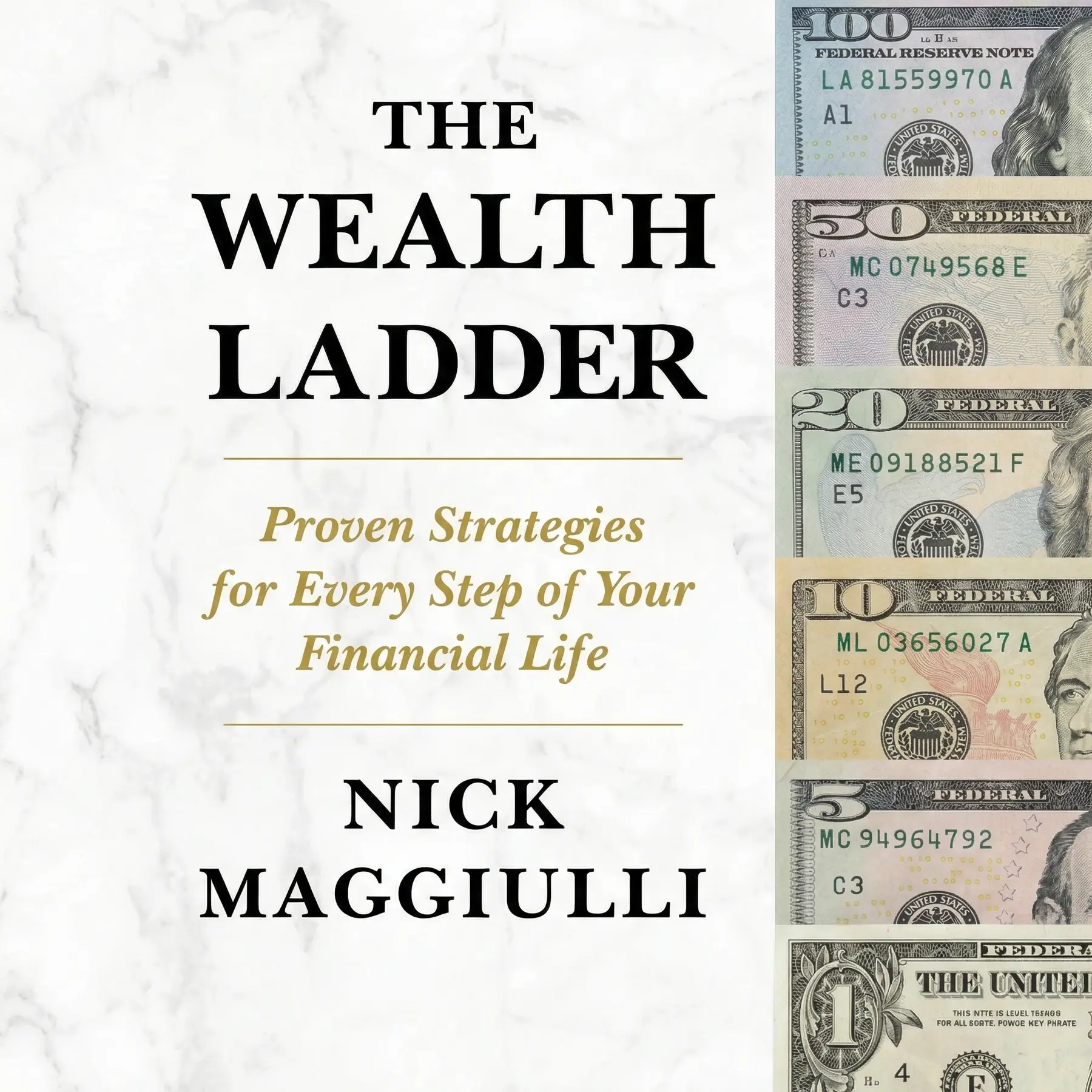
The Wealth Ladder: Proven Strategies for Every Step of Your Financial Life
Discover how to navigate financial growth by aligning your spending and earning strategies with your actual net worth. Learn to use leverage and view money as a tool to enhance your overall well-being.
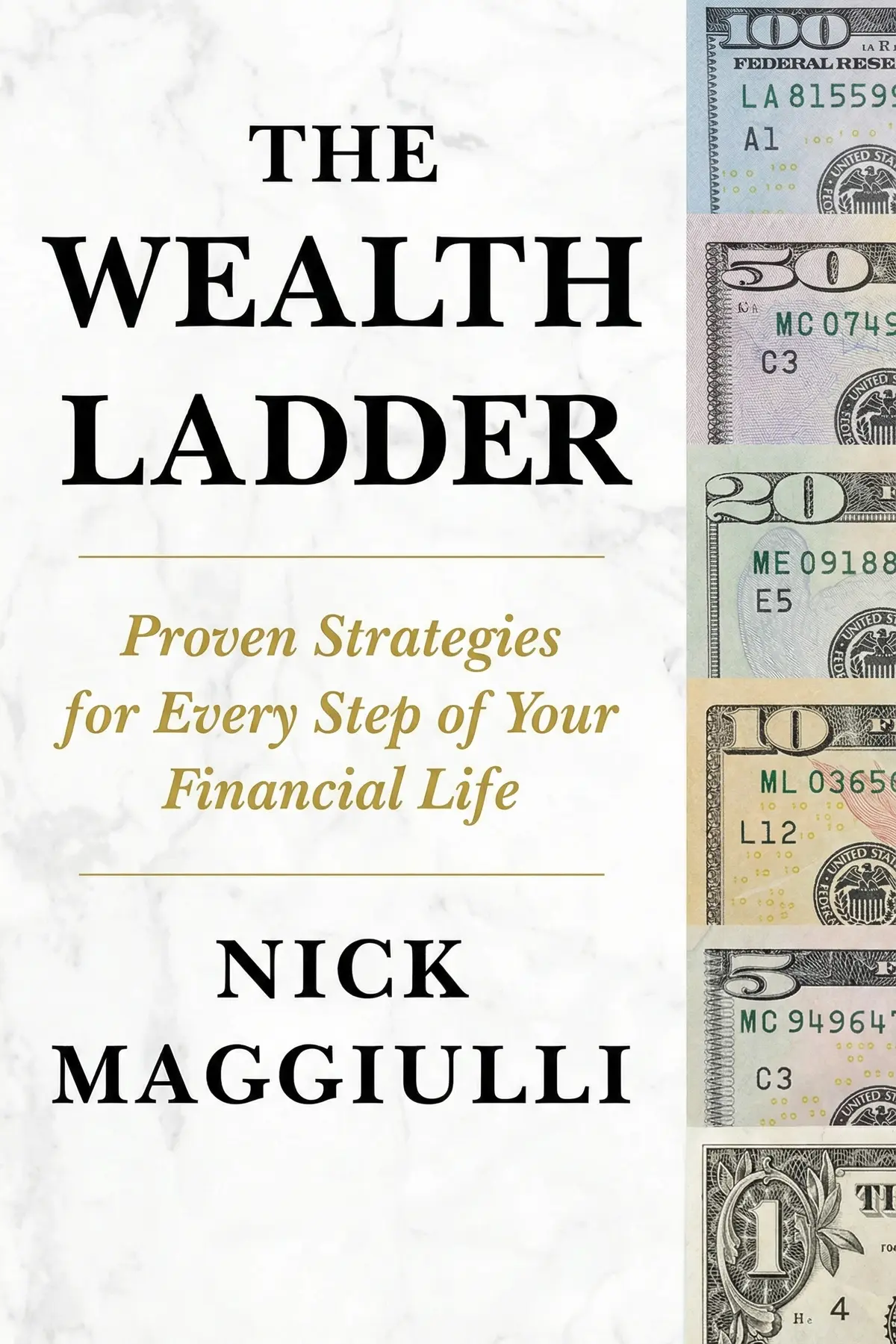
Table of Content
1. Introduction
1 min 41 sec
Have you ever wondered why some people who earn massive salaries still seem to be struggling, while others with modest incomes appear perfectly at peace? The secret often lies in a fundamental misunderstanding of how wealth actually works. Most of us are taught that money is a linear game: you work, you earn, you save, and eventually, you’re rich. But the reality is far more dynamic. Building true prosperity is less like a straight line and more like climbing a ladder. At each rung, the rules of the game change entirely. What helped you save your first thousand dollars might actually be the very thing holding you back from your first million.
In this summary, we are going to explore the framework of the wealth ladder. This isn’t just about numbers on a spreadsheet; it’s about your psychological relationship with money and how that relationship must evolve as you grow. We’ll look at why budgeting every cent is vital for some but a waste of time for others. We will examine the distinct levels of financial freedom—from the ability to buy whatever groceries you want to the ability to change the world through philanthropy.
We’ll also dive into the mechanics of scaling. You’ll see why trading your time for money has a hard ceiling and how the wealthy use leverage—be it through people, capital, or digital content—to break through those limits. Perhaps most importantly, we will discuss the purpose of it all. Money is a powerful tool, but it’s only one type of wealth. We’ll explore how to use your financial gains to amplify your health, your relationships, and your time. By the end of this journey, you’ll have a clear roadmap for where you are, where you’re going, and how to change your strategy at exactly the right moment to keep moving upward.
2. Spending Based on Net Worth
2 min 06 sec
Traditional budgeting often focuses on what you earn, but true financial peace comes from aligning your expenses with what you actually own.
3. The Six Stages of Financial Autonomy
2 min 16 sec
Wealth isn’t a single destination; it’s a series of transitions that grant you increasing levels of control over your daily choices.
4. Evolving Your Earning Strategy
1 min 56 sec
The tactics that work at the bottom of the ladder will eventually become inefficient as you move toward higher levels of wealth.
5. The Power of Permissionless Leverage
2 min 00 sec
To break the limit of twenty-four hours in a day, you must learn to use tools that multiply your efforts without increasing your workload.
6. Investing in the Level 2 Sweet Spot
1 min 50 sec
The most critical period for long-term financial success is the transition from five to six figures of net worth.
7. The Danger of the Wealth-Only Mindset
1 min 51 sec
Financial success can be hollow if it is achieved at the expense of your health, your time, or your connections with others.
8. Money as a Tool for Intentional Living
1 min 31 sec
The ultimate goal of accumulating wealth is to reach a state where you can live with intention and purpose rather than necessity.
9. Conclusion
1 min 35 sec
As we conclude this exploration of The Wealth Ladder, the most important takeaway is that your financial journey is an evolving process. There is no single piece of advice that remains true from your first paycheck to your last. The key to success is adaptability. You must have the courage to leave behind the habits that served you at one level in order to embrace the strategies required for the next.
We’ve seen how shifting your spending from an income-based model to a wealth-based model can eliminate unnecessary stress. We’ve identified the six levels of freedom that act as milestones for your progress. We’ve discussed the vital importance of leverage—using labor, capital, and content to break the shackles of the time-for-money trade. And we have emphasized that money is only a multiplier; it requires the foundational wealth of health, relationships, and purpose to create a life of true value.
Moving forward, take a moment to honestly assess where you are on the ladder. Are you applying the right rules for your current rung? If you are at Level 1, focus on volume and survival. If you are at Level 2, focus on your skills. If you are higher up, focus on leverage and impact. Above all, don’t forget to invest in the non-financial areas of your life. Use your growing resources to buy back your time, protect your health, and nurture your connections. When you treat money as a tool for freedom rather than a scorecard for ego, you don’t just build a big bank account—you build a life that is truly worth living. The ladder is there for you to climb; now, take the next step.
About this book
What is this book about?
The Wealth Ladder provides a comprehensive roadmap for financial advancement, moving beyond basic budgeting to a sophisticated understanding of wealth levels. It argues that financial advice is not one-size-fits-all; instead, your tactics must evolve as your assets grow. The book introduces the concept of spending based on net worth rather than income, using the 0.01% rule to eliminate minor financial stress. Readers will learn how to identify their current position among six distinct stages of financial freedom, ranging from basic survival to philanthropic impact. Beyond simple saving, the book explores how to scale earnings through three types of leverage—labor, capital, and content. Ultimately, it promises a holistic view of prosperity, positioning financial wealth as a multiplier for the things that truly matter: health, relationships, time, and peace of mind. By mastering these shifts, you can build a life that is both financially secure and personally fulfilling.
Book Information
About the Author
Nick Maggiulli
Nick Maggiulli is the Chief Operating Officer and Data Scientist at Ritholtz Wealth Management, where he helps lead one of the most respected advisory firms in finance. He is also the creator behind Of Dollars and Data, a widely read blog known for using clear data to explain complex financial topics. His first book, Just Keep Buying, became an international bestseller and earned praise for its practical, evidence-based approach to building wealth.
Ratings & Reviews
Ratings at a glance
What people think
Listeners describe this finance guide as both captivating and expertly crafted, offering an intelligent six-stage wealth structure alongside practical advice. Filled with evidence-based data, the work is notably straightforward, ensuring it remains easy to understand for any reader. They value its stimulative material; in fact, one listener highlighted how the book prompted a complete shift in their financial perspective.
Top reviews
Wanida
Picked this up because I’ve been a long-time reader of Nick’s blog and he didn't disappoint. What sets this apart is his willingness to acknowledge the role of luck and his own working-class background. The analogy of the rich kid being able to throw more darts at the carnival game really hit home for me. He doesn't just tell you to 'grind' but explains how capital and scale actually function at different levels of wealth. As someone currently at Level 2, the focus on increasing human capital through education was exactly the kick in the pants I needed. This isn't just a book about numbers; it's about the reality of economic mobility in a very unequal world. Highly recommended.
Show moreKomsan
The way Maggiulli breaks down 'freedoms'—from grocery prices to dream homes—is incredibly intuitive and helpful for goal setting. I’ve read dozens of finance books, yet this is the first one that made me rethink my obsession with frugality. The idea that money is like salt, meant to enhance the flavors of a life you've already built, is a beautiful sentiment. He backs up every claim with hard data from the Panel Study of Income Dynamics, which provides a level of rigor missing from most 'influencer' books. I especially loved the section on non-financial wealth like relationships and time. It serves as a necessary reminder that the ladder isn't the only thing that matters in life. Truly an excellent piece of work.
Show moreFort
Maggiulli’s data-heavy approach is a breath of fresh air in a genre filled with anecdotal 'trust me' advice. I appreciate how he dismantled the myth that high wealth and low income are common bedfellows; the numbers simply don't support it. This book encourages you to focus on your earning power as the primary engine for moving up the rungs. It’s refreshing to see an author emphasize that you can't just 'save' your way into the top levels without a serious income strategy. The final chapters on happiness and 'time wealth' provide a much-needed balance to the earlier focus on net worth. This is easily one of the most thoughtful financial books I’ve read in years. Definitely pick this up if you want a realistic roadmap.
Show moreMatteo
This framework is precisely what most personal finance books lack: context. Maggiulli correctly identifies that a person with $5,000 in the bank needs radically different advice than someone with $5 million. I appreciated the specific milestones like 'grocery freedom' and 'restaurant freedom,' which make the abstract concept of net worth feel much more tangible. However, I gotta say that the jump from Level 3 to Level 4 felt like a massive chasm that the book didn't quite bridge for the average W-2 employee. The data-heavy approach is refreshing and prevents the book from feeling like a collection of empty platitudes. While it occasionally repeats points from his blog, the cohesive structure makes it a worthwhile addition to any financial library.
Show moreSupranee
Ever wonder why financial advice feels so contradictory depending on who you ask? Maggiulli solves this by showing that your strategy must evolve as your ladder rung changes. I found the '0.01% Rule' for discretionary spending to be the most practical takeaway in the entire text. It’s a smart, research-backed way to stop feeling guilty about small purchases if you've already hit certain benchmarks. To be fair, the later chapters on Level 5 and 6 felt a bit like voyeurism since so few people will ever reach those heights. Still, the writing is clear and the analytical tone kept me engaged from start to finish. It’s a solid 4-star read for anyone looking to professionalize their personal savings strategy.
Show moreDivya
As someone who just hit 'restaurant freedom,' I found the transition to Level 4's focus on business ownership a bit daunting. Maggiulli is a realist, and he doesn't sugarcoat how difficult it is to break out of the middle-wealth brackets. The statistics on upward mobility over a twenty-year period were sobering but necessary for setting realistic expectations. His writing is very clean and he avoids the typical jargon that makes most finance books a chore to get through. I did think some of the historical anecdotes felt a bit shoehorned in to add 'color.' Despite that, the core framework is robust enough to help me plan my next decade. It’s a smart, data-driven guide for the modern era.
Show moreSupatra
Look, the central metaphor of a wealth ladder is a smart way to organize your thinking about net worth. I personally loved the distinction between different types of spending freedoms because it allows for 'wins' along the journey. The 'Learn today, earn forever' mantra for Level 2 is something I plan on sharing with my younger siblings. My only real complaint is that the book glosses over the impact of inherited wealth or family safety nets a bit too quickly. While Nick mentions his own luck, the framework assumes a somewhat level playing field that doesn't always exist. That said, the actionable insights for those starting from scratch are still very valuable. It is a very well-written and engaging book overall.
Show moreRose
To be fair, the first fifty pages of this book are absolute gold, but the momentum stalls out shortly after. The central idea of the wealth ladder is a brilliant way to categorize financial progress. Unfortunately, much of the middle section felt like it was padded with quotes and fluff to reach a book-length word count. I felt like I was reading a series of expanded blog posts rather than a singular, cohesive narrative. If you are in high school or just starting your career, you will gain a massive amount of perspective here. For more seasoned investors, you might find yourself skimming through the basic definitions of asset allocation and compound interest. It’s a good framework, but perhaps not a revolutionary book.
Show moreMaria
After hearing Nick on a podcast, I expected a bit more depth in the middle chapters regarding the transition between levels. The categorization of 'freedoms' is a clever mental model, but the advice for the higher levels seems out of reach for most readers. Truth is, once you get past the $1 million mark, the book assumes everyone wants to be a business mogul or a billionaire. I just want to retire comfortably, not necessarily buy a private jet or run a philanthropic empire. The writing style is punchy and accessible, which I liked. However, the actual 'meat' of the strategy could have been summarized in a much shorter format. It’s a decent read but didn’t quite change my life.
Show moreYui
Not what I expected from a follow-up to 'Just Keep Buying,' which I actually quite enjoyed. My main gripe is that the book feels written with the assumption that everyone's ultimate goal is to become a centimillionaire. The advice for the lower rungs is very basic—things you can find on any finance subreddit for free. Once it gets to the higher rungs, it becomes irrelevant to 99% of the population. I found myself bored by the 150th page because the content felt repetitive and spread thin. Frankly, this should have been a long-form essay or a PDF guide rather than a 200-page hardcover. It’s not a 'bad' book, but it lacks the density I look for in financial literature.
Show moreReaders also enjoyed

AUDIO SUMMARY AVAILABLE
Listen to The Wealth Ladder in 15 minutes
Get the key ideas from The Wealth Ladder by Nick Maggiulli, plus 5,000+ more titles in English and Thai.
- 5,000+ titles
- Listen as much as you want
- 7-day free trial
- Cancel anytime







