
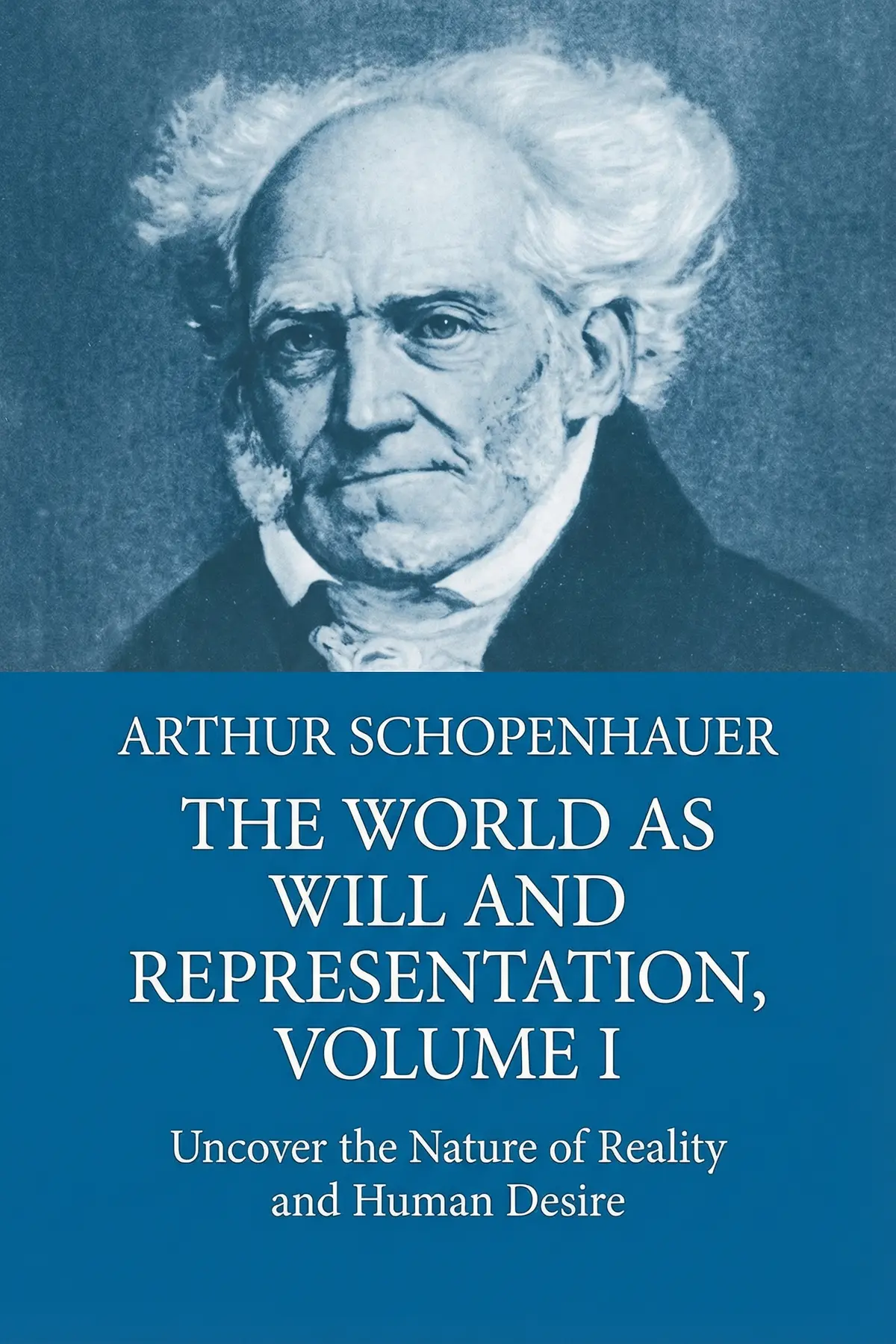
The World as Will and Representation, Volume I
Arthur Schopenhauer
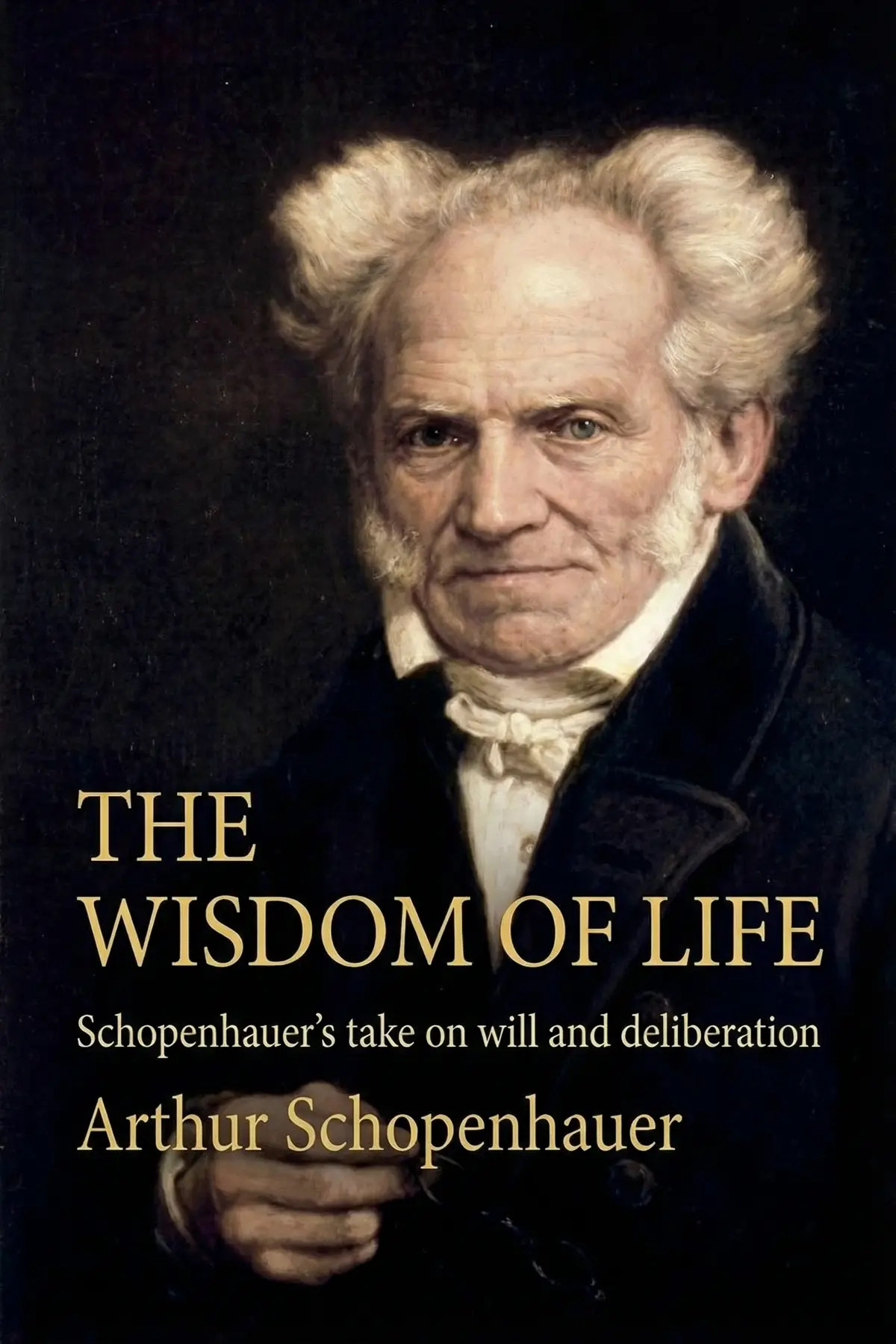
A profound exploration of the internal and external factors that define human happiness, arguing that true fulfillment arises from a rich inner life and physical health rather than social status or material wealth.
1 min 33 sec
What does it actually mean to live a good life? This question isn’t just for modern self-help gurus or late-night thinkers; it has been the central puzzle of human existence since the dawn of philosophy. Long ago, the thinkers of Ancient Greece coined the term eudaimonia to describe a state of flourishing—a blend of luck, prosperity, and genuine joy. But even with a word for it, the formula for achieving it remained elusive.
In this exploration, we dive into the mind of Arthur Schopenhauer, a philosopher who stepped away from the abstract theories of his era to focus on the practical realities of the human condition. He wanted to understand why some people seem naturally content while others, despite having everything the world says they should want, remain miserable. Schopenhauer’s perspective is strikingly modern: he suggests that happiness is less about what happens to us and more about the foundation we build within ourselves.
Through his unique lens, we will see that the path to a wise life involves a careful balancing act between our health, our possessions, and our public image. We’ll discover why your internal world is your most important asset, why wealth has a ceiling on the satisfaction it can provide, and why the opinions of total strangers are a heavy burden you should probably put down. By the end of this journey, you’ll have a clearer sense of how to minimize the pain of existence and maximize the deep, quiet pleasures of a mind that is truly at peace with itself. Here is a guide to navigating the complexities of life with the clarity of a philosopher who saw the world exactly as it was.
2 min 04 sec
Your internal qualities—your health, your mind, and your temperament—are the primary filters through which you experience the world, making them the most vital components of happiness.
2 min 14 sec
While financial security covers essential needs, the pursuit of luxury often fails to deliver lasting satisfaction because our expectations quickly rise to meet our means.
2 min 09 sec
Caring excessively about public opinion is a widespread folly that breeds anxiety and distracts from the pursuit of genuine internal peace.
2 min 03 sec
Artificial social hierarchies and nationalistic fervor are often used to compensate for a lack of individual merit or to serve the interests of the state.
2 min 15 sec
Honor functions as a set of social rules designed to ensure cooperation, but it should not be confused with the internal merits that drive true fulfillment.
2 min 20 sec
Fame is a lasting reflection of great individual merit, but the real reward lies in the intellectual work itself rather than the public recognition that follows.
1 min 41 sec
In the end, Arthur Schopenhauer’s roadmap for a wise life brings us back to a singular, powerful truth: the quality of our existence is determined by our internal state far more than our external circumstances. We have explored the three pillars of human blessings—what we are, what we have, and how we are seen—and the conclusion is clear. Our personality, encompassing our health and our mind, is the only asset that stays with us until the very end. It is the foundation upon which everything else is built.
While material wealth can provide a necessary shield against the hardships of the world and the drudgery of survival, its ability to generate true happiness is limited. Similarly, the pursuit of status, rank, and the approval of others is often a fool’s errand, leading to anxiety and a loss of personal autonomy. The wise person understands that the opinions of others are merely reflections in a distorted mirror, and that true merit is its own reward.
To apply these insights, start by shifting your focus inward. Prioritize your physical health, for it is the engine of your joy. Cultivate your mind through learning, reflection, and creative pursuits, so that you are never a victim of boredom or a slave to external entertainment. Most importantly, learn to value your own self-assessment over the fleeting judgments of the world. By building a rich and resilient inner life, you create a sanctuary that no external loss can destroy. This is the true wisdom of life: to be self-sufficient, to find joy in your own thoughts, and to live in a way that is true to the best version of yourself.
The Wisdom of Life investigates the fundamental components of a satisfying existence, breaking down the human experience into three distinct areas: what we are, what we have, and how we are perceived by others. Arthur Schopenhauer challenges the traditional pursuit of fame and fortune, suggesting that these external markers are often distractions that lead to boredom or anxiety. By prioritizing intellectual cultivation and physical well-being, the book promises a roadmap for achieving a state of self-sufficiency. It offers a practical guide to avoiding the pitfalls of vanity and the opinions of others, providing a timeless perspective on how to foster a resilient and happy mind that remains steady regardless of external circumstances.
Arthur Schopenhauer (1788-1860) was a prominent German philosopher. He built on Kant's idealism but fiercely opposed the German idealists of his time, especially Hegel. Schopenhauer greatly influenced other intellectuals, including Richard Wagner, Friedrich Nietzsche, Leo Tolstoy and Thomas Mann.
Arthur Schopenhauer
Listeners find this book approachable and full of wisdom, with one listener pointing out its profound observations on mental characteristics. Furthermore, the text brings listeners a sense of happiness, with one listener mentioning how it depicts every aspect of human emotion. There is also positive acclaim for the writing quality, and listeners believe it offers excellent value for the price. However, perspectives on the quality of the translation are mixed.
Arthur Schopenhauer has a way of cutting through the noise of modern life with surgical precision. Most people assume philosophy is just dusty old men talking about clouds, but this is actually practical advice for your brain. He explains how our happiness depends almost entirely on what we are—our personality—rather than what we have in terms of wealth or rank. I found the section on the struggle between pain and boredom to be particularly eye-opening because it describes my daily life perfectly. Even though the writing is over a century old, the observations on human emotion feel incredibly fresh. You might need to look past a few archaic views on society, but the core message is timeless. It’s a slim volume that offers more value than any modern self-help book I've purchased recently.
Show moreFinally got around to reading this after seeing it referenced everywhere, and I’m stunned by how much hope I found in these pages. People always talk about Schopenhauer as this ultimate pessimist, but this work felt remarkably uplifting to me. It teaches you that you have control over your internal state regardless of external circumstances. The writing style is surprisingly clear and lacks the dense jargon you usually find in academic philosophy. I especially loved the distinction between what a person represents and what they actually possess. It really puts the modern obsession with social media and reputation into perspective. It’s under a hundred pages, so you can finish it in an afternoon, but the insights will stay with you for years. This is essential reading for anyone trying to find balance in a chaotic world.
Show moreThis book completely shifted my perspective on what it means to live a good life, even more than Nietzsche did. Schopenhauer is often labeled a doom-and-gloom guy, but 'The Wisdom of Life' is actually quite practical and full of common sense. He explains that happiness comes from a healthy mind and a peaceful spirit, not from the empty pursuit of fame or material riches. The prose is elegant and the advanced vocabulary makes the reading experience feel very rewarding without being overly difficult to grasp. It really illustrates every aspect of human emotion and gives you a framework to handle life's inevitable setbacks. It’s rare to find a book that offers this much value for such a low price. If you’re looking for a life-changing fix for your perspective, this is the one to pick up. I'm honestly thankful I found this when I did.
Show moreThe truth is that people haven't changed a bit in the last hundred years, and this book proves it. We still struggle with the same insecurities about our reputation and the same nagging boredom when we aren't working. Schopenhauer captures the essence of the human condition with such clarity that it’s almost scary. He argues that the happiest people are those who don't need much from the outside world because they are satisfied with their own thoughts. It’s a powerful message in an age where we are constantly told that we need more 'stuff' to be happy. The writing is top-notch and the price point makes it an absolute steal for the amount of wisdom you get. I would recommend this to anyone who feels like they’re running on a treadmill and getting nowhere. It’s a refreshing wake-up call.
Show moreRead this if you feel like you're stuck in the rat race and don't know why you're still unhappy. I wish I had discovered Schopenhauer when I was in my early twenties because it would have saved me a lot of grief. He explains that your character is your destiny and that you should focus on developing your mind instead of chasing status. It’s the kind of honest, no-nonsense advice that they don't teach you in college anymore. The chapters on how to maintain your own sense of pride versus seeking external honor are especially relevant for young men today. It’s a quick read, very accessible, and provides a much-needed reality check on what actually matters in the long run. Don't let the 'philosophy' label scare you off—this is a manual for living. It’s easily one of the best books I’ve ever read.
Show moreEver wonder why you're constantly oscillating between total exhaustion and mind-numbing boredom? Schopenhauer argues that these are the two main enemies of human happiness, and frankly, he hits the nail on the head. This book is a deep dive into the mental characteristics that define us, showing that a rich inner life is the only real defense against the world's misery. To be fair, some of the chapters on 'honor' and 'position' feel a bit dated, especially when he starts talking about 19th-century knighthood and social rank. It gets a little bogged down in the weeds there. But the overall breakdown of how we should value our own personality over the opinions of others is pure gold. It’s a very accessible read for anyone interested in why we feel the way we do.
Show moreAs someone who has always been fascinated by human psychology, Schopenhauer’s breakdown of personality is a revelation. He explores how our will is constantly being pushed around by emotions and urges, often preventing us from doing what we know is right. He uses the example of overeating to show how our desires can hijack our rational mind, which is a struggle I think everyone relates to. The book is very insightful regarding the way we perceive wealth and how quickly we get bored once our basic needs are met. My only real complaint is that some sections are a bit repetitive. He really beats you over the head with the idea that 'what you are' matters more than 'what you have.' Still, for a book written in the 1850s, it’s shockingly relevant to our current consumerist culture. Definitely worth a read.
Show moreThe core ideas here are undeniably brilliant, but this specific edition is a bit of a headache for a casual reader like me. Schopenhauer is surprisingly easy to follow when he’s writing in English, but the translator left dozens of Latin and Greek phrases completely untranslated. It is incredibly frustrating to be in the middle of a profound point about the human will only to hit a wall of foreign text. My Kindle dictionary couldn't even keep up with half of the phrases, so I felt like I was missing out on the full picture. If you can get past the linguistic hurdles, there is a lot of wisdom regarding why we chase fame and honor. However, I’d suggest looking for a more modern annotated version if you don't have a classical education. The philosophy deserves five stars, but this presentation makes it a chore.
Show morePicked this up as a supplement for my philosophy seminar and found it to be a bit of a mixed bag. On one hand, the way he analyzes the 'foes' of happiness—pain and boredom—is incredibly sharp and easy to understand even for a beginner. On the other hand, the middle section of the book gets caught up in very specific 19th-century social rules that just don't apply anymore. It was hard to stay engaged when he was talking about the nuances of knighthood and rank. Also, the lack of translations for the foreign language sentences was a major hurdle that slowed down my reading pace. It’s a good resource for students who want to understand the foundations of Schopenhauer’s work, but it’s not exactly a page-turner. It provides a decent perspective, but be prepared to do some supplemental Googling for the quotes.
Show moreLook, I really wanted to like this given the hype, but the constant elitism and outdated 19th-century theories on honor were just too much for me to ignore. While I appreciate the 'genius' everyone talks about, I found many of his comments to be incredibly cynical and occasionally outright offensive. He spends so much time talking about 'dullness vs brilliance' that it starts to feel like he’s just looking down on everyone who isn't a philosopher. The translation I read also left a bunch of Latin quotes in the text, which is just lazy editing in this day and age. I did find the parts about finding happiness from within to be somewhat useful, but they were buried under a lot of grumpy, old-man rambling. Not exactly the 'wisdom' I was looking for. Buy it if you want to feel superior to your neighbors, I guess.
Show more
William B. Irvine
Nigel Warburton
John Rawls
Robert Nozick

Nassim Nicholas Taleb
John Milton
AUDIO SUMMARY AVAILABLE
Get the key ideas from The Wisdom of Life by Arthur Schopenhauer, plus 5,000+ more titles in English and Thai.







