
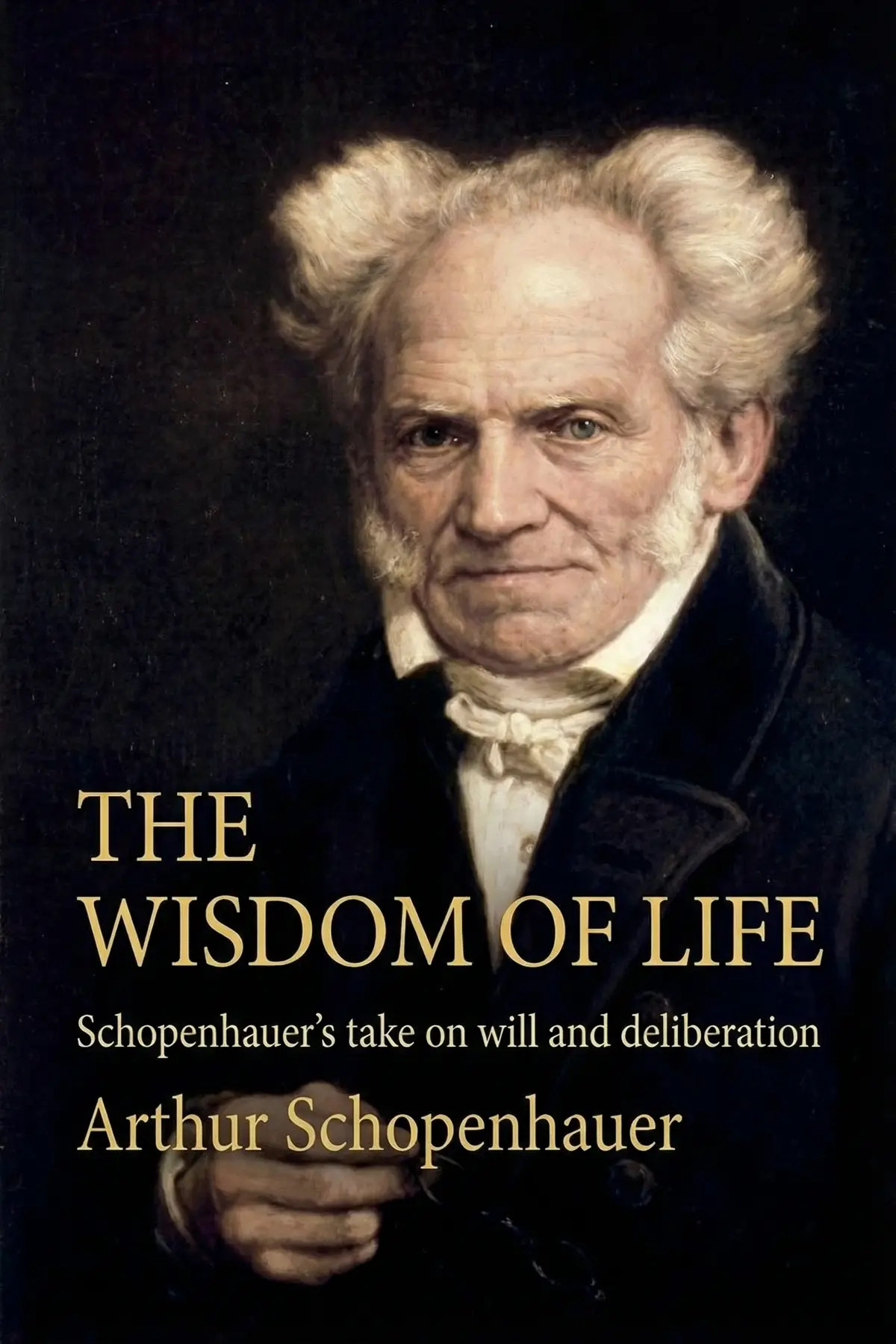
The Wisdom of Life
Arthur Schopenhauer
A profound exploration into the nature of existence, arguing that the visible world is merely a mental projection masking a blind, insatiable, and universal force known as the Will.
1 min 27 sec
Imagine for a moment that everything you see, feel, and touch is not the world itself, but merely a sophisticated movie playing inside your head. This is the starting point for one of the most influential and challenging works in the history of philosophy. When Arthur Schopenhauer released his masterpiece in the early nineteenth century, he wasn’t just trying to add a new theory to the library; he was attempting to pull back the curtain on reality itself. At a time when other thinkers were obsessed with the idea that the universe was a grand, rational machine governed by logic, Schopenhauer pointed in the opposite direction. He saw a world driven not by reason, but by a blind, hungry, and unconscious force.
This journey through his thought is structured around two main pillars: the world as we perceive it—which he calls representation—and the world as it truly is in its inner essence—which he identifies as the Will. By the end of this exploration, you will understand how our minds construct the reality we inhabit, why human life so often feels like an endless treadmill of unfulfilled desires, and how we might find moments of profound peace through art and ethical living. We are diving into a perspective that merges Western rigorous logic with insights that mirror ancient Eastern wisdom, providing a comprehensive throughline that connects our deepest instincts with the fabric of the cosmos. Prepare to look at your surroundings, your desires, and your very self in a completely new light.
2 min 07 sec
Discover why the universe you experience is actually a construction of your own mind, governed by internal rules rather than objective reality.
1 min 53 sec
Peel back the layer of mental representation to find the single, unified energy that drives every action in the universe.
1 min 52 sec
Explore why the nature of the Will makes true satisfaction impossible and keeps humanity trapped in a loop of longing.
1 min 39 sec
Learn how aesthetic beauty provides a rare and precious escape from the constant pressure of our personal desires.
1 min 42 sec
Understand why music holds a higher status than any other art form, acting as a direct reflection of reality’s inner pulse.
1 min 49 sec
Discover a moral framework based not on rules, but on the profound realization that all living beings are essentially one.
1 min 42 sec
Explore the ultimate solution to the human predicament through the total denial of worldly desires and the self.
1 min 35 sec
As we conclude our journey through Arthur Schopenhauer’s foundational work, we are left with a worldview that is as challenging as it is profound. We have seen how our minds create a vivid but illusory representation of the world, masking the blind and restless Will that hums beneath everything. We’ve explored the dark reality that this Will, by its very nature, leads us into a cycle of perpetual desire and dissatisfaction, making suffering an inherent part of the human experience.
Yet, even within this pessimistic framework, Schopenhauer provides us with powerful tools for navigation. He shows us that through the beauty of art and the transcendent power of music, we can find moments of pure, will-less clarity. He teaches us that by looking past our own egos and recognizing the shared essence we have with every living being, we can cultivate a deep, transformative compassion that heals the world’s divisions. And finally, he points toward the possibility of a lasting peace found through the quiet strength of detachment and the negation of the self.
The throughline of this work is a call to awaken from the ‘dream’ of everyday life. It invites you to stop being a passive passenger driven by your instincts and to become a conscious observer of reality. Whether through a moment of silence in front of a painting, an act of selfless kindness, or a gradual letting go of the things you think you need, the lessons of the Will and Representation remain timeless. They remind us that while the struggle of life is real, the path to understanding and liberation is always open to those who dare to look behind the curtain.
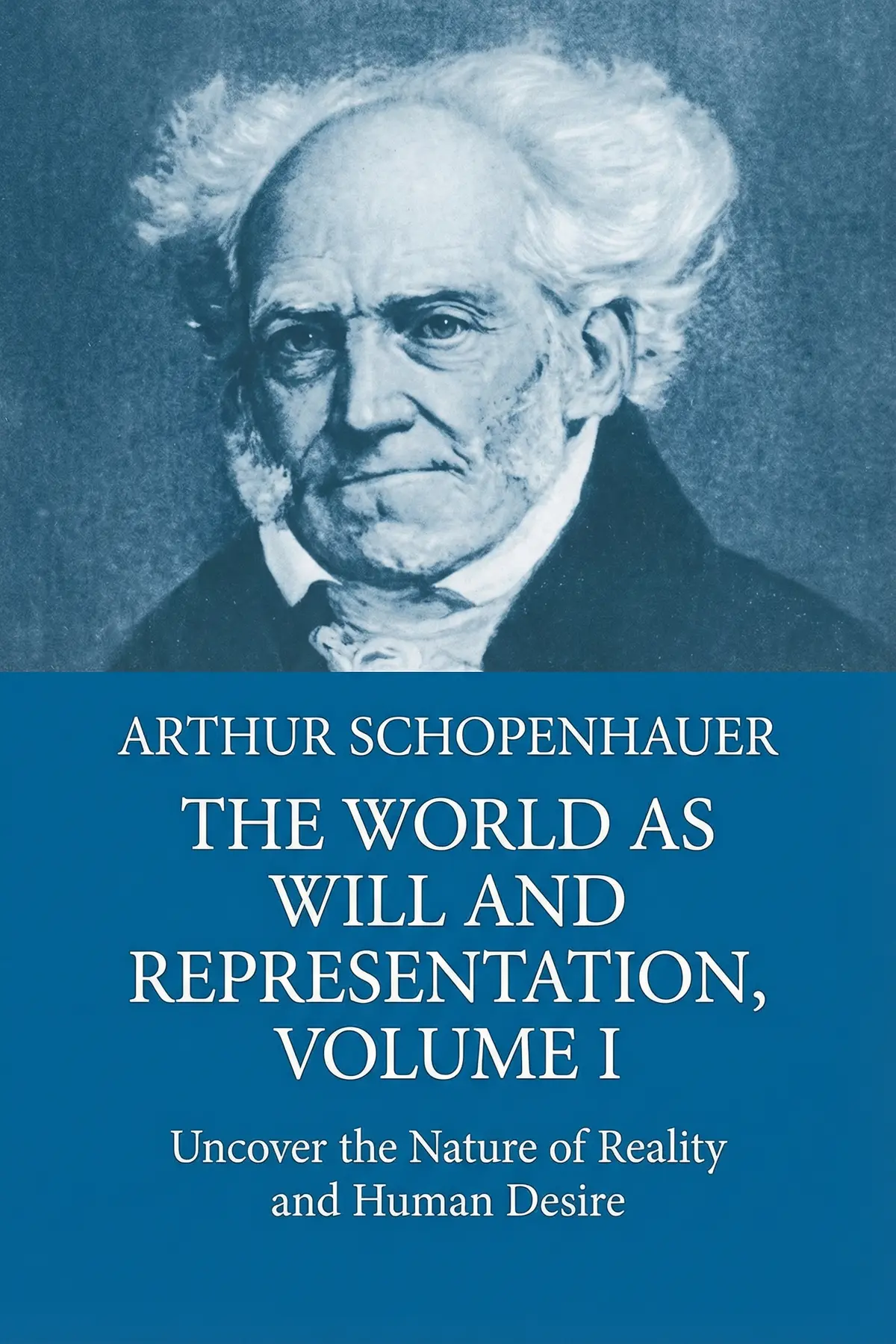
This summary explores Arthur Schopenhauer’s foundational philosophical work, which presents a striking alternative to the rationalist traditions of his time. It posits that everything we experience through our senses—time, space, and causality—is a mere representation constructed by the human mind. Beneath this surface lies the Will, a purposeless and eternal striving that animates all of nature, from the simplest stone to the complex human intellect. Listeners will learn why this constant striving leads to inevitable suffering and how the cycle of desire can be temporarily suspended through the power of aesthetic experiences, particularly music. Finally, the work offers a path toward liberation through compassion and the ascetic denial of the self. By shifting the focus from reason to instinct, this summary provides a deep dive into a worldview that influenced some of the greatest minds in history, offering a roadmap for navigating the struggles of the human condition.
Arthur Schopenhauer was a prominent nineteenth-century German philosopher who fundamentally altered the course of Western thought by challenging the idea of a rational universe. Influenced by the works of Plato and Immanuel Kant, he developed a philosophical system that prioritized instinct and Will over reason. Schopenhauer is well-known for his pessimistic outlook on human existence and his advocacy for universal benevolence and asceticism as means to transcend the endless cycle of worldly desire and suffering.
Arthur Schopenhauer
Listeners find this philosophical study both deep and well-crafted, with one mentioning that it is mostly devoid of jargon. The translation is favorably reviewed, and one listener mentions Schopenhauer's fluency in four foreign languages. However, listeners feel the text is challenging to grasp on the first read.
Leibniz once argued that this is the best of all possible worlds, but Schopenhauer spends these four books systematically proving it is actually the worst. This was not just a bleak academic exercise for me; it felt like a mirror held up to the quiet desperation of modern life. The translation I read was surprisingly fluid, capturing his biting wit and refusal to hide behind the dense, impenetrable clouds of jargon favored by his contemporaries. While the metaphysics are heavy, especially the distinction between the "Will" and our perceived "Representation," the prose itself carries you through the darkness. Truth is, you will not find a more honest appraisal of the human condition anywhere else in Western philosophy. It is a profound, life-altering read that demands you sit with your own disillusionment until it transforms into a strange kind of peace.
Show moreAfter hearing about the curative power of pessimism in modern novels, I felt compelled to finally tackle the source material to see if it lived up to the hype. What I found was a philosopher who speaks directly to the broken and the defeated without offering cheap, sentimental platitudes. His description of the world as a restless manifestation of Will explains so much of our collective anxiety and constant, unquenchable desire. Personally, I found the third book on aesthetic experience to be the most beautiful part of the entire philosophical system. It suggests that art is our only temporary relief from the crushing weight of a miserable existence. While his pessimism is legendary, there is a certain curative power in finally having someone admit that life is inherently full of suffering.
Show moreEverything started to click once I grasped the distinction between the world as representation and the underlying, blind Will that drives everything. Schopenhauer manages to bridge the gap between Western rationalism and Eastern mysticism in a way that feels completely organic and ahead of its time. His prose is a masterclass in clarity, proving that deep philosophy does not always need to be buried under layers of unnecessary complexity. Not gonna lie, I was surprised by how much he influenced people like Wagner and Nietzsche once I saw the raw power of his arguments. The book is a journey from the illusions of our senses to a hard-won, ascetic enlightenment. It is easily the most impactful book I have read in years, even if it did leave me questioning everything I thought I knew.
Show moreFrankly, his argument that all joy is just a brief absence of suffering is hard to swallow, even if it is brilliantly argued. Most of us want to believe that happiness is something positive and attainable. Schopenhauer strips that illusion away with absolutely surgical precision. This book is a deep dive into the "noumena," showing us the dark, hungry force that lies beneath the surface of our everyday lives. It is a profound experience to read a thinker who is so utterly unafraid of being disliked by his audience. The section on music being the direct expression of the Will was particularly mind-blowing and changed how I listen to my favorite albums. It is an incredibly challenging reading experience. But it offers a unique perspective on our world.
Show moreWow, this book is an incredibly powerful reading experience. The sheer intellectual force behind these four books is absolutely staggering to behold. Schopenhauer is a master stylist who manages to make the most complex metaphysical questions feel urgent and deeply personal. He leads you through the "Veil of Maya" to show that our individual selves are just an illusion, which is both terrifying and oddly liberating. I have read a lot of philosophy, but nothing has ever felt quite as "real" as his description of the insatiable Will. This book is absolutely essential for all modern thinkers. The translation captures his sophisticated tone perfectly, making it clear why he was so admired by literary giants like Tolstoy and Borges.
Show moreLook, jumping into nineteenth-century philosophy usually feels like hitting a brick wall of academic jargon, but this translation is remarkably clear and accessible. Schopenhauer was apparently fluent in several foreign languages, and that linguistic precision shines through every single page of this monumental work. He does not just theorize; he attacks the very foundations of our optimism with a sharp, misanthropic blade that feels oddly refreshing. I did find the sections on Kantian theory a bit of a slog during my first pass through the text. However, once you grasp the idea of the "Will" as an insatiable, blind force, the rest of the world starts to make a terrifying amount of sense. It is a dense volume that requires patience, but the intellectual rewards are well worth the effort.
Show moreThe chapter on aesthetics provides a rare moment of light in an otherwise suffocatingly dark system of thought. Schopenhauer argues that when we look at a masterpiece, we lose our individual "will" and become a pure subject of knowledge. This specific concept resonated with me very deeply. It successfully explains why music feels so transcendent today. To be fair, he is incredibly arrogant throughout the book, often pausing to insult other famous thinkers or demand that you read his other essays first. Despite his haughty personality, his writing style is remarkably organized compared to the chaotic rambling of other German idealists. You might not agree with his conclusion that asceticism is the only path to peace, but you cannot deny his absolute genius.
Show moreTo be fair, you really need to have a handle on Kant’s phenomenal world to fully appreciate what Schopenhauer is doing in this volume. He takes those foundational ideas and pushes them to their most extreme, logical, and often depressing conclusions. I appreciated that the text is mostly free of the technical jargon that usually makes nineteenth-century philosophy so inaccessible to the general public. There is a strange comfort in his honesty about boredom and pain being the twin poles of human life. My only real complaint is that he can be quite repetitive, hammering the same points about the "Will" over and over again in different contexts. Still, the translation is excellent, and Schopenhauer's voice remains one of the most distinctive in the history of ideas.
Show morePicked this up hoping for a guide to life, but found the prose to be a bit of a marathon that requires multiple focused sittings. While I can appreciate his fluency and the lack of traditional academic fluff, the sheer weight of his pessimism is hard to carry for four hundred pages. He is right that we are driven by desires we cannot control, but his solution of total denial feels almost impossible for a modern person to achieve. I felt like I was being scolded by a very brilliant, very grumpy grandfather for most of the reading experience. It is definitely a work of genius, but it is a difficult one to enjoy in the traditional sense of the word. I would recommend it to serious students, but casual readers should stick to his shorter essays first.
Show moreNot what I expected from a supposed 'lover of wisdom' given his legendary misanthropy and the infamous story of how he treated his landlady. I struggled to connect with his vision of humanity. I could not reconcile his beautiful prose with the bitter, petty man who seems to drip with contempt for almost everyone except himself. The text itself is undeniably profound and very dense. Yet, the unrelenting gloom becomes exhausting after the first hundred pages or so. He makes some brilliant points about the vanity of existence, but his refusal to see any positive value in human connection feels like a major blind spot. It is an important historical document, but I found his thesis to be more of a personal projection than a universal truth. I truly disliked his constant and overwhelming bitterness.
Show more
William B. Irvine
Nigel Warburton
John Rawls


Kate Kirkpatrick
Jean-Paul Sartre
AUDIO SUMMARY AVAILABLE
Get the key ideas from The World as Will and Representation, Volume I by Arthur Schopenhauer, plus 5,000+ more titles in English and Thai.







