
A Little History of Economics
Niall Kishtainy
Discover the hidden world of commodity traders who control the global flow of oil, grain, and metals, wielding immense power over international politics and the world economy from the shadows.
1 min 44 sec
Think about the last time you filled up your car with gas, or bought a loaf of bread, or even used a smartphone. We often take these essentials for granted, viewing them as simple products of a global supply chain. But behind every gallon of fuel and every ton of wheat is a high-stakes world of deal-making that most of us never see. This is the domain of the commodity traders—a group of individuals and firms that act as the circulatory system of the global economy. They don’t just move goods; they move power, influence, and wealth on a scale that is difficult to fathom.
For decades, these traders have operated in the shadows, purposefully avoiding the limelight while they brokered deals between warring nations, financed struggling regimes, and navigated the collapse of empires. They are the ultimate pragmatists, driven by a singular goal: to find a resource that someone needs and deliver it at a price that maximizes their own profit. In doing so, they have become some of the richest and most influential people on the planet, often wielding more leverage over a country’s survival than its own elected officials.
In this exploration of The World for Sale, we are going to pull back the veil on this secretive industry. We’ll look at how a few bold mavericks built empires out of the chaos of the Cold War, how they transformed themselves into the “lenders of last resort” for countries that the rest of the world had abandoned, and how their relentless pursuit of commodities has reshaped the geopolitical map. This isn’t just a story about money; it’s a story about the fundamental forces that keep our world running and the people who have learned to master them.
2 min 24 sec
Discover how a few daring individuals defied Cold War boundaries to build a global resource network that bypassed traditional monopolies.
2 min 12 sec
Learn how traders transformed from simple middlemen into essential financial lifelines for cash-strapped nations, gaining unprecedented geopolitical leverage.
2 min 31 sec
Witness the internal power struggle and market gamble that ended the reign of a trading legend and birthed a new corporate titan.
2 min 12 sec
Explore how commodity traders stepped into the vacuum left by the Soviet collapse, using barter and bravery to dominate new markets.
2 min 00 sec
Examine the complex intersection of massive wealth and ethical compromise as traders secured minerals in some of the world’s most challenging regions.
2 min 09 sec
Investigate the role of the ‘ABCD’ firms in the 2008 food crisis and how information became a lucrative weapon in agricultural markets.
2 min 01 sec
See how the massive IPO of Glencore in 2011 signaled a permanent shift from private deals to public accountability and immense corporate scale.
1 min 46 sec
As we look back at the journey of these commodity traders, it’s clear that they are far more than just businessmen. They are the architects of a global system that connects the most remote mines and oilfields to the most modern cities. They have thrived by being the first to enter a new market and the last to leave a crisis. Through the stories of figures like Theodor Weisser and Marc Rich, we’ve seen how individual ambition and a willingness to take extreme risks can reshape the world’s economic map.
However, this power comes with a complex legacy. While these traders have provided the liquidity and logistics that keep the global economy functioning, they have also operated in the gray areas of international law and ethics. They have profited from volatility and, at times, provided a lifeline to some of the world’s most problematic regimes. Their transition from secretive partnerships to public giants like Glencore marks a new era—one where their immense influence is now accompanied by an unprecedented level of public accountability.
The throughline of the commodity trading world is the constant search for value in a world of scarcity. Whether it’s oil from the Soviet Union, minerals from the Congo, or grain from the American heartland, these traders have mastered the art of the deal. As we move into an era defined by the transition to green energy and the increasing competition for critical minerals, the role of the commodity trader will only become more central. The world is still for sale, and the people who know how to buy and sell it will continue to hold the keys to our collective future. The challenge for the rest of us is to ensure that this power is exercised with the transparency and responsibility that a globalized world demands.
The World for Sale pulls back the curtain on the most powerful yet least understood players in the global economy: the commodity traders. These are the individuals and firms that buy, sell, and transport the fundamental building blocks of modern life—the fuel that powers our cars, the grain that fills our pantries, and the metals that build our cities. While names like Glencore, Vitol, and Trafigura are rarely found in the headlines of mainstream news, they possess more influence over the destiny of nations than many world leaders. This narrative exploration follows the evolution of the industry from its post-war origins to the modern era of billion-dollar IPOs. It reveals how a small group of ambitious entrepreneurs moved into war zones and struck deals with dictators to secure resources, eventually becoming indispensable lenders to cash-strapped governments. The promise of the book is a deep understanding of how global power has shifted from traditional political institutions to the opaque world of private resource trading, highlighting the immense wealth, ethical complexities, and strategic maneuvers that keep the world running.
Javier Blas is a prominent journalist with deep expertise in energy, natural resources, and global commodities. He has built a distinguished career reporting for major financial outlets, including Bloomberg and the Financial Times, where his investigations into global markets have established him as a leading voice in the field. Jack Farchy is also an experienced journalist who has extensively covered the commodities and trading beat for Bloomberg and the Financial Times. His reporting focuses on the critical developments within the industry and the intersection of trade and geopolitics.
Listeners find this work educational and thoroughly investigated, with one listener mentioning how it clarifies the intricate systems of commodity trading. Furthermore, the prose is captivating, and listeners especially enjoy the intriguing accounts of traders and the political and economic context provided. The book also earns praise for its ease of use, with one listener describing it as highly accessible.
This book is essentially a high-stakes thriller masquerading as a business history. Blas and Farchy have done an incredible job pulling back the curtain on a shadow industry that most of us never think about, yet it dictates the prices we pay at the pump and the grocery store. The stories about Marc Rich are legendary, but seeing the connective tissue between his early deals and the modern giants like Glencore and Vitol was truly eye-opening. I was particularly struck by the amoral nature of these traders—men who would fly into war zones or deal with sanctioned dictators just to keep the oil flowing. It’s well-researched and reads incredibly fast for a non-fiction title. The sheer audacity of diverting a tanker to Jamaica on a handshake is something you couldn't make up. If you want to understand how the global economy actually functions behind the scenes, this is mandatory reading.
Show moreThe chapter on the fall of the Soviet Union is worth the price of admission alone. It’s a chilling account of how a handful of opportunistic traders effectively asset-stripped a collapsing empire while the rest of the world looked away. Blas and Farchy manage to make commodities like aluminum and wheat seem as exciting as stolen diamonds. The writing style is engaging and punchy, keeping a brisk pace that never feels bogged down by dry statistics. I loved the focus on individuals like Ian Taylor and David Reuben. These aren't just corporate suits; they are true gamblers in every sense of the word. They took risks that would make a Wall Street hedge fund manager faint. It’s easily one of the most readable business books I’ve picked up in years. Highly recommended for anyone interested in the intersection of money and power.
Show moreWow. I never thought a book about wheat and zinc could be this addictive. Picked this up after hearing a podcast interview with the authors, and it exceeded my expectations. The sheer scale of the wealth involved is mind-boggling—billions of dollars made by individuals who thrive on volatility and chaos. I found the story of the Jamaican government’s near-collapse particularly moving, showing how these traders become lenders of last resort when the banks run away. The writing is sharp, clear, and devoid of unnecessary jargon. It’s a fascinating look at the men who literally 'sold the world' to the highest bidder. Truthfully, it changed how I look at global news. Now, when I see a coup or a revolution, I find myself wondering which trading house is already on the ground making deals.
Show moreNot what I expected at all—in a good way! I thought this would be a dry economics text, but it’s actually a sweeping epic about greed, risk, and the end of empires. The way the authors link the rise of China to the fortunes of these trading houses is brilliant. They show how these firms acted as the plumbing for the greatest economic expansion in human history. Every chapter has at least one 'I can't believe they did that' moment. From smuggling oil into apartheid South Africa to cornering the cobalt market in the Congo, the stories are just wild. It’s a fascinating, informative, and revealing read that makes you realize how fragile our global systems really are. Personally, I found the writing style perfectly suited to the subject matter—fast, aggressive, and direct. A must-read for the 21st century.
Show moreEver wonder how raw materials actually move across the globe during a geopolitical crisis? This book provides a fascinating and informative look at the middlemen who make it happen. The authors, both veteran journalists, clearly know their subject matter inside and out. They explain complex market mechanisms like futures and contango without making the reader feel like they're in a boring lecture. I especially enjoyed the section on post-Soviet Russia and the 'wild east' of the 1990s. My only minor gripe is that the middle sections can feel a bit repetitive as one billionaire trader replaces another. However, the insight into how companies like Trafigura and Cargill operate is invaluable. It’s a complex web of influence that everyone should be aware of. To be fair, the level of detail is impressive, even if the names start to blur together by the end.
Show moreAs someone who works in the energy sector, I found the deep dive into the 'Wild East' of post-Soviet aluminum markets absolutely gripping. It’s rare to find a book that manages to be this well-researched while maintaining the accessibility of a beach read. The authors explain the transition from the old-school world of secret handshakes to the modern era of public listings and ESG requirements. The shift from Marc Rich's private fiefdom to Glencore’s IPO is a perfect metaphor for how the world has changed. Look, the truth is that these companies are more powerful than many small nations, and this book proves it. While some of the technical trading descriptions were a bit brief, the overarching narrative about the shift in global power is spot on. It really helps you understand the complex web of commodity trading that keeps the modern world running.
Show moreFinally got around to reading this, and frankly, I’m stunned by the sheer amoral audacity of these traders. The book is well-organized, moving chronologically through the major shifts in the industry from the post-WWII era to the rise of China. It’s quite informative, especially regarding the 'Seven Sisters' and how the independent traders broke their monopoly. My favorite part was the exploration of how information was the ultimate currency before the internet era. These guys knew what was happening in a port in Africa before the local government did. While the prose is mostly excellent, there were a few chapters where the focus on corporate restructuring felt a bit dry compared to the earlier tales of sanctions-busting and secret flights. Still, it’s a remarkably well-researched piece of investigative journalism that shines a light on a very dark corner of the global economy.
Show moreAfter hearing about Marc Rich for years, it was fascinating to finally get the full context of his rise and fall. This book isn't just about one man, though; it’s about an entire breed of human being that views the world as a giant chessboard. The authors do a great job of explaining why these traders are necessary, even if their methods are questionable. They provide liquidity and market access to places that would otherwise be isolated. The readability here is high, and I appreciated the inclusion of the recent COVID-era oil price crash, which showed that the traders’ era isn't over yet. It’s a very good book for anyone who wants a peek behind the curtain of global capitalism. I do wish there were a few more maps or diagrams to help track the complex shipping routes, but that’s a small detail.
Show moreTo be fair, the stories are incredible, but I felt the authors were a bit too lenient on the ethical implications of these deals. We hear about traders bailing out the apartheid regime in South Africa or funding warlords in Africa, and while the authors call it 'amoral,' the narrative often leans into a 'cowboy' mythology that glamorizes the greed. The research is undeniably top-notch, and the political-economic context provided is helpful for a layperson. However, I found the structure a bit disjointed in the final third. It felt like a series of loosely connected anecdotes rather than a cohesive argument about the future of global trade. It’s informative, sure, but it left me feeling a bit cynical about the lack of oversight in these markets. A good read for the facts, but I wanted more critical analysis of the human cost.
Show moreWhile the research is undoubtedly top-notch, the narrative sometimes gets bogged down in repetitive lists of shell companies and corporate structures. I appreciated the insight into the commodities boom of the 2000s, but at times the book felt more like a collection of Financial Times articles than a unified story. It’s highly accessible, which is a plus, but I found myself wanting more depth on the environmental impact of these operations. The Trafigura toxic waste scandal in the Ivory Coast was mentioned, but it felt rushed compared to the pages spent on IPO valuations. It's a solid 3.5-star read that offers a lot of information, but it lacks the emotional core that makes for a truly great history book. Good for a flight or a weekend, but maybe not a permanent shelf-dweller for me.
Show moreNiall Kishtainy
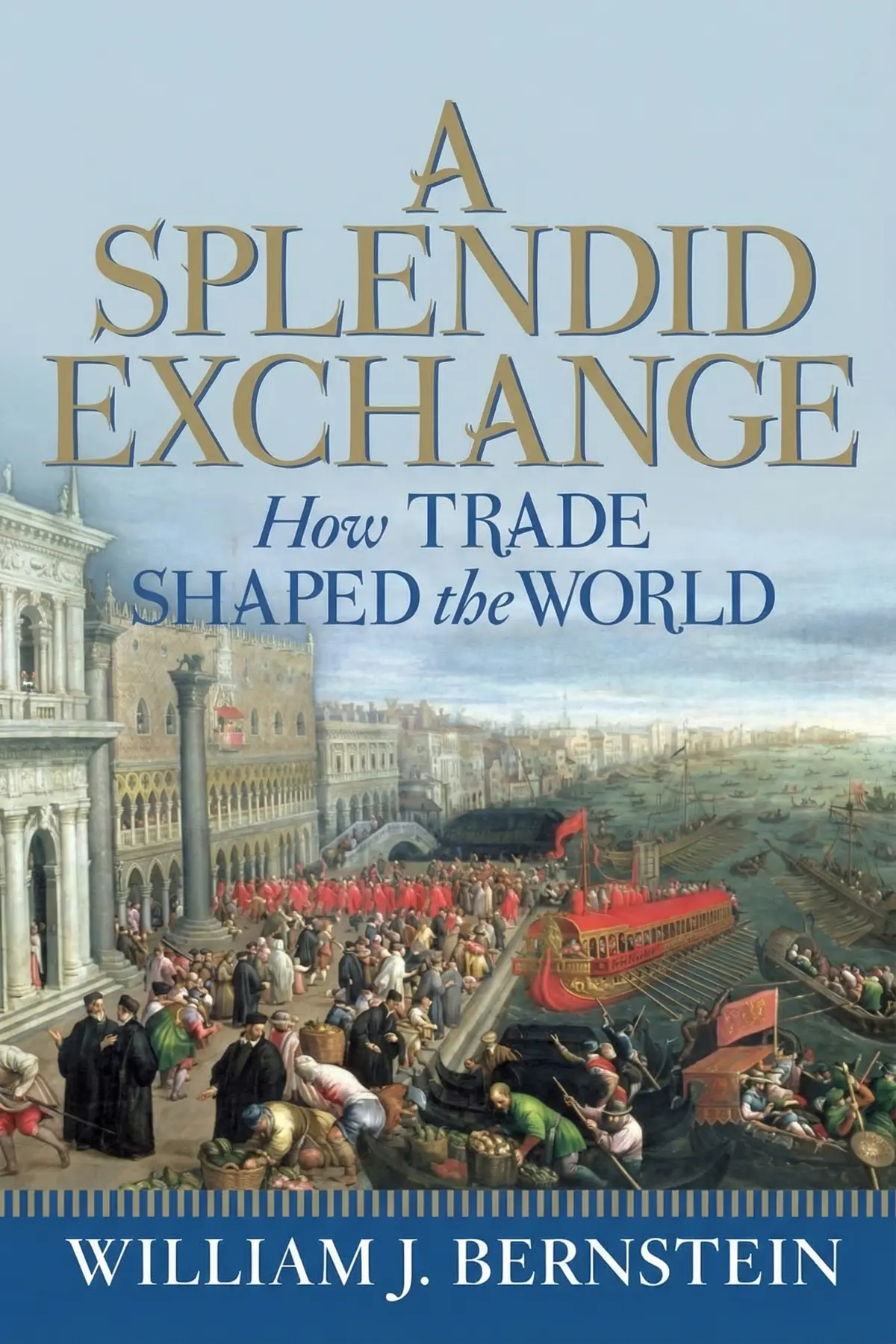
William J. Bernstein

Yanis Varoufakis
Andrew Ross Sorkin
AUDIO SUMMARY AVAILABLE
Get the key ideas from The World for Sale by Javier Blas, plus 5,000+ more titles in English and Thai.







