
16 min 15 sec
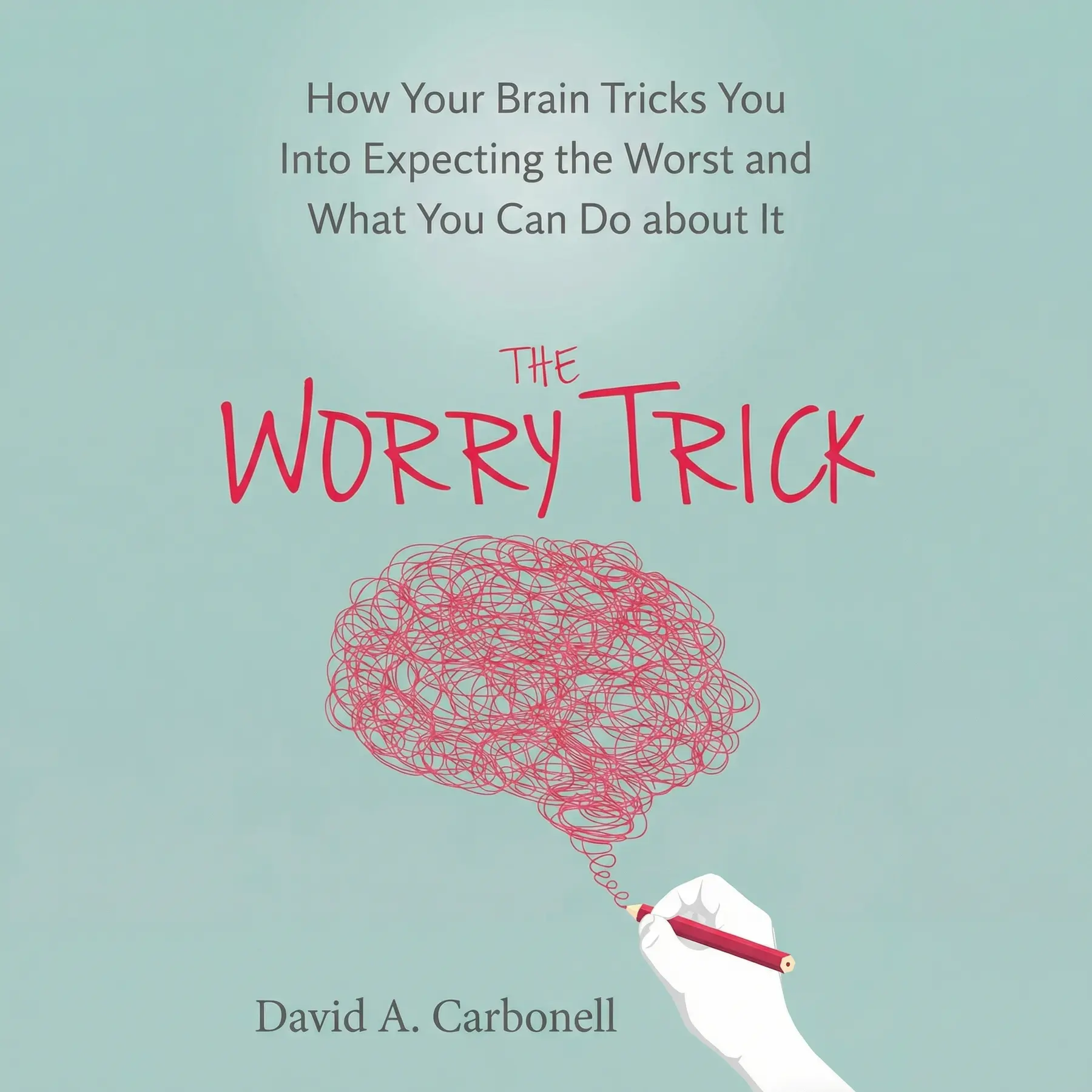
The Worry Trick: How Your Brain Tricks You Into Expecting the Worst and What You Can Do about It
Learn why conventional efforts to stop worrying often backfire and discover a paradoxical approach to managing anxiety by understanding the clever psychological trap known as the worry trick.
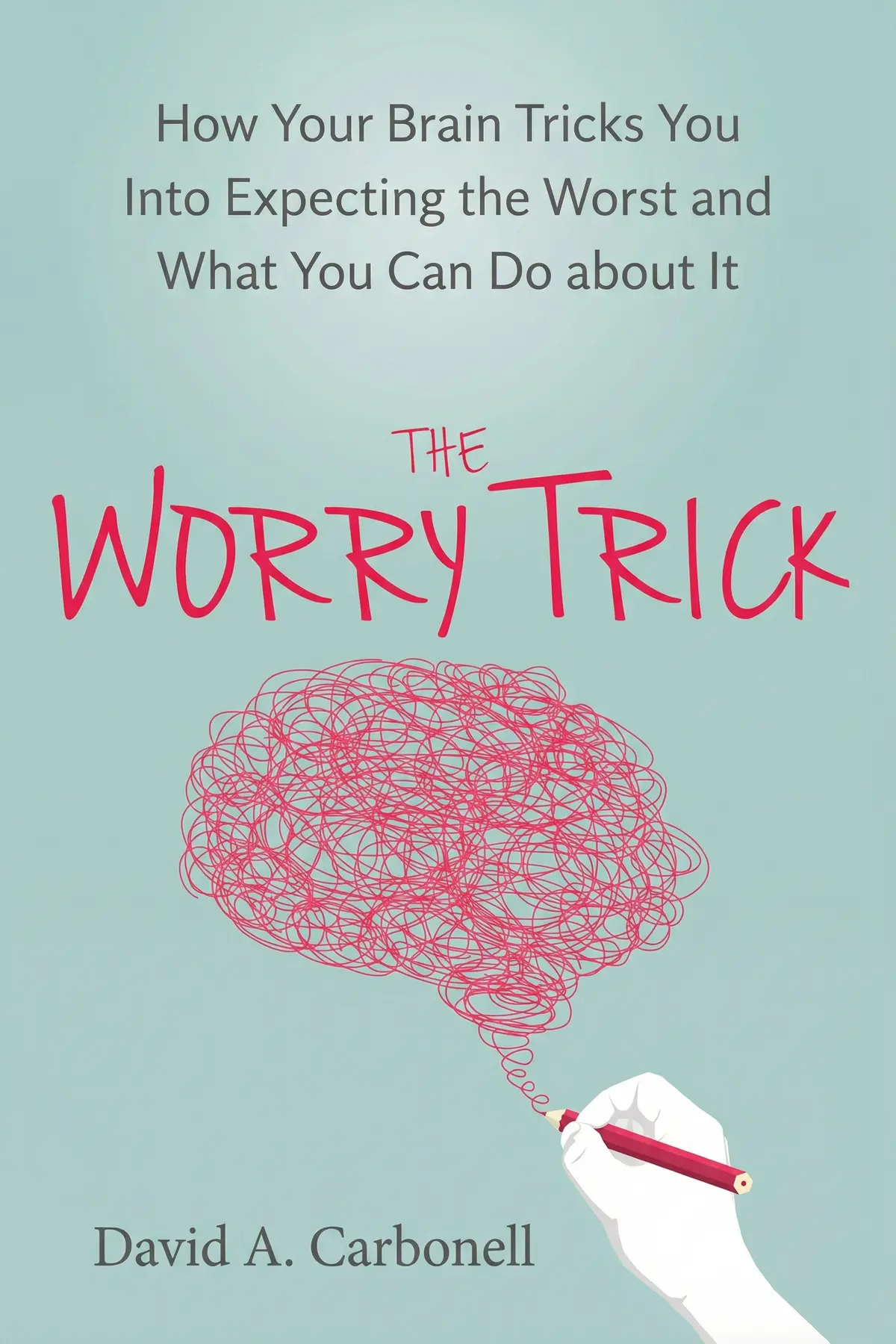
Table of Content
1. Introduction
1 min 40 sec
Have you ever felt like your mind was spinning in circles, chasing a problem that doesn’t actually exist in the physical world? We have all experienced that sudden jolt of adrenaline when a ‘what-if’ scenario pops into our heads. For many of us, the natural response is to fight those thoughts, to argue with them, or to try and push them out of our minds entirely. However, as we will explore in this summary of David A. Carbonell’s work, these very efforts to find relief are often what keep us stuck.
At the heart of this exploration is a concept called the worry trick. It is a psychological phenomenon where our brains misidentify a thought as a threat and a feeling of discomfort as a sign of danger. When this happens, we treat our internal imagination as if it were an external crisis, like a fire or a physical predator. The tragedy of chronic worry is that the more we try to ‘fix’ it using our logical brain, the more we reinforce the idea that the worry is something we need to be afraid of.
Throughout this discussion, we are going to look at why your brain is actually trying to protect you, even when it’s making you miserable. We will see how to distinguish between a real-world problem that requires action and a ‘worry’ problem that requires a completely different approach. By the end of this session, you will understand the throughline of Carbonell’s philosophy: that the way out of worry is not through more thinking, but through a radical change in how you relate to your thoughts. We aren’t looking to delete worry from your life, but to transform it from a terrifying monster into a familiar, albeit annoying, background noise. Let’s dive into the mechanics of the trick and learn how to stop being its victim.
2. The Nature of the Paradoxical Trap
2 min 12 sec
Discover why your best efforts to stop worrying are likely the very things keeping the cycle alive through a process called paradoxical effort.
3. Distinguishing Between Discomfort and Danger
2 min 13 sec
Explore the crucial difference between feeling unsafe and actually being in peril, and how misinterpreting these signals fuels chronic anxiety.
4. The Rule of Opposites
2 min 00 sec
Learn a practical strategy for dealing with anxiety by doing the exact opposite of what your worried mind demands.
5. Managing the What-If Voice
2 min 09 sec
Uncover the mechanism of the ‘What-If’ voice and how to stop engaging in an endless debate with your own imagination.
6. The Power of Acceptance and Observation
2 min 11 sec
Shift from a mindset of resistance to one of mindful observation, and see how this changes your relationship with anxious thoughts.
7. Physical Grounding and the Vagus Nerve
2 min 10 sec
Understand the physiological side of worry and how simple breathing techniques can help signal safety to your body.
8. Conclusion
1 min 40 sec
As we wrap up our journey through the insights of David A. Carbonell, it is important to remember that the worry trick is just that—a trick. It is a clever, yet ultimately empty, illusion created by a brain that is trying too hard to protect you. The core takeaway from this exploration is that our relationship with our thoughts is far more important than the content of the thoughts themselves. We don’t need to live in a world where we never have a ‘what-if’ thought; we simply need to learn that we don’t have to follow those thoughts down the rabbit hole.
The path to freedom involves a series of paradoxical shifts. We learn to stay when we want to run, to observe when we want to hide, and to accept when we want to fight. By distinguishing between the discomfort of an anxious feeling and the actual presence of a physical danger, we strip worry of its most powerful weapon: fear of the unknown. Remember the Rule of Opposites: when anxiety demands your compliance, give it your curiosity instead.
Moving forward, try to view your next worry session not as a crisis to be managed, but as an opportunity to practice these new skills. Notice the ‘what-if’ voice, feel the physical sensations in your body, and choose to do something—anything—that is the opposite of what the worry suggests. With time and consistent practice, the trick will lose its luster. You will find that you are no longer a captive audience member, but someone who knows exactly how the magician pulled the rabbit out of the hat. You have the tools to live a life defined by your values and your goals, rather than your fears. The trick has been revealed; now, the real work of living begins.
About this book
What is this book about?
The Worry Trick explores the counterintuitive nature of chronic anxiety and why our natural instincts to fight or flee from worrisome thoughts only serve to strengthen them. David A. Carbonell explains that worry operates like a magician’s trick, using misdirection to make us believe that our internal thoughts are external threats. When we treat a thought as a literal danger, we fall into a cycle of avoidance and struggle that keeps us trapped in a loop of apprehension. This summary provides a roadmap for shifting your relationship with anxiety. Instead of trying to suppress or argue with your thoughts, you will learn to recognize the mechanics of the trick itself. By adopting a stance of acceptance and applying the rule of opposites—doing exactly what the anxiety tells you not to do—you can dismantle the power of chronic worry. The promise of this approach is not necessarily the total absence of worry, but a life where worry no longer dictates your choices or limits your freedom.
Book Information
About the Author
David A. Carbonell
David A. Carbonell is a clinical psychologist who specializes in the treatment of anxiety. He has written four self-help books on anxiety, and offers workshops for therapists who want to deepen their understanding of the treatment of anxiety disorders.
Ratings & Reviews
Ratings at a glance
What people think
Listeners find this guide to be a superb resource for understanding persistent anxiety and obtaining actionable methods for managing intrusive thoughts. Additionally, the tone is approachable and clear, making for a compelling experience. The material also delivers profound observations and highlights the underlying scientific research. However, views regarding its value are divided; some believe it is worth the expense, while others feel it is a poor investment of both time and money.
Top reviews
Priya
This book completely shifted my perspective on how to handle the nagging thoughts that keep me up at night. Truth be told, I was initially skeptical because I’ve tried CBT before without much success, but the ACT approach used here feels much more sustainable. Carbonell’s writing is light and surprisingly humorous, which helps take the edge off a very heavy topic. While the first few chapters focus heavily on theory, the second half is packed with practical tips that I started using immediately. It’s all about realizing that your brain is playing a trick on you rather than presenting facts. I highly recommend sticking with it even if the repetition feels a bit much at first.
Show moreYaowares
Carbonell’s take on chronic worry is both brilliant and relatable. He uses humor to ridicule the way our minds create catastrophic scenarios, which actually made me feel more empowered. In my experience, most books on this topic are too clinical, but this felt like talking to a wise friend. The distinction between thoughts and emotions was a major 'lightbulb' moment for me. I stopped trying to argue with my anxiety and started noticing it as a mere mental event. If you are tired of the same old 'just think positive' advice, this counter-intuitive method is exactly what you need.
Show moreDylan
Wow, I finally feel like someone understands the toxic thought processes I’ve been trapped in for years. As a woman of color, my worries are often tied to real social pressures, and I appreciated how this book helped me distinguish between valid concerns and chronic, unproductive worry. The sections on how emotions are simply responses to our thoughts were particularly transformative. It taught me to confront my fears head-on rather than resisting them, which only ever made them stronger. It’s a light, engaging read that manages to deliver profound psychological tools without being overly academic or dry.
Show moreUdom
As someone who has struggled with chronic anxiety for years, finding a guide that actually offers a different path was refreshing. Carbonell explains the research behind why our brains get stuck in these loops in a way that is very easy to digest. I appreciated the specific exercises designed to help you confront your worries rather than running away from them. To be fair, the book does get a bit repetitive, but the author argues that repetition is necessary to retrain an anxious mind. The 'opposite of instinct' concept was particularly eye-opening for me. It’s a solid resource that provides real value for the price.
Show moreSophia
The concept of the 'worry trick' is a game-changer for anyone who feels hijacked by their own mind. I’ve read plenty of books on this topic, but this one stands out because of its focus on counter-intuitive responses. Instead of teaching you how to calm down, it teaches you how to be okay with being anxious. Look, it’s not an easy pill to swallow at first, and some of the chapters feel a bit long-winded. But if you can get past the repetitive nature of the writing, the insights are incredibly deep. It’s a practical, well-researched guide for handling chronic worry.
Show moreNatnicha
Picked this up during a period of extreme stress and found it to be a very helpful companion. The author’s humorous approach really helps to demystify the power that anxiety holds over us. I particularly liked the exercises that focus on 'leisure time' worry and how to stop treating every thought like an emergency. While I agree with other reviewers that it takes a long time to get to the 'meat' of the advice, the payoff in the second half is worth the wait. It’s a great value for anyone needing encouragement and a new way to look at their brain.
Show moreChai
Ever wonder why some self-help books feel like they could have been a long blog post instead of 200 pages? That was my main issue here. The central idea is solid—stop fighting your thoughts and just accept them—but the author repeats this same point through endless metaphors that didn't always land for me. Frankly, it felt like a stream of consciousness at times. I did find a few helpful gems in the later chapters, but you have to dig through a lot of fluff to find them. It's okay for beginners, but if you've already read about ACT therapy, this might feel too basic for your needs.
Show moreVimolwan
After hearing a lot of hype about 'The Worry Trick,' I went in with very high expectations. While the core message about accepting worry is vital, the delivery felt a bit slow and drawn out. Truth is, I almost gave up during the first half because it felt like the author was just talking in circles about how CBT fails. However, once I reached the second half, I found the examples of past clients to be very relatable and helpful. It isn't a life-changing masterpiece, but it provides a decent foundation for anyone looking to understand the mechanics of their own anxiety.
Show moreClara
Look, the information here is definitely useful, but I can't help feeling that it lacks a bit of depth for more experienced readers. Much of what Carbonell suggests feels like common sense dressed up in new terminology. Personally, I struggled with the tone; it felt a bit too 'simple' for a topic as complex as chronic anxiety. That being said, for someone who is just starting their mental health journey, this is probably a great entry point. The research is solid, and the writing style is easy to follow, but it just didn't 'wow' me like I hoped it would.
Show moreOrawan
Frankly, I found this book incredibly frustrating and ended up DNFing it about halfway through. I was looking for actionable strategies to manage my obsessive thoughts, but I just got stuck in a loop of meandering metaphors and anecdotes. The author keeps telling you to 'do the opposite' of your instincts without giving clear, step-by-step instructions on what that looks like in real life. Not gonna lie, I felt like my time was being wasted by the constant repetition. It’s definitely not for everyone, especially if you prefer a more structured, direct approach to therapy and personal improvement.
Show moreReaders also enjoyed
ADHD an A-Z: Figuring It Out Step by Step
Leanne Maskell

Alcoholics Anonymous
Alcoholics Anonymous World Services
AUDIO SUMMARY AVAILABLE
Listen to The Worry Trick in 15 minutes
Get the key ideas from The Worry Trick by David A. Carbonell, plus 5,000+ more titles in English and Thai.
- 5,000+ titles
- Listen as much as you want
- 7-day free trial
- Cancel anytime







