

14 min 56 sec
The Wretched of the Earth
By Frantz Fanon
Explore Frantz Fanon’s seminal analysis of the psychological and political machinery of colonialism, revealing why liberation requires a complete transformation of both society and the human mind to achieve true independence.
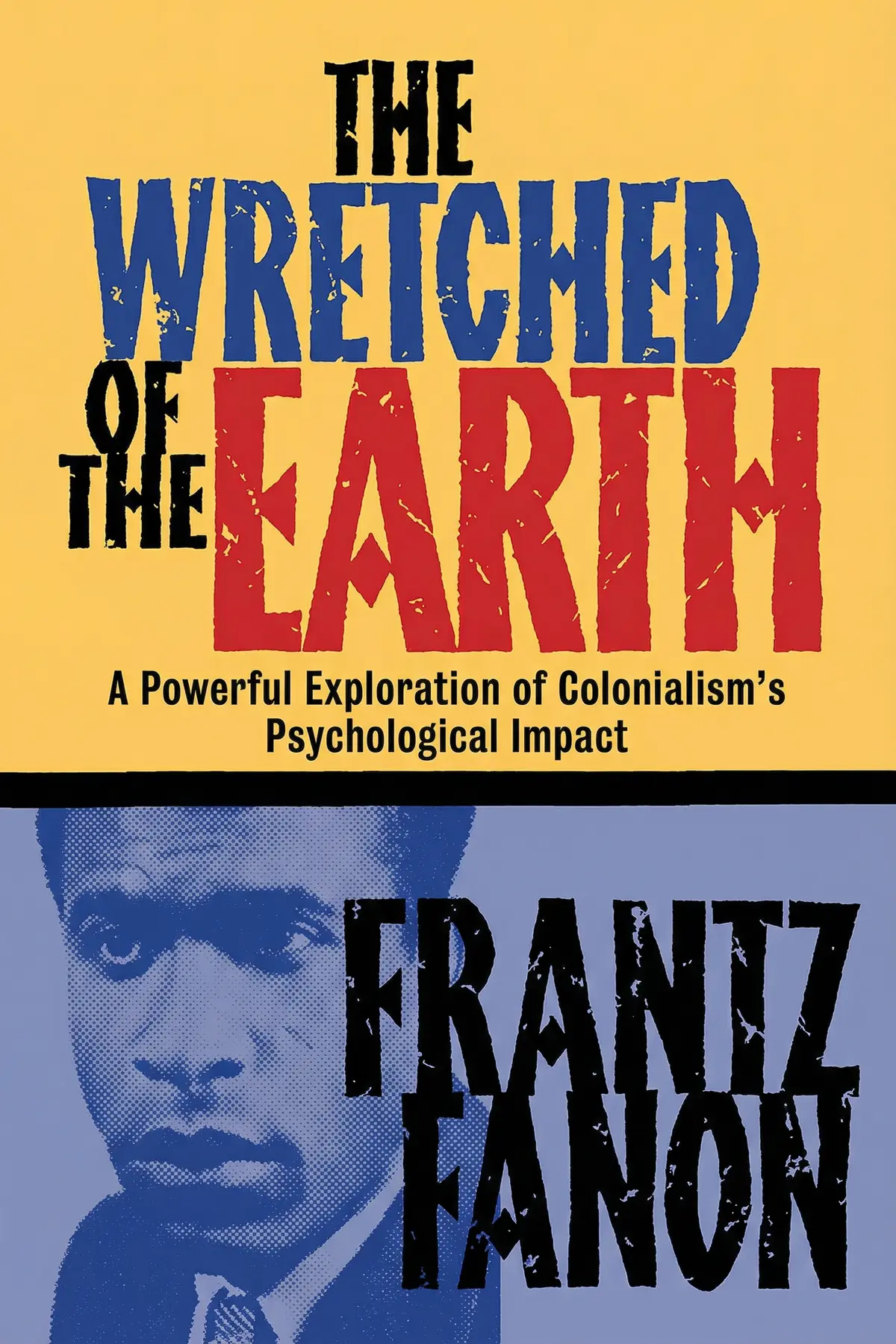
Table of Content
1. Introduction
1 min 20 sec
When we look back at the history of the twentieth century, few thinkers have captured the raw, painful reality of the struggle for freedom as vividly as Frantz Fanon. A psychiatrist by training, Fanon didn’t just look at the maps of changing borders; he looked at the scars on the human soul. His work serves as a visceral guide to the mechanics of oppression and the harrowing journey toward liberation.
At the heart of this exploration is a fundamental question: What does it truly take to undo the damage of centuries of colonial rule? The answer, as we will see, is far more complex than simply changing a flag or holding an election. It involves a total overhaul of the political, economic, and—most importantly—the psychological landscape of a nation.
In this journey, we’ll move through the heavy atmosphere of the Algerian War and beyond, exploring why movements for independence often feel driven toward a violent showdown. We’ll uncover the hidden ways that colonial powers try to erase the very identity of those they rule, and how that erasure creates a vacuum that can only be filled by a radical reclamation of culture. We will also confront the modern reality of neocolonialism, where the chains of soldiers are replaced by the chains of debt and international finance. This isn’t just a history lesson; it’s a deep dive into the throughline of human dignity and the persistent effort required to secure a freedom that is both mental and physical.
2. The Inevitable Language of Force
2 min 30 sec
Explore why the foundational brutality of a colonial regime creates a cycle where revolutionary action becomes the only effective response to systemic oppression.
3. The Psychological Toll and the Erasure of Self
2 min 22 sec
Go beyond the physical battlefield to see how colonial rule systematically attacks the mental health and cultural identity of the oppressed.
4. The Strength and Limits of Spontaneous Uprisings
2 min 19 sec
Understand the raw power of organic rebellion and why it must be transformed into a disciplined movement to avoid burning out.
5. The Shadow of Neocolonialism
2 min 20 sec
Discover how the end of military rule can give way to a new, subtle form of empire-building through international finance and economic debt.
6. Rebuilding the Soul Through Culture
2 min 30 sec
Learn why restoring a nation’s culture is a vital, active process that goes beyond reviving the past to create a new, participatory future.
7. Conclusion
1 min 35 sec
In the end, the work of Frantz Fanon reminds us that decolonization is one of the most demanding tasks a society can ever undertake. It is a process that requires a total transformation—moving from the ‘foundational violence’ of the colonial system to a state of genuine self-determination. We have seen how the trauma of being ruled by force creates a psychological desperation that often makes revolution inevitable. We’ve explored how the ‘invisible wounds’ of mental colonization can persist long after the soldiers have left, and how the subtle traps of neocolonialism can turn a new nation’s independence into a financial prison.
The throughline of this entire exploration is the necessity of a holistic approach to freedom. Political victory is meaningless without economic sovereignty, and economic sovereignty is fragile without a deep-rooted cultural identity. The lesson here is that liberation is not a single event, but a continuous effort of ‘mental liberation’ and ‘cultural rehabilitation.’ It requires a disciplined unity and a commitment to healing the soul of a people.
As we close, consider this: true liberation means more than just ending the rule of an oppressor; it means beginning the rule of the self. It means taking the ‘wretched of the earth’ and restoring their dignity, their agency, and their future. By matching external political changes with internal psychological freedom, a nation can build a foundation that is truly durable. The journey from being a subject to being a citizen is long and difficult, but it is the only path to a world where every individual is recognized as a full human being.
About this book
What is this book about?
This summary delves into one of the most influential manifestos on decolonization ever written. It examines the brutal reality of colonial rule and argues that because the colonial system is established through force, the struggle for freedom often necessitates a similarly forceful response. It moves beyond the battlefield to explore the 'invisible wounds'—the deep-seated psychological trauma and erasure of identity that continue to haunt the oppressed even after the colonizers depart. Listeners will gain a deep understanding of the transition from traditional colonialism to the subtle, economic traps of neocolonialism, where financial debt replaces military occupation. The book also provides a roadmap for cultural rehabilitation, explaining how a nation must rediscover its roots and create a new, participatory culture to avoid falling into the same traps of oppression. Ultimately, it is a profound study of how the 'wretched of the earth' can reclaim their humanity, heal their minds, and build a future based on genuine sovereignty and self-reliance.
Book Information
About the Author
Frantz Fanon
Frantz Fanon was an influential twentieth-century psychiatrist and philosophical writer who analyzed the traumatic psychological effects of colonization and advocated for revolutionary action against colonial rule, inspiring anti-colonial movements for over 40 years.
Ratings & Reviews
Ratings at a glance
What people think
Listeners find this work thought-provoking, with one reviewer drawing attention to its profound study of the colonized person’s psychology. The caliber of the writing is also highly praised, and listeners deem it a required text for students and researchers, with one listener noting its meticulous analysis of class and race. Furthermore, the book is appreciated for its precision and modern-day significance. However, opinions on the pacing vary, with some describing the experience as frustrating.
Top reviews
Zoe
The chapter on Colonial War and Mental Disorder is perhaps the most gut-wrenching thing I have ever read in a political text. Fanon uses his professional background as a psychiatrist to peel back the layers of how systemic oppression literally breaks the human mind. The story about the two European boys who kill their Algerian friend is a chilling illustration of how violence becomes a social atmosphere. It is far more than just a political manifesto; it is a clinical dissection of a dying soul. To my mind, the way he links the criminalization of the Algerian people to French 'scientific' psychology is terrifyingly relevant to how we pathologize marginalized communities today. It’s dense, sure, but the emotional weight of those case studies makes it impossible to put down. Every student of history needs to grapple with this.
Show moreSangduan
Picked this up after hearing so much about it in radical circles, and it definitely lived up to the hype, though it is a serious commitment. Fanon’s writing is incredibly sharp when he’s talking about the psychological impact of being colonized, especially that internalized feeling of inferiority. However, gotta say, the pacing is occasionally challenging in the middle chapters where the Marxist theory gets really thick. I actually had to Google half the history of the FLN and the Algerian War of Independence just to keep up with his specific references. It’s a powerful book, but it is very much a product of 1961. Even with the dense theory, his final call to stop mimicking Europe and forge a new path is a message that still resonates with incredible accuracy today.
Show moreLuckana
Fanon's analysis of the national bourgeoisie is so spot on it’s almost scary to read in the 21st century. He predicts exactly how newly independent nations often fall into the trap of just replacing a white master with a local one. The way he describes the middle class as managers for Western enterprises should be required reading for anyone interested in global economics. Frankly, his take on the 'lumpenproletariat' and the peasantry as the true revolutionary force completely flips traditional Marxist thought on its head. While some people find his focus on violence controversial, he makes a compelling case that decolonization is, by its very nature, a violent phenomenon because the original colonization was a violent act. This isn't just history; it is a mirror reflecting our modern world.
Show moreNadia
Wow. This book is like a red-hot cannonball to the chest. Sartre’s introduction alone gave me chills, setting the stage for a text that refuses to apologize for the anger of the oppressed. Fanon doesn't just talk about politics; he talks about the very marrow of what it means to be human under the boot of an empire. Not gonna lie, the section on the necessity of violence is difficult to stomach, but he explains it as a cleansing force that restores the colonized person's humanity. The contemporary relevance is staggering when you look at how internalized racism and colorism still function in the United States today. It is a meticulous analysis of race and class that feels like it was written yesterday.
Show moreSue
As a student of post-colonial studies, I found Fanon’s work to be the essential foundation for everything else I’m learning this semester. His ability to blend psychiatric observation with revolutionary fervor is something you just don't see in modern academic writing. The truth is, his critique of how Europe uses 'universal values' to mask its own provincialism is one of the most insightful things I’ve ever encountered. He warns us that trying to catch up to the West is a dead end because the West is currently falling apart under its own inhumanity. Instead, we have to create a new human and a new way of thinking. Even if you disagree with his tactics, his accuracy regarding the psychological scars of colonialism is undeniable. This is a life-changing book.
Show moreValentina
Ever wonder why certain revolutionary movements take the paths they do? This book provides the operating instructions. Fanon is a genius who isn't interested in bourgeois morals; he's interested in the results of decolonization and the liberation of the masses. I was particularly struck by his insistence that the people must be educated politically, not just through speeches but through actual participation. The writing quality is top-tier, even if it feels dangerous to hold in your hands. It’s the kind of book that makes you rethink every 'peaceful' transition of power you've ever read about in a school textbook. In my experience, there is no other work that captures the raw, kinetic energy of a people demanding their own existence.
Show moreMichael
This book is a haunting, violent, and necessary map of the human psyche under extreme duress. Fanon captures the precise moment when the colonized person realizes that their breath is just as valuable as their master’s. I absolutely loved the way he concluded this masterpiece. He tells the Third World to stop trying to imitate Europe, because Europe is a monster that has lost its way. His focus on the 'manichaean world' of the settler and the native explains so much about modern social justice movements today. It is a meticulously written work that demands your full attention and refuses to let you remain comfortable in your privilege. If you want to understand the roots of modern revolution, you have to start here.
Show moreTom
Finally got around to reading this classic, and I’m torn between admiration and exhaustion. On one hand, Fanon’s deconstruction of how colonialism pathologizes the native is absolutely brilliant and essential for understanding radical disability studies today. On the other hand, the prose is so thick with psychological jargon and heavy-handed Marxist critique that it becomes a real chore to finish at points. Personally, I appreciated the case studies at the end because they grounded the heavy theory in real, heartbreaking stories of the Algerian struggle. It’s a 4-star read for me because, while the insights are world-changing, the pacing and the exclusion of women’s voices made it a frustrating experience at times. This is definitely a book you study rather than just read.
Show moreTuck
To be fair, the theory here is brilliant, but I struggled with the incredibly masculinist lens Fanon uses throughout the entire work. Every 'colonized subject' he describes is a man, and women are only mentioned as victims or as objects that affect a man’s psychology. There’s a specific sketch of a man becoming impotent because his wife was raped, and Fanon focuses entirely on the man’s trauma while ignoring the woman’s experience entirely. It made it hard for me to fully connect with his vision of total liberation. Plus, the writing is frequently so dense and academic that I found myself re-reading the same page three times just to grasp the core argument. It’s an important historical document, but it’s definitely not an easy or inclusive read for a modern audience.
Show moreKomsan
Look, I understand the historical significance of this book, but the pacing is absolutely frustrating and the rhetoric is often over the top. It felt less like a cohesive analysis and more like a collection of angry lectures that haven't aged well in terms of structure. The theory is so dense that it feels intentionally inaccessible to the 'peasantry' Fanon claims to champion. I also found his glorification of violence to be deeply problematic, regardless of the context of 1960s Algeria. To be honest, I spent more time Googling terms than actually reading the text itself. It’s an important piece of the puzzle for scholars, but for a casual reader interested in history, it’s a bit of a nightmare to get through.
Show moreReaders also enjoyed

A Warning
Miles Taylor

A Biography of Loneliness: The History of an Emotion
Fay Bound Alberti
A Force for Good: The Dalai Lama's Vision for Our World
Daniel Goleman
Abolish Rent: How Tenants Can End the Housing Crisis
Tracy Rosenthal
AUDIO SUMMARY AVAILABLE
Listen to The Wretched of the Earth in 15 minutes
Get the key ideas from The Wretched of the Earth by Frantz Fanon, plus 5,000+ more titles in English and Thai.
- 5,000+ titles
- Listen as much as you want
- 7-day free trial
- Cancel anytime







