
25 min 20 sec
The Yoga Sutras of Patanjali
Explore the foundational spiritual philosophy of yoga through this detailed guide. Learn how to master the mind, transcend the ego, and find lasting inner peace through the ancient wisdom of Patañjali.
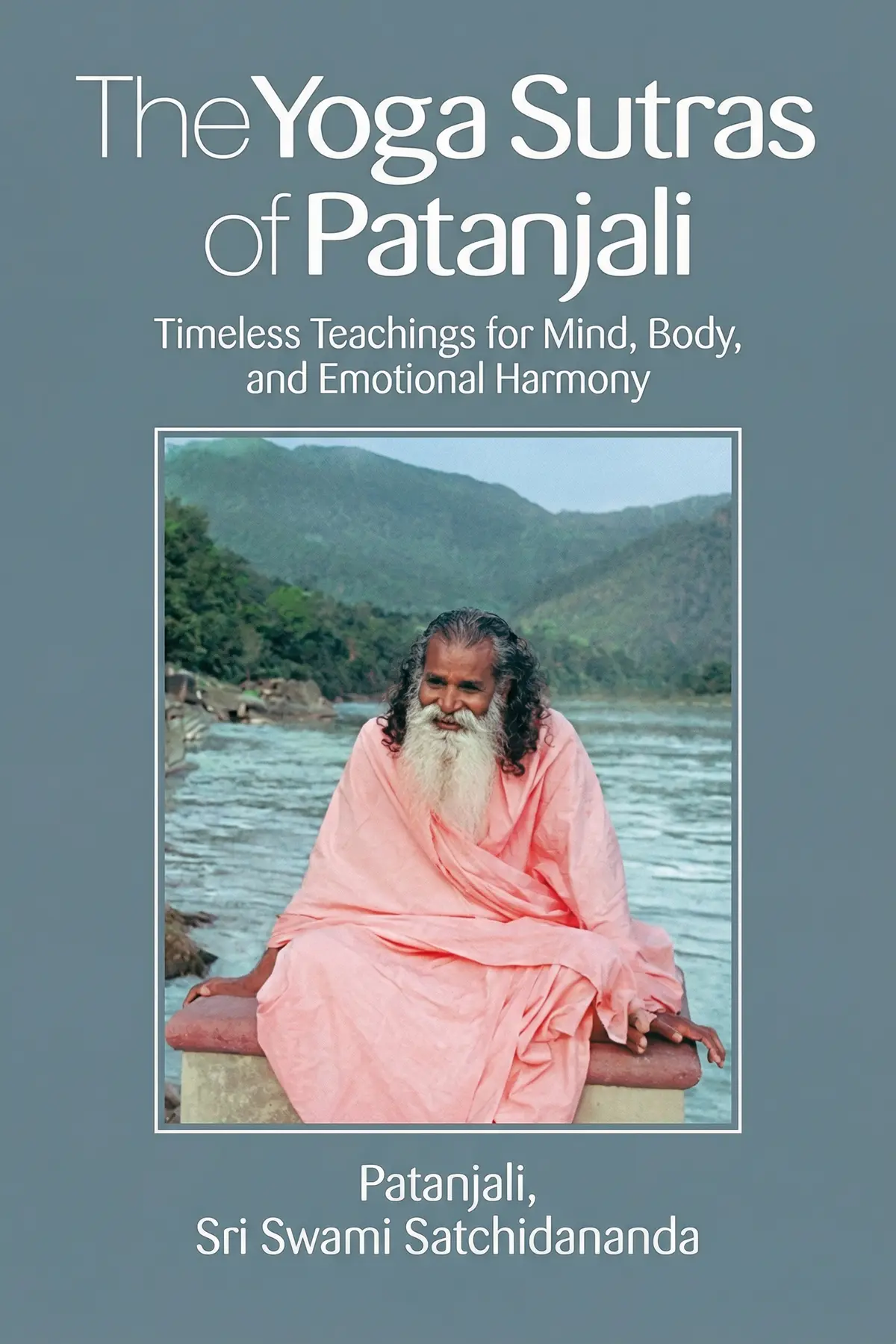
Table of Content
1. Introduction
2 min 00 sec
When the word yoga is mentioned in a modern context, most people immediately envision a gym or a studio filled with people practicing complex physical poses and stretching. We often view it as a way to increase flexibility or perhaps lower our stress levels after a long day at the office. However, if we peel back the layers of time and look at the ancient roots of this tradition, we discover that the physical aspect is just one small part of a much larger, more profound system. The Yoga Sutras of Patanjali represents a comprehensive spiritual philosophy that was developed thousands of years ago to address the very core of human existence. It isn’t just about the body; it’s a deep exploration of the mind, our ethical foundations, and the psychological mechanisms that dictate how we experience the world.
Think of this journey as a transition from the external to the internal. While yoga certainly involves the physical form, its ultimate aim is self-transformation and the attainment of a state of lasting peace. It provides a structured, logical pathway for anyone seeking to understand the nature of their own consciousness. This isn’t just abstract theory, either. The philosophy is grounded in practical steps that help us navigate the various obstacles that life inevitably throws our way. Whether it’s managing our turbulent emotions or finding a sense of purpose beyond our material possessions, these ancient teachings offer a timeless guide for the modern soul.
In the following exploration, we are going to look at the world through the lens of one of the most significant spiritual texts ever written. We will see why our sense of self is often a misunderstanding, how our ego creates a barrier between us and true happiness, and why achieving mental stillness is the key to seeing reality as it truly is. By the end, you’ll see that yoga is not just something you do for an hour a day—it is a way of being that can fundamentally change your relationship with yourself and everything around you. Let’s begin this process by looking at how these ancient ideas were brought into the modern era.
2. A Universal Bridge to Ancient Wisdom
2 min 39 sec
Discover how a modern master translated cryptic ancient notes into a universal guide for spiritual seekers of all backgrounds, transcending religious boundaries.
3. Yoga as an Experimental Science
2 min 42 sec
Learn why yoga is more like a laboratory experiment than a dogma, inviting you to prove its benefits through your own direct experience.
4. The Illusion of External Identity
2 min 30 sec
Explore the profound philosophical shift of moving beyond your job, your status, and even your body to find who you truly are.
5. The Universal Nature of the True Self
2 min 39 sec
What if the core of your being is exactly the same as the core of everyone else? Dive into the concept of a shared universal spirit.
6. The Mind as a Distorted Mirror
2 min 38 sec
Imagine your mind as a lake. Discover how the ‘ripples’ of daily stress and desire prevent you from seeing your true reflection.
7. The Anatomy of Suffering
2 min 37 sec
Uncover the psychological roots of pain and why mistaking our ego for our self creates a cycle of constant anxiety and dissatisfaction.
8. The Ethical Foundation of a Quiet Mind
2 min 30 sec
Discover why being ‘good’ isn’t just a moral rule, but a practical necessity for anyone who wants to achieve deep mental tranquility.
9. The Path to Ultimate Union
2 min 39 sec
Walk through the final stages of the yogic journey, from breath control to the sublime state of Samādhi, where the self and the universe become one.
10. Conclusion
2 min 26 sec
As we reach the end of this exploration of The Yoga Sutras of Patanjali, the central theme becomes clear: the path of yoga is a journey from the noisy, distorted world of the ego to the silent, clear reality of the True Self. We have seen that our suffering isn’t an inevitable part of life, but a result of how we identify with things that are temporary and external. By mistaking our careers, our bodies, and our wandering thoughts for our true essence, we create a life of constant fluctuation and anxiety. However, the ancient wisdom of Patañjali, interpreted through the inclusive lens of Sri Swami Satchidananda, offers us a way out. It provides a practical, step-by-step system to reclaim our peace.
This system starts with the way we move through the world. By adopting ethical principles like non-violence, truthfulness, and contentment, we stop agitating our own minds. We then use the tools of posture, breath, and focus to quiet the remaining ripples of our consciousness. When the mind finally becomes still, we don’t ‘discover’ a new self; we simply stop being distracted by the false one. We see the reflection of the universal spirit that has been there all along, waiting to be recognized. This isn’t a destination that requires us to leave the world behind, but a perspective that allows us to engage with the world more deeply and compassionately.
The most important takeaway is that yoga is a lived practice. You don’t need to master every pose or memorize every Sanskrit word to begin. You can start exactly where you are by simply observing your thoughts and questioning your labels. If you find yourself feeling stressed or overwhelmed, remember the image of the lake. Ask yourself: what is stirring up the water right now? Is it a desire? An attachment? A false identification? By shifting your focus from the waves back to the observer, you can find a sense of calm that remains steady regardless of the weather on the surface. As you continue this practice, your sense of ‘self’ will naturally expand to include others, leading to a life defined by service and universal love. That is the true promise of yoga: a heart at peace and a mind that sees the truth in everyone.
About this book
What is this book about?
This summary provides a deep dive into the spiritual and psychological framework of ancient yoga practice. It moves beyond the modern perception of yoga as mere physical stretching to reveal a comprehensive system for mental clarity and emotional harmony. By examining the relationship between the mind, the ego, and the true self, the work offers a roadmap for overcoming human suffering. You will discover the eight components of yogic practice, ranging from moral foundations and ethical conduct to deep meditation and contemplation. The guide explains why our identification with external labels causes turmoil and how to cultivate a mind that is as calm as a still lake, allowing your authentic essence to shine through clearly. Ultimately, it promises a path toward universal compassion and self-liberation.
Book Information
About the Author
Patanjali
Patañjali was an ancient Indian spiritual teacher, or perhaps a lineage of teachers, who lived between 500 BC and 300 AD. His Sutras are the foundational texts of classical yoga. Sri Swami Satchidananda was a prominent twentieth-century yoga master and teacher. He played a vital role in popularizing yogic philosophy in the West, providing accessible interpretations of ancient wisdom for modern, diverse audiences.
Ratings & Reviews
Ratings at a glance
What people think
Listeners find this Yoga Sutras edition to be an essential read for practitioners, serving as a top-tier resource for Yoga Teacher Training courses. The precise Sanskrit translations and clear commentary facilitate easy comprehension, with one listener mentioning how it helps make sense of the Sutras. They value the detailed explanations and believe it is a worthwhile purchase.
Top reviews
Man
This book is basically the gold standard for anyone diving into yoga philosophy for the first time. Sri Swami Satchidananda has this incredible way of taking ancient, complex Sanskrit and turning it into something that feels like a conversation over tea. I was worried the Sutras would be too dense or academic, but the commentary is remarkably accessible. He uses simple stories and humor to explain the 'mind-stuff' and how to control it. For a westerner used to just the physical stretching part of yoga, this was an eye-opener. It really hammers home that yoga is a mental discipline first and foremost. I find myself returning to the sections on the five Yamas whenever I feel my life getting too chaotic. It’s a thorough, life-changing reference that I’ll keep on my nightstand for years.
Show moreKoi
Finally got around to reading this for my YTT, and I can see why it’s on every syllabus in the country. The breakdown of the eight limbs is so clear that even a complete beginner could grasp the progression from physical posture to full contemplation. I particularly appreciated the detailed Sanskrit translations followed by Satchidananda’s plain-English explanations. Frankly, it makes the mystical elements feel much more grounded in reality. It isn't just about 'om-ing' in a dark room; it’s about personal responsibility and how we treat others. The stories he shares to illustrate the Niyamas, like contentment and purity, really stuck with me. If you are serious about understanding the roots of your practice beyond the mat, you need this specific edition. It is a mandatory read for a reason.
Show moreSuthee
Just finished my second pass through these pages, and the wisdom feels even deeper this time around. This isn't a book you read once and toss on the shelf; it's a manual for living a better life. I’ve started reading just one sutra each morning before my practice, and it changes my entire perspective for the day. Truth is, I used to think yoga was just a workout, but this text proved me wrong. The explanation of how to witness your own thoughts without judgment is exactly what I needed for my anxiety. Satchidananda’s modern examples make the ancient text feel relevant to our current world. The nature metaphors are beautiful and help visualize the 'stilling' of the mind. It’s an essential purchase for anyone seeking a higher state of acceptance.
Show moreElias
Ever wonder how ancient wisdom actually translates to our chaotic modern lives? This book provides the answer. Satchidananda has a gift for making the 'eight limbs' feel like a practical roadmap rather than a set of impossible rules. I was particularly drawn to the sections on the Yamas—avoiding violence and greed isn't just moralizing here; it’s shown as a way to find internal peace. The physical quality of the book is nice too, making it easy to highlight and take notes. I found that the more I read, the more I understood my own mental 'modifications.' It’s a deep dive into the science of the soul. If you only buy one book on yoga philosophy, make it this one. It's truly eye-opening and written with so much love and clarity.
Show moreJack
The way Satchidananda breaks down the Yamas and Niyamas makes them feel like practical life tools rather than rigid rules. I loved the chapter on contentment. It’s so easy to get caught up in wanting more, but this book reminds us that the ego is the root of our woes. The translation is clear, and the commentary provides a bridge between ancient India and the modern West. I found myself relating the philosophy to my everyday struggles with work and relationships. It fosters a very deep sense of contemplation. Every yoga teacher should have this on their shelf. It’s not just a book; it’s a guide to being a better person. The beauty of the writing and the depth of the insight are just unmatched. A masterpiece of spiritual literature.
Show moreBun
As someone who has struggled with other translations, this version felt like a breath of fresh air. I tried Edwin Bryant’s version before, but it was a bit too academic for my daily practice. Satchidananda, however, feels like a real mentor. He explains the goal of each sutra with such simplicity that you can actually start practicing it immediately. Not gonna lie, some of the talk about surrendering your ego is hard to swallow at first. But the way he frames it as a path to bliss makes it feel worth the effort. The book is organized perfectly for study, with the Sanskrit, the word-for-word translation, and then the commentary. It is worth every penny and then some. This book has immeasurably changed my life and my meditation practice for the better.
Show moreIvan
To be fair, some of the concepts here feel quite dated and even a bit strange in a 21st-century context. I recoiled at a few of the sutras that suggest supernatural powers like levitation or entering other bodies through meditation. That stuff is a bit too esoteric for my taste. However, if you can look past the more 'woo-woo' elements, the core psychological insights are brilliant. The idea that our ego is the root of all our suffering is something I've been processing for weeks. Satchidananda's tone is gentle and encouraging, which helps when the text gets difficult. I didn’t love every single page, but the chapters on breath control and concentration were game-changers for my mental health. It’s a solid four-star read that requires an open but discerning mind.
Show moreSirichai
After hearing about the Sutras for years, I didn't expect the commentary to be so down-to-earth. The translation is very thorough, providing the original Sanskrit which is great for study. I've been practicing the physical 'asana' part of yoga for a decade, but this book finally connected the dots for me regarding the spiritual side. My only gripe is that it can feel repetitive at times, as the same themes of detachment and ego-loss come up constantly. Still, the way the author explains 'attachment to possessions' really hit home. It made me realize how much of my identity is tied to things that don't actually matter. It’s a very thought-provoking read that will definitely challenge your worldview. Great for anyone wanting to move beyond the exercise-focused version of yoga.
Show moreSiriphen
Look, I have a complicated relationship with texts that tell me to suppress my desires and ignore the physical world. As a woman who has spent years finally learning to appreciate my body and my achievements, some of the self-deprecation here felt like a step backward. Why should I want 'less' when society has already tried to give me less? I struggled with the idea that happiness is a choice that ignores external oppression. That said, Satchidananda is a funny and engaging commentator. His breakdown of the three types of karma was absolutely fascinating and gave me a lot to think about. I’m choosing to take the parts that resonate—like the focus on nature and breath—and leave the parts about 'conserving semen' or total transcendence behind. It’s a mixed bag for me.
Show moreJom
Wow, talk about a mixed bag that left me more confused than enlightened. I picked this up for my teacher training expecting a deep dive into the science of yoga and anatomy. Instead, I got instructions on how to levitate and advice on 'entering another person's body' through meditation. Honestly, it felt a bit like reading a fantasy novel at times. While the early chapters on the Yamas and Niyamas have some decent moral advice, the later sections are just too far-fetched for a skeptic like me. I wish there was more focus on how these practices affect the nervous system and less on supernatural feats. If you want a modern, evidence-based approach to yoga, this probably isn't the book for you. It felt very outdated and a bit too esoteric for my liking.
Show moreReaders also enjoyed
A Force for Good: The Dalai Lama's Vision for Our World
Daniel Goleman
A Return to Love: Reflections on the Principles of a Course in Miracles
Marianne Williamson
Abundance: The Inner Path to Wealth
Deepak Chopra

Alcoholics Anonymous
Alcoholics Anonymous World Services
A New Earth: Awakening to Your Life’s Purpose
Eckhart Tolle
Aflame: Learning from Silence
Pico Iyer
AUDIO SUMMARY AVAILABLE
Listen to The Yoga Sutras of Patanjali in 15 minutes
Get the key ideas from The Yoga Sutras of Patanjali by Patanjali, plus 5,000+ more titles in English and Thai.
- 5,000+ titles
- Listen as much as you want
- 7-day free trial
- Cancel anytime







