
All In: How Great Leaders Build Unstoppable Teams
Mike Michalowicz
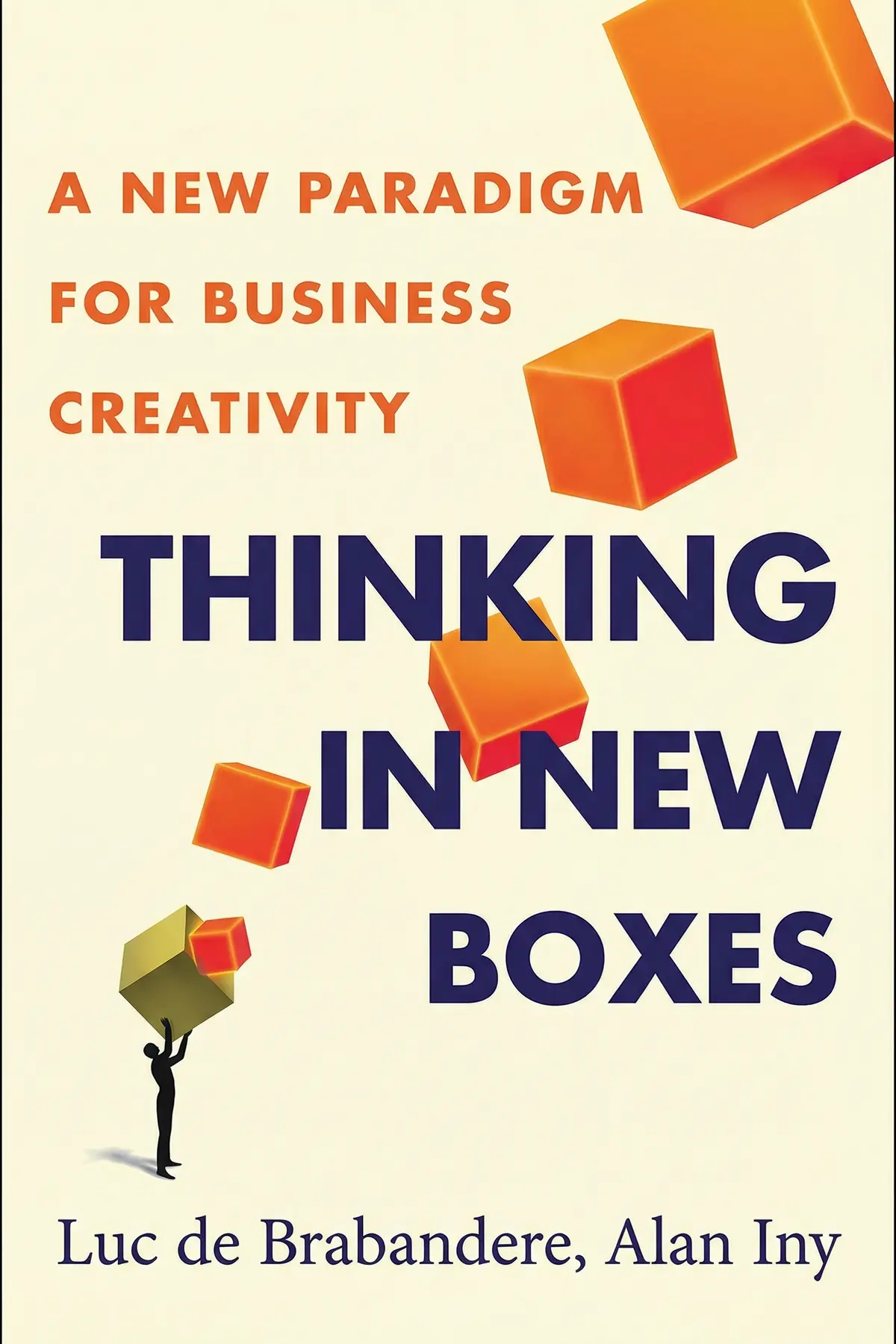
Learn to revolutionize your creative process by mastering the mental models that govern your thoughts. This guide provides a strategic framework for escaping cognitive ruts and building new frameworks for innovation.
1 min 46 sec
Have you ever felt like your own mind was playing a trick on you? Perhaps you made a snap judgment in a meeting that you later regretted, or you found yourself unable to see a solution that, in hindsight, was staring you right in the face. It is a frustrating experience, but it is not a sign of failure. Rather, it is the result of how the human brain is hardwired to function. We are naturally designed to create mental shortcuts to make sense of a chaotic world. These shortcuts are what people commonly call boxes.
For decades, the standard corporate advice has been to think outside the box. It is a popular cliché, but it often falls flat because it ignores a fundamental psychological reality: our brains cannot actually function without these structures. If we were to truly step outside every mental model we have, we would be paralyzed by the sheer volume of information surrounding us. We need our boxes to survive and to make decisions. The real problem isn’t that we think inside a box; it’s that we often stay in the same old box long after it has stopped being useful.
In this BookBits summary of Thinking in New Boxes, we are going to explore a new paradigm for business creativity. Instead of trying to escape the box, we are going to learn how to identify our current mental frameworks and, more importantly, how to build new ones. We will look at how major brands like Bic and Nintendo managed to reinvent themselves by shifting their internal definitions. We will also dive into a five-step process designed to help you recognize your own cognitive biases and open your mind to possibilities you might currently be ignoring. By the end of this journey, you will see that creativity isn’t a mysterious gift for the lucky few—it is a disciplined process of doubting what you know so you can discover what is possible.
1 min 47 sec
Explore why the human brain is naturally designed to categorize the world into mental boxes and why these shortcuts are both a blessing and a burden.
1 min 56 sec
Learn how tunnel vision limits your potential and why even the most successful business models can become dangerous blinders over time.
2 min 06 sec
Discover why your intuition often leads you astray and how to recognize the cognitive shortcuts that favor the familiar over the effective.
1 min 38 sec
Understand why no mental box lasts forever and why the most successful innovators are those who constantly question their own assumptions.
1 min 44 sec
Learn a systematic approach to gathering data that can break through your mental blinders and spark new ways of thinking.
1 min 41 sec
Explore the process of generating wide-ranging hypotheses and why testing them against objective criteria is vital for success.
1 min 35 sec
Understand how redefining your company’s core identity can unlock massive growth and unleash a cascade of new opportunities.
1 min 42 sec
Learn the difference between predicting the future and preparing for multiple possibilities through the power of inductive reasoning.
1 min 44 sec
As we reach the end of our journey through the art of thinking in new boxes, it is important to remember that the goal is not to reach a final destination where you never have to change again. In fact, the most important takeaway is that the process of innovation is never truly finished. The world is moving faster than ever, and the mental models that serve you today will inevitably become the constraints of tomorrow. The true masters of creativity are those who have learned to fall in love with the process of starting over.
To apply these ideas in your own life and work, start by practicing the art of doubt. The next time you feel absolutely certain about a business decision or a market trend, pause and ask yourself: What box am I standing in right now? What assumptions am I making that I haven’t questioned in years? By consciously identifying your mental frameworks, you take the first step toward masterfully navigating them. Don’t be afraid to entertain ideas that seem wild or impractical at first, and don’t be afraid to fail. A fear of failure is simply a sign that you are clinging too tightly to an old box.
Remember the lessons of Bic and Nintendo. They didn’t just change their products; they changed their minds. They dared to redefine themselves at a fundamental level, and in doing so, they opened doors that their competitors didn’t even know existed. You have the same capacity for transformation. By gathering fresh data, doubting your intuition, and building bold new mental models, you can turn uncertainty into your greatest competitive advantage. The boxes are there to help you think, but you are the one who gets to decide which ones to build. It’s time to start building.
Have you ever wondered why some companies thrive during periods of upheaval while others vanish into obscurity? The answer usually lies in how their leaders think. This exploration of business creativity suggests that the traditional advice to think outside the box is fundamentally flawed. Because the human brain relies on mental shortcuts and models to process reality, we can never truly escape having a box. Instead, the secret to innovation is learning how to build better, more relevant boxes. Through a structured five-step process, you will learn how to identify the hidden assumptions that limit your perspective. The journey begins with doubting your current worldview and gathering fresh environmental data. From there, you will explore how to generate divergent hypotheses and test them against rigorous criteria. Finally, the book illustrates how to redefine your business at its core, moving from narrow product definitions to broad, future-proof identities. By the end, you will have a toolkit for navigating uncertainty and turning the unpredictable nature of the market into a competitive advantage.
Luc de Brabandere is a prominent research fellow and senior advisor at The Boston Consulting Group in Paris. A prolific thinker on organizational change, he has authored or co-authored twelve books, including the acclaimed work The Forgotten Half of Change. Joining him is Alan Iny, a senior specialist for creativity and scenario planning at The Boston Consulting Group in New York. Iny holds an MBA from Columbia Business School and focuses on helping organizations navigate complex futures through strategic imagination.
Listeners find the work insightful, and one person notes it gives a helpful overview of brainstorming. There is also praise for the book’s creativity, as one listener appreciates the organized method it provides for thinking about thinking. Listeners further value the book's easy readability and how it brings awareness to their own biases. However, the storytelling style results in mixed reviews from listeners.
Finally, a business book that admits the 'outside the box' cliché is actually impossible for the human brain to achieve. By accepting that we always think in boxes, we can take control of which ones we choose to use for problem-solving. The five-step process is remarkably well-structured. I found the section on 'Probing the Possible' to be an absolute game-changer for my own independent consulting practice this year. It makes you conscious of your own biases, which is the first step toward genuine innovation.
Show moreThis book's greatest strength lies in its ability to make you conscious of the mental shortcuts you take every day. Instead of the usual fluff, you get a well-structured approach to dismantling old assumptions and building better ones. I was particularly impressed by the chapter on scenarios, which helps businesses get out of their own way. It is a must-read for consultants leading a team through a complex problem-solving phase. The concepts are presented in a way that feels both intellectual and practical.
Show moreTruth is, most creativity books are either too abstract or too technical, but this one finds a comfortable middle ground. By focusing on the 'new boxes' metaphor, the authors give you a concrete way to talk about abstract mental models with your team. I found the advice on questioning what you think you know to be a very helpful exercise for upper management. While some sections felt unoriginal, the structured method for brainstorming makes it worth the price of admission for me. It is a solid, insightful read that will change how you approach your next big project.
Show moreAs someone who spends most days navigating corporate strategy, this book provided a refreshing framework for mental models. The authors successfully argue that we cannot simply think outside the box because our brains naturally crave structure and categorization. Instead, they suggest we consciously choose better boxes. While the five-step method is easy to follow, I found the Diverge and Converge phases most useful for my team's weekly sessions. It is a solid read for anyone looking to improve their professional brainstorming.
Show moreThe authors do a fantastic job of illustrating how our own biases create invisible walls around our collective creativity. This book offers a very readable and structured method to think about how we actually process new, complex information. I particularly liked the focus on how we need to periodically reevaluate our mental models to stay competitive in a shifting market. To be fair, the storytelling is a bit of a mixed bag. Some examples are quite vivid, while others feel like they belong in a different book entirely. However, the overall framework is strong enough to make this a valuable addition to your library.
Show moreAfter hearing about this book for months, I finally sat down to see if it lived up to the hype. The premise is fascinating: you cannot escape boxes, but you can certainly build better ones to suit your needs. The writing style is quite accessible for a business text. Gotta say, the five steps provide a very useful overview for anyone who feels stuck in a professional rut. It helped me realize how many 'boxes' I was using without even knowing they were there.
Show moreEver wonder why the phrase 'think outside the box' feels so useless when you are actually stuck on a problem? De Brabandere and Iny answer this by suggesting that we should focus on creating entirely new mental frameworks instead of escaping them. I enjoyed the conceptual parts of the book, but the 'Doubt Everything' step felt extreme for a fast-paced workplace. It sounds poetic but can lead to analysis paralysis. The Dick Fosbury example was interesting, yet it felt like a stretch to call his physical persistence a form of total doubt. It is a decent book for beginners who need a push to innovate.
Show morePicked this up after a recommendation from a colleague who swears by the methodology for lead-level brainstorming activities. There are definitely some gems in here, especially regarding the importance of the 'Diverge' and 'Converge' stages of thinking. However, the authors' definition of a 'Eureka' moment seemed to confuse simple necessity with actual creative inspiration. They cite Toyota's lean manufacturing as a Eureka moment, but it was really more about space constraints and survival. In my experience, the book works best when you take the tools you like and ignore the filler. It is a helpful guide for facilitators who need a structured path.
Show moreLook, I really wanted to enjoy the journey this book promised, but I found myself bogged down by the volume of anecdotes. The stories are much too long for my taste. While the core theory about mental categorization is sound, the authors spend far too much time on long-winded, repetitive historical examples. The methodology is okay, but you have to dig through a lot of fluff to find the actual actionable advice. I ended up skimming the last third of the book just to get to the summary sections.
Show moreNot what I expected at all, mostly because the core concepts felt like a rehash of other popular creativity manuals. While the writing style is clear, I struggled to find unique insights. The authors focus heavily on the 'Toyota lean' philosophy, which has been covered extensively by many other business writers for decades. Frankly, the five steps are just common sense repackaged into new terminology. It might be useful for a newcomer, but I was hoping for something more groundbreaking than this.
Show moreMike Michalowicz
Hamilton Helmer

Margaret Heffernan
AUDIO SUMMARY AVAILABLE
Get the key ideas from Thinking in New Boxes by Luc de Brabandere, plus 5,000+ more titles in English and Thai.







