
14 min 09 sec
Third Millennium Thinking: Creating Sense in a World of Nonsense
Explore a unique framework for navigating the complexities of the modern world by blending scientific discovery, philosophical inquiry, and psychological insights to solve the most pressing challenges of our future.
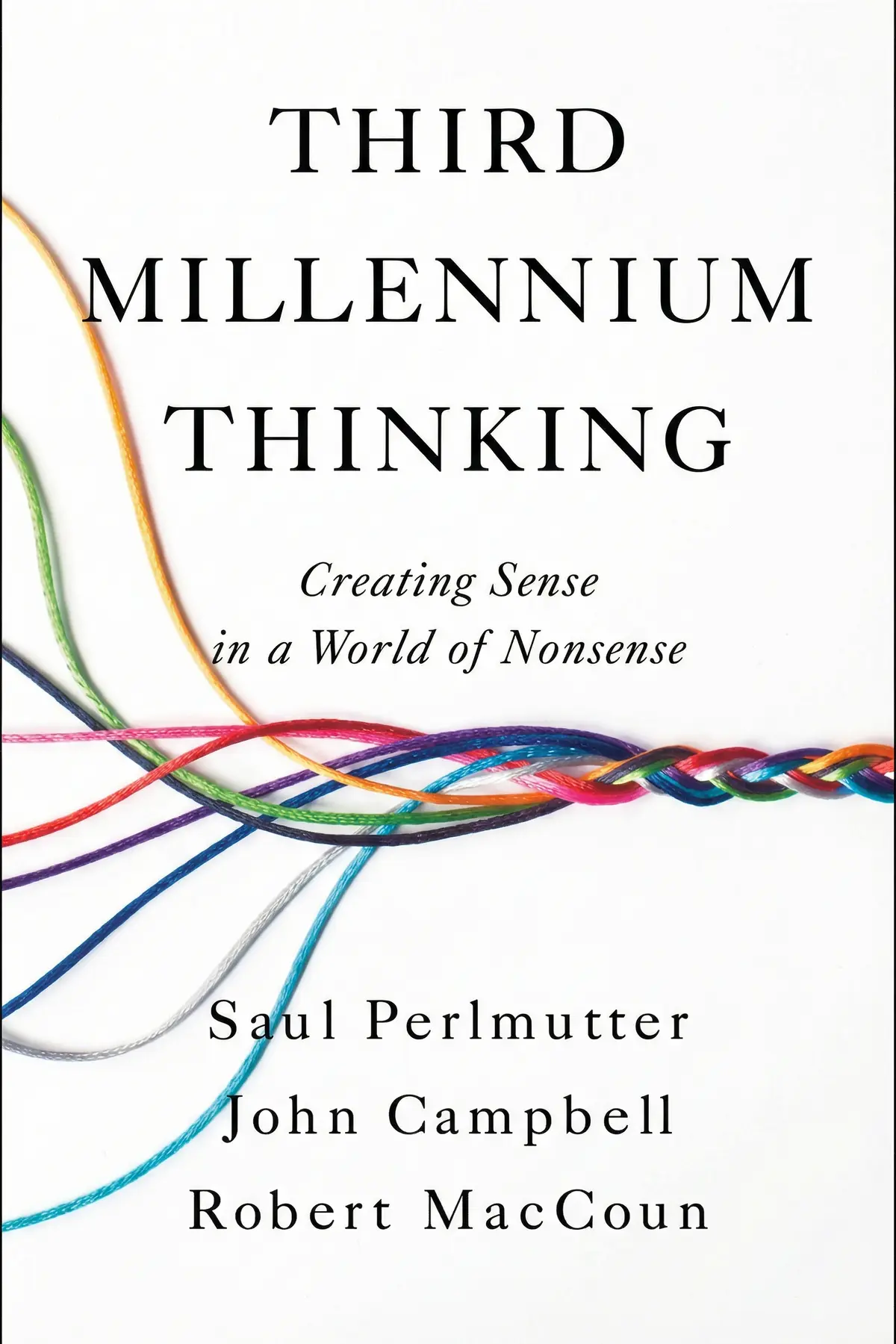
Table of Content
1. Introduction
1 min 36 sec
We are currently living through a period of human history that feels different from everything that came before it. It’s not just that things are changing; it’s that the rate of change itself seems to be accelerating. Between the rapid-fire evolution of our technology and the shifting state of our global environment, it can feel like we are constantly trying to find our footing on a ground that won’t stop moving. This is the core challenge of the modern era: how do we make sense of a world that is evolving faster than our traditional ways of thinking can keep up with?
In our journey through this discussion, we are going to explore a framework designed specifically for this new reality. The authors of Third Millennium Thinking suggest that to thrive today, we need to move beyond single-track perspectives. We can’t just rely on common sense or old-fashioned logic. Instead, we need a synthesis. We need the precision of a Nobel-winning physicist, the deep inquiry of a celebrated philosopher, and the social insight of a leading psychologist.
By bringing these three perspectives together, we can start to build a more robust toolkit for decision-making and understanding. This isn’t just about learning new facts; it’s about learning a new way to process those facts. It’s about understanding the nature of thought itself, the biases that cloud our judgment, and the physical realities of a universe that is constantly expanding in complexity. As we move forward, we will look at how this multi-disciplinary approach can help us navigate the future of society with more confidence and clarity. We are looking for a throughline that connects scientific rigor with human reason, providing us with a stable foundation in an unstable time.
2. Synthesizing Disciplines for a Modern Toolkit
2 min 20 sec
Discover why the challenges of the twenty-first century require a combined approach from physics, philosophy, and psychology to avoid the pitfalls of isolated thinking.
3. The Lessons of Universal Expansion and Change
2 min 11 sec
Learn how the physics of our universe provides a surprising metaphor for navigating the rapid social and technological changes in our daily lives.
4. Refining the Mechanics of Human Thought
2 min 04 sec
Examine the philosophical underpinnings of reasoning to understand how we can sharpen our minds and avoid common errors in judgment.
5. Navigating Social Influence and Decision-Making
2 min 03 sec
Explore the psychological forces that shape our collective choices and discover how to make better decisions amidst social pressure.
6. Thriving in a Rapidly Evolving Landscape
2 min 08 sec
Pull all the threads together to create a cohesive strategy for adapting to the environmental and social shifts of the future.
7. Conclusion
1 min 47 sec
As we wrap up our exploration of these ideas, it becomes clear that the path through the complexities of the third millennium isn’t found in a single book or a single branch of study. Instead, it is found in the intersection of our most rigorous ways of looking at the world. We’ve seen how the expansive view of physics can teach us to embrace a dynamic reality, how the precision of philosophy can sharpen our internal logic, and how the insights of social psychology can help us navigate the invisible forces of influence that surround us.
What this really means is that we are being called to a higher level of intellectual and social maturity. We can no longer afford to be passive observers of the changes happening around us. The world is evolving at a breakneck pace, and our survival and success depend on our ability to think clearly amidst the noise. The authors have provided us with a throughline—a way to connect the dots between seemingly unrelated fields to form a cohesive picture of our modern existence.
Your actionable takeaway from this journey is to begin questioning the foundations of your own thinking. The next time you are faced with a complex decision or a piece of news that challenges your worldview, try to look at it through these three lenses. Ask yourself: What is the evidence? Is my reasoning sound? And how is my social environment influencing my perception? By doing this, you aren’t just reacting to the future; you are actively participating in it. You are using the tools of the third millennium to build a life—and a society—that is capable of thriving in the face of any change. The future is not something that just happens to us; it is a landscape we can navigate with skill, logic, and a deep understanding of our place in the expanding universe.
About this book
What is this book about?
Our modern world is moving faster than ever, driven by a relentless wave of technological advancements and significant environmental shifts. In this environment, the traditional ways we think and make decisions are often pushed to their limits. This book provides a roadmap for thriving in this landscape by synthesizing three distinct but powerful disciplines: physics, philosophy, and social psychology. By drawing on the specialized expertise of three leaders in these fields, the text offers a new way of processing information and evaluating reality. It promises to equip readers with the tools necessary to understand the accelerating pace of change, refine their own reasoning processes, and navigate the complex social influences that shape our collective decisions. Ultimately, it is a guide for the third millennium, teaching us how to think more clearly and act more effectively in an era of unprecedented global transformation.
Book Information
About the Author
Saul Perlmutter
Saul Perlmutter is a Nobel Prize-winning physicist known for his groundbreaking work on the expansion of the universe. John Campbell is an acclaimed philosopher and recipient of the Jean Nicod Prize, specializing in the nature of human reasoning. Robert MacCoun is a distinguished social psychologist and legal scholar, honored with the James McKeen Cattell Fellow Award for his extensive research into decision-making and social influence. Together, they bridge the gap between hard science and human cognition.
Ratings & Reviews
Ratings at a glance
What people think
Listeners find this book highly educational, with one review specifically praising the helpful illustrations used to explain scientific principles. They also value its readability; one listener mentioned how easy it is to remain fully engaged with the material.
Top reviews
Kenji
The final section on the importance of community really tied everything together for me in a way I didn't anticipate. We often think of critical thinking as a solitary endeavor—a person in a room fighting their own brain—but the authors argue that cold calculation is often a miscalculation. They use the analogy of Mr. Spock from Star Trek perfectly, showing how logic must be tempered by human connection and shared goals to be truly effective. This book isn't just about avoiding errors; it’s about how we can function better as a collective in a world that feels increasingly polarized. The prose is punchy. The examples are relevant to the struggles of the 2020s. I found myself highlighting entire pages of advice on probabilistic thinking and distant future impacts.
Show moreManika
I’ve spent years looking for a manual on collective decision-making that actually works in the real world, and this might be it. The authors don't just tell you to 'think better'; they explain the specific mechanisms of the scientific community that allow for progress despite human error. Applying these same concepts to our broader society is a genius move that feels both urgent and practical. The writing is accessible enough for a teenager but deep enough for a professional to gain some new perspectives. I especially appreciated the breakdown of how to weigh evidence when experts disagree. This is the kind of book that should be required reading in every high school and university across the globe. It offers a way to move forward when everything feels stuck.
Show moreJiraporn
After hearing about the Berkeley course that inspired this book, I had high hopes for a toolkit that could cut through the modern noise. The collaboration between a physicist, a philosopher, and a psychologist results in a surprisingly cohesive guide to navigating uncertainty and cognitive bias. It feels like a masterclass in intellectual humility. It reminds us that being wrong is often the first step toward finding a better answer. I particularly enjoyed the illustrations that broke down complex scientific concepts into digestible bites without sacrificing their inherent rigor or nuance. While it doesn't solve every existential crisis, it provides the scaffolding needed to build a more rational outlook on our current global challenges. It’s a readable, engaging entry point for anyone tired of being misled by flashy headlines and partisan bickering.
Show moreJom
In an era of deepfakes and constant noise, this acts as a necessary anchor for anyone feeling overwhelmed by information. The authors provide a brilliant set of 'tricks of the trade' from the scientific world that are surprisingly applicable to voting, shopping, and even social media. I loved the emphasis on being careful with our own certainty, which is a trait that seems to be disappearing in public discourse lately. The layout is clean and the illustrations help bridge the gap between abstract theory and practical reality. Truth is, we all need a refresher on how to evaluate evidence without letting our emotions take the driver's seat. It’s a solid, four-star read that deserves a spot on any modern citizen’s bookshelf for the sake of our collective future.
Show moreSamuel
Look, we are living through a massive shift in how we process reality, and this book provides the necessary software update for our brains. The discussion on 'Third Millennium Thinking' highlights that our old ways of processing information are no longer sufficient for a globalized, high-tech society. I found the examples regarding climate change and public health policy to be particularly enlightening and well-reasoned. The authors managed to make a book about logic feel surprisingly urgent and human-centric. While some parts were a bit repetitive, the overall message of using scientific rigor to build better communities is powerful. It’s a thoughtful, well-constructed argument for why we need to change our mental habits right now if we want to survive as a species.
Show moreWei
Not what I expected, but exactly what I needed to read this year. Instead of a dry academic text, I found a passionate plea for a more thoughtful and collaborative approach to the world's biggest problems. The way the authors integrate the concept of 'Spock-like' logic with the necessity of human friendship and mission was genuinely moving. It’s rare to find a book that treats its readers with this much respect while still explaining complex ideas clearly. The 'tricks of the trade' mentioned are genuinely useful for anyone trying to navigate the sea of misinformation we live in. High quality, informative, and ultimately very hopeful about the future of human thought. I will definitely be recommending this to my book club for our next meeting.
Show moreMalee
Frankly, I expected a bit more depth from a team of such high-caliber academics. While the writing is clear and the sentiment is noble, much of the advice feels like common sense dressed up in academic robes. If you already have a basic grasp of heuristics and the scientific method, you won’t find many groundbreaking revelations buried in these chapters. It serves as a decent primer for someone just starting to question their own cognitive biases, but for seasoned readers of popular science, it often feels like 'science for dummies.' The book is well-organized and professional. However, it lacks that 'aha' moment that distinguishes a good book from a truly transformative one. It’s a useful reinforcement of good habits, but nothing more.
Show moreOscar
Ever wonder how a Nobel laureate, a psychologist, and a philosopher would tackle modern chaos? This book is their answer, though it leans more toward a classroom lecture than a gripping narrative. The interdisciplinary approach is the strongest selling point, but at times the different voices feel a bit fragmented and disjointed. I found the sections on distant future impacts especially interesting, though I wish there was more 'how-to' and less 'here is why this matters.' It’s an insanely important topic, but the execution felt a bit dry in the middle sections of the text. Not gonna lie, I struggled to stay engaged during the more technical explanations of peer review and data analysis. It’s good, but it didn't quite grip me like other similar titles.
Show morePete
Picked this up on a whim and was pleasantly surprised by how accessible the prose is, even when dealing with dense logic. However, as someone who has read a lot in the 'rationality' genre, there wasn't much here that felt truly original or fresh. If you’ve already read your fair share of Kahneman or Mlodinow, you might find yourself skimming through the familiar bits about cognitive biases. To be fair, the authors bring a unique 'triangulated' perspective that adds a bit of flavor, but the core message remains largely the same as other primers. It’s a great gift for someone who doesn’t read much science, but perhaps a bit redundant for the hobbyist. It’s a polished piece of work, just not a revolutionary one.
Show moreSam
Why does every book about 'meaning' end up being a lecture on probability and statistical significance? I went into this looking for something a bit more philosophical or existential, but instead, I got a methodological manual that feels more like a textbook. The authors seem to believe that finding 'sense' in the third millennium is purely a matter of applying the right scientific tools to our daily problems. Personally, I find that approach a bit sterile and lacking in the human warmth that usually makes these kinds of deep dives worth the time. If you love spreadsheets and rigorous logical frameworks, you will likely adore this, but I found the focus on process over outcome quite tedious. It’s more nonsense than sense for my specific tastes and needs.
Show moreReaders also enjoyed
A Liberated Mind: How to Pivot Toward What Matters
Steven C. Hayes
Acting with Power: Why We Are More Powerful Than We Believe
Deborah Gruenfeld

Alien Earths: The New Science of Planet Hunting in the Cosmos
Lisa Kaltenegger
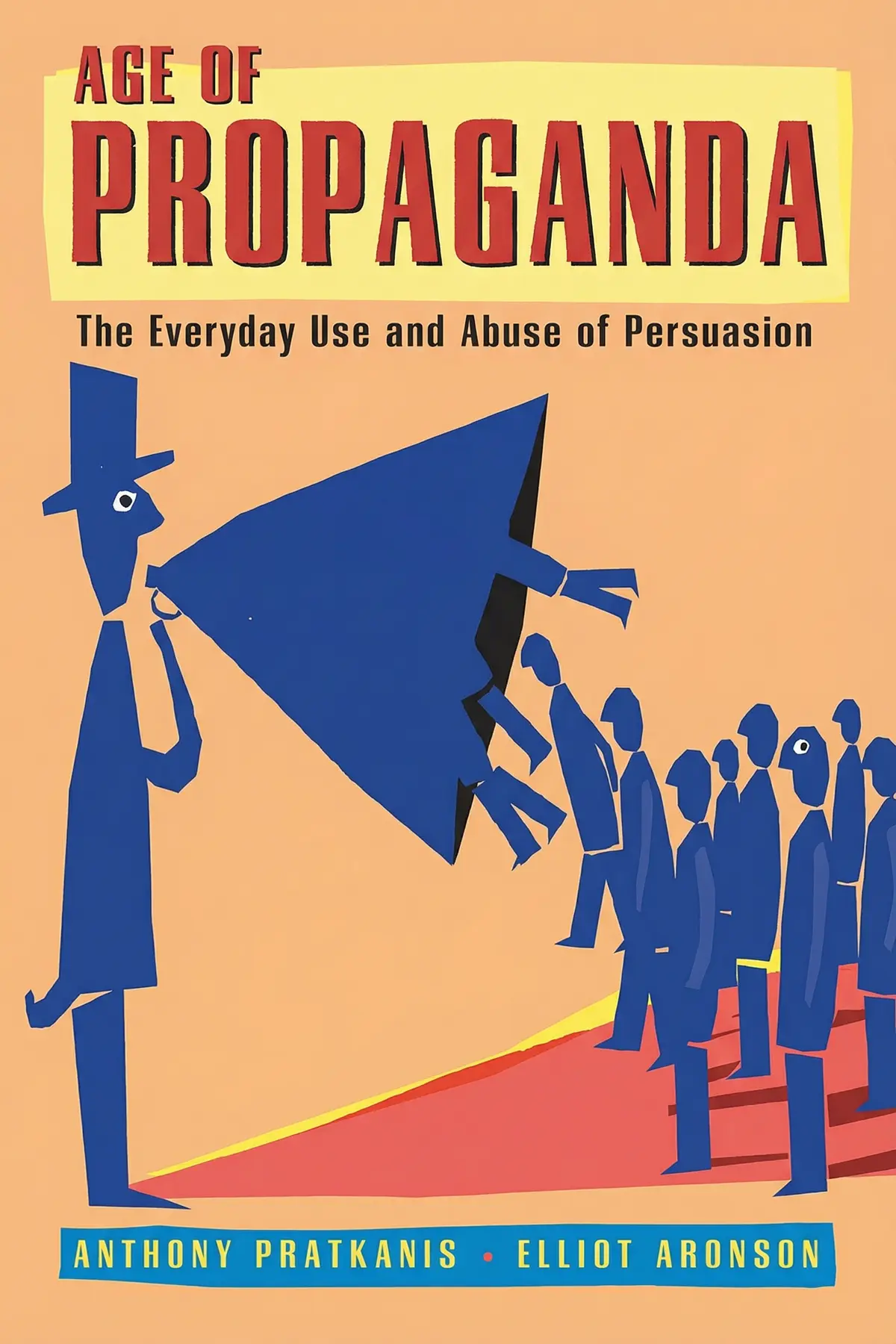
Age of Propaganda: The Everyday Use and Abuse of Persuasion
Anthony Pratkanis
AUDIO SUMMARY AVAILABLE
Listen to Third Millennium Thinking in 15 minutes
Get the key ideas from Third Millennium Thinking by Saul Perlmutter, plus 5,000+ more titles in English and Thai.
- 5,000+ titles
- Listen as much as you want
- 7-day free trial
- Cancel anytime







