
23 min 52 sec
Thirty Million Words: Building a Child’s Brain
By Dana Suskind
Discover how the simple act of talking to children can close the achievement gap and reshape their neural architecture for a lifetime of intellectual and emotional success.
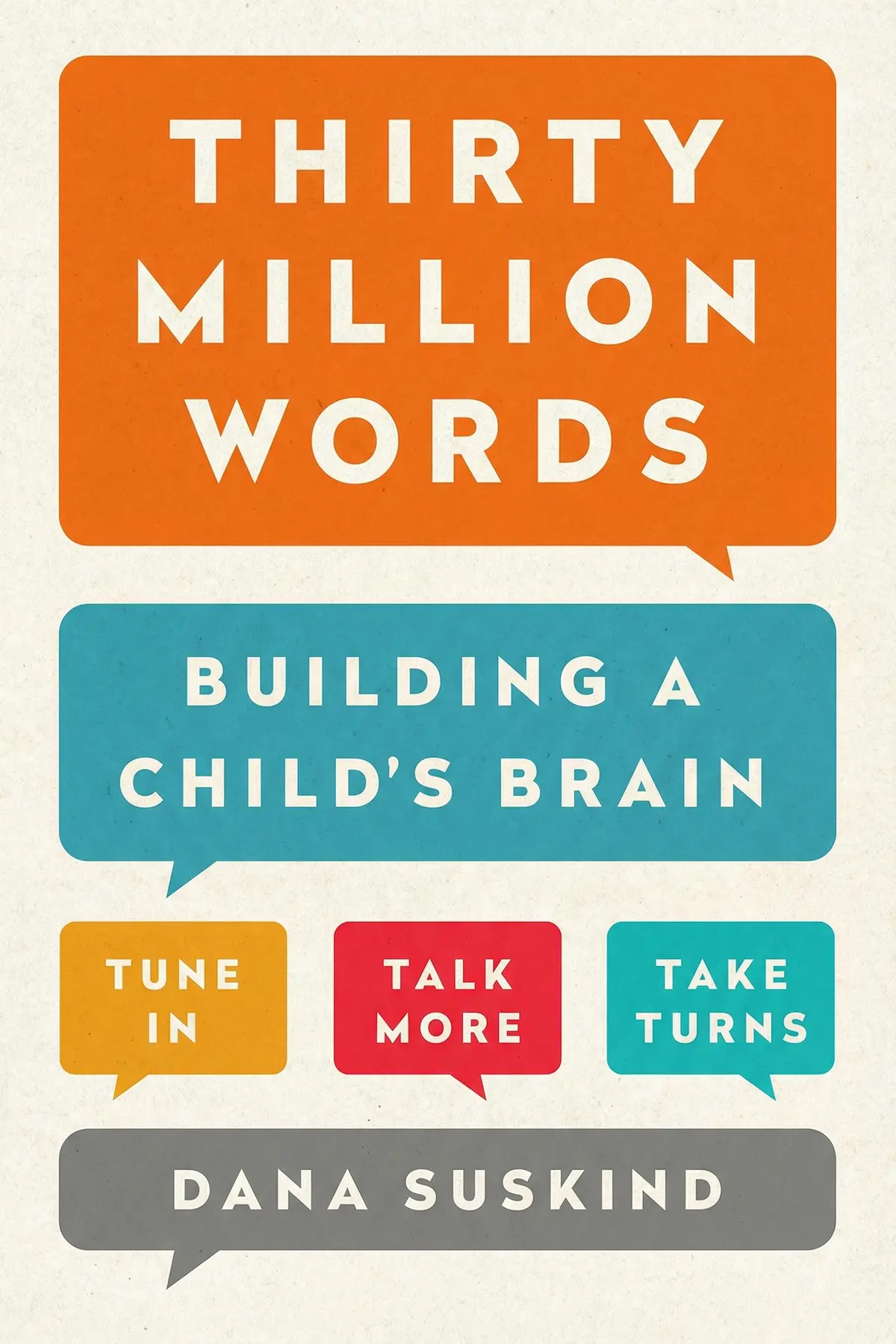
Table of Content
1. Introduction
2 min 00 sec
Imagine a world where the future success of a child could be largely predicted by the number of words they hear before they even set foot in a preschool classroom. This isn’t a science fiction premise; it is the reality revealed by decades of pediatric and neurological research. When we think about the development of a child, we often focus on nutrition, physical safety, and perhaps the toys they play with. But there is an invisible nutrient that is just as vital as vitamins or minerals: language. The words spoken to a baby are the actual building blocks of their brain’s physical architecture.
Our guide through this fascinating territory is Dr. Dana Suskind. As a surgeon who performs cochlear implants, Dr. Suskind witnessed something puzzling. She would perform the same successful surgery on two different children born with hearing loss, but several years later, their outcomes would be vastly different. One child would be thriving in school, speaking fluently and keeping up with peers, while the other would be struggling significantly. She realized that the difference wasn’t the surgery itself; it was the linguistic environment the child entered after the operation.
This realization led to a journey into the heart of early childhood development and the discovery of a staggering disparity known as the thirty-million-word gap. This gap describes the difference in language exposure between children from word-rich homes and those from word-poor environments. The implications are profound, affecting everything from IQ scores to emotional regulation. However, the message here is one of immense hope. By understanding how the brain develops and utilizing simple, accessible strategies, any caregiver can bridge this gap. We are going to explore the mechanics of the young brain, the specific strategies that foster growth, and the societal shifts necessary to ensure every child has the opportunity to reach their full potential. This is a story about the power of the human voice to shape a human life.
2. The Biological Imperative of Language
2 min 09 sec
Explore how the infant brain is a masterpiece under construction, waiting for the spark of human speech to forge permanent neural connections.
3. Bridging the Thirty Million Word Gap
2 min 04 sec
Uncover the landmark research that revealed a massive disparity in word exposure across different households and its lifelong impact.
4. The First T: Tuning In
1 min 58 sec
Master the art of shared attention by following your child’s lead to create a fertile ground for learning.
5. The Second T: Talking More
2 min 16 sec
Discover how narrating your world and using rich vocabulary can transform everyday routines into a cognitive feast.
6. The Third T: Taking Turns
1 min 58 sec
Learn why the conversational duet is the most critical element for developing a child’s social and cognitive brain.
7. Cultivating a Growth Mindset Through Praise
2 min 06 sec
Understand how the subtle nuances in how we praise our children can either foster resilience or create a fear of failure.
8. Language as a Tool for Self-Regulation
1 min 57 sec
See how verbalizing emotions and thoughts helps children gain mastery over their impulses and behavior.
9. The Vocabulary of Math and Spatial Reasoning
1 min 51 sec
Discover why ‘math talk’ is just as important as ‘book talk’ for setting a child up for success in STEM fields.
10. The Limits of Technology in Early Learning
2 min 00 sec
Unpack the reasons why screens and digital media cannot replace the power of human interaction in the early years.
11. A Social Responsibility for Language Equality
1 min 54 sec
Examine why the word gap is a societal issue that requires community-wide action and support for all families.
12. Conclusion
1 min 39 sec
In the end, the message of Dr. Dana Suskind’s work is both incredibly simple and profoundly transformative: you have the power to build a better brain for your child, and it starts with the words you speak today. We have explored how the first three years of life are a singular period of neural construction, where every interaction acts as a master architect. We’ve seen how the thirty-million-word gap creates an uneven playing field, but we’ve also discovered the tools to level it. By Tuning In to what your child loves, Talking More about the world around you, and Taking Turns in the conversational duet, you are providing the essential nutrients for their cognitive and emotional growth.
This isn’t about perfection; it’s about presence. It’s about turning the mundane moments of life—the grocery shopping, the bath time, the walks to the park—into opportunities for connection and learning. It’s about moving from ‘business talk’ to a rich, exploratory dialogue that honors the child’s curiosity and builds their resilience through a growth mindset.
As we close this summary, remember that your voice is a powerful instrument. It is the first sound of comfort a child knows and the primary tool they will use to navigate the world. Every word you speak is a gift to your child’s future. Whether you are a parent, a caregiver, or a concerned citizen, you now hold the knowledge that can change the trajectory of a life. The science is clear, the strategies are accessible, and the potential is limitless. It’s time to start talking, one word at a time, until every child has the chance to reach their full potential.
About this book
What is this book about?
This exploration of early childhood development dives into the profound impact of linguistic environments on the developing brain. Based on the transformative work of Dr. Dana Suskind, the narrative explains how the first three years of life represent a critical window for cognitive growth. It reveals that the trajectory of a child’s future is determined not just by genetics or socioeconomic status, but by the quantity and quality of words they hear from their primary caregivers. The promise of this summary is to provide parents, educators, and caregivers with a scientifically backed toolkit for optimizing a child's brain. Through the framework of the Three Ts—Tune In, Talk More, and Take Turns—listeners will learn how to turn everyday interactions into powerful learning moments. By understanding the data behind the thirty-million-word gap and the importance of a growth mindset, caregivers can effectively foster resilience, empathy, and academic excellence in children, regardless of their background.
Book Information
About the Author
Dana Suskind
Dana Suskind is an accomplished surgeon specializing in the fields of hearing loss and cochlear implantation. Her medical practice led her to a deep fascination with the intersection of hearing, language, and brain development. Beyond the operating room, she is the founder and director of the Thirty Million Words initiative. This program is a major research and intervention project aimed at educating parents and the public about the vital role early language exposure plays in shaping a child’s cognitive future.
Ratings & Reviews
Ratings at a glance
What people think
Listeners consider this an excellent choice for parents and school boards, offering essential perspectives on early growth and significant facts regarding how children acquire language. The book also delivers actionable advice and remains an engaging experience, with one listener calling it riveting from start to finish. Furthermore, listeners value the clear communication style, with one noting the connection between language and self-regulation, and they believe it is successful in helping children reach their full potential.
Top reviews
Kanchana
Wow. I didn't expect a book about linguistics to start with the high-stakes world of pediatric cochlear implants. Dr. Suskind’s journey from surgeon to social advocate is truly riveting, and it makes the science feel deeply personal. She explains how the first three years of life are a critical window for brain development, acting as the foundation for everything that follows. The concept of the 'Thirty Million Word' gap between different socioeconomic groups is heartbreaking but highlights how much power parents actually have. By using the 3Ts—Tune In, Talk More, Take Turns—we can literally wire our children’s brains for success and better self-regulation. While some parts of the data feel a bit dense, the overall message is a call to action for every parent. It’s not just about talking; it’s about the quality of the engagement. This should be required reading in every prenatal class.
Show moreAir
As a school board member, I found this book to be an essential piece of the puzzle regarding the achievement gap. We often focus on what happens in the classroom starting at age five, but Suskind proves the real work happens in the home much earlier. The research on neural plasticity and how early language environments act as 'brain food' is foundational for anyone interested in education policy. It’s not just about vocabulary; it’s about the complex social cues and cognitive frameworks built through simple, everyday interactions. I particularly appreciated the sections on 'growth mindset' and how our verbal feedback shapes a child’s persistence. This book offers a roadmap for community-wide change that starts with the very first word spoken to a newborn. It’s a riveting look at how we can collectively support families to ensure every child has an equal start.
Show moreMonthon
Ever wonder why some kids just seem 'naturally' smarter? This book argues that it’s not nature at all, but rather the rich linguistic environment provided by their caregivers. Dr. Suskind’s work is a perfect companion to Carol Dweck’s research on growth mindset, showing how our words build a child’s internal narrative. I found the section on 'Tuning In' to be particularly convicting in our age of constant digital distraction. The book is riveting when it sticks to the science of neural networks and the 'use it or lose it' nature of early brain development. It’s empowering to know that something as simple as narrating your day can have such a profound impact on your child’s IQ. While the book is a bit repetitive, the message is so important that the repetition actually helps it stick. This is a must-read for anyone who cares about the future of our children.
Show moreNum
Finally got around to finishing this after it sat on my nightstand for months. I'm glad I did, because it fundamentally changed how I interact with my three-year-old. The idea that we only have a small window to optimize brain development is a bit stressful, but the book is ultimately very encouraging. It’s not about using big, fancy words; it’s about the quantity and quality of the 'conversational turns' you take every day. I especially liked the part about how language helps children develop self-regulation and emotional control. Some of the chapters felt like they were drifting into a policy paper, which I found myself skimming through. But the core advice is solid gold. If you have a baby or toddler, you need to read this—it’s much more useful than those 'milestone' apps. A very solid, enlightening read for any parent.
Show moreGun
After hearing Dr. Suskind on a podcast, I knew I needed to dive into the full text before my daughter turned two. The central premise—that parent talk is the most valuable resource we have—is incredibly empowering for families who might feel they lack other resources. I found the practical tips on 'tuning in' to be the most helpful, as it’s easy to get distracted by phones or chores. To be fair, the book does get quite repetitive in the middle sections, often circling back to the same statistics multiple times. However, the connection she draws between early language exposure and a child’s eventual ability to self-regulate is eye-opening. It’s a great read for parents who want to help their kids reach their full potential without needing expensive toys or specialized classes. Just be prepared to skim through some of the more bureaucratic anecdotes if you’re short on time.
Show moreYui
Picked this up as a baby shower gift for a friend, but ended up reading the whole thing myself first. The idea that we can 'make' our children smart through simple conversation is such a hopeful, beautiful message. I loved the emphasis on 'Taking Turns' because it reminds us that babies are active participants in communication, not just passive listeners. Look, some of the advice feels very rooted in American social structures, which might not translate perfectly for everyone, but the biological science is universal. The book provides very clear, practical tips that any parent can use regardless of their education level or income. I do think the author is a bit hyperbolic when she suggests that language can solve almost every societal ill. Even so, the core advice is too good to ignore. It’s a solid read that I will definitely be passing along to more new parents in my circle.
Show moreChamlong
Language is essentially oxygen for a child's brain, and Dr. Suskind does a masterful job of explaining why. Her perspective as a surgeon gives her a unique authority on how the brain literally builds itself in response to sound and interaction. I was fascinated by the data showing the massive word gap between different SES households and how that translates to school readiness later on. The 3Ts provide a simple, actionable way to bridge that gap in your own home. Truth is, I did find some of the 'calls to action' for government intervention a bit distracting from the parenting advice. But the connection between early talk and a child's future self-regulation is worth the price of admission alone. It’s a very informative read that helps you understand the weight of every 'coo' and 'ba-ba' you exchange with your little one. Highly recommended for anyone who wants to maximize their child's cognitive potential.
Show moreOak
I appreciate how this bridges the gap between surgical science and daily parenting. Dr. Suskind takes complex ideas about neural plasticity and makes them accessible for the average mom or dad. The 'Take Turns' strategy is a game-changer for me, as I realized I was often just talking at my toddler instead of with him. It’s amazing how much more engaged he is when I treat our interactions like a real conversation. My only gripe is that the book feels a little bloated with descriptions of the author’s meetings and professional setbacks. I wanted more about the kids and less about the administration! Regardless, the practical tips provided are invaluable for fostering early speech and social skills. It’s an effective guide for anyone looking to give their child a head start in life through the power of words.
Show moreKan
The core message is vital, but the delivery felt like it could have been a long-form article rather than a 300-page book. Frankly, I felt like I was reading the same three chapters over and over again, just with different anecdotal coatings. The 3Ts (Tune In, Talk More, Take Turns) are excellent, evidence-based tools that every caregiver should implement immediately. Yet, the book drifts into political territory and state-level policy discussions that felt a bit out of place for a parenting guide. I was hoping for more deep dives into specific language exercises and fewer pages devoted to the author's specific organization. If you are an avid reader of child development books, you might find that you already know much of this. It’s a decent resource for the 'gist,' but I’d recommend checking it out from the library rather than buying it for your permanent collection.
Show moreFon
To be fair, the research is solid, but the book spends far too much time on the author's personal career and organizational struggles. I was looking for a manual on child language development, not a memoir about the inner workings of a Chicago-based non-profit. The 3Ts are a fantastic framework, and the explanation of the 30-million-word gap is genuinely startling. However, the writing style can be a bit dry and academic in places, making it a bit of a slog to get through the middle. I also found the sections on gender gaps and math biases to be a bit of a detour from the main topic. If you’re a busy parent, you can probably read the first fifty pages and the concluding chapter and get 90% of the value. It’s an important topic, but the padding in this book is significant. Honestly, a 15-page brochure would have sufficed.
Show moreReaders also enjoyed



AUDIO SUMMARY AVAILABLE
Listen to Thirty Million Words in 15 minutes
Get the key ideas from Thirty Million Words by Dana Suskind, plus 5,000+ more titles in English and Thai.
- 5,000+ titles
- Listen as much as you want
- 7-day free trial
- Cancel anytime







