
A Little History of Economics
Niall Kishtainy
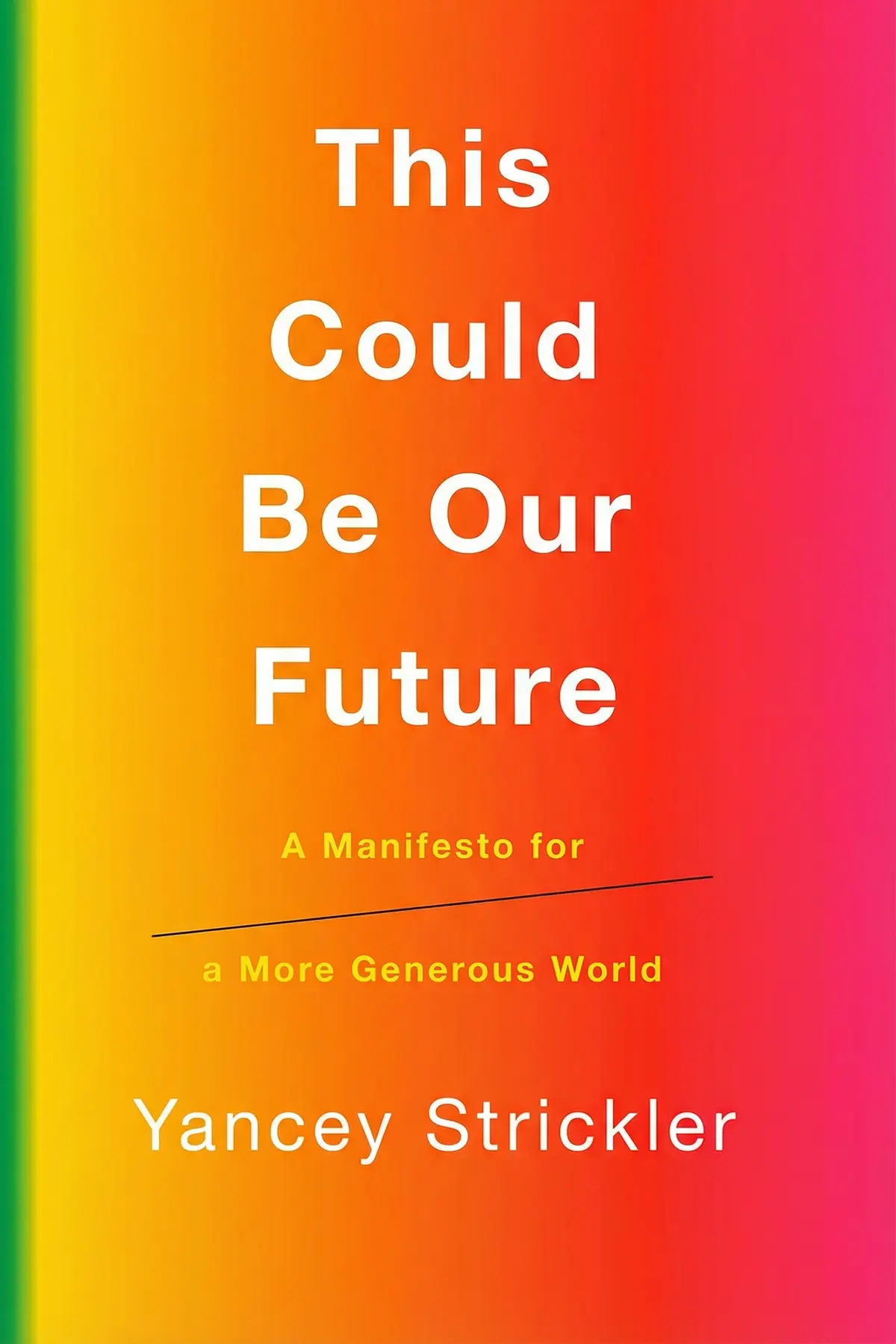
This Could Be Our Future challenges the modern obsession with profit maximization, proposing a new framework called Bentoism to help individuals and businesses prioritize long-term well-being, community values, and collective flourishing.
1 min 52 sec
Imagine waking up in a world where every decision you make is weighed against a single question: Will this make me more money right now? For many of us, this doesn’t require an act of imagination; it feels like our daily reality. We live in a society that treats financial profit as the ultimate metric of success, the only rational driver of human behavior. Whether it’s a corporation deciding to lay off workers to boost quarterly earnings or an individual choosing a career path based solely on the salary, the logic is the same: money comes first, and everything else follows.
But as we look around at the state of our communities, the quality of our entertainment, and the rising levels of distrust, we have to ask ourselves: Is this actually working? In This Could Be Our Future, Yancey Strickler argues that we have fallen under the spell of an invisible idea—one that tells us that maximizing financial gain is the only sensible way to live. This concept, while seemingly permanent, is actually a relatively recent invention, a byproduct of specific economic theories from the late twentieth century.
In this exploration, we’re going to look at how we got here and, more importantly, how we can find our way out. We’ll delve into the history of how greed became a standardized business practice and how that shift has flattened our culture. But we won’t just look at the problems. We’ll also discover a new way of thinking called Bentoism—a framework that allows us to balance our immediate needs with our long-term goals and the needs of those around us. By the end of this journey, you’ll see that a more generous, diverse, and fulfilling future isn’t just a pipe dream; it’s a practical possibility that starts with changing the way we value our lives.
2 min 25 sec
Discover how a recent shift in economic thinking turned profit into the only acceptable goal, transforming every aspect of our daily existence into a transaction.
2 min 44 sec
Uncover the Cold War origins of modern decision-making and how mathematical models convinced us that being selfish is the only smart way to live.
2 min 20 sec
See how the quest for guaranteed profit has drained the creativity out of our media and the character out of our neighborhoods.
2 min 38 sec
Learn about the emergence of a new elite whose primary skill is extracting wealth, and how their strategies have left the average worker behind.
2 min 41 sec
Explore the limits of financial indicators like GDP and why chasing a number on a screen doesn’t lead to a flourishing society.
2 min 46 sec
Meet the Bento framework—a simple yet powerful tool for making decisions that honor your future self, your community, and the generations to come.
2 min 26 sec
See how unexpected examples from the worlds of pop music and professional basketball prove that looking at the big picture can lead to better results than chasing a quick buck.
2 min 35 sec
Change doesn’t happen overnight, but history shows that societal shifts take about three decades to go from fringe ideas to the new normal.
1 min 58 sec
As we wrap up our look at This Could Be Our Future, the central message is clear: we are more than just consumers, and our lives are worth more than our net worth. For too long, we have allowed a narrow, profit-driven logic to dictate how we build our businesses, treat our neighbors, and envision our potential. We have seen how this philosophy has led to a culture of sameness, a widening gap between the rich and the poor, and a pervasive sense of emptiness despite our material wealth.
But we have also discovered that this is not the only way to live. Through the framework of Bentoism, we have a tool to reclaim our agency. We can choose to honor our future selves, care for our communities, and protect the world for those who will follow us. We have seen that prioritizing loyalty, fairness, and long-term sustainability isn’t just a moral choice; it’s a smarter, more resilient way to navigate the world.
The challenge now is to take these ideas into your own life. You don’t have to change the entire global economy tomorrow. You can start small. Next time you face a decision, try drawing a bento box. Look at your “Now Me,” your “Future Me,” your “Now Us,” and your “Future Us.” Ask yourself which choice maximizes the most value across all those boxes, not just the one that puts the most cash in your pocket right now.
Changing the world is a marathon, not a sprint, and as we’ve seen, it often takes thirty years for a new idea to truly take root. We are in the middle of that transformation right now. By broadening your own spectrum of values and supporting businesses and ideas that do the same, you are part of the movement toward a more generous, diverse, and flourishing future. The world we want is possible, and it begins with the realization that money is just one kind of value. It’s time to start investing in all the others.
In our current era, we are often told that the only rational goal for a person or a business is to make as much money as possible. This philosophy, known as financial maximization, has come to dominate every aspect of our lives—from the way we build our cities to the way we produce art and provide healthcare. But is this really the best we can do? This summary explores the origins of our profit-driven world and the hidden costs of ignoring human values like loyalty, creativity, and sustainability. It introduces the concept of Bentoism, a multi-dimensional approach to decision-making that considers not just our immediate self-interest, but also our future selves and the wider community. By shifting our focus, we can move toward a more generous world where success is measured by more than just a bottom line.
Yancey Strickler is an entrepreneur, writer, and speaker who co-founded the crowdfunding giant Kickstarter, serving as its CEO. His work focuses on how technology and culture can support creative and social endeavors. He has shared his insights at prestigious venues including MIT, the Sundance Film Festival, and the Museum of Modern Art. In 2015, the World Economic Forum named him a Young Global Leader.
Listeners find the book highly accessible, with one mentioning that the final chapter is especially gripping. The subject matter earns high marks, as one listener notes that it provides tools for reshaping our future.
Picked this up because I’ve been feeling burnt out by the 'grind' culture that seems to dominate every facet of modern life. Yancey Strickler offers a refreshing alternative to the usual corporate obsession with maximizing shareholder value. His concept of Bentoism—balancing 'Now Me' with 'Future Us'—is a practical framework that I’ve actually started using for my own career decisions. The prose is incredibly smooth and easy to digest, which is rare for a book that touches on economic theory. While some might call it idealistic, I think we desperately need this kind of optimism right now. The way he breaks down the shift since the 1970s really helped me understand why our current system feels so broken. It’s a compelling call to action that doesn't just complain about the problem but actually provides a vocabulary for building something better. Definitely a must-read for anyone looking for a more meaningful way to live and work.
Show moreFinally got around to reading this manifesto, and the last chapter alone makes the entire journey worthwhile. It’s where everything clicks into place. Strickler doesn't just complain about the status quo; he provides actual tools for redrawing the roadmap of our lives. I’ve been thinking a lot about the 'Future Me' quadrant in my own life lately. It’s so easy to get caught up in immediate financial security that we forget about the legacy we want to leave behind. The book is remarkably readable and avoids the dry, academic tone you might expect from a topic like this. It felt like having a long conversation with a very smart, very hopeful friend. If you’re feeling cynical about the direction of the world, this might be exactly the antidote you need. It’s a bold vision for a society that values more than just the bottom line.
Show moreWow. I didn't think a book about economic philosophy would make me think so much about the Chilean miners or the way we structure our neighborhoods. Strickler has a gift for making complex ideas feel personal and urgent. The way he challenges the idea of 'rational self-interest' is brilliant. He shows that we are actually hardwired for cooperation and long-term thinking, but our current economic incentives suppress those instincts. I found the sections on 'Future Us' to be particularly moving. It’s a reminder that our actions today ripple out for decades. The book is incredibly engaging, and I appreciated the lack of jargon. It feels like a genuine attempt to provide tools for reshaping our future rather than just another academic critique. Highly recommended for anyone who wants to believe a better world is possible.
Show moreThe chapter on the 1970s shift toward financial maximization was a total eye-opener for me. It’s easy to assume the world has always been this way, but Strickler proves it was a conscious choice—which means we can choose something else. This book is a bold, necessary manifesto for a new era. I loved the emphasis on 'meaning' over just 'money.' The Bentoism tool is simple but profound; I've used it to evaluate my last three major projects. It’s rare to find a book that is both this readable and this transformative. Personally, I found the tone to be perfectly balanced—not too cynical, not too naive. He acknowledges the difficulty of the task but insists that we have the agency to change things. If you're looking for a book that will make you rethink your entire relationship with work and success, this is it. It’s a 5-star vision for the next thirty years.
Show moreEver wonder why we feel so hollow despite having more 'stuff' than ever before? This book dives into that void. Strickler traces our current predicament back to Milton Friedman’s 1970 essay and shows how that single-minded focus on profit has warped our values. I loved the connection he made to Maslow’s Hierarchy of Needs, suggesting that our society is stuck at the bottom of the pyramid when we should be aiming for self-actualization. The writing is punchy and direct. Some of the examples, like the mention of Taylor Swift and Adele as paragons of value-based decision making, felt a little out of place, but the overall message resonates. It's an important book for anyone in a leadership position who wants to look beyond the quarterly earnings report. It makes you realize that money is just one metric among many.
Show moreAs someone who has always been skeptical of the 'shareholder value' mantra, this was a refreshing deep dive into how we got here. Strickler does a great job of explaining the cultural shift that happened in the 1980s. I found the statistics about college students' changing goals—from finding meaning to making money—to be particularly revealing. It confirmed a lot of what I’ve felt intuitively for years. The Bentoism framework is a clever way to visualize our responsibilities to our future selves and our communities. My only gripe is that it sometimes feels a bit too optimistic about how easily these changes can be implemented. Still, the truth is that we need these kinds of big-picture ideas to spark real conversation. It’s a solid 4-star read that will definitely change the way you look at your bank account and your life goals.
Show moreYancey Strickler writes with a level of infectious optimism that is hard to find in economic literature these days. He’s not arguing that profit is inherently evil, but rather that it has become our only metric for success, which is a dangerous imbalance. The book is highly readable, and I found myself fly through it in just a couple of sittings. The anecdotes, from the Chilean miners to the evolution of Kickstarter, help ground the more abstract theories. I did think some sections were a bit repetitive, and the distinction between individual and corporate responsibility could have been sharper. However, the core message—that we can choose a different future—is powerful. It’s a great book for book clubs because it sparks so much debate about personal values and societal priorities. We need more of this kind of thinking in the mainstream.
Show moreThis book offers a fascinating look at 'Bentoism,' a framework that I’ve already started applying to my weekly planning. It's essentially a SWOT analysis for your soul. Strickler argues we've been stuck in the 'Now Me' box for far too long, and it's killing our collective potential. Look, the writing isn't perfect, and he sometimes glosses over the harder questions of policy, but the shift in perspective he advocates for is vital. I liked the bit about how we’ve turned everything into a competition, like a never-ending dog show. It’s an exhausting way to live. This book provides a way out of that mindset. It’s accessible, thought-provoking, and ultimately very hopeful. A great read for anyone who feels like the current 'system' isn't working for them.
Show moreWhile I appreciate Strickler's diagnosis of our society’s obsession with profit, the actual solutions felt a bit thin. He argues convincingly that financial maximization is the root of many modern ills, from the death of local radio to the rise of consumer debt. However, the 'Bentoism' solution feels more like a personal productivity hack than a systemic fix for global capitalism. I also found it strange that a book about the year 2050 barely scratches the surface of the climate crisis. How can we talk about 'Future Us' without a rigorous plan for environmental sustainability? It’s a well-written manifesto, and I agree with the core sentiment, but it lacks the analytical depth I was hoping for. To be fair, it’s a quick and engaging read, but don’t expect a detailed economic roadmap. It’s more of a philosophical starting point than a finished plan for the future.
Show moreNot what I expected from a tech founder, but unfortunately not in a way that felt grounded in reality. The author spends a lot of time cheerleading for a 'rosy' future without acknowledging the messy, difficult work required to get there. He oversimplifies complex economic issues, often conflating individual choices with massive corporate structures. For example, blaming individuals for Wal-Mart’s success while ignoring the structural factors that force people to shop there felt like a major oversight. The tone is very 'manifesto-lite'—heavy on inspiration but light on rigor. I found the fictionalized scenario set in 2050 to be particularly unconvincing and a bit like a fairy tale. Frankly, if you’ve read any serious critique of neoliberalism, you won't find much new here. It feels like it was written for people who have never questioned capitalism before.
Show moreNiall Kishtainy
William J. Bernstein
Yanis Varoufakis
Andrew Ross Sorkin
AUDIO SUMMARY AVAILABLE
Get the key ideas from This Could Be Our Future by Yancey Strickler, plus 5,000+ more titles in English and Thai.







