
22 min 04 sec
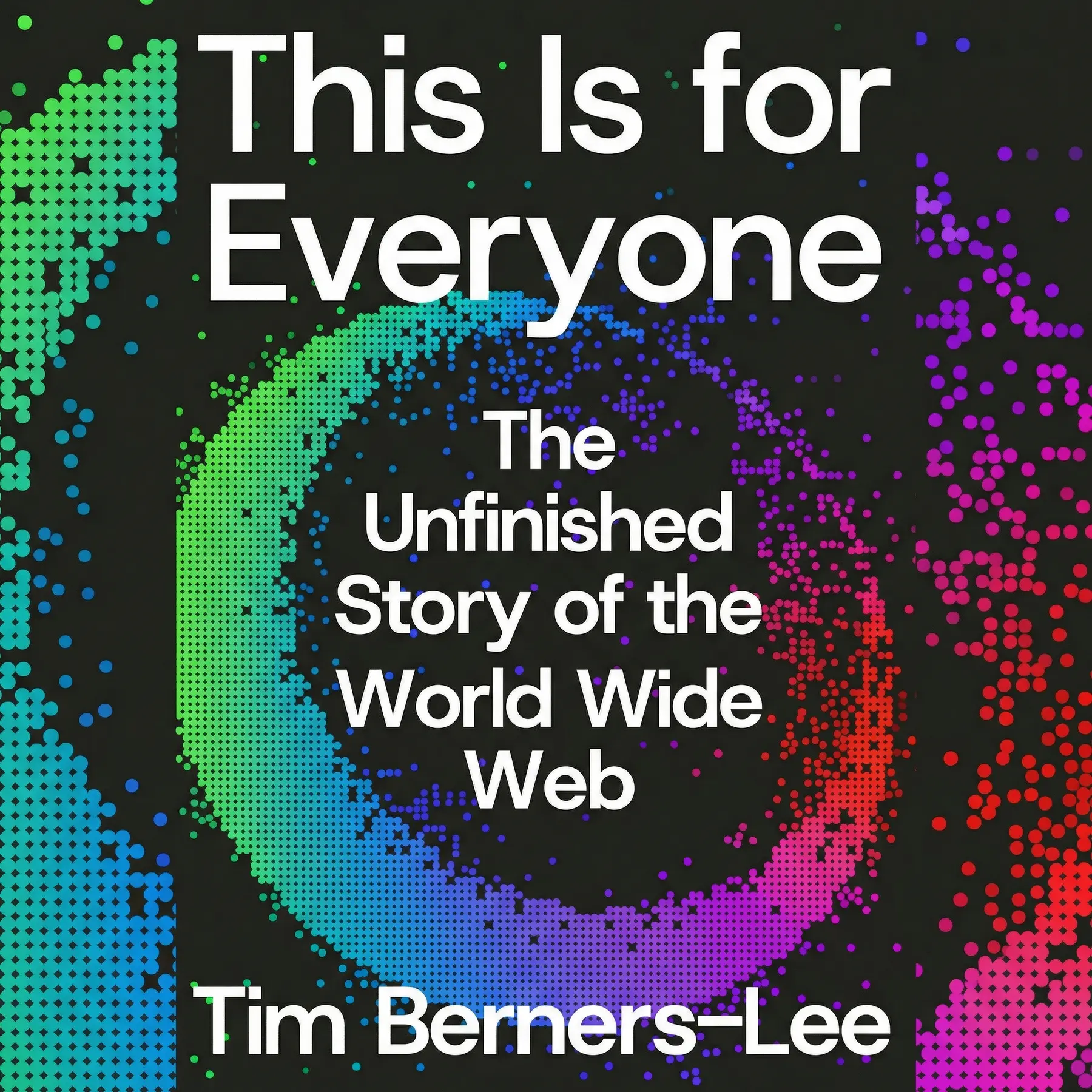
This Is for Everyone: The Unfinished Story of the World Wide Web
Explore the history and future of the World Wide Web through the eyes of its creator. This summary tracks the internet’s evolution from a collaborative scientific tool to a decentralized platform for human empowerment.
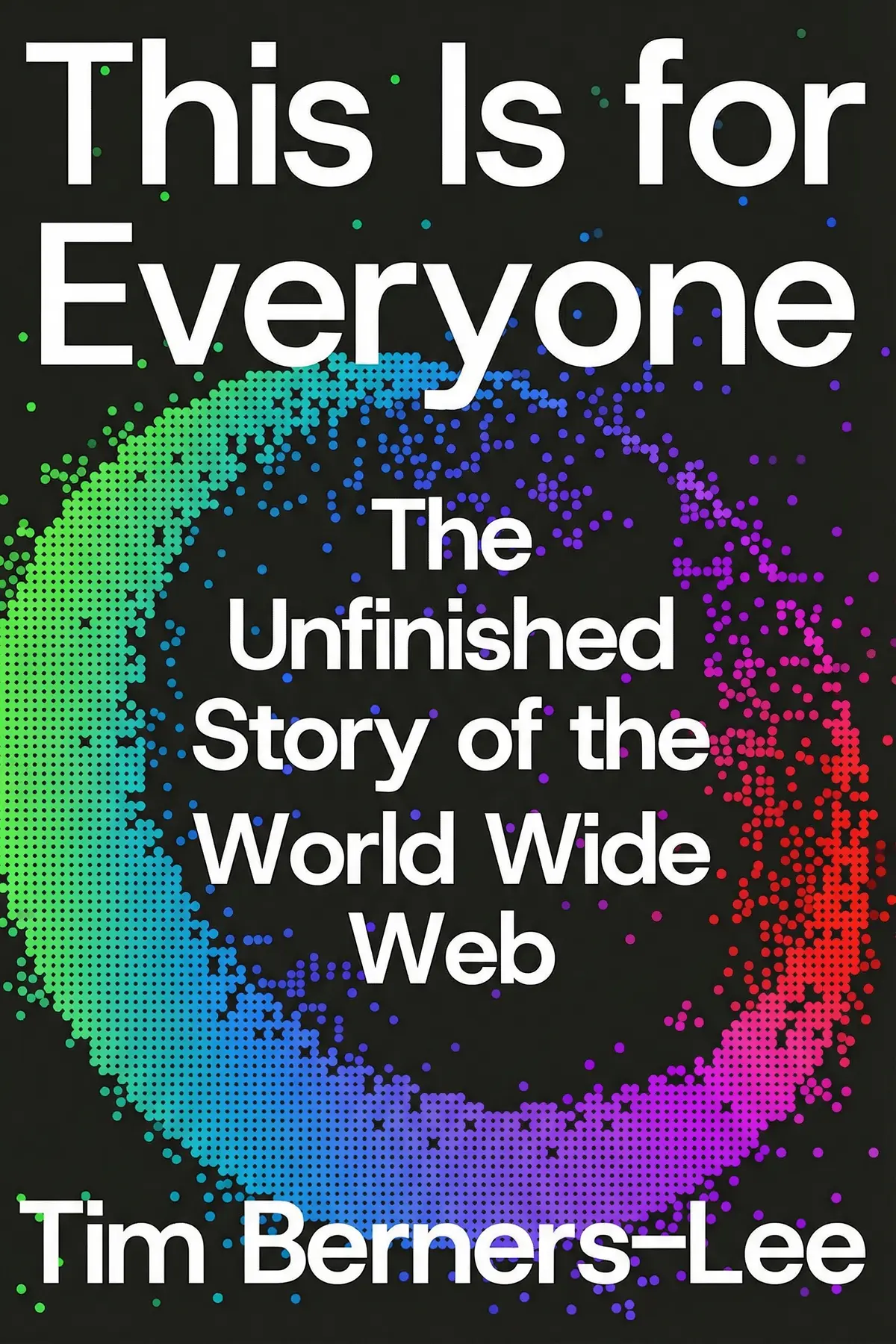
Table of Content
1. Introduction
1 min 31 sec
When we log onto the internet today, it often feels like a pre-packaged experience dominated by a handful of massive platforms. We scroll through feeds designed to grab our attention and find ourselves siloed into echo chambers. But it wasn’t supposed to be this way. The World Wide Web was originally conceived as a wild, decentralized space where anyone could link any idea to another, mirroring the complex and non-linear way the human brain actually functions. It was meant to be a tool of intention, not a machine for manipulation.
In this exploration of This Is for Everyone, we look at the life and philosophy of the man who started it all, Tim Berners-Lee. We will travel back to the laboratories of CERN in Switzerland to witness the moment the first protocols were written, and we’ll see why the decision to keep the web free and open was perhaps the most important choice of the twentieth century.
But this isn’t just a history lesson. It is a call to action. We’ll examine how the web drifted toward centralization and how modern innovations like data pods and decentralized platforms are attempting to steer it back on course. The throughline here is simple but profound: the web belongs to all of us. By understanding its origins and the mechanics of its current struggles, we can better advocate for a digital future that prioritizes human agency over corporate profit. Let’s dive into the story of how a single invention changed everything, and why its story is still being written.
2. A Foundation of Logic and Curiosity
2 min 34 sec
Discover how a childhood surrounded by pioneering computers and a homemade terminal built from scrap parts set the stage for a technological revolution.
3. The CERN Greenhouse for Innovation
2 min 45 sec
Explore the halls of a Swiss physics lab where the need for better communication led to a revolutionary way of linking human ideas.
4. Assembling the Web's Architecture
2 min 34 sec
Learn how three simple protocols and a sleek black computer transformed a dream of connectivity into a functional global reality.
5. Keeping the Keys to the Kingdom Free
2 min 40 sec
Trace the critical turning point when the web’s creators chose public domain over profit, ensuring the internet remained a tool for everyone.
6. The Shift from Intention to Attention
2 min 45 sec
Observe how the early, hand-crafted web gave way to a commercial landscape defined by tracking, cookies, and the erosion of privacy.
7. A Global Contract for the Digital Age
2 min 39 sec
Learn how the fight for internet freedom moved from the laboratory to the global stage, advocating for access as a fundamental human right.
8. Redesigning the Future with Solid and AI
2 min 44 sec
Explore a vision for a decentralized web where individuals reclaim their data and use AI as a personal assistant rather than a corporate spy.
9. Conclusion
1 min 52 sec
As we reach the end of this journey through the evolution of the World Wide Web, the central message of Tim Berners-Lee is clear: the internet is a reflection of us, and its future is within our control. We’ve seen how it began as a dream of universal connectivity in a Swiss physics lab, and how the pivotal decision to keep its core protocols in the public domain allowed it to explode into every corner of human life. We have also confronted the reality that the web’s success brought unforeseen challenges—centralization, the loss of privacy, and the rise of the attention economy.
However, the story doesn’t end with a lament for what has been lost. Instead, it points toward a new architecture. Through initiatives like the Contract for the Web and the development of the Solid platform, there is a clear path forward. By moving toward decentralized ‘data pods,’ we can reclaim our digital sovereignty. We can transform our relationship with technology so that our data works for us, enabling powerful AI assistants that respect our privacy rather than exploiting it.
The most important takeaway is that the web’s original spirit of ‘intercreativity’—the idea that we are all both creators and consumers—is still alive. It is visible in projects like Wikipedia and in the growing movement toward decentralized social media. To ensure a web that is truly ‘for everyone,’ we must remain vigilant about our digital rights and support standards that prioritize human agency. The web was built on the idea that linked ideas can solve any problem. If we can apply that same collaborative spirit to the way we govern our digital lives, the World Wide Web can still become the empowering, generous, and universal tool it was always meant to be. Thank you for listening to this BookBits summary.
About this book
What is this book about?
This Is for Everyone chronicles the remarkable journey of the World Wide Web, starting with Tim Berners-Lee’s early days at CERN and his vision for a non-linear, brain-like system of information exchange. It details the technical breakthroughs of HTML, HTTP, and URLs, while emphasizing the crucial decision to keep these protocols in the public domain. The narrative also addresses the challenges facing the modern internet, including the rise of centralization, data exploitation, and privacy concerns. By exploring current projects like Solid, the book offers a roadmap for reclaiming digital sovereignty. It promises a look at how we can return the web to its original purpose: a tool that serves all of humanity rather than a few corporate interests.
Book Information
About the Author
Tim Berners-Lee
Tim Berners-Lee is the British computer scientist who invented the World Wide Web while working at CERN in 1989. He later founded the World Wide Web Consortium (W3C) at MIT, which has guided the web’s open standards for more than three decades. A lifelong advocate for online freedom and user privacy, he continues to push for a more ethical, decentralized web through projects like Solid and his company, Inrupt.
Ratings & Reviews
Ratings at a glance
What people think
Listeners find this memoir to be an intriguing and approachable history of the World Wide Web's development, commending the author for his skill in translating dense technical evolution into simple, clear prose. Beyond this, they value the text’s relevant examination of online morality, data security, and the rising role of artificial intelligence. Listeners also enjoy the intimate details concerning the author's youth and professional milestones, with one listener remarking that being a "computer geek" is not a requirement to value the narrative. They further highlight the excellent production of the audiobook edition, particularly noting the narration style and the thought-provoking concluding interview conducted by Stephen Fry.
Top reviews
Valentina
Ever wonder how we went from a quiet lab in Switzerland to the absolute chaos of the modern internet? Sir Tim Berners-Lee finally gives us the definitive account of the web’s birth, and it is far more human than you might expect. I was particularly struck by his insistence that the web remains a 'universal' space. He explains the technical foundations—HTML, HTTP, and URLs—in a way that even my non-tech parents could easily follow. The book doesn’t shy away from the darker turns the internet has taken, like the rise of tracking cookies and corporate silos. However, his optimism about the 'Solid' project and personal data pods gives me a glimmer of hope. It’s a call to action for everyone who cares about digital freedom. Truly, this is an essential read for the 21st century.
Show moreChamlong
The audiobook version narrated by Stephen Fry is an absolute must-listen for anyone who appreciates tech history told with a bit of wit. Fry’s voice perfectly captures the nerdy, idealistic spirit that Berners-Lee brings to his writing. The concluding interview between the two of them was the highlight for me; it felt like eavesdropping on a conversation between two of the brightest minds in Britain. Berners-Lee’s story about growing up with parents who worked on the first commercial computers is incredible. It really puts into perspective how he was almost destined to build what he did. I loved the focus on the 'Contract for the Web' and the ethical responsibilities of big tech. If you’re tired of the 'move fast and break things' mantra of Silicon Valley, this book is the perfect antidote. Absolutely stellar.
Show moreRome
Wow. It is rare to hear from a living legend who isn't trying to sell you a subscription, a cryptocurrency, or a new piece of hardware. Sir Tim wrote this for everyone, and it shows in the inclusive tone he takes from page one. He could have been the richest man on earth if he had patented the web, but he chose to give it away for free at CERN. That selflessness shines through every chapter. The book details his fascinating journey from Oxford physics to the creation of the first web browser. I especially enjoyed the parts about his parents and their connection to Alan Turing. It’s a beautiful reminder that great inventions often come from a place of pure curiosity rather than just a desire for profit. Essential reading for every citizen of the web.
Show moreWyatt
This book serves as a vital reminder that the web was meant for humanity, not just for shareholder value. Berners-Lee writes with a clarity that demystifies the complex systems we use every single day. From the first web server on a NeXT machine to the global standards of the W3C, the journey is nothing short of miraculous. Frankly, I didn't realize how close we came to having a fragmented web owned by different corporations before CERN put the protocols in the public domain. The author's concern about AI and misinformation is timely and well-argued. He isn't anti-tech; he's pro-human. Reading this made me want to go out and support the open-source community immediately. It's an inspiring, accessible, and deeply ethical look at our digital world. Five stars for the man who gave us the world.
Show moreKwan
Not what I expected, but in the best way possible. I thought this would be a dry history of coding, but it’s actually a very warm and inviting look at a life spent solving problems. Berners-Lee has a way of making you feel like you were there at CERN with him, watching the first links come to life. The chapters on the 'Contract for the Web' and his work in developing nations show that his vision was always about empowerment. He really emphasizes that the web’s story is 'unfinished' and that we all have a role in fixing it. Whether he's talking about Alan Turing or the rise of deepfakes, his voice is consistently thoughtful and humble. This is a must-read for anyone who wants to understand the past, present, and future of our connected life.
Show moreYindee
As someone who spends way too much time online, reading this felt like looking at the architectural blueprints of my own digital house. Berners-Lee provides a fascinating look at the early days at CERN, working with NeXT computers and trying to convince the world that hyperlinking was the future. To be fair, the middle section gets a bit bogged down in the bureaucratic minutiae of the W3C standards, which might be a bit dry for some. But the way he connects his childhood in a house full of logic puzzles to the creation of a global network is masterful. I appreciate that he remains so grounded despite his legendary status. He didn't invent the internet, but he certainly gave it a soul. A very solid four-star read that makes you think twice about your data privacy.
Show morePakinee
Berners-Lee doesn't just dwell on the 90s; his insights into the future of AI and data decentralization are what make this book feel urgent. He discusses how the web moved from a decentralized dream to a corporate-controlled reality where our attention is the primary currency. Look, it’s not always a comfortable read, especially when he discusses how easily the tools he built have been used for political manipulation. Yet, his belief in the 'Semantic Web' and user-controlled data pods offers a practical roadmap out of our current mess. The writing style is clear and accessible, avoiding the dense jargon that usually plagues computer science memoirs. I did wish there was a bit more about his collaboration with Robert Cailliau, but overall, it’s a brilliant summary of where we’ve been and where we desperately need to go.
Show moreTun
Finally got around to reading this, and I was pleasantly surprised by how much of it focuses on his early life in London before the web was even a thought. His childhood home sounds like a paradise for a budding engineer, filled with logic puzzles and electronic components. These personal insights make the technical sections about CERN and the 'Enquire' program much more relatable. He explains the shift from the early, open web to the modern, tracked version with a sense of regret that is palpable. However, he doesn't just complain; he offers solutions. The discussion on 'Solid' and how we can reclaim our data from the giants like Meta and Google is the most important part of the book. It’s a bit idealistic at times, but we need that kind of idealism right now.
Show moreIff
Truth is, I was expecting a bit more introspection from the man who fundamentally changed human communication forever. While the historical details are undeniably interesting, the narrative often feels like a chronological list of events—'I did this, then I did that'—rather than a deep dive into his personal philosophy. It’s more of a career memoir than a reflective autobiography. I also found his stance on net neutrality a bit one-sided, though I understand why he holds those views so passionately. On the plus side, the sections regarding the future of AI were genuinely thought-provoking. He raises excellent points about how we can prevent AI from becoming another tool for corporate surveillance. It is an informative book, certainly, but it lacked the emotional resonance I was hoping for from such a visionary figure.
Show moreBam
While I have immense respect for Sir Tim's technical contributions, his policy arguments in the latter half of the book left me wanting a more balanced perspective. He makes an impassioned case for net neutrality and decentralized data, which is noble, but he doesn't fully address the practical economic challenges of those models. In my experience, the 'I did this, then that happened' style of the memoir also felt a bit repetitive after a while. It’s a very informative read for anyone curious about how HTML and URLs came to be, but it doesn't quite reach the level of a literary masterpiece. To be fair, he is a computer scientist, not a novelist. If you want a technical history, this is great. If you want a deep, philosophical meditation on the human condition in the digital age, you might find it a bit surface-level.
Show moreReaders also enjoyed
A River in Darkness: One Man’s Escape from North Korea
Masaji Ishikawa

A Spy Among Friends: Philby and the Great Betrayal
Ben Macintyre

21 Lessons for the 21st Century
Yuval Noah Harari

A Year in the Life of William Shakespeare: 1599
James Shapiro

AUDIO SUMMARY AVAILABLE
Listen to This Is for Everyone in 15 minutes
Get the key ideas from This Is for Everyone by Tim Berners-Lee, plus 5,000+ more titles in English and Thai.
- 5,000+ titles
- Listen as much as you want
- 7-day free trial
- Cancel anytime







