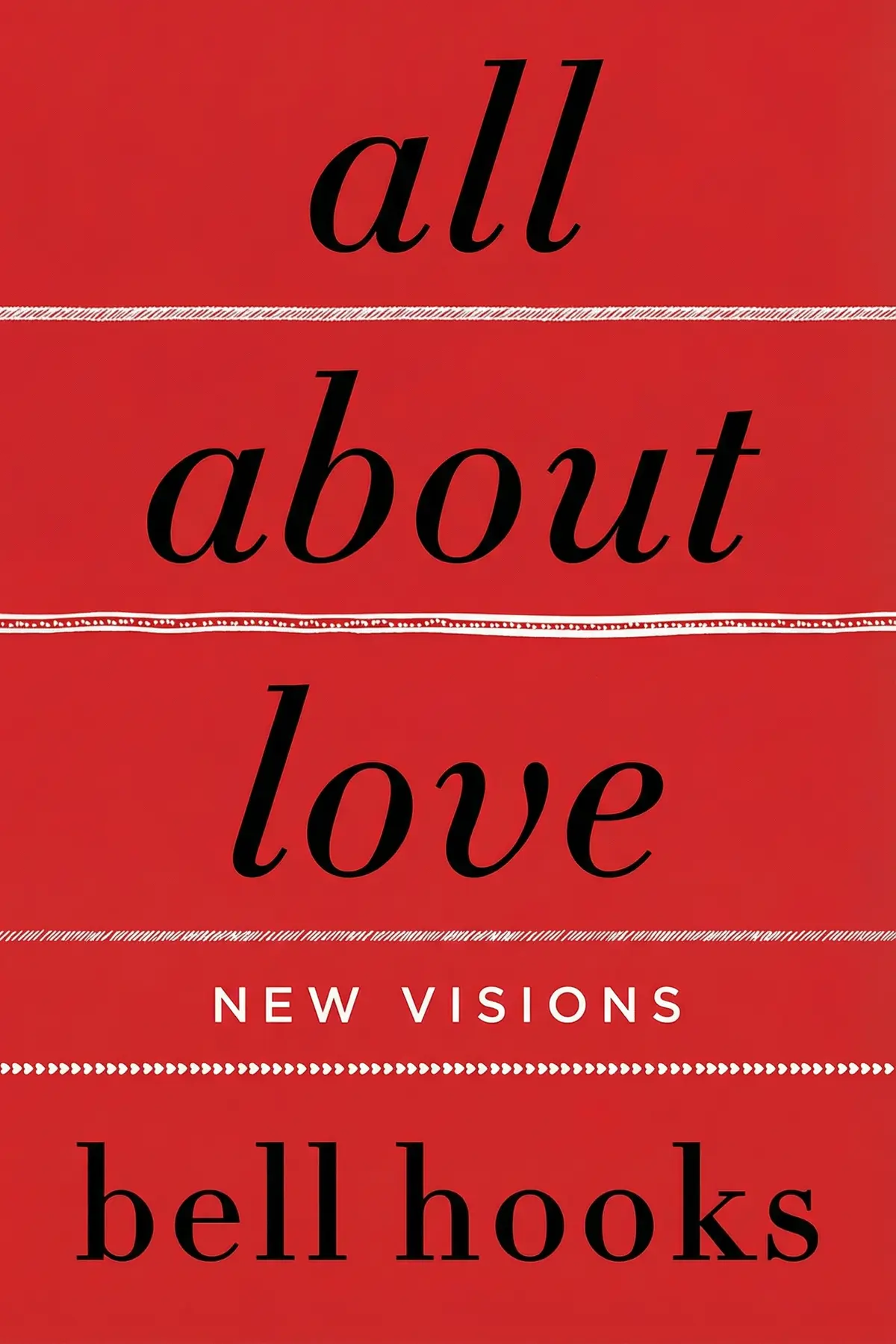
All About Love: New Visions
bell hooks
A deep dive into how external pressures—rather than personal failings—disrupt romantic partnerships, offering research-backed strategies for co-regulation, managing the mental load, and maintaining intimacy under pressure.
2 min 04 sec
Imagine a couple who, on a typical Tuesday, seems perfectly in sync. They handle the morning rush with ease, exchange supportive texts throughout the workday, and share a quiet dinner where they truly listen to one another. But then, a major life change occurs. Perhaps one partner takes on a high-stakes promotion, or they move to a new city, or they welcome a first child. Suddenly, the harmony vanishes. The very same people who once communicated with grace are now snapping at each other over the dishes or retreating into icy silence. They begin to wonder: Did we make a mistake? Is the love gone?
This is a crossroads that almost every long-term partnership eventually hits. However, the true culprit often isn’t a lack of love or a fundamental incompatibility. Instead, it is the invisible, heavy hand of stress. In our modern world, we are under more pressure than ever before. Studies show that a vast majority of parents and professionals are operating at their limit, yet we rarely acknowledge how this physiological state alters our personality and our ability to relate to those we love most.
In this exploration of the forces that pull us apart, we are going to look at the intersection of neuroscience and partnership. We will see why your brain literally prevents you from being a ‘good partner’ when you’re in a state of high alert and how you can stop blaming each other for what is actually a biological response. By the end of this journey, you’ll have a new framework for understanding conflict, not as a sign of failure, but as an opportunity to practice the science of connection. The goal isn’t to live a life without stress—that’s impossible—but to ensure that stress never becomes the primary narrator of your love story.
2 min 54 sec
Discover why your brain’s survival mechanisms can turn a simple discussion into a battlefield and how to move from a stressed state back to safety.
3 min 07 sec
Learn to recognize the three distinct ways people react to pressure and how identifying these archetypes can stop toxic conflict loops.
3 min 03 sec
Explore the hidden burdens of domestic management and how societal expectations can create deep-seated resentment in even the strongest couples.
2 min 46 sec
Learn why the presence of a calm partner is one of the most powerful tools for biological stress reduction and how to master it.
2 min 40 sec
Uncover how stress acts as either a brake or an accelerator for sexual desire and how to bridge the gap when partners react differently.
2 min 42 sec
Re-evaluate the pressures you take on and learn why ‘good’ stress can sometimes lead to relationship burnout if it lacks a deeper purpose.
1 min 43 sec
As we conclude this exploration of how stress shapes our love lives, the most important takeaway is a shift in perspective. You are not a bad partner, and your loved one is not the enemy. You are two human beings with sensitive nervous systems trying to navigate a world that is often too loud, too fast, and too demanding.
We’ve seen how biology can hijack our best intentions, turning safe brains into survival brains. We’ve learned that the mental load and societal expectations are external forces that we must dismantle together. We’ve discovered the healing power of co-regulation and the importance of protecting our intimacy from the ‘brakes’ of modern life. Finally, we’ve looked at the necessity of the North Star—the core values that help us say ‘no’ to the wrong things so we can say ‘yes’ to each other.
Moving forward, try to view your next conflict through this lens. When tension rises, ask yourself: Is this about us, or is this about the stress in the room? Take that deep breath, monitor your heart rate, and remember that your partner is your greatest ally. By choosing to face the world’s pressures as a team, you don’t just survive the stress—you use it to forge a bond that is stronger and deeper than you ever thought possible. You have the tools now to move from a state of ‘us versus them’ to a state of ‘us versus the world,’ and that is where true, lasting love lives.
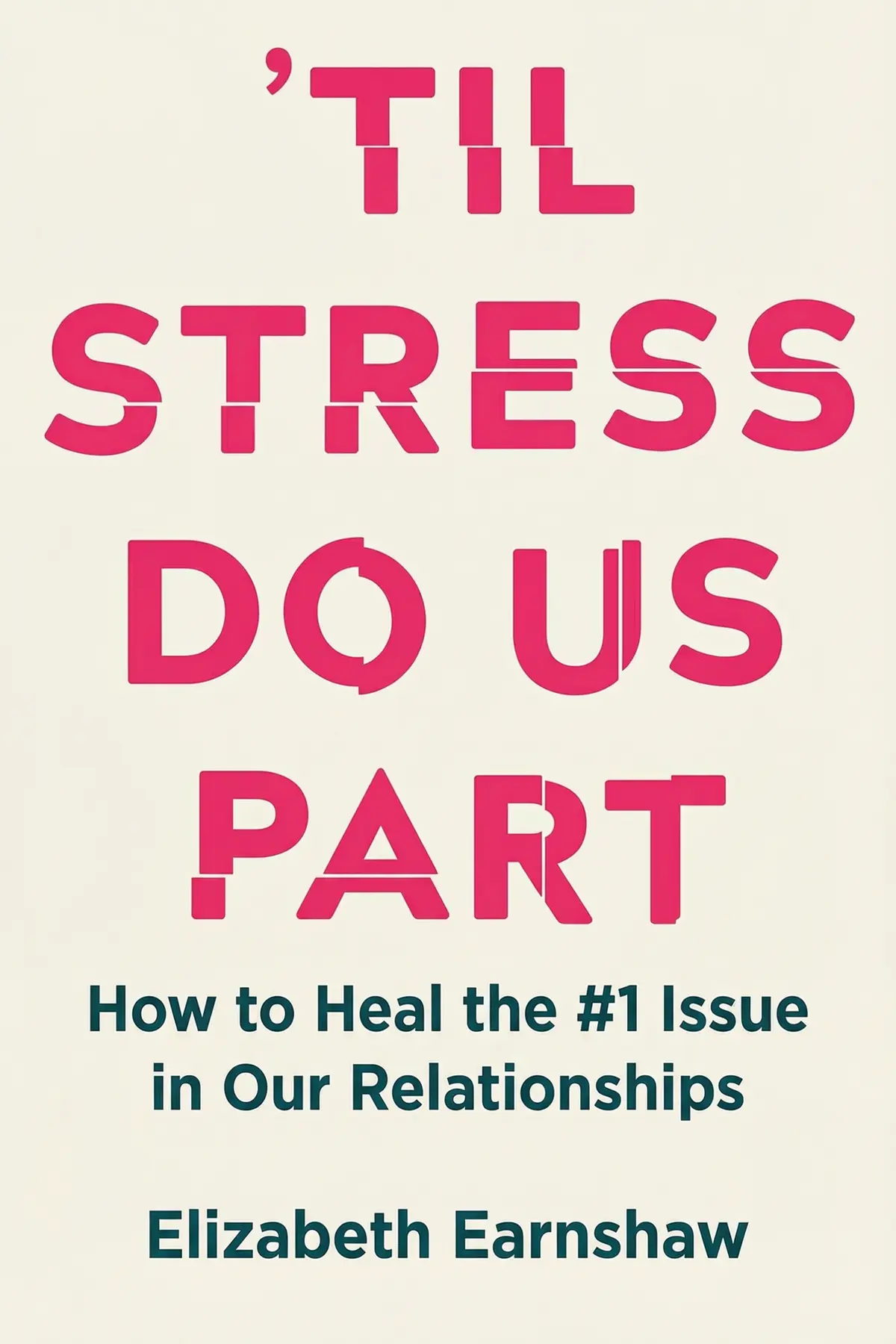
Modern life is saturated with stress, from career demands to the invisible labor of maintaining a home. This book explores how these external forces infiltrate our relationships, triggering biological survival mechanisms that shut down communication and foster resentment. It posits that the central conflict in many relationships isn't 'you versus me' but rather 'us versus the stress.' Through the lens of family therapy and neuroscience, the book provides a roadmap for couples to identify their specific stress responses—whether they lash out, run away, or shut down entirely. Readers will learn the vital difference between self-regulation and co-regulation, how to balance the mental load fairly, and ways to protect their physical intimacy from the dampening effects of high cortisol. By identifying their 'North Star' or core values, couples can begin to choose their stressors more wisely and build a resilient bond that withstands the chaos of the outside world.
Elizabeth Earnshaw is a licensed marriage and family therapist and a prominent educator on contemporary relationship dynamics. As the founder of A Better Life Therapy, she provides a wide range of counseling services and is well-regarded for her research-based approach to stress management and emotional connection. Her work has helped many couples build healthier relationships through approachable, compassionate guidance.
Listeners appreciate the book's deep wisdom and actionable tips, noting how it aids in focusing on what truly matters in life. Many find the content highly relatable, with one listener highlighting its raw and insightful approach to the struggles couples face.
I’ve read a lot of relationship books, but Earnshaw’s voice feels different—more human, less like a clinical lecture. She really nails the concept of the 'mental load' and how resentment builds when one person is doing all the researching and worrying behind the scenes. Honestly, that section on the 'four horsemen' was a huge wake-up call for how I handle my own anxiety-driven criticisms. It's not just theory; it’s like she’s sitting there with you, admitting she also struggles to spot her own patterns sometimes. Totally recommend if you feel like stress is drowning your connection.
Show moreIf you liked Lori Gottlieb’s 'Maybe You Should Talk to Someone,' you will probably love this. Elizabeth Earnshaw manages to be both the expert and the student in her own life, which makes the advice feel much more attainable. The way she describes 'roles' in a relationship—how we wear so many hats today—really hit home for me. We aren't just partners; we’re co-managers, roommates, and caregivers all at once. It’s a raw look at how stress is basically the silent killer of intimacy. Truly an insightful manual for modern love.
Show moreWow. This sentence hit home: 'In order to avoid dealing with arguments... one partner takes it over.' I felt so seen! This book perfectly captures that cycle of quiet resentment when one person tries to shield the other from stress, only for it to blow up later. It’s relatable, easy to digest, and actually gives you words to use during those tense moments. It’s the kind of book you want to leave on your partner’s nightstand (with some highlighted passages, obviously). Best thing I've read on the subject in a long time.
Show moreHonestly, just read it. Even if you think your relationship is 'fine,' the way Earnshaw explains how stress leaks into our communication is eye-opening. The 'name it to tame it' strategy has already saved us from at least three pointless bickers this week. It's simple, it's practical, and it prioritizes what actually matters in the long run. A must-read for anyone feeling burnt out by their schedule and their various roles.
Show moreThis was a solid read with some really practical takeaways for navigating the chaos of daily life. I particularly liked the client stories because they made the concepts feel less abstract. However, I’ll be honest—some of the advice felt a bit like common sense packaged as new insights. Like, obviously external stress impacts your mood? But the way she breaks down the 'name it to tame it' method helped me rethink how I approach arguments. It's a 4-star for me because while it’s very helpful, some chapters felt slightly repetitive.
Show moreVery practical, though it might not be for everyone. I felt like the book was at its strongest when discussing the 'invisible' work we do—the planning, the delegating, the constant mental tab-keeping. It’s not strictly a couples therapy book, but it gives you the tools to stop blaming your partner for things that are actually just symptoms of being overwhelmed by life. I did find myself skimming some of the intro bits that felt a bit 'surface level,' but the feedback notes at the end of each session were pure gold.
Show moreThis is a really helpful guide for anyone feeling the 'physical, emotional, and mental load' of a fast-paced world. Earnshaw is a very 'human' therapist; she admits when she's wrong and uses her own relationship blunders to teach us. I loved the 'good enough mother' section because I struggle so much with perfectionism. My only gripe is that it sometimes ignores how external systemic stresses can't always be 'solved' with a mindset shift. Still, it's a great tool for your relational toolbox if you’re willing to do the work.
Show moreSolid 4 stars. It’s a quick read and very accessible. I appreciated that it wasn't overly academic, though she clearly has the research to back up her points. The 'scathing but likable' tone she mentions is exactly how the book feels—she’s blunt about where we mess up, but she’s on your side. I would have liked a bit more focus on long-term financial stress, as that felt a little rushed, but overall, it’s a great resource for managing the daily grind without taking it out on your spouse.
Show moreI’m really torn on this one. On one hand, the patient stories are deeply moving and provide a lot of context for how stress manifests in a marriage. On the other hand, the 'solutions' provided often felt inadequate for the weight of the problems described. She’ll describe a traumatic event like a terminal illness or job loss, and then follow it up with tips that felt a little too simple for that level of grief. I listened to the audiobook, and the narrator’s tone was so consistent it almost became monotonous, which didn’t help. It’s okay, but maybe didn't meet my high expectations.
Show moreI don't know, I just felt like this didn't tell me anything I hadn't already heard on a basic wellness podcast. It’s a lot of 'duh' moments for me. If you’re already aware of your stress triggers, you might find the substance lacking. The patient stories were the only thing that kept me reading, but even those felt a bit glossed over in favor of quick fixes. I was looking for something deeper, and this just felt like a collection of generic relationship tropes. Just didn't land for me personally.
Show moreAUDIO SUMMARY AVAILABLE
Get the key ideas from ‘Til Stress Do Us Part by Elizabeth Earnshaw, plus 5,000+ more titles in English and Thai.