
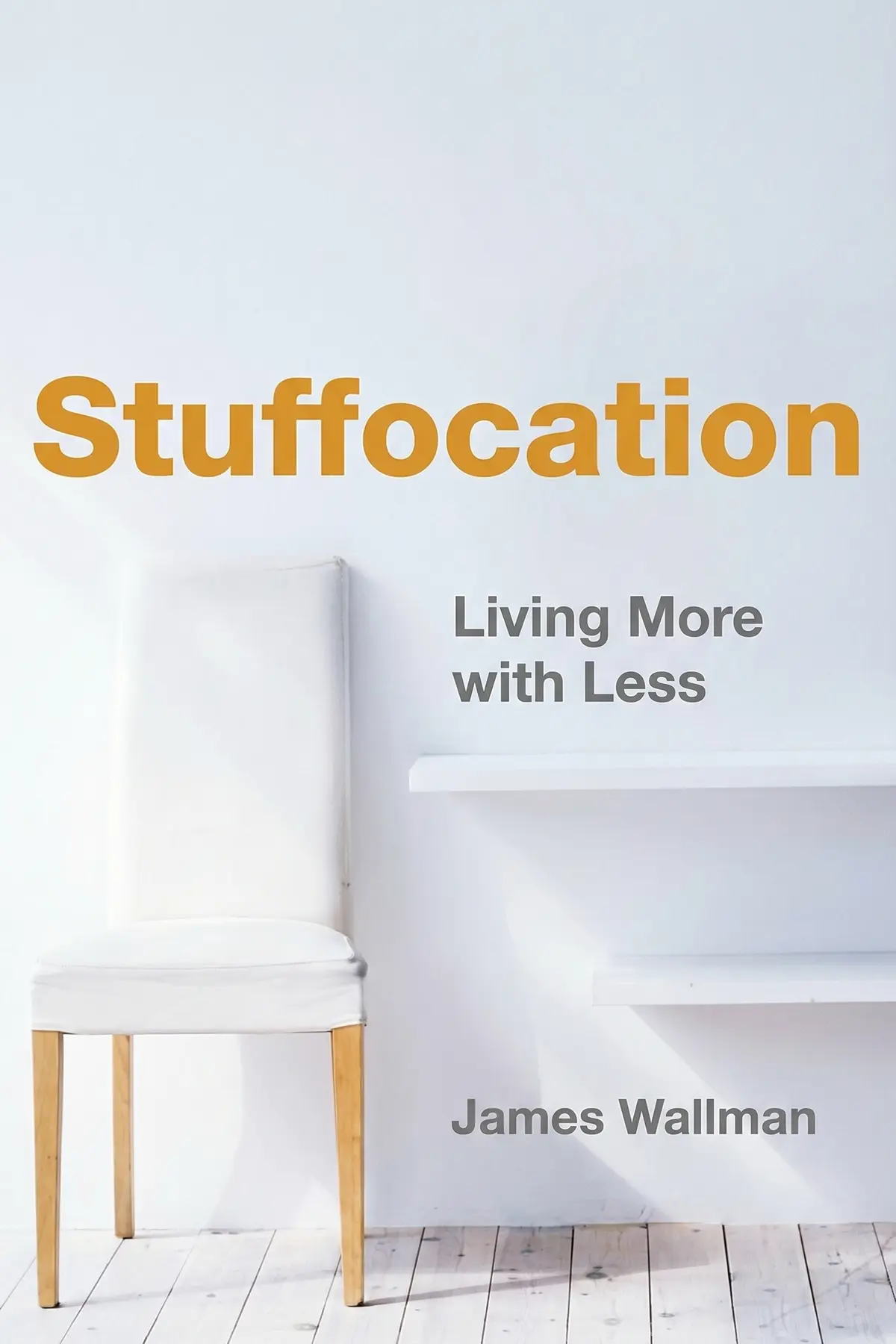
Stuffocation: Living More with Less
James Wallman
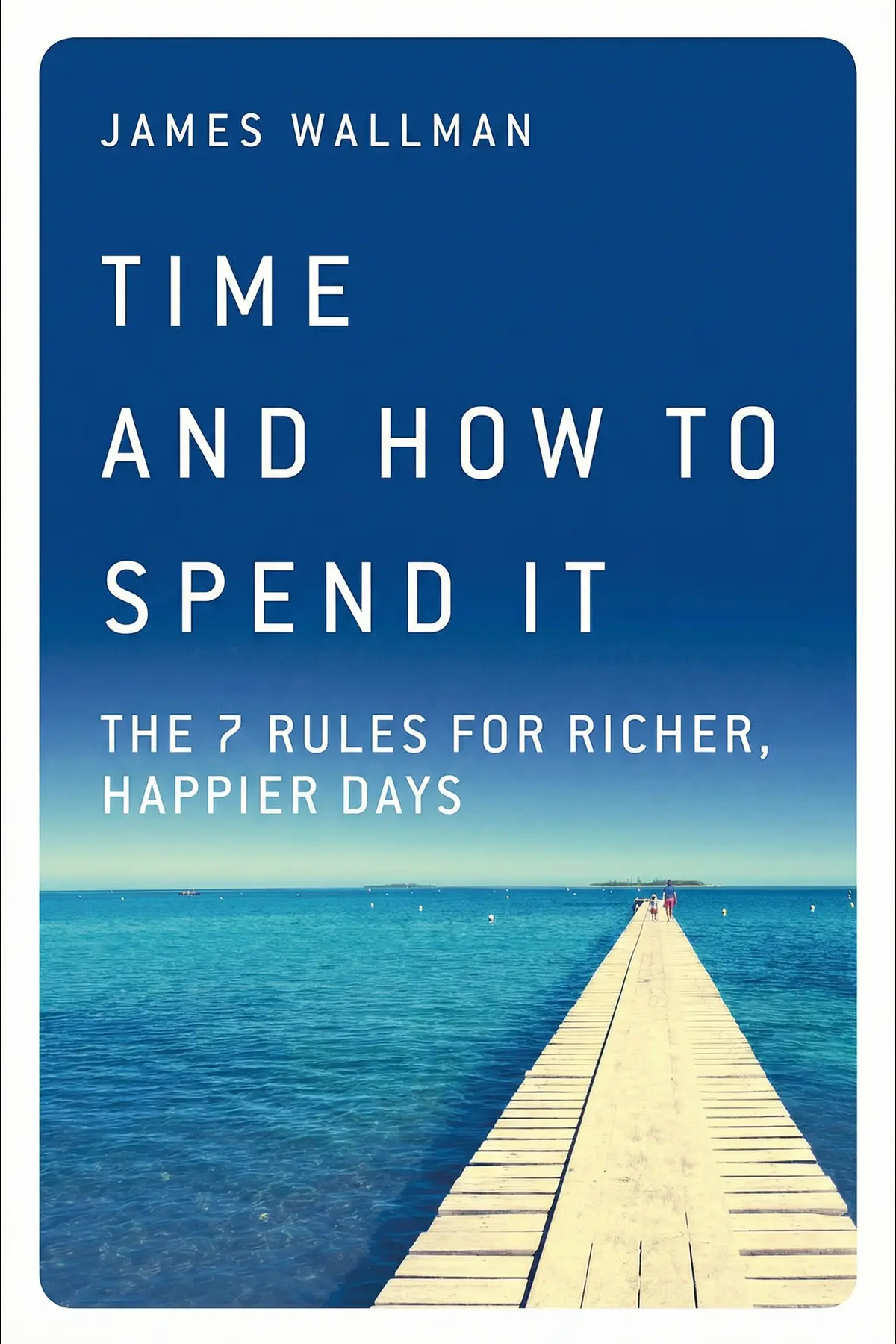
Discover how to transform your free time from mindless scrolling into meaningful growth. This guide offers a science-backed framework to prioritize experiences that lead to lasting happiness, success, and personal fulfillment.
2 min 17 sec
Imagine for a moment that you’ve just been handed a massive inheritance. But instead of money, this fortune is paid out in seconds, minutes, and hours. Every single day, your account is refreshed with twenty-four hours to spend exactly as you please. Now, ask yourself: are you spending that wealth like a connoisseur, or are you letting it slip through your fingers like sand?
Most of us live in a state of constant ‘time poverty.’ We feel rushed, distracted, and perpetually behind. We spend our workdays dreaming of the weekend, but when the weekend finally arrives, we often find ourselves slumped on the sofa, scrolling through social media or binge-watching shows that we won’t even remember by Monday morning. We’ve been taught how to be productive at the office, but we’ve never been taught how to be ‘happy’ with our leisure.
James Wallman, a trend forecaster who has spent years studying the intersection of culture and well-being, suggests that our approach to free time is fundamentally broken. He argues that the key to a flourishing life isn’t about working harder or earning more; it’s about choosing better experiences. In this journey, we’re going to explore a specialized toolkit designed to help you curate your life. Based on research from some of the world’s most prestigious universities—from Harvard to the London School of Economics—we will break down a seven-part framework known as the STORIES checklist.
This isn’t just a list of hobbies. It’s a way to evaluate how every hour you spend contributes to your identity, your health, and your long-term success. By the end of this summary, you’ll understand how to stop killing time and start investing it. You’ll see why a difficult hike might be more relaxing than a movie marathon, and how becoming the hero of your own narrative can change everything. So, let’s take a look at how you can stop being a passive spectator in your own life and start building a story worth telling.
2 min 44 sec
Why does having more free time often make us feel more stressed? Explore the transition from material wealth to experiential richness and why happiness is the ultimate lead indicator for success.
2 min 51 sec
Your life isn’t a highlight reel—it’s a story waiting to be written. Discover how reframing your time through narrative transforms ordinary moments into chapters of genuine growth and meaning.
2 min 57 sec
We often believe we are finished products, but true fulfillment comes from constant change. Learn how to plan your leisure time for personal growth and avoid the ‘end of history’ illusion.
3 min 09 sec
Your brain is hardwired for the great outdoors, yet we spend our lives tethered to screens. Discover the biological benefits of ‘forest bathing’ and the hidden cost of the digital world.
2 min 47 sec
Your body treats loneliness like smoking fifteen cigarettes a day. Discover why meaningful connection isn’t a luxury—it’s a biological necessity that determines your health and happiness.
2 min 48 sec
What if you could lose yourself in an activity so completely that time seems to disappear? Learn the difference between ‘real flow’ and ‘fake flow’ and why intensity is the key to joy.
3 min 01 sec
Our memories don’t record every second of an experience equally. Discover the psychological ‘shortcuts’ our brains use to evaluate our past and how to use them to plan better days.
2 min 47 sec
Status isn’t just about fancy cars or job titles; it’s about having the power to shape your world. Explore why using your time to help others might be the smartest move for your own happiness.
2 min 08 sec
We’ve traveled through the seven pillars of the STORIES framework, and by now, the message should be clear: your free time is a precious, non-renewable resource that deserves as much intentionality as your career or your finances. We’ve seen how viewing your life as a narrative can give your choices direction, and how transformation keeps you from becoming a static version of yourself. We’ve explored the vital need to step outside and unplug, and the biological imperative to foster deep relationships. We’ve learned that intensity leads to flow, that extraordinary moments define our memories, and that true significance comes from contribution.
Now, it’s time to move from theory to action. The most immediate thing you can do to reclaim your time is to conduct a ‘digital detox.’ This coming weekend, try to go entirely offline. From Friday evening until Sunday night, put the screens away. Step into the ‘real’ world. Go for a hike, meet a friend for a long walk, or start that project you’ve been putting off because you were ‘too busy.’
Notice the sensations that arise. You might feel a twitch to check your phone, a phantom vibration in your pocket. That’s the feeling of your brain beginning to rewire itself. In those quiet moments, you’ll find the space to ask yourself: What story am I writing today? Does this activity make me more capable? Does it connect me to the people who matter? By using the STORIES checklist, you can stop letting your time just ‘happen’ to you. You can start spending it with the wisdom of someone who knows that every hour is an opportunity to be happier, healthier, and more truly alive. The clock is ticking, but for the first time, you have the map to make every second count.
Do you ever reach the end of a weekend feeling just as exhausted as when it began? Many of us suffer from a strange paradox: we have more hours of leisure than ever before, yet we feel increasingly starved for time. This summary explores the groundbreaking shift from a culture of material accumulation to one of experiential richness. It argues that the secret to a successful life isn't hidden in your work habits, but in how you navigate your hours off the clock. By introducing a seven-part checklist, the text provides a practical lens through which to view every potential activity. You will learn why nature and physical movement are non-negotiable for mental health, how to distinguish between true engagement and passive consumption, and why the stories we tell about our lives are our most valuable assets. This isn't just about time management; it is about life management. The promise is a blueprint for escaping the 'time famine' and building a legacy of memories that offer enduring satisfaction rather than fleeting distractions.
James Wallman is a highly regarded cultural commentator and professional trend forecaster whose insights are sought after by global brands like Google and the Royal Academy. As the head of a consultancy serving clients such as Eventbrite and KFC, he specializes in identifying the shifts that define modern life. His expertise has been featured in major outlets including the New York Times and GQ. Wallman is also the author of the international best-seller Stuffocation, which examined the downsides of our obsession with material goods.
James Wallman
Listeners find that *Time and How to Spend It* offers a compelling system for choosing significant moments instead of material goods. They value the way the text integrates psychology and "flow" research, with one listener noting it provides a "powerful insight" into how we value our time. Additionally, the "STORIES" checklist is highlighted as a functional resource for attaining personal growth and fulfillment. They also point out that while some feel the intentional planning can make leisure feel like a task, the book is ultimately viewed as a revitalizing and helpful guide for optimizing happiness.
Ever wonder why you feel so drained after a weekend of Netflix and mindless scrolling? This book provides a much-needed wake-up call regarding how we squander our most precious resource. The STORIES checklist is a brilliant tool for anyone wanting to move away from 'stuffication' toward truly transformative experiences. I particularly liked the sections on seeking flow and the importance of getting offline to reconnect with the real world. It’s not just about being busy; it’s about being intentional with your narrative arc. Wallman synthesizes a lot of complex psychological research into something that feels actionable and urgent. While some might find the planning aspect a bit intense, I think it’s necessary for those of us stuck in a rut of passive consumption. My weekends have already started to feel more meaningful.
Show morePicked this up because I felt like I was drowning in 'stuff' and losing my sense of purpose. Wallman’s previous book 'Stuffocation' laid the groundwork, but this one provides the actual blueprint for what to do next. The idea of being the 'hero' of your own story by seeking out challenging, novel experiences resonated deeply with me. It’s about more than just having fun; it’s about transformation and growth. The STORIES checklist is something I’ve now taped to my fridge to help me plan my months. I love how he uses positive psychology to validate why we need 'extraordinary' moments rather than just more possessions. It’s a brilliant, life-affirming read that I’ve already recommended to several friends. If you want to maximize your happiness and build better social relationships, this is the book you need.
Show moreJames Wallman writes with that snappy, anecdote-heavy rhythm that fans of Malcolm Gladwell will immediately recognize. He manages to weave together stories about fruit machines, Pavlov’s dogs, and ancient philosophy to explain why we’re so bad at being happy. The central thesis is that we need to stop buying things and start investing in 'Experience Intelligence.' Truth is, the book is a bit eclectic, jumping from one study to another like a caffeinated toddler, but it mostly works. I did find the constant use of 'middle-class' examples like opera tickets and luxury camping a bit alienating. However, the underlying message about building a personal hero’s journey is compelling enough to overlook the occasional tone-deafness. It’s a solid blueprint for personal growth that challenges the way we view our social status and daily habits.
Show moreTo be fair, the advice about going offline and getting wild actually changed my perspective on weekends. I tried his 'no-internet' experiment from Friday evening to Sunday evening, and the withdrawal was eye-opening. We spend so much time on 'brain candy' like social media that we forget how to engage with the physical world. Wallman makes a strong case for why these digital habits keep our cortisol levels high and our fulfillment low. The STORIES framework—specifically the focus on 'Intensity' and 'Relationships'—is a practical guide for anyone feeling hollowed out by consumer culture. I appreciated how he linked our well-being to the stories we tell about ourselves. While the prose is a bit dense in parts, the actionable advice is worth the effort. It's a powerful insight into how we value our time in the 21st century.
Show moreFinally got around to finishing this after my husband recommended it. It’s a very cool book that offers a lot of powerful insight into the value of our time. Wallman’s style is very accessible, making it a great gift for anyone who feels like they’re just going through the motions. I especially liked the focus on 'flow' and how to find it in everyday activities. It makes you realize how precious each hour is and how easily we throw them away on things that don't matter. While some of the 'STORIES' elements were more relevant to my life than others, the overall message is incredibly positive. It’s a refreshing change from the typical 'hustle' culture books that tell you to work more. This is about living more.
Show moreAfter hearing so much buzz about 'Experience Intelligence,' I decided to give this a go. The book follows the typical non-fiction formula: one big idea, a catchy acronym, and a lot of familiar psychological experiments. You’ve got your marshmallow test and your flow theory, all stirred together with a bit of British wit. In my experience, the writing style can be a bit rambling, which makes the core message harder to find than it should be. Wallman over-explains things that are fairly intuitive, leading to a lot of preamble before getting to the crux of the chapter. That said, the synthesis of the narrative arc was genuinely insightful. It provided a baseline theory for how to view my life experiences as a cohesive story rather than a series of random events. It’s a decent 3-star read, but it could have been much more succinct.
Show moreThe core argument here—that we should prioritize memories over material goods—is hardly a new concept in the self-help world. However, Wallman’s approach feels uniquely tailored for our current era of dispersed attention and digital overflow. He argues that we need a specific kind of 'intelligence' to navigate the menu of experiences available to us. Personally, I found the connections he made between social status and health to be the most fascinating part of the book. It’s a taboo subject, but the research he cites is quite convincing. On the downside, the book can feel a bit like an academic paper that didn't have enough jargon to get published elsewhere. It’s a bit dry, and the 'fruit machine' analogies get a bit tired after a while. Still, it’s a thought-provoking framework for anyone looking to optimize their happiness.
Show moreLook, I’m a productivity nerd, but this book almost ruined my Saturday. While Wallman provides some solid research on 'flow' and happiness, his methods for planning free time felt like adding more chores to my to-do list. I want my leisure to feel spontaneous, not like a project-managed operation with a checklist. To be fair, the STORIES framework is logical, but it sucks the joy right out of a lazy afternoon. If you’re looking for a way to actually relax without feeling like a failure, I’d suggest reading 'Four Thousand Weeks' instead. That book offers a much-needed reprieve from this type of high-pressure self-optimization. Wallman’s focus on 'Experience Intelligence' is an interesting concept, but the execution is a bit too rigid for my taste. It’s a decent read for those who need a kick in the pants, but a bit exhausting for the rest of us.
Show moreHonestly, this felt like an academic paper that lacked the courage to stay in a journal. The author takes a simple idea—spend time on experiences, not things—and stretches it out with endless examples and over-explanation. I ended up reading most of it on double speed because the preamble for each chapter was just too much. I don’t need twenty pages of narrative build-up to understand that going outside is good for me. While the 'narrative arc' concept was a useful takeaway, the rest of the book felt like a used car sales pitch for a lifestyle I’m not sure I want. Planning my free time according to a seven-point checklist sounds like the opposite of a good time. It’s a classic case of a great essay being inflated into a mediocre book.
Show moreNot what I expected, and frankly, quite insulting to anyone who isn't living a comfortable middle-class life. The author spends hundreds of pages arguing that stuff doesn't matter, yet uses examples that require a significant amount of disposable income. He laments the 'horror' of a woman having to camp in a tent, as if that isn't a standard holiday for most people. Also, suggesting opera tickets as an accessible way to build 'status' is laughable. I felt like I lost IQ points reading some of these chapters. The 'STORIES' acronym is just a way to repackage basic common sense—go outside, talk to people, turn off your phone. I paid full price for this paperback and I genuinely feel like I wasted my time. It’s a self-help book that pretends to be for everyone but is really just for people with too much money and not enough imagination.
Show more
Richard Wiseman
William B. Irvine
Andrew D. Thompson
Deepak Chopra
AUDIO SUMMARY AVAILABLE
Get the key ideas from Time and How to Spend It by James Wallman, plus 5,000+ more titles in English and Thai.







