
17 min 38 sec
Stuffocation: Living More with Less
Stuffocation examines the modern crisis of material overload and proposes a shift toward experientialism. It explores how prioritizing memories over possessions can lead to greater happiness, health, and economic sustainability.
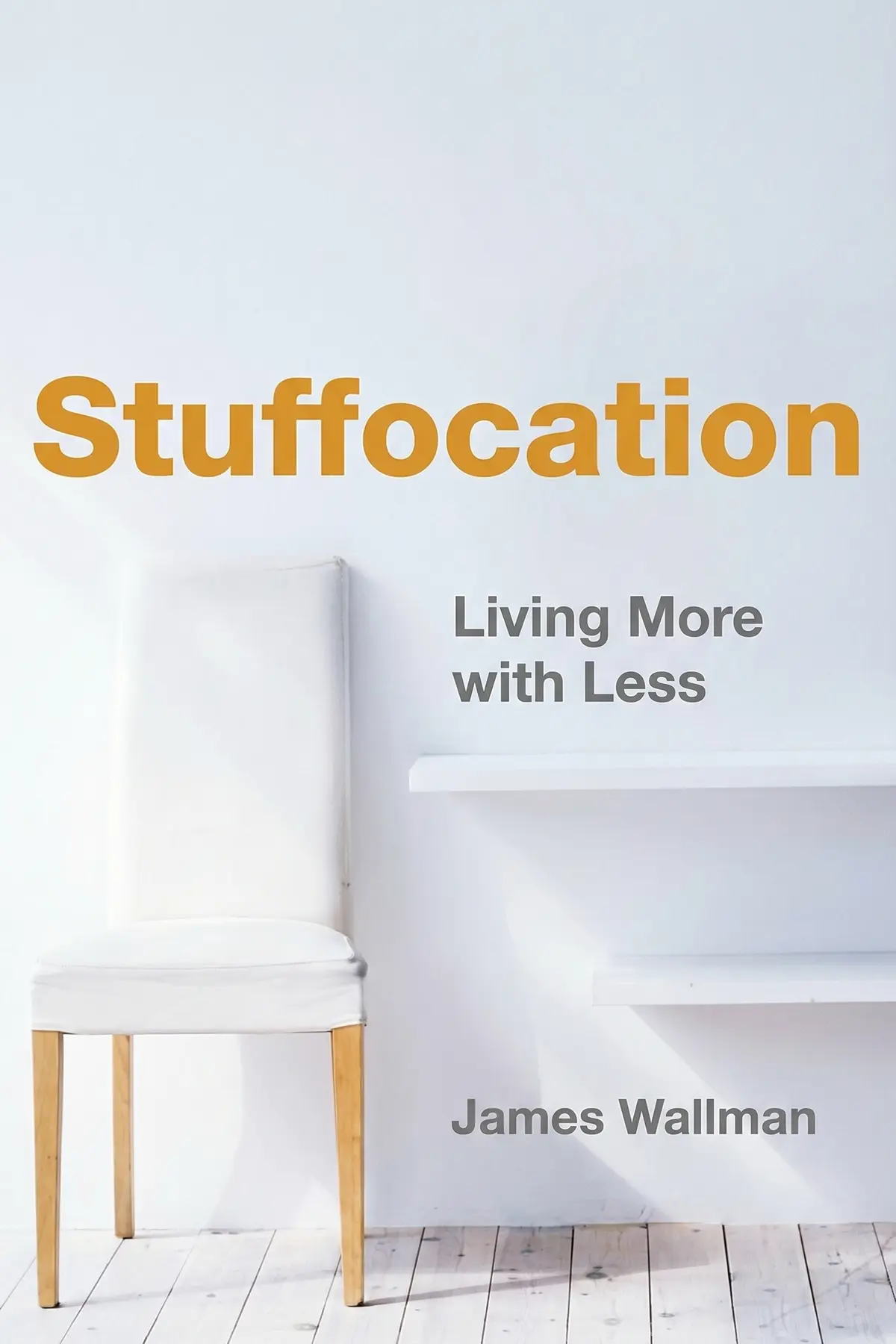
Table of Content
1. Introduction
1 min 31 sec
Imagine walking through your home and feeling a strange sense of weight, even though you aren’t carrying anything. Look around at the shelves packed with books you’ll never re-read, the closets bursting with clothes you haven’t worn in years, and the drawers filled with gadgets that seemed essential at the time but now just take up space. This feeling of being overwhelmed by our own belongings is what James Wallman calls ‘stuffocation.’ It is the defining claustrophobia of the twenty-first century. For decades, the narrative of success has been tied to accumulation—the idea that the more we have, the happier and more secure we will be. But that narrative is beginning to crumble under its own weight.
In this exploration of our relationship with things, we are going to look at why our obsession with material goods is actually making us less happy and how it’s even endangering our health. We will journey through the history of how we became such prolific consumers and why the economic models of the past are no longer serving us. More importantly, we will look at the emerging shift toward a different way of living. This isn’t just about throwing things away; it’s about a fundamental change in values. We are moving from an age of ‘having’ to an age of ‘doing.’ By the end of this summary, you’ll understand how choosing experiences over objects can provide a richer, more meaningful life while actually helping the world around you thrive. Let’s dive into how we can move past the clutter and find a new sense of freedom.
2. The Weight of Material Abundance
2 min 07 sec
We are living through a historical shift where having more no longer equals feeling better, as our biological instincts clash with modern overabundance.
3. The Physical and Mental Toll of Clutter
2 min 13 sec
Beyond mere annoyance, an excess of possessions is linked to rising rates of depression and a surprising increase in physical danger within our homes.
4. The Engineered Choice of Overconsumption
1 min 53 sec
Modern materialism wasn’t an accident; it was an economic strategy chosen in the early twentieth century to solve the problem of industrial overproduction.
5. Strategies for Reclaiming Your Life
2 min 13 sec
Overcoming material overload can take several forms, from the radical simplicity of rural living to the strategic balance of the ‘medium chill.’
6. The Superiority of Doing Over Having
2 min 07 sec
Science confirms that experiences provide more lasting happiness than objects because they become part of our identity and are immune to comparison.
7. A Global Shift in Values and Policy
1 min 56 sec
The move toward experience is more than a personal choice; it’s a global trend reflected in everything from digital media to national economic metrics.
8. The Rise of the Experience Economy
2 min 01 sec
Businesses are adapting to the post-materialist world by transforming physical products into immersive events and service-based models.
9. Conclusion
1 min 37 sec
The message of James Wallman’s work is a powerful reminder that we are the masters of our possessions, not the other way around. We have lived through an era that promised fulfillment through accumulation, only to find ourselves stressed, anxious, and literally crowded out of our own lives. But ‘stuffocation’ is not a permanent condition; it is a signal that it’s time for a change. By recognizing the historical and economic forces that pushed us toward overconsumption, we can begin to make more conscious choices about how we spend our time and money.
The shift toward experientialism offers a way out. It’s a philosophy that values the richness of our stories over the clutter in our closets. It’s about choosing the concert over the gadget, the family trip over the luxury watch, and the ‘medium chill’ over the soul-crushing promotion. As we have seen, these choices lead to more lasting happiness, better mental health, and a more sustainable planet. They also fuel an exciting new economy based on creativity and connection.
As you move forward, try taking two pieces of actionable advice with you. First, before you buy something new, ask yourself if you really need to own it. Could you borrow it, rent it, or access it through a shared service? Second, change how you view the price tag. When you see a new phone or a piece of furniture, don’t just think about the dollar amount; think about what else that money could buy in terms of an experience—a weekend away, a new course, or a dinner with friends. When you start measuring your life in moments instead of things, you’ll find that you have all the room in the world to grow.
About this book
What is this book about?
Have you ever felt buried under your own belongings? James Wallman calls this phenomenon Stuffocation—a modern ailment where the sheer volume of our possessions begins to diminish our quality of life. This book explores the historical roots of our consumer culture, explaining how we were conditioned to believe that 'more is better.' However, as the author demonstrates, we have reached a breaking point where material clutter contributes to stress, mental health issues, and even physical danger. Through a blend of sociology, history, and economics, Wallman argues that the era of materialism is fading. In its place, a new movement is rising: experientialism. By shifting our focus from what we own to what we do, we can reclaim our time, our environment, and our joy. The book provides a roadmap for this transition, offering practical strategies like minimalism and 'medium chill' to help readers find fulfillment. Ultimately, it promises a vision of a future where the economy thrives on meaningful interactions and shared moments rather than the constant production of disposable goods.
Book Information
About the Author
James Wallman
James Wallman is a futurist and best-selling author known for his insights into social trends and the future of consumerism. His expertise has led to appearances on major networks like MSNBC and the BBC, and his perspectives are frequently featured in prestigious global publications including Time, The Economist, and The New York Times. Additionally, he has contributed as a futurology columnist for T3 magazine, where he explored the intersection of technology and lifestyle.
Ratings & Reviews
Ratings at a glance
What people think
Listeners find the book accessible and stimulating, valuing its historical background and insightful perspectives. It receives positive reviews for its core message, engaging concepts, and structure, with one listener remarking that it functions as a guide for decluttering. Listeners also enjoy the title and feel it is a valuable purchase, with one calling attention to its focus on buying experiences.
Top reviews
Saowalak
Wow. The term 'stuffocation' perfectly describes that crushing feeling I get when looking at my overflowing closets and junk drawers. This book serves as a much-needed wake-up call for our consumer-driven culture. I loved how the author encourages us to pivot toward 'experientialism' by prioritizing memories and hobbies over physical junk. Since finishing the chapters, I’ve actually started a decluttering game and found myself thinking twice before every Amazon purchase. The writing is engaging and conversational, making complex ideas about GDP and social values easy to digest for the average reader. Not gonna lie, some of the 'minimalist' quizzes were a bit silly, but they added a fun, lighthearted element to a serious topic. This is a thought-provoking read that I’ve already recommended to several friends who feel buried by their belongings.
Show moreAisha
Finally got around to reading this, and it has fundamentally changed how I view my weekend spending habits. Wallman argues that we are 'stuffocating' under the weight of too many things, and his solution of prioritizing experiences is brilliant. I loved the examples of people who declined promotions to gain more time; it’s a powerful reminder that time is our most precious resource. The book is incredibly readable and the way it’s organized makes it easy to jump between historical context and modern-day anecdotes. I’ve already started looking for more 'experiential' gifts for my family instead of more plastic toys that will just end up in a landfill. Truly, this is the decluttering guide for the 21st century. It’s a must-read for anyone who feels like they have everything they need but still isn't quite happy.
Show moreAudrey
Picked this up during a weekend trip and found it surprisingly hard to put down. Wallman captures the zeitgeist of our era, identifying that 'peak stuff' moment many of us are currently hitting. I particularly enjoyed the analysis of the sharing economy and how services like Spotify or Zipcar are changing our relationship with ownership. The book is well-organized and the history of how marketing created the consumerist monster was truly fascinating to me. To be fair, some of the case studies feel a bit extreme—not everyone can just quit their job to move to the woods—but the underlying message is vital. It’s a readable, insightful look at how we might find more happiness by owning less and doing more. Even if you don't become a full-blown minimalist, the shift in perspective is worth the price of admission.
Show moreAnchalee
As someone who has always struggled with the pressure to 'keep up with the Joneses,' Wallman’s analysis of status-seeking was eye-opening. He explains that we aren't just greedy; we are biologically hardwired to seek status, and we've simply been using the wrong tools to do it. By shifting the 'scorecard' from material goods to experiences, he suggests a path that is better for both our mental health and the environment. The book is thought-provoking and provides a nice synthesis of current trends like the 'sharing economy' and 'voluntary simplicity.' I did find the focus on affluent, white, middle-class examples a bit limiting, but the core thesis remains strong. It’s a great companion for anyone looking to simplify their life without necessarily moving into a yurt. Definitely a worthwhile purchase for those feeling overwhelmed by modern life.
Show moreSirichai
Look, some of the case studies about people moving to the country to grow crops are a bit extreme for the average reader. Most of us aren't going to quit our city jobs to become self-sufficient farmers overnight. However, the core message of the book—that we need to stop craving 'tangibles' and start valuing 'intangibles'—is spot on. Wallman writes with an engaging, journalistic style that keeps the pages turning even during the denser parts about GDP and economics. The quiz at the beginning was a bit ridiculous, but it served as a fun entry point into a deeper conversation about our values. It’s an authentic look at the future of our economy and how we might actually save ourselves from our own clutter. If you’re feeling weighed down by your possessions, this book offers a very compelling way out.
Show moreHenry
After hearing about 'Stuffocation' on a podcast, I expected a practical guide to decluttering my apartment, but it’s actually more of a social history. Wallman does a solid job explaining how we shifted from an age of scarcity to this modern era of overwhelming abundance. The sections on 'medium chill' and 'voluntary simplicity' offer some food for thought, even if they aren't always realistic for everyone. However, I couldn't help but feel that 'experientialism' is just status-seeking in a different outfit; posting photos of a trek in Peru is still a way of showing off. The book is readable and decently organized, yet it struggles to offer a solution that doesn't involve having a large safety net of cash. It’s a worthwhile purchase for the history lessons alone, but don't expect a life-altering epiphany.
Show moreLucas
To be fair, the historical sections detailing how we transitioned from scarcity to abundance are the strongest parts of the book. Wallman clearly did his homework on how industrialization and 20th-century marketing forced us into a cycle of overconsumption. However, the 'solution' of experientialism feels a bit hollow when you realize it’s still just a form of consumption. Instead of buying a new sweater, you’re buying a ticket to a pop-up cinema event—is that really a radical shift? Personally, I found the constant stream of case studies about 'successful' people dropping out of the rat race to be a bit repetitive after a while. The book is decent and offers some good insights, but it lacks a certain 'nitty-gritty' reality for people living paycheck to paycheck. It’s a light, interesting read that doesn't quite hit the home run it aims for.
Show moreSupaporn
Ever wonder why a ten-minute TED talk needs to be stretched into a 300-page slog that feels like walking through thick mud? The title is brilliant and the initial hook is compelling, but the book quickly devolves into a repetitive collection of case studies. I lost interest after the sixth person described their journey from city life to a rural homestead or a minimalist apartment. Truth is, the author spends too much time sheltering behind voluminous anecdotes rather than digging into the deep socio-economic reasons for our consumerist obsession. It takes an awfully long time to say very little, and the writing style can be quite exhausting to follow. While there are some decent insights about the 'sharing economy,' they are buried under layers of fluff. I'd recommend watching the author's videos online instead of buying the hardcover.
Show moreKatya
The psychology cited throughout the chapters felt incredibly flimsy and unscientific to me. As someone with a background in the field, I found the researchers' methods—like following families around and recording them—to be prone to obvious observation bias. Beyond the questionable 'science,' the author’s treatment of religion and traditional values felt dismissive and poorly researched. He seems convinced that we can solve our internal voids by simply attending more 'theatrical experiences' or events. It feels like a very secular, First World solution to a much deeper human problem. While the prose is breezy and the title is clever, the content lacks the intellectual depth I was hoping for. It’s a bit too much like a long Sunday Times supplement article that has been padded out to meet a publisher's word count.
Show moreRungtip
This book is essentially a manifesto for the upper middle class who have the luxury of choosing to own less. Wallman assumes everyone reading has a high-paying job to decline or a Maserati to trade in for a beach hut. Frankly, the dismissal of those living in actual scarcity feels incredibly out of touch and elitist. While the concept of 'experientialism' sounds trendy on paper, it often just feels like a new way for wealthy people to brag on social media. I found the psychological studies cited to be largely bunkum, lacking the rigor one would expect from a serious social critique. It’s an interesting premise ruined by a narrow worldview and a tone that feels patronizing to anyone not living in a London penthouse. If you aren't already rich, most of these 'alternatives' to materialism are simply out of reach.
Show moreReaders also enjoyed
Abundance: The Inner Path to Wealth
Deepak Chopra

A Biography of Loneliness: The History of an Emotion
Fay Bound Alberti
A Force for Good: The Dalai Lama's Vision for Our World
Daniel Goleman
59 Seconds: Change Your Life in Under a Minute
Richard Wiseman
A Room of One’s Own
Virginia Woolf
AUDIO SUMMARY AVAILABLE
Listen to Stuffocation in 15 minutes
Get the key ideas from Stuffocation by James Wallman, plus 5,000+ more titles in English and Thai.
- 5,000+ titles
- Listen as much as you want
- 7-day free trial
- Cancel anytime







