
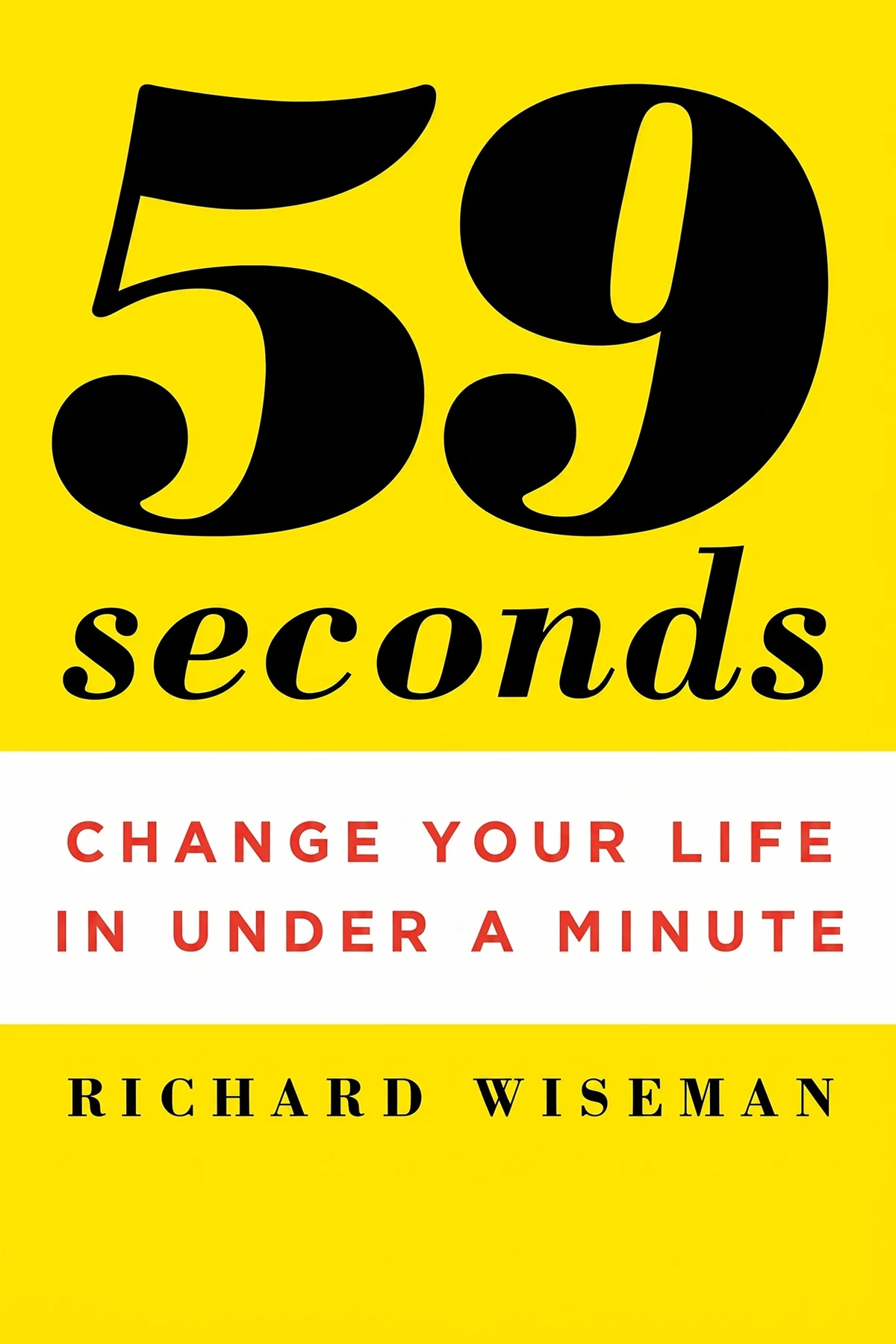
59 Seconds: Change Your Life in Under a Minute
Richard Wiseman
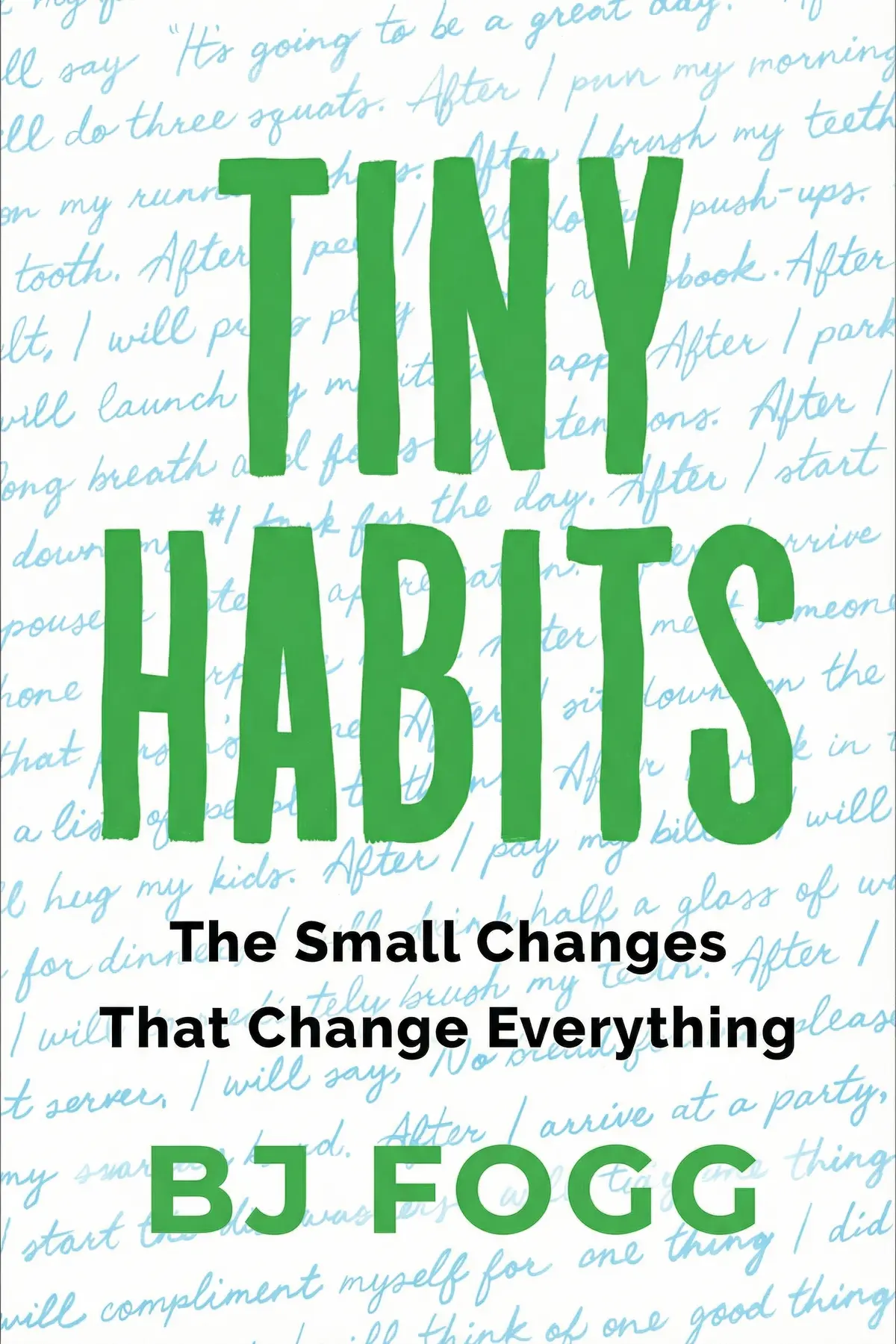
Discover how to transform your life by starting small. BJ Fogg reveals a scientific system for building lasting habits by focusing on simplicity, celebration, and the mechanics of human behavior.
1 min 57 sec
Think about the last time you decided to change your life. Perhaps it was New Year’s Day, or maybe just a Monday morning when you felt particularly inspired. You likely set a high bar: you were going to go to the gym for an hour every day, stop eating sugar entirely, or wake up at 5:00 a.m. to write a novel. For the first few days, the excitement carried you through. You felt energized and capable. But then, life intervened. A late night at work, a poor night’s sleep, or just a rainy afternoon made that goal feel impossible. Gradually, the new habit slipped away, leaving behind a nagging sense of guilt and the belief that you simply don’t have enough willpower.
This cycle is incredibly common, but behavioral scientist BJ Fogg wants you to know that it is not your fault. The primary reason we fail to change is not a lack of character or discipline; it is that we are using a flawed system. We try to make huge changes using motivation alone, but motivation is a fickle friend. It spikes when we are inspired and vanishes when we are tired or stressed. To create lasting change, we need a method that works even when our motivation is at its lowest.
In this exploration of Fogg’s work, we are going to look at a new philosophy of behavior design. We will move away from the idea that change has to be hard or painful. Instead, we will see how focusing on tiny, manageable actions can lead to massive transformations over time. The core of this approach is the Tiny Habits method, which has been refined through years of research at Stanford University and tested by tens of thousands of people. By the end of this journey, you’ll understand the mechanics of why we do what we do and how to steer your own behavior toward the person you want to become. We’ll look at the specific formula for behavior, the danger of relying on big goals, and the simple ways you can anchor new habits into the life you are already living. It’s time to stop blaming yourself for past failures and start designing a system that actually works.
2 min 12 sec
Why do we blame ourselves when habits fail? Explore why your approach to change is usually the culprit rather than your willpower.
2 min 12 sec
Learn why the ‘Information-Action Fallacy’ fails and why tiny actions are the only reliable way to spark long-term growth.
2 min 34 sec
Discover the ‘B=MAP’ formula and how motivation, ability, and prompts interact to determine every action you take.
2 min 24 sec
Understand why relying on willpower is a trap and why we should focus on behaviors instead of just aspirations.
2 min 15 sec
Discover the five factors that make a habit hard or easy and why simplicity is the ultimate superpower for change.
2 min 14 sec
A habit won’t happen without a trigger. Learn how to use your existing routines as ‘anchors’ for new behaviors.
2 min 16 sec
Not all anchors are created equal. Learn how to match habits to routines based on location, frequency, and theme.
1 min 56 sec
The journey of transformation doesn’t have to be a grueling uphill battle. As we’ve seen through the work of BJ Fogg, the secret to changing your life isn’t about finding more willpower or waiting for a massive surge of motivation. It is about understanding the simple mechanics of human behavior and using them to your advantage. By making your desired behaviors tiny, you ensure that you can succeed even on your hardest days. By using anchors, you turn your existing routines into a powerful engine for growth. And by shifting your focus from big, intimidating aspirations to small, manageable behaviors, you remove the fear of failure.
As you move forward, remember the most important takeaway: if you fail to stick to a habit, the problem is the design, not the person. Treat yourself with the kindness you would give a friend and the curiosity of a scientist. Start with ‘starter steps’—the smallest possible versions of what you want to achieve. If you want to become a regular walker, just start by putting on your walking shoes every morning. Tell yourself that you don’t even have to leave the house; you just have to put the shoes on. More often than not, once the shoes are on, you’ll find yourself taking a walk anyway. But the success is in the shoes.
Celebrate your small wins. Every time you complete a tiny habit, give yourself a mental pat on the back or a quick ‘Good job!’ This small act of celebration releases dopamine and tells your brain that this new behavior is worth repeating. This is how you ‘wire in’ success. Change is not a destination you reach through suffering; it is a skill you develop through practice and design. By starting small and being consistent, you’ll look back in a year and realize that those tiny habits were the very things that changed everything. Now, take a moment to identify one tiny action you can take today, find an anchor for it, and begin your journey toward lasting change.
Have you ever wondered why your biggest resolutions often crumble by February? Many of us assume that failing to stick to a new diet or exercise routine is a personal failure of willpower. However, behavior expert BJ Fogg argues that the problem isn’t you—it’s your strategy. This summary explores the groundbreaking Fogg Behavior Model, which demonstrates that change doesn't require massive motivation or grueling discipline. Instead, sustainable transformation comes from making behaviors so tiny that they are impossible to fail at. You will learn how to deconstruct your largest aspirations into bite-sized actions and how to anchor these new behaviors to routines you already have. By understanding the three core variables of human behavior—motivation, ability, and prompts—you can stop fighting against your nature and start designing a life that evolves naturally. This approach provides a practical, science-backed blueprint for anyone looking to improve their health, productivity, or mindset without the stress of traditional self-improvement methods.
BJ Fogg is an expert on persuasive technologies and the way interactive computing products and software influence our behavior. The founder of the Behavior Design Lab at Stanford University, Fogg uses his scientific expertise to help industry innovators get a handle on how human behavior really works. Tiny Habits is his fifth book.
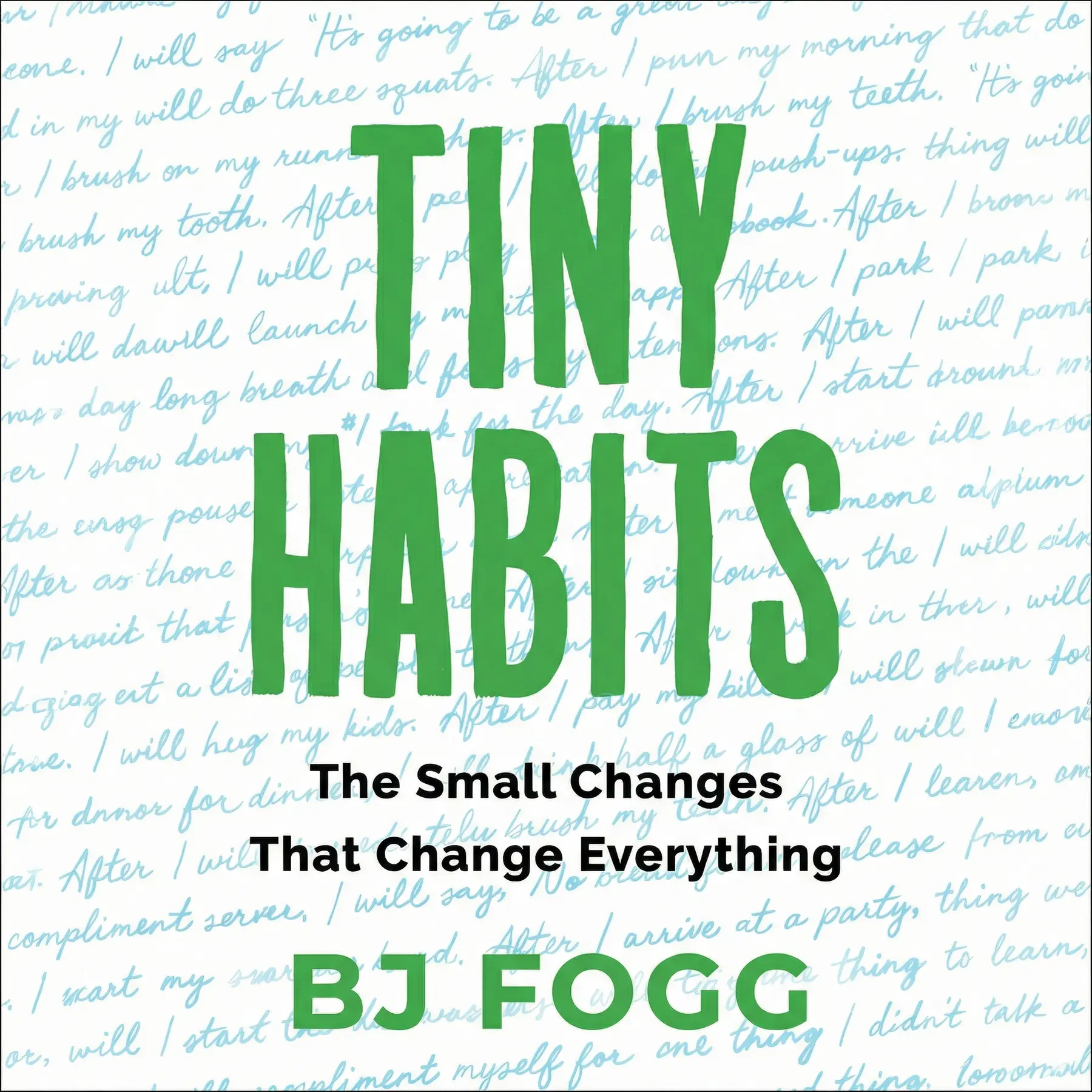
Listeners find this book to be a superb resource that offers a validated roadmap for altering habits via easy-to-follow actions. The content is extensively researched, with one listener observing how it skillfully deconstructs basic skills and tasks, while another mentions how it utilizes visual diagrams of processes for easy comprehension. They value its direct style and functional instructions, with one review emphasizing how it offers actual situations for implementing the frameworks. Listeners label it as life-altering, with one remarking on how it simplifies the process of making meaningful improvements to one’s life.
BJ Fogg’s background as a Stanford behavior scientist really shines through in this practical guide to life design. Unlike many self-help gurus who rely on fluff and willpower, Fogg leans into a rigorous, evidence-based system that makes success feel inevitable. I loved the emphasis on 'Ability'—making the behavior so small that you can’t fail. The appendixes alone are worth the price of admission, especially the list of 300 recipes for different life situations. It’s rare to find a book that is both intellectually grounded and immediately applicable to your Tuesday morning routine. I stopped feeling guilty about my lack of motivation once I realized that my environment and my anchors were the real problem. This is easily the most actionable book on behavior change I’ve ever held in my hands. It visually lays out procedures for clear understanding and provides real-world scenarios on how to execute the structures. Truly a masterclass in psychology.
Show morePicked this up after reading Atomic Habits, and I actually think this is the superior book for practical application. While James Clear is a great synthesizer, Fogg is the one who actually did the primary research at the Stanford Behavior Design Lab, and that depth of knowledge is apparent. The BMAT model is a revelation because it helps you troubleshoot why a habit isn't sticking without blaming your own character or lack of discipline. I’ve started using the 'Anchor' technique for everything from drinking more water to practicing mindfulness, and the results are undeniable. The book provides a clear, visual layout of procedures that makes the psychological concepts feel less like science and more like a toolkit. It’s a must-read for anyone serious about behavior design and long-term personal growth. This book is thoroughly researched and provides a straightforward approach that feels life-changing.
Show moreThis book is the real deal when it comes to lasting change. I’ve tried every productivity hack under the sun, but Fogg’s focus on emotions rather than repetition is what finally made things click for me. The 'Recipes for Tiny Habits' section is incredibly practical, offering real-world scenarios for everything from reducing stress to getting better sleep. It feels like having a world-class behavior scientist as a personal mentor. The book is thick, yes, but it’s packed with proven guides and visually laid out procedures that take the guesswork out of habit formation. Since finishing it, I’ve managed to build a consistent meditation practice that I actually look forward to every day. It describes effective change in a way that feels possible for normal, busy people. Truly life-changing stuff that expertly breaks down simple skills and activities for long-term success.
Show moreAfter hearing so many people rave about this on social media, I decided to see if the hype was justified. It’s a very straightforward approach to a complex problem, and Fogg’s 'Small is Mighty' philosophy is quite liberating. I love that he discourages the use of willpower, which is a finite resource most of us run out of by noon. The book is excellent for breaking down simple skills into manageable chunks. My only minor criticism is that it can feel a bit repetitive, but maybe that's the point when you're trying to drill in a new way of thinking? Regardless, the practical guides and the 'Shine' concept make this a standout in a crowded field. It’s a solid resource for anyone looking to improve their life without the drama of massive, failing resolutions. The straightforward approach and practical guides make it an essential read for 2024.
Show moreThe core premise here—take things in tiny measures—is absolutely solid and probably the only way most of us will actually change. However, I found the book itself to be a bit of a slog because the author repeats the same points quite often. It felt like a 30-page white paper that was stretched into a full-length manuscript to satisfy a publisher's requirements. Look, the ABC technique is a game-changer, but you can learn the method in the first few chapters and skim the rest. I appreciated the colorful pages and the specific exercises, but the tone occasionally felt like a late-night infomercial for his 5-day program. It’s a good resource, but it requires some patience to dig through the repetition to get to the gold. Overall, it provides a proven guide to changing behavior through simple steps that actually work if you stick with them.
Show moreEver wonder why your New Year's resolutions fall apart by February 15th? Fogg explains that it's because we rely on a 'Motivation Wave' that eventually crashes, leaving us stranded. I started implementing the 'after I pee, I will do two pushups' routine, and it sounds ridiculous until you actually do it for a week. The concept of 'Shine'—that feeling of success you celebrate immediately—was the missing piece for me. I used to be so hard on myself, but this book taught me that emotions create habits, not repetition. My only gripe is that some of the diagrams are a bit clunky, but the real-world scenarios helped me visualize exactly how to anchor new habits to my existing schedule. It’s a very empowering read for anyone feeling stuck in a cycle of failure. The book expertly breaks down simple skills and activities into manageable daily chunks.
Show moreAs someone who usually avoids the self-help section, I found this surprisingly grounded and useful. The writing is accessible, and the author avoids the 'hustle culture' nonsense that ruins most books in this genre. I particularly enjoyed the section on 'celebration' and how it wires the brain for success. It’s not just about doing the task; it’s about how you feel immediately afterward. To be fair, the book is a bit bulky, but the appendixes at the back are fantastic for quick reference when you don’t want to re-read a whole chapter. The ABC (Anchor-Behavior-Celebration) format is easy to remember and even easier to teach to my family. It’s a solid 4-star read that offers a refreshing take on human psychology. It breaks down effective change to improve life without requiring massive upheavals of your current daily routine.
Show moreFinally got around to finishing this, and I’m genuinely impressed by how much my daily routine has shifted. The focus on 'Ability' over 'Motivation' is a total paradigm shift for anyone who has ever felt like a failure for skipping the gym. Fogg shows you how to design your life so that the right behaviors are the easiest ones to perform. I did find the cheering-on tone a bit grating at times, and the book could have been about fifty pages shorter without losing any impact. Still, the methodology is sound and the results speak for themselves. The 'One Hundred Ways to Celebrate' section helped me realize I was being too stingy with my own self-praise. Highly recommended for the chronically overwhelmed who need a win. It’s an excellent read that provides a proven guide to changing behavior through tiny, manageable steps.
Show moreNot what I expected, but it has some gems if you're willing to hunt for them. The idea of starting 'tiny'—like literally flossing one tooth—is a great way to overcome the initial resistance we all feel. However, the author spends a massive amount of time on the 'why' and the 'research' when I just wanted more 'how.' It felt like the book was trying too hard to prove its own validity. The formatting is helpful, with distinct sections for exercises, but the prose itself is quite wordy. It’s a decent guide for changing behavior, but I think you could get ninety percent of the value from a summary or a podcast interview. If you like deep dives into social science and Stanford-level research, you'll love it; if you want a quick, punchy fix, you might get bored by the middle chapters.
Show moreFrankly, this felt like one long advertisement for the author’s coaching program and his Stanford lab. If I have to read about flossing one single tooth one more time, I might actually lose my mind. While I agree that small goals are better than massive ones that fail, the writing style is incredibly repetitive and feels a bit condescending. It treats the reader like they’ve never heard of a 'routine' before. The book is way too long for such a simple concept, and I found myself glossing over the endless anecdotes to find the actual how-to sections. I was looking for something to get me energized, but this just made me feel like I was sitting through a very slow lecture. The ABC method is okay, but you can find the same info in a ten-minute YouTube video without the 300 pages of fluff. Not for me.
Show moreRichard Wiseman
William B. Irvine
Andrew D. Thompson
Deepak Chopra
AUDIO SUMMARY AVAILABLE
Get the key ideas from Tiny Habits by BJ Fogg, plus 5,000+ more titles in English and Thai.







