

13 min 33 sec
Tubes: A Journey to the Center of the Internet
By Andrew Blum
Explore the physical reality of the internet in this fascinating journey. From undersea cables to massive data centers, discover how the global network is built on tangible, geographical foundations.
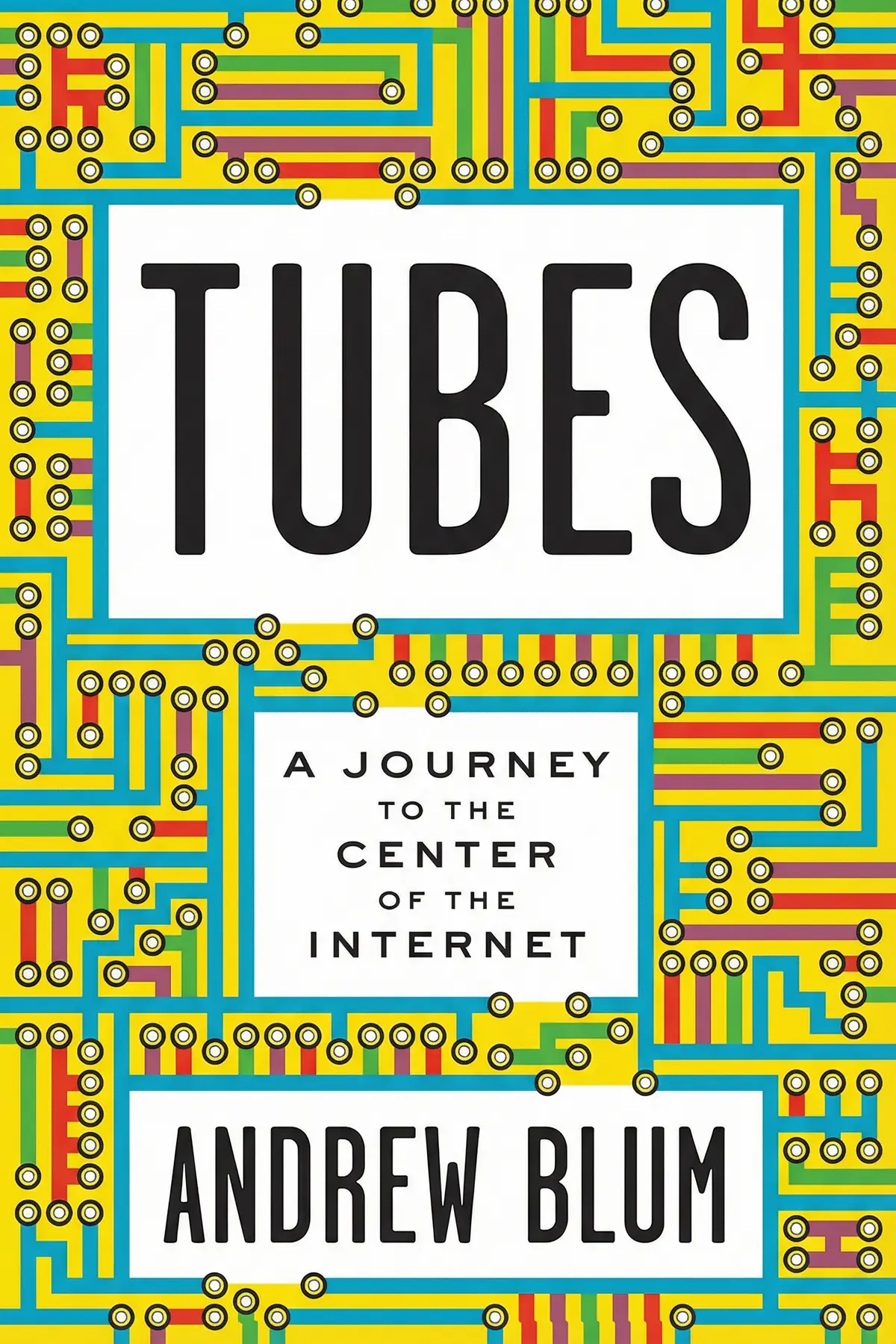
Table of Content
1. Introduction
1 min 35 sec
When we think about the internet today, we often use metaphors that suggest it is weightless and omnipresent. We talk about ‘the cloud,’ we look at wireless signals on our phones, and we imagine our data floating somewhere in the ether, accessible by magic. But if you were to follow the signal from your laptop, you would find that it eventually leads to something very solid. It leads to a wire, then a box, then a massive building, and perhaps even a cable resting on the dark floor of the Atlantic Ocean.
The internet is not an abstract concept; it is a physical place. Or, more accurately, it is a series of physical places connected by tangible materials. In this exploration, we are going to strip away the digital curtain and look at the ‘tubes’ themselves. We will see how a network of networks relies on the cooperation of humans, the durability of glass fibers, and the sheer scale of industrial data centers.
Our throughline today is the realization that the digital world is inextricably tied to the physical world. By understanding the geography and the hardware of the web, we can begin to see the internet not as a mysterious force of nature, but as a monumental human achievement in engineering and logistics. We’ll look at the silent hubs in our largest cities, the history of how these connections formed, and the fragile links that span the globe. It’s time to move beyond the router in your living room and see where the internet truly resides.
2. The Physicality of the Digital World
2 min 14 sec
Think the internet is just a cloud? Discover the massive, windowless buildings and buzzing hardware that actually house our digital reality.
3. The Evolution of a Global Language
2 min 05 sec
From a small academic phonebook to a worldwide explosion, learn how a single protocol allowed thousands of isolated networks to finally speak the same language.
4. The Logic of Interconnection and Hubs
2 min 07 sec
Speed isn’t just about your provider; it’s about who is ‘peering’ with whom. Discover why direct physical connections are the secret to a fast web.
5. The Human Element and the Risk of Disconnection
1 min 53 sec
The internet is run by people making deals in conference rooms. Find out what happens when these social contracts break down and the ‘plug’ gets pulled.
6. The Submerged Veins and Global Data Hearts
2 min 17 sec
Dive deep into the ocean to see the fragile cables connecting continents and the village-sized data centers that store our digital identities.
7. Conclusion
1 min 22 sec
As we reach the end of our journey through the physical internet, the image of a weightless, magical ‘cloud’ should be replaced by something much more grounded. We have seen that the internet is a triumph of geography and engineering. It is the result of thousands of miles of undersea fiber, massive cooling fans in windowless city buildings, and complex social agreements between the people who keep the data moving.
The takeaway is clear: the digital and physical worlds are one and the same. Every email you send, every video you stream, and every photo you upload triggers a physical process in a specific location on Earth. This infrastructure is both incredibly powerful and surprisingly delicate. It can be disrupted by a shift in the earth’s crust or a disagreement in a corporate boardroom.
Moving forward, take a moment to look at the world differently. When you see a nondescript gray building in a city center or notice a ‘buried cable’ sign near a beach, remember that you are looking at the heart of our global civilization. The internet is a magnificent series of tubes, and by understanding its physical reality, we can better appreciate the massive human effort required to keep us all connected. The web isn’t just a tool we use; it’s a place we’ve built, and it’s more tangible than we ever imagined.
About this book
What is this book about?
Have you ever wondered where the internet actually lives? While we often treat the digital world as an ethereal cloud or a magical signal in the air, the reality is far more concrete. This summary takes you on a physical tour of the internet's backbone, revealing the massive buildings, high-tech hubs, and thousands of miles of underwater cables that make our digital lives possible. You will explore the hidden infrastructure of the web, from the historical origins of the first connected universities to the modern-day giants like Google and Facebook. The journey moves through gray, windowless buildings in major cities and dives deep into the ocean where light pulses through fiber-optic strands. By the end, you’ll understand how networks negotiate with one another to keep your data moving and why the physical location of a router in Oregon or a cable in a Taiwanese strait can impact your ability to send a simple email.
Book Information
About the Author
Andrew Blum
Andrew Blum is a New-York based journalist who has published his work in Wired, Wall Street Journal, Vanity Fair and Popular Science.
Ratings & Reviews
Ratings at a glance
What people think
Listeners find the work absorbing and skillfully composed, with one highlighting its non-technical language. The book delivers an educational look at the internet's infrastructure, presenting a totally fresh viewpoint, and listeners value its historical context. They characterize the story as an intriguing journey that helps clarify complex topics. Although listeners feel the material is easy for non-experts to follow, they point out a lack of technical detail, and the more reflective portions receive mixed feedback.
Top reviews
Bo
It is rare to find a book that makes the mundane mechanics of our modern world feel so genuinely vital and interesting. This book completely changed the way I look at my computer and the world around me. Blum has this incredible ability to take something as banal as a fiber optic cable and make it feel like a vital artery of civilization. The book is written in non-technical language, which was perfect for me because I don't have a background in computer science. I loved learning about the history of how these networks were physically laid out and the people who maintain them. It felt like a fascinating trip around the world that actually taught me something useful. The internet isn't just a virtual space; it’s a human world made of glass and steel. I highly recommend this to anyone who wants a better understanding of modern life. It is an informative overview of a hidden world.
Show moreThawee
Finally got around to reading this, and I’m struck by how much we take the physical infrastructure of our lives for granted. Andrew Blum’s journey to the center of the internet is part travelogue and part history, and it works beautifully. He moves from his own backyard to the ocean floor, showing us the tangible pieces—the tubes and routers—that make binary code possible. I found his observations about the psychological and sociological aspects of connectivity to be really insightful. It’s a delightful read that manages to be both engaging and informative without requiring an engineering degree. Even the sections that others called flowery worked for me because they captured the sheer scale of the achievement. It’s a wonderful book that provides a much-needed physical reality to our digital existence. I am looking forward to reading his more recent work on the weather. This book is a must-read for any curious mind.
Show moreAurora
As someone who isn't a tech genius, I found this journey into the plumbing of the web to be incredibly enlightening and accessible. Blum’s architectural background really shines through as he describes the massive server farms and the hidden wires that run under our streets. It’s a fascinating trip that makes a very complex subject feel understandable for the average person. I especially liked the story about the squirrel—it’s a funny, relatable starting point for a very ambitious project. The book is well-written and offers a perspective that you just don't get from standard tech reporting. He reminds us that behind every email and video stream, there is a massive, physical machine humming away in a warehouse somewhere, which is a perspective we often ignore in our wireless world. This remains a truly eye-opening experience for any modern reader. It offers a completely different perspective on our daily digital habits.
Show moreChan
Picked this up because I’ve always been curious about the physical side of our digital world, and Blum delivers some vivid imagery. The chapters on the cable landing stations in Cornwall were genuinely fascinating and gave me a new appreciation for the infrastructure beneath our feet. I love the idea that the Cloud is actually just a bunch of tubes and wires inside nondescript buildings. While some reviewers find his style a bit too poetic, I thought it helped humanize a subject that could have been dry. There are some minor annoyances, like his obsession with literary quotes, but the overall journey is engaging enough to overlook them. It’s a great way to understand the tough subject of global connectivity without getting bogged down in jargon. This is definitely a book for people who want to know how things work on a grand scale. You will never look at a Wi-Fi router the same way again.
Show morePalm
After hearing so much about the Cloud, it was genuinely refreshing to see someone map out the actual concrete and fiber. Andrew Blum takes a completely different perspective by focusing on the locations where the internet actually resides. He treats the OSI layers like a spiritual quest, and while that might make network engineers roll their eyes, it makes for an entertaining story. I particularly enjoyed the comparison between the openness of Facebook’s facilities and the paranoid secrecy surrounding Google’s data centers. It makes you realize how fragile and robust this system is at the same time. The writing is polished and the pacing is generally good, though it does drag a bit in the middle sections. If you can handle a little bit of grad-student pretension, there is a lot of valuable information here. It’s a thought-provoking look at the infrastructure we use every single minute. I am glad I took the time to read it.
Show moreSamuel
Ever wonder why your internet signal lags or where those packets actually travel when you click send? This book provides a decent look behind the scenes, focusing heavily on the physical plumbing rather than the code. It is clearly written for everyday people who think of the web as a magical, invisible cloud. However, as someone with a basic understanding of networking, I felt the book stayed too much on the surface throughout the chapters. Blum focuses on the macro-geography—the big cables and the warehouses—while ignoring the underlying chip architectures that actually make the system hum. Look, it’s a pleasant read if you want to know about the history of ARPANET, but it isn’t particularly informative for techies. If you want a more comprehensive guide to the underlying technologies, you might find yourself wishing he had spent more time in the server rooms and less time looking at the scenery. It is a solid follow-on to Where Wizards Stay Up Late.
Show moreHang
Not what I expected when I picked this up, though I suppose that’s partially on me for wanting a technical manual. Blum writes with the eye of an architecture critic, which makes the descriptions of server farms and exchange points quite vivid. He manages to make the physical reality of the internet feel tangible and heavy. Yet, I found myself getting bored with the constant flowery language used to describe giant rural warehouses. Is it really necessary to imbue a sense of cosmic mystery into what is essentially electric information transfer? That is probably okay for most casual readers. The sections on the secrecy of Google were intriguing, but he gets a bit over-dramatic about their privacy protocols. It lacks the same level of rigorous historical detail found in other pop-science volumes. It’s a light, breezy read that works better as a travel memoir than a technical science book.
Show moreSuphan
Personally, I think this book sits in a weird middle ground where it’s too literary for engineers and too niche for casual readers. Blum is a talented writer, and he can certainly turn a phrase when describing a giant squid of fiber optic cables. But the lack of maps or charts made it difficult to visualize the connections he was describing across the globe. Why mention a DNS issue in Melbourne affecting New York without showing us the path? The book is more concerned with the wonder of connectivity than the actual mechanics of how it functions day-to-day. I appreciated the insight into the different cultures at Facebook and Google, but these felt like brief highlights in a narrative that often felt lost. It's a fine book for a weekend read, but don't expect to come away with a master's degree in internetworking. The truth is, I wanted more data and less fluff.
Show moreLek
To be fair, the premise that a squirrel chewing on a wire justifies a global travelogue felt a bit thin from the start. Andrew Blum takes us on a journey that feels more like a series of expensive vacations than a rigorous investigation into infrastructure. He visits these fascinating sites like the data centers in The Dalles, but then complains when Google won't let him roam around like a lost toddler. The writing is undeniably stylish, yet it’s hampered by an unwarranted self-indulgent tone that prioritizes his feelings over the actual mechanics of the system. I was hoping for a deep dive into how data packets are transformed into light, but instead, I got descriptions of digital Kathmandus. The repetition of certain similes was distracting and made the whole endeavor feel unpolished. It’s an ambitious attempt that ultimately fails to provide any meaningful technical analysis for the reader. This was a disappointing experience overall.
Show moreRatchada
Blum’s constant need to turn every mundane piece of hardware into a spiritual revelation made this an incredibly frustrating and tedious read. The factual information about routers and switchboards was actually quite interesting, but it was buried under piles of non-stop poetic waxing about physical geography. I understand the internet is vast, but I don't need a literary reference to Emerson every time the author sees a fiber optic cable. Frankly, the childlike whimsy got old within the first forty pages and felt more like a pretentious travelogue than a serious investigation. If you're looking for cold, hard technical facts about packet switching or network protocols, you are better off reading a specialized textbook or a much more grounded history. This book tries too hard to be art when it should have been informative. It completely missed the mark for me, and I won't be looking for more of his work.
Show moreReaders also enjoyed




AUDIO SUMMARY AVAILABLE
Listen to Tubes in 15 minutes
Get the key ideas from Tubes by Andrew Blum, plus 5,000+ more titles in English and Thai.
- 5,000+ titles
- Listen as much as you want
- 7-day free trial
- Cancel anytime







