
Illogical: Saying Yes to a Life Without Limits
Emmanuel Acho
Emmanuel Acho provides an essential bridge for understanding race in America, inviting readers into the difficult but necessary dialogues required to dismantle systemic prejudice and foster true racial empathy and equity.
1 min 51 sec
When we look at the landscape of modern America, there is one subject that consistently generates heat, friction, and, perhaps most frequently, a profound sense of hesitation: the subject of race. For many, the desire to do the right thing or say the right thing is often paralyzed by the fear of saying the wrong thing. We find ourselves in a culture where the stakes of these discussions feel incredibly high, yet the cost of silence is even higher. This is the starting point for a journey into the heart of racial dynamics in the United States.
In this exploration, we aren’t just looking at statistics or dry historical dates. Instead, we are entering a space designed for the questions that keep people up at night—the ones that feel too ‘uncomfortable’ to ask in polite company. Why does it matter how we label each other? What does it actually mean to have privilege in a world that feels difficult for everyone? And how do events from a century ago still shape the neighborhoods we live in today?
Emmanuel Acho acts as a guide through this often-treacherous terrain. He approaches the topic not with a spirit of condemnation, but with an open hand, inviting listeners to sit down and truly listen. The throughline here is simple yet profound: progress is impossible without communication, and communication is impossible without vulnerability. By the end of this journey, the goal is to move from a place of confusion or defensive silence toward a posture of informed action.
We will navigate the complexities of language, the hidden machinery of systemic racism, and the weight of historical legacy. We will look at why some common phrases are more damaging than they appear and why the path to becoming an ally requires more than just good intentions. It requires a willingness to sit with the discomfort of the truth until that discomfort transforms into a catalyst for change. Let’s begin by looking at the very tools we use to build our understanding: our words.
2 min 30 sec
How do the names we use for racial groups shape our understanding of identity, and why is certain language strictly off-limits for some while reclaimed by others?
2 min 22 sec
What happens when we realize that our successes and struggles are shaped by hidden advantages we didn’t earn and biases we didn’t know we had?
2 min 01 sec
Why is it that wealth and opportunity are so unevenly distributed, and how did policies from decades ago build the walls we see today?
1 min 50 sec
How are the rules of the game manipulated to ensure that those who want change are the ones least able to achieve it?
2 min 06 sec
What role do labels like ‘superpredator’ and ‘thug’ play in how we perceive crime, and how do they obscure the real roots of violence?
2 min 27 sec
How did the institutions of the past intentionally break apart the Black family, and what are the lasting effects on today’s social fabric?
2 min 05 sec
Why is anger a necessary component of social change, and how does the way we label public outcries change our perception of justice?
2 min 06 sec
What is the difference between helping and saving, and how can individuals move from passive supporters to active participants in change?
1 min 35 sec
As we reach the end of this journey, it’s important to reflect on the throughline that has guided us: the necessity of discomfort in the pursuit of truth. We have traveled from the nuanced history of the words we use to the deep architectural flaws of our social systems. We have looked at how myths about criminality and family have been used to justify inequality, and we have explored the vital role of protest in a healthy democracy.
The goal of confronting these issues isn’t to leave you in a state of guilt or despair. Guilt is a passive emotion; it doesn’t build houses, change laws, or heal wounds. Instead, the goal is to move you toward responsibility and empathy. Understanding the ‘why’ behind the current racial landscape is the first step in deciding ‘how’ you will show up in the world.
Actionable change often starts small. It starts with the books you read, the conversations you have at the dinner table, and the way you respond when you see bias in your own life. It expands into how you vote, where you spend your money, and which causes you support with your time. The path to a more equitable America is paved with the courage of individuals who are no longer willing to look away.
Emmanuel Acho’s invitation remains open. The conversation doesn’t end here; it simply moves from this space into your daily life. The challenge is to remain curious, to keep asking the hard questions, and to stay in the room even when it gets uncomfortable. By doing so, you contribute to a future where the dignity of every person is not just a slogan, but a lived reality. The work of dismantling 400 years of racism is the work of a lifetime, but it is the most important work we can do together.
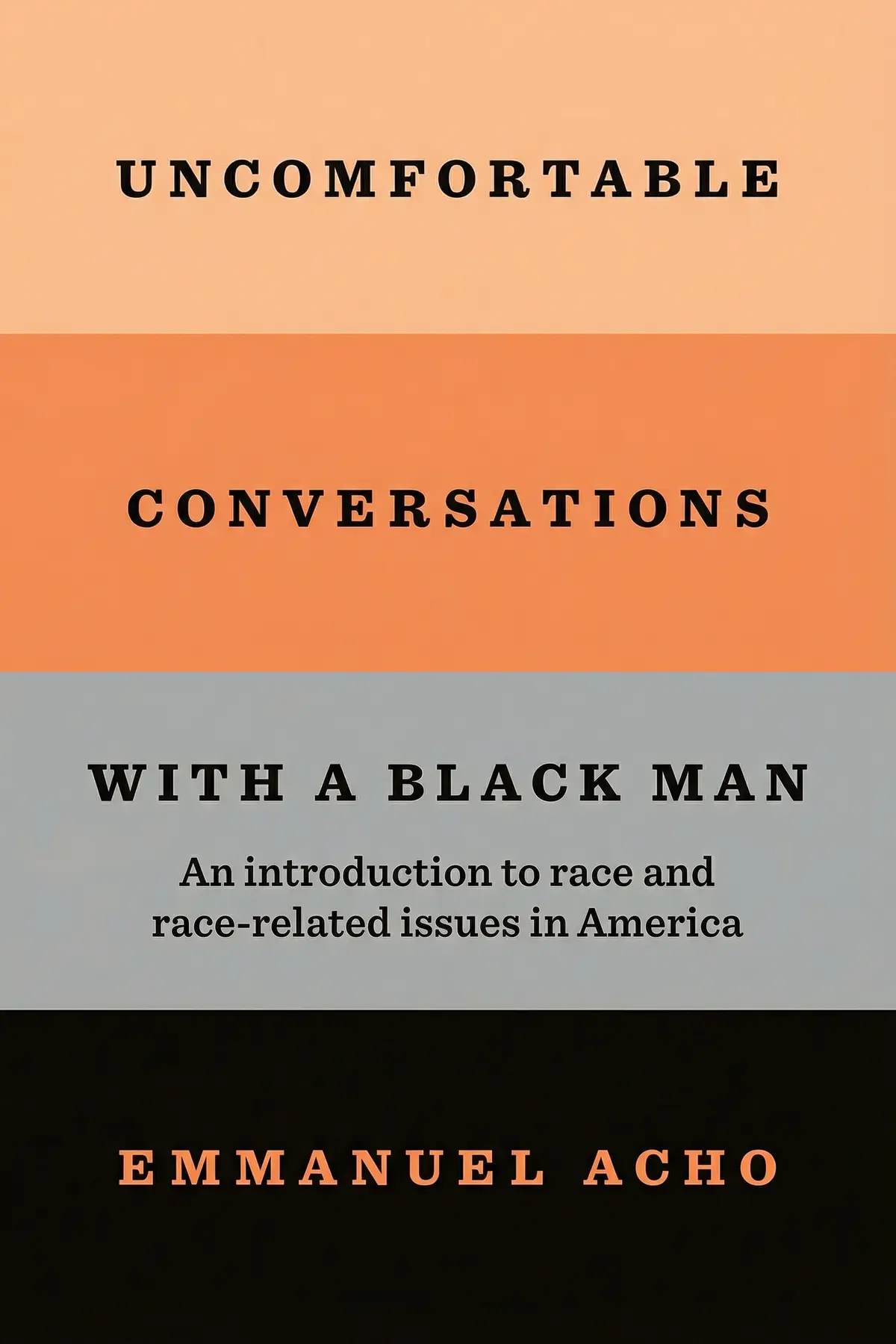
Uncomfortable Conversations with a Black Man serves as an open invitation to confront the deep-seated issues of race and racism that many find difficult to discuss. Emmanuel Acho, a former NFL player and prominent media personality, steps into the role of a patient teacher, addressing the questions that white people often feel too embarrassed or fearful to ask. The book acts as a primer for those who want to move beyond performative gestures and toward a genuine understanding of the Black experience in the United States. By weaving together personal anecdotes, historical context, and sharp sociological analysis, the work breaks down complex concepts like white privilege, systemic inequality, and the nuances of cultural appropriation. It promises to equip the reader with the tools necessary to participate in the ongoing struggle for social justice. Rather than offering guilt, Acho offers a pathway to growth, encouraging listeners to examine their own biases and the structures that perpetuate them. Ultimately, it is a guide for anyone seeking to be a more effective ally and a more informed citizen in a divided nation.
Emmanuel Acho grew up in Dallas, Texas, before embarking on a career as a professional athlete. He played as a linebacker in the NFL, spending time with both the Cleveland Browns and the Philadelphia Eagles. After transitioning away from professional football in 2016, he carved out a successful path in sports media, working for major networks including ESPN and Fox Sports. In 2020, he launched the highly successful video series titled Uncomfortable Conversations with a Black Man, which served as the foundation for this book, his debut literary work.
Emmanuel Acho
Listeners find this work to be crucial reading, particularly for white audiences, and value the stimulating content that brings valid points to the conversation. Furthermore, the book is very accessible and clear, with one listener highlighting its conversational writing style. Additionally, listeners appreciate the knowledge shared, which includes citations for further study, and the actionable guidance provided, with one review noting specific strategies for changing behavior. Listeners also praise the author’s candid transparency throughout the text.
Acho's conversational approach makes a heavy topic feel manageable, like you're just sitting down for coffee with a friend who happens to be a pro athlete. He doesn't shy away from the 'big' words like systemic racism or implicit bias, but he defines them through stories rather than academic jargon. While some might find the slang a bit much, I think it helps bridge the gap for people who are usually intimidated by these discussions. The piano keys analogy really stuck with me as a beautiful way to visualize how integration should actually function in our society. It's not just about tolerating each other; it's about making a joyful noise together through genuine partnership. I especially appreciated the 'stop, look, listen' approach to learning about experiences different from my own. This isn't just a book to read once; it’s a resource with a wealth of further reading suggestions that I plan to explore.
Show moreTruth is, I didn't expect a book about racism to be this accessible or, frankly, this hard to put down. Most titles in this genre feel like they were written for a graduate seminar, but Acho speaks to the everyman without watering down the truth. He tackles the 'N-word' debate and the 'Karen' phenomenon with a level of patience that is honestly remarkable given the weight of the subject matter. The way he breaks down white privilege as a 'head start' rather than an indictment of one's character makes the concept much easier to digest for skeptics. I found the list of movies and books at the end of each chapter to be an absolute goldmine for continued education. It’s clear that his goal isn't just to inform, but to transform the way we interact with our neighbors. This is a vital tool for anyone who is genuinely ready to listen and learn.
Show moreFinally got around to reading this and I’m kicking myself for waiting so long. Emmanuel Acho has a rare talent for taking the most controversial topics—from sagging pants to systemic housing inequality—and explaining them with total clarity. The book doesn’t feel like a lecture; it feels like a bridge being built in real-time between two different worlds. I was particularly struck by his explanation of how 'implicit bias' works in our brains without us even realizing it’s happening. He provides practical strategies for catching those thoughts and changing our behavior, which is exactly what I was looking for. The open honesty he displays about his own life and mistakes makes the reader feel like it’s okay to be imperfect as long as you’re trying. Every person in America should have a copy of this on their nightstand. It is an essential starting point for a better future.
Show moreThe chapter on 'White Privilege' was a game changer for me because it removed the defensiveness I usually feel. Acho describes it as an invisible backpack of tools that some people just happen to be born with, which clicked instantly. I appreciated how he addressed the 'thug' label and how language is used to dehumanize Black men in the justice system. The book is filled with open honesty, and you can tell he genuinely wants to help people understand each other better. He doesn't just point out problems; he offers real references to continue learning through films, articles, and other Black authors. It’s a fast read, but it leaves you with a lot to think about long after you close the cover. If you’re looking for a way to start having these conversations at home or work, start here. This book is a gift to anyone willing to open their heart.
Show moreDirect and honest, this book is exactly what the title promises. Emmanuel Acho takes the 'scary' out of discussing race by being a patient, thoughtful guide through some of America's thorniest issues. I was moved by his plea for more empathy and less judgment, especially in how we view the Black Lives Matter movement. He breaks down the difference between 'equality' and 'equity' in a way that finally made sense to my stubborn brain. The practical advice on how to be a true ally—not just a performative one—is worth the price of the book alone. I’ve already started sharing his reading recommendations with my local book club members. This is the kind of writing that can actually change minds because it doesn't lead with shame. It leads with a hand held out, asking us to walk together toward something better. Five stars for sure.
Show moreAfter watching the YouTube series, I wasn't sure if the book would offer anything new, but I was pleasantly surprised by the depth here. The structure is incredibly helpful for anyone who feels like they’re walking on eggshells whenever race comes up in conversation. Emmanuel Acho manages to be blunt about painful history while maintaining a spirit of grace that keeps the reader from shutting down defensively. I will say that the advice on interracial dating felt a bit clunky and perhaps slightly over-generalized compared to the rest of the chapters. However, the section on why 'color blindness' is actually harmful was a massive eye-opener for me and my family. He provides a roadmap for moving past guilt and toward actual, tangible behavior changes in our daily lives. It’s a solid 4-star read for anyone looking to build a foundation of empathy and start the journey of being a true ally.
Show moreEver wonder why certain topics feel so taboo in mixed company? Acho dives headfirst into those awkward spaces with a level of courage that is really refreshing to see. He explains why saying 'I don't see color' is actually dismissive of a person’s lived experience and identity. I loved the short chapters because they allowed me to digest one big idea at a time before moving on to the next. Some of the historical context was new to me, particularly the roots of certain stereotypes that still persist today in media and policing. While the book is definitely geared toward a white audience, I think anyone can benefit from his focus on granting people more grace. My only minor gripe is that some chapters felt a bit rushed toward the end. Overall, it’s a thought-provoking read that brings a lot of valid points to a very necessary national discussion.
Show morePicked this up because of my book club, and I’m so glad I did. The conversational writing style made it much easier to engage with heavy topics like systemic racism and the history of the 'N' word. I especially liked the 'Stop, Look, Listen' sections that provide action items for readers to implement in their own lives immediately. It’s not just theory; it’s a manual for changing your perspective and your behavior in the real world. I did feel that some of the analogies were a little oversimplified, like comparing racism to a broken leg, but I understand why he chose them. The book provides a great entry point for people who are afraid of saying the wrong thing and therefore say nothing at all. It’s an important reminder that silence is often its own kind of statement. I'd recommend this to anyone who wants to be part of the solution but isn't sure where to begin.
Show moreAs someone who has read a lot in this space, I found this to be a bit of a mixed bag. On one hand, Acho is an incredibly charismatic narrator and his passion for unity is undeniable. He covers a lot of ground, including voter suppression and the origins of the Black Lives Matter movement, in a way that is easy to follow. On the other hand, the writing style can feel a little too casual, almost like a transcript of a podcast rather than a cohesive book. There were times when I wanted more data and fewer metaphors, especially when discussing the psychological impact of racism. It’s definitely a 'starter' book, which is valuable, but it might feel a bit repetitive if you’ve already read Kendi or DiAngelo. It’s a good gift for that relative who is just starting to ask questions, even if it lacks some academic rigor. I appreciate the heart behind it, but I wanted a bit more substance.
Show moreLook, I really wanted to like this given the hype, but the execution felt like a bit of a miss for me. While I support the message of empathy and understanding, the tone felt way too much like 'detention for white people' combined with confusing slang. The author frequently uses colloquialisms that feel out of place when discussing deeply traumatic historical events or systemic issues. I also found the chapter on interracial relationships to be quite strange, as it seemed to warn against them more than it encouraged genuine connection. It felt like he was trying to satisfy a very specific, suburban audience by making the conversation 'safe' rather than truly challenging. If you want a deep dive into the history of anti-Black violence, you are better off reading authors like bell hooks or Ta-Nehisi Coates. This felt more like a surface-level introduction that prioritizes comfort over the raw, messy truth of the Black experience.
Show more
Tracy Rosenthal
Jessica Valenti
Johny Pitts
bell hooks

Fay Bound Alberti
Daniel Goleman
AUDIO SUMMARY AVAILABLE
Get the key ideas from Uncomfortable Conversations with a Black Man by Emmanuel Acho, plus 5,000+ more titles in English and Thai.







