
Abolish Rent: How Tenants Can End the Housing Crisis
Tracy Rosenthal
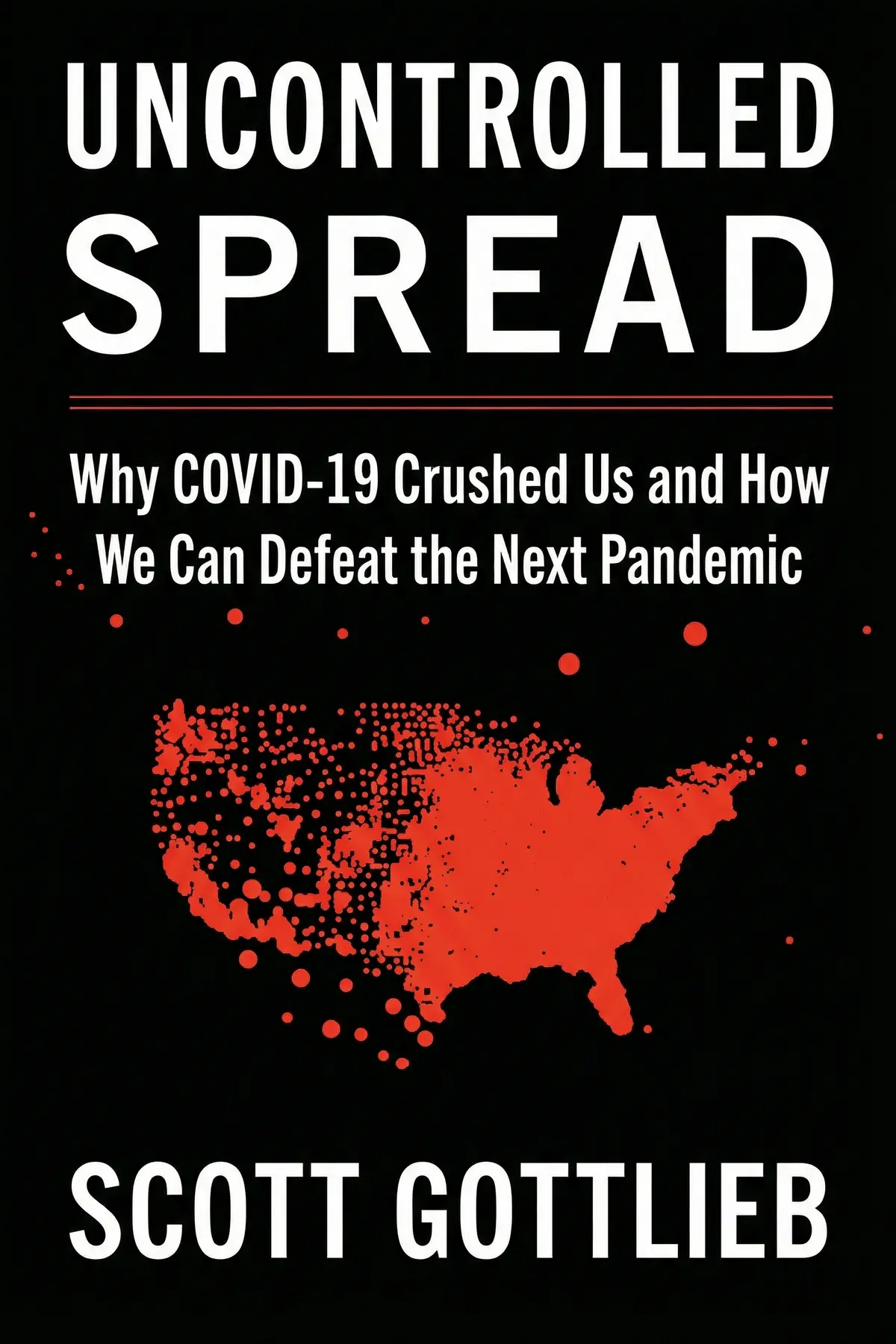
Uncontrolled Spread examines the structural and political failures that allowed COVID-19 to devastate the United States. Former FDA Commissioner Scott Gottlieb details how the nation can overhaul public health for future safety.
1 min 45 sec
In early 2020, the world was forced to confront a reality that many experts had long feared but few had properly planned for. For years, there had been a steady drumbeat of warnings. We saw outbreaks of Zika, Ebola, the avian flu, and the original SARS. Each of these events was a flare in the night, a signal that the global landscape of infectious disease was changing. Yet, when a new coronavirus arrived on American shores, the systems designed to protect the public health didn’t just bend—they fractured.
What happened in the United States wasn’t the result of a single mistake or one bad actor. Instead, it was a ‘perfect storm’ of institutional inertia, outdated playbooks, and a fundamental misunderstanding of the enemy we were facing. In this exploration of Uncontrolled Spread, we look through the eyes of Scott Gottlieb, the former commissioner of the FDA. He was one of the early voices raising the alarm, watching from a unique vantage point as the crisis unfolded.
The throughline of this story is a transition from vulnerability to resilience. It is about understanding that managing a pandemic isn’t just a medical challenge; it’s a logistics challenge, an intelligence challenge, and a matter of national security. We will walk through the early days of misinformation, the failures of our domestic testing infrastructure, and the missed opportunities to learn from international neighbors who navigated the storm more effectively.
Ultimately, this is a look at how we can rebuild. It’s a call to move away from a backward-looking public health model toward one that is proactive and integrated into our national defense. As we dive into these ideas, we’ll see why the status quo failed and what specific shifts are required to ensure that the next time a pathogen emerges, we aren’t caught standing still.
2 min 13 sec
Discover how the initial lack of transparency from international sources created a critical information gap that left the U.S. flying blind during the virus’s first weeks.
1 min 57 sec
The delay in formalizing the pandemic status and the CDC’s insistence on centralized testing led to a catastrophic loss of time in the early containment phase.
2 min 02 sec
The U.S. had spent years planning for a flu pandemic or a bioterror attack, leaving the nation ill-equipped for the specific challenges of a coronavirus.
1 min 49 sec
The CDC’s focus on academic research and retrospective analysis made it fundamentally ill-suited to lead a high-speed, manufacturing-intensive emergency response.
1 min 54 sec
Inconsistent messaging from the federal level and a lack of coordination between states created a fragmented and ineffective response to nonpharmaceutical interventions.
1 min 54 sec
By examining South Korea’s proactive approach to stockpiling and testing, we can see a clear blueprint for what pandemic readiness should look like.
1 min 52 sec
The rapid development of mRNA vaccines was a triumph of technology, but it also exposed how public health has become a new frontier for international espionage and soft power.
1 min 51 sec
To prevent the next pandemic, the U.S. must treat biological threats with the same level of intelligence and federal investment as it does military defense.
1 min 38 sec
As we look back on the devastation caused by the COVID-19 pandemic, the clear message of Uncontrolled Spread is that our failure was one of imagination and preparation. We allowed ourselves to believe that our advanced medical system was synonymous with a robust public health system. We learned the hard way that they are two very different things. One treats the individual after they are sick; the other protects the population by preventing the sickness from spreading in the first place.
The path forward requires us to be honest about the institutional shortcomings of the CDC and the lack of coordination at the federal level. We have seen that technology, particularly mRNA vaccines, can perform miracles when given the chance. But technology alone isn’t enough. We need the logistical and political will to create a ‘warm’ infrastructure—one that is always running, always monitoring, and ready to scale at a moment’s notice.
We must take the lessons of South Korea and apply them to our own unique context, moving away from centralized bottlenecks and toward a decentralized, high-velocity testing and response model. Most importantly, we must elevate public health to its rightful place as a cornerstone of national security. In a globalized world, a virus in a distant city is just as much a threat as a cyber-attack or a military maneuver.
The next pandemic is not a question of ‘if,’ but ‘when.’ By treating the lessons of COVID-19 as a blueprint for reform rather than just a tragic memory, we can build a future where the next outbreak is contained before it ever has the chance to become a catastrophe. The tools are in our hands; the question is whether we have the resolve to use them before the next shadow falls.
Uncontrolled Spread provides a rigorous behind-the-scenes look at the systemic breakdowns that occurred during the onset of the COVID-19 pandemic. Author Scott Gottlieb, drawing on his experience as the former head of the FDA, explores why the United States, despite its resources, was uniquely vulnerable to a novel coronavirus. The book traces the timeline of the early outbreak, from the initial lack of transparency in China to the institutional rigidness of the CDC and the uncoordinated federal response that followed. Beyond a mere post-mortem, the book offers a strategic roadmap for the future. It promises to explain how the U.S. can transform its public health infrastructure into a national security asset. By comparing the American response with successful models like South Korea and highlighting the revolutionary potential of mRNA technology, Gottlieb argues for a shift from reactive data collection to proactive, intelligence-driven pandemic management. It is a call to treat biological threats with the same urgency and strategic investment as military or cyber threats.
Scott Gottlieb is the former commissioner of the Food and Drug Administration in the US. He is also a contributor to CNBC and sits on the board of directors at the pharmaceutical company Pfizer. He is a member of the National Academy of Medicine and is considered one of the “50 People Transforming Healthcare” by Time magazine.
Listeners consider the writing to be thoroughly researched and expertly crafted, noting that its direct and brief style allows for effortless comprehension. Additionally, they value the sincere way it tackles the pandemic, with one listener specifically praising its nonpartisan viewpoint. The work also draws acclaim for its strategic depth, with one listener labeling it a guide for managing future health crises. Nevertheless, the book's storytelling elements garner a divided response among listeners.
This book is effectively a post-mortem manual for a society that wasn't ready for the fire. Gottlieb writes with the precision of a surgeon, dissecting why the CDC failed to act as an operational entity when we needed it most. Truth is, his insights into the manufacturing base and our lack of excess capacity are chillingly accurate. While some might find the prose a bit dry in the middle, the strategic value of the "playbook" he outlines for future pandemics is undeniable. It’s meticulously researched and manages to keep a level head even when discussing the most frustrating bureaucratic failures. If you want to understand the logistics of why the world stopped, start here. The focus on genomic surveillance is particularly forward-thinking.
Show moreAfter hearing Gottlieb on various news programs, I expected a balanced take, and he mostly delivered on that front. The chapters regarding China’s early secrecy and the WHO’s inability to demand transparency were genuinely eye-opening for me. He frames the pandemic not just as a health crisis, but as a national security failure that requires a complete overhaul of our domestic manufacturing. The writing is clear and concise, making complex molecular medicine concepts accessible to people like me who aren't in the medical field. I’m not gonna lie, the realization that we are still unprepared for the next one is terrifying. This should be required reading for every lawmaker in Washington. It is honest, brutal, and necessary.
Show morePersonally, I picked this up hoping for a non-partisan deep dive and was pleasantly surprised by the level of technical detail. Gottlieb’s background as a former FDA commissioner gives him a unique lens, allowing him to bridge the gap between high-level policy and boots-on-the-ground logistics. In my experience, most books on the pandemic are either too emotional or too political, but this feels like a genuine strategic playbook. He highlights the absolute necessity of a domestic manufacturing base so we aren't reliant on bad actors during a crisis. While the prose is a bit dry at times, the clarity of his vision for the future is exactly what we need right now. Five stars for the honesty and strategic depth.
Show moreScott Gottlieb has produced what is arguably the definitive post-mortem on the American COVID-19 response. This isn't just a retelling of events; it's a meticulous autopsy of a system that was designed for the wrong war. He compares our lack of preparedness to the pre-9/11 intelligence community, which is a haunting but accurate analogy. The writing style is professional and authoritative, yet it remains accessible to a general audience without dumbing down the science. Although he might be too soft on certain political figures, his analysis of the CDC's operational failures is masterly. It is an essential, meticulously researched work that provides a roadmap for avoiding the next catastrophe. It should be on every policy-maker's desk.
Show moreWow, what an eye-opening look at the internal friction between our health agencies. Gottlieb doesn’t hold back on the CDC’s academic nature, arguing they were too slow to provide actionable data in real-time. I found his defense of the FDA a little convenient considering his history there, but the technical breakdown of the testing fiasco is worth the price of admission alone. The narrative flows well for a policy-heavy book, though it can feel like he's settling some old scores with specific bureaucrats. Personally, I appreciated the focus on how we need a JSOC-style coordination for health threats. It’s a dense read but incredibly vital for anyone interested in public policy and emergency management.
Show moreFinally got around to finishing this, and the depth of research is truly impressive. Gottlieb manages to explain the "testing fiasco" in a way that highlights organizational rot rather than just blaming individuals. His prose is straightforward and avoids the sensationalism found in other COVID-era books, which I found refreshing. To be fair, he does repeat himself occasionally, especially when hammering home the need for better genomic surveillance and more aggressive data collection. However, the strategic content regarding how we can leverage private sector technology for public health is brilliant. It’s a sophisticated look at a mess that we are still trying to clean up years later, though it demands a lot of the reader's attention.
Show moreThe chapter on the CDC’s initial refusal to use private labs for testing is the most frustrating thing I’ve read all year. Gottlieb captures the "academic" mindset that prioritized a perfect test over a fast one, effectively blinding us during the crucial early weeks. I think he has some blind spots regarding the FDA's own regulatory hurdles, but his critique of the broader system is hard to argue with. The book is quite readable despite the heavy subject matter, and the sentence structure keeps things moving at a decent pace. It’s a bit scary to think about how much of our response was based on outdated influenza models. A very solid, informative read for the curious citizen wanting to understand the logistics.
Show moreGottlieb’s take on the pandemic is probably the most sober and analytical one I’ve encountered so far. He doesn't go for the "gotcha" moments that sell newspapers, instead focusing on the structural reasons why our response was so sluggish. It’s fascinating to see an AEI fellow advocate so strongly for public investment in manufacturing capacity. I gotta say, the technical sections on how the virus spreads via aerosols vs. droplets were a bit long, but they provide necessary context for his policy critiques. It’s an important book that refuses to simplify a complex disaster into easy soundbites. Definitely worth a look if you want to move past the headlines and into the actual machinery of government.
Show moreEver wonder why a country with so much resources struggled so much with the initial rollout of tests? This book answers that question in excruciating detail, perhaps sometimes too much detail for the casual reader. While Gottlieb is clearly an expert, the narrative quality is hit-or-miss; some chapters feel like urgent thrillers while others read like a dry government white paper. Look, he tries to stay apolitical, but his omissions regarding the executive branch's leadership failures are noticeable to anyone who lived through 2020. It's a solid 3-star read for the research alone, but it definitely needed a more ruthless editor to trim the repetitious science sections and self-congratulatory tone.
Show moreNot what I expected from someone who had a front-row seat to the initial response. Gottlieb spends an enormous amount of time trashing the CDC while almost entirely absolving the Trump administration of any meaningful responsibility for the chaos. Frankly, it feels like a strategic attempt to protect his own reputation and those of his colleagues at conservative think tanks. The book is well-written in a technical sense, but the "objective" tone feels like a thin veneer for a very specific political agenda. If you're looking for an honest accounting of how leadership failed the American people, you won't find the full picture in these pages. It’s too self-congratulatory and narrow-minded for my taste, ignoring the human element of the crisis.
Show moreTracy Rosenthal
Jessica Valenti

Yanis Varoufakis
Yuval Noah Harari

Jacinda Ardern
Pankaj Mishra
James Comey
Anthony Pratkanis

AUDIO SUMMARY AVAILABLE
Get the key ideas from Uncontrolled Spread by Scott Gottlieb, plus 5,000+ more titles in English and Thai.







