
15 min 51 sec
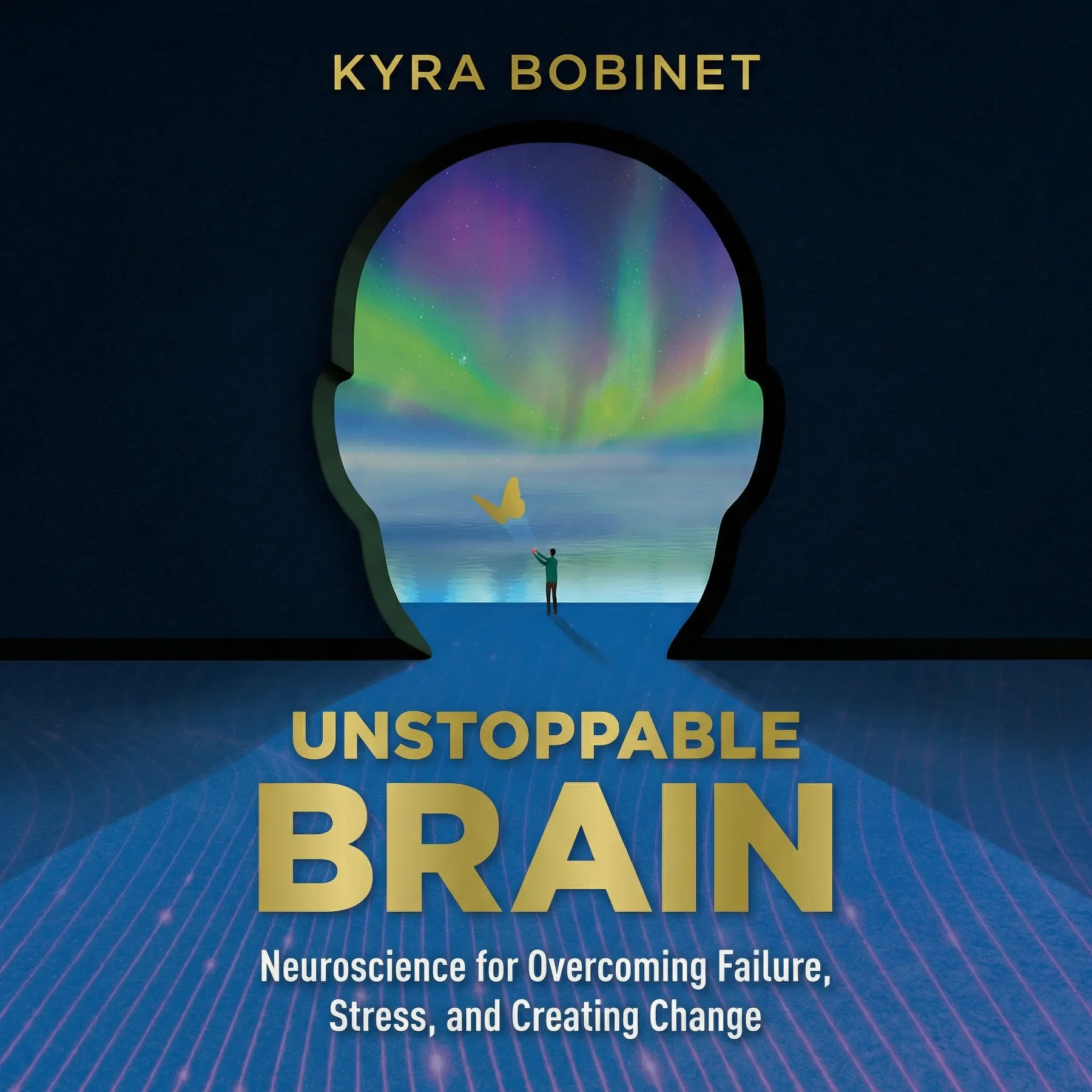
Unstoppable Brain: Neuroscience for Overcoming Failure, Stress, and Creating Change
By Kyra Bobinet
Unstoppable Brain reveals the neuroscience behind why we quit and how to restart. Dr. Kyra Bobinet explains the habenula’s role in motivation and offers an iterative approach to lasting personal change.
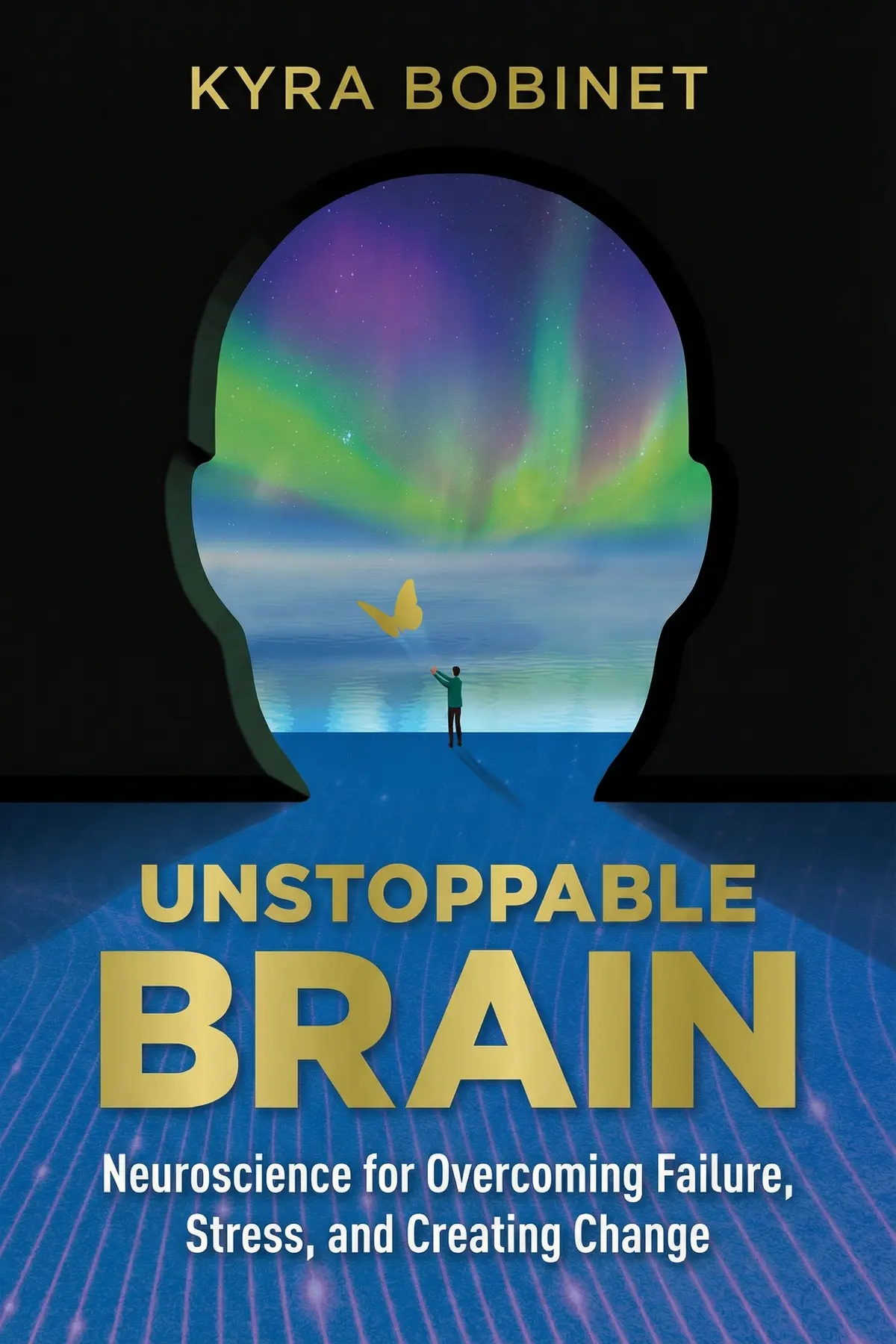
Table of Content
1. Introduction
1 min 21 sec
We have all been there. You start a new year or a new project with a burst of energy and a clear vision of success. You’ve bought the equipment, you’ve cleared your schedule, and you’ve told your friends. But then, a week or two in, something happens. You miss a day. You make a mistake. Suddenly, that fire in your belly isn’t just flickering—it’s out. You find yourself sitting on the couch, wondering where all that motivation went and why you just can’t seem to follow through.
In the past, we might have called this a lack of discipline or a failure of character. But as Dr. Kyra Bobinet explains in Unstoppable Brain, what you’re experiencing isn’t a character flaw; it’s a biological response. Your brain has a built-in mechanism designed to protect you from the pain of failure, and sometimes, that mechanism works a little too well. It’s called the habenula, and understanding it is the secret to moving past the cycle of starting and stopping.
This summary is going to take you on a journey through the latest findings in neuroscience to explain why our modern world is making it harder than ever to stay on track. We will look at how our obsession with performance is actually hurting us, how certain industries profit from our setbacks, and most importantly, how we can rewire our approach to life using an iterative mindset. By the end of this exploration, you’ll see your brain not as a stubborn obstacle, but as a powerful tool that simply needs the right operating instructions. Let’s look at how we can stop being stopped and finally build a life that lasts.
2. The High Cost of Living for the Scoreboard
2 min 12 sec
Discover why focusing solely on results can lead to a psychological breakdown and how the pressure to perform turns our passions into sources of deep anxiety.
3. The Habenula: Your Brain's Motivation Kill Switch
2 min 09 sec
Explore the tiny neurological structure that forces you to give up and why ‘trying harder’ is often the worst thing you can do for your goals.
4. The Hidden Economy of Human Failure
2 min 08 sec
Uncover how the multi-billion dollar wellness and healthcare industries are actually designed to profit when you fail to meet your goals.
5. Two Paths to Transformation: Habits and Emotional Events
2 min 11 sec
Learn the difference between the slow burn of habit formation and the sudden impact of emotional experiences in creating a new version of yourself.
6. The MacGyver Mindset and the Power of Iteration
2 min 04 sec
Why the most successful people in the world act like experimental scientists rather than disciplined soldiers when it comes to their personal lives.
7. Overcoming the Collective Habenula
2 min 13 sec
See how entire communities can lose hope and discover the strategies that small groups use to win big battles against impossible odds.
8. Conclusion
1 min 33 sec
As we wrap up our journey through Unstoppable Brain, the most important thing to take away is that your struggle with motivation is not a personal failure—it is a biological event. The habenula is doing exactly what it was evolved to do: protect you from the pain of unsuccessful efforts. But in our modern world, where we are bombarded by performance metrics and industries that profit from our setbacks, that protection can become a prison.
The path to true, lasting change isn’t through more willpower or harsher self-discipline. It’s through kindness, curiosity, and iteration. When you stop grading yourself and start experimenting, you take the power away from the habenula and give it back to your creative, thinking brain. You become a MacGyver, capable of taking the messy, imperfect parts of your life and crafting something meaningful out of them.
Remember that change is a slow process of building new habits and staying open to life’s big emotional lessons. Don’t be discouraged when the old trails of your former habits resurface; just gently guide yourself back to the path you’re building today. Whether you’re trying to improve your health, advance your career, or help your community, the secret is to never stop iterating. Every ‘setback’ is just a piece of data telling you how to move better the next time. Keep your curiosity alive, stay flexible, and you will find that your brain truly is unstoppable. Thank you for listening, and may your next experiment be your most revealing one yet.
About this book
What is this book about?
Have you ever wondered why even your best intentions seem to wither away after a few weeks? In Unstoppable Brain, Dr. Kyra Bobinet dives deep into the biological structures that dictate our persistence and our tendency to give up. The book centers on a tiny but mighty part of the brain called the habenula, which acts as a motivation kill switch when it senses failure. This isn't just another self-help book about willpower; it’s a scientific investigation into why traditional performance-based goals often backfire. Bobinet reveals how the industries we rely on for health and success often thrive on our repeated failures. By shifting from a rigid performance mindset to an iterative, flexible way of living, the book promises to help you bypass your brain's internal roadblocks. You will learn how to turn setbacks into data points and how to harness the power of neuroplasticity to create a life that feels authentic and sustainable.
Book Information
About the Author
Kyra Bobinet
Dr. Kyra Bobinet is a leading expert in the fields of neuroscience and behavior change. With an MD and an MPH from Harvard University, she has spent her career bridging the gap between clinical science and everyday wellness. She has served as a faculty member at Stanford University, focusing on patient engagement and behavioral design. Beyond her academic work, Dr. Bobinet is the author of Well Designed Life and the CEO of Fresh Tri, a behavior change technology company. Her work is dedicated to helping individuals and organizations use design thinking and brain science to achieve long-term health and fulfillment.
Ratings & Reviews
Ratings at a glance
What people think
Listeners find this work exceptionally educational, praising the mix of scientific detail and actionable strategies for surmounting mental hurdles. The prose is described as articulate and approachable, incorporating relatable narratives that create a gripping experience. Listeners also treasure the motivational aspects, viewing it as a trailblazing entry in the field that improves mental performance; one review specifically mentions its groundbreaking exploration into the neuroscience of behavior change. Finally, listeners prize the book for its stress-lowering benefits and high level of readability.
Top reviews
Chan
Listening to the author narrate her own research in the audiobook version made the concepts feel so much more personal and urgent. Her excitement is infectious. You can tell she truly cares about helping people break free from chronic motivation loss. The way she breaks down how childhood trauma scars the habenula was particularly moving. While I’m not a doctor, I followed every word without feeling lost. It’s a rare blend of high-level neuroscience and compassionate, actionable advice for the everyday person. Purely transformative.
Show moreNiramai
Wow. This is a total game-changer for anyone who feels stuck in a cycle of perceived failure. Bobinet identifies the habenula as the culprit behind our motivation crashes, and it makes so much sense. I’ve spent years blaming my willpower. But seeing it as a brain function changed my entire perspective. The book is intellectually stimulating but remains deeply human. It challenges the entire diet industry and how they profit from our demotivation. It’s bold, innovative, and frankly, it’s exactly what I needed to hear right now.
Show moreAir
Finally, a science-backed explanation for why my brain rebels against every fitness app I've ever downloaded! Bobinet explains that performative tools actually trigger the habenula to shut us down. It’s not laziness; it’s biology. I love how she encourages small, manageable steps—like using soup cans as weights—rather than unsustainable lifestyle overhauls. The tone is encouraging and the research is top-notch. I’m already using the iterative approach to adjust my morning routine. If you’re tired of failing at your New Year’s resolutions, read this book immediately.
Show moreThawee
Few books successfully bridge the gap between hard data and indigenous wisdom, but Bobinet pulls it off. She shows how the habenula acts as a gatekeeper for our motivation and how we can use 'MacGyver' strategies to keep moving. The blend of technical expertise and artistic expression makes it a unique read. It’s not just about 'doing better'; it’s about understanding the brain’s default mode and learning to work with it. The insight into Significant Emotional Experiences changed how I view my own past setbacks. Inspiring, resilient, and deeply informative.
Show morePakinee
Ever wonder why you just... stop? Kyra Bobinet’s deep dive into the habenula explains that 'giving up' isn't a character flaw, but a neurological safety switch. Personally, I found the science of the 'Failure Matrix' incredibly eye-opening. It explains why rigid goals often backfire. The writing is accessible, though it does get a bit repetitive when discussing the diet industry. Still, the iterative mindset tools are worth the price of admission. It’s refreshing to read something that moves beyond the typical 'hustle harder' narrative. A solid resource for anyone feeling stuck.
Show morePing
The concept of 'MacGyvering' your own life is what finally clicked for me. Instead of viewing a missed workout as a total failure, Bobinet encourages an iterative mindset—essentially just tweaking the experiment. It’s a relief to step away from the rigid performance-based success metrics that usually lead to burnout. The book offers a practical pathway to healing. My only gripe is that it could have been shorter. Some points are hammered home a few too many times. Regardless, the brain science is solid and the techniques are easy to implement immediately.
Show moreSamira
As someone who has struggled with the toxic 'performance mindset' in my career, Maya’s story hit home. We are so conditioned to value achievement over growth, which Bobinet correctly points out is a recipe for anxiety. The book is a masterful narrative that weaves together neuroscience and real-life examples. I especially appreciated the inclusion of indigenous healing practices alongside the clinical data. It provides a more holistic view of recovery than your standard health book. This is a must-read for anyone looking to unlock their cognitive potential without the usual stress.
Show moreBo
Dr. Kyra Bobinet manages to make complex neuroscience feel like a conversation with a friend. The book is focused, flows well, and is incredibly relatable. I was particularly struck by the discussion on how trauma creates lasting neural connections. It’s heavy stuff, but she handles it with such grace and clarity. My only minor complaint is the layout of some of the exercises, which felt a bit buried in the text. But the core message—that we can retrain our brains to side-step the failure response—is absolutely transformative. A very solid read.
Show moreIce
To be fair, I went in expecting more of a general self-help guide, but this leans very heavily into diet culture and weight loss examples. While the core idea of the habenula triggering a 'shut down' response is brilliant, I found the author’s occasional rants about fixing the world’s problems a bit unfocused. It felt like two different books fighting for space. However, the section on Significant Emotional Experiences (S.E.E.s) was fascinating. If you can look past the heavy emphasis on dieting, there is some real gold here regarding how to side-step failure.
Show moreRungtip
I really wanted to love this because the neuroscience of the habenula is fascinating, but the execution felt messy. The first half is a brilliant look at brain function and why we quit. But then it devolves into some uncomfortable rants about global issues that don't seem to have much grounding in the data provided. It felt a bit disjointed. Also, if you aren't interested in the mechanics of dieting or weight loss apps, you might find yourself skimming large sections. There are great insights buried here, but you have to dig for them.
Show moreFeatured in
Readers also enjoyed


A Liberated Mind: How to Pivot Toward What Matters
Steven C. Hayes
Acting with Power: Why We Are More Powerful Than We Believe
Deborah Gruenfeld
AUDIO SUMMARY AVAILABLE
Listen to Unstoppable Brain in 15 minutes
Get the key ideas from Unstoppable Brain by Kyra Bobinet, plus 5,000+ more titles in English and Thai.
- 5,000+ titles
- Listen as much as you want
- 7-day free trial
- Cancel anytime







