

14 min 44 sec
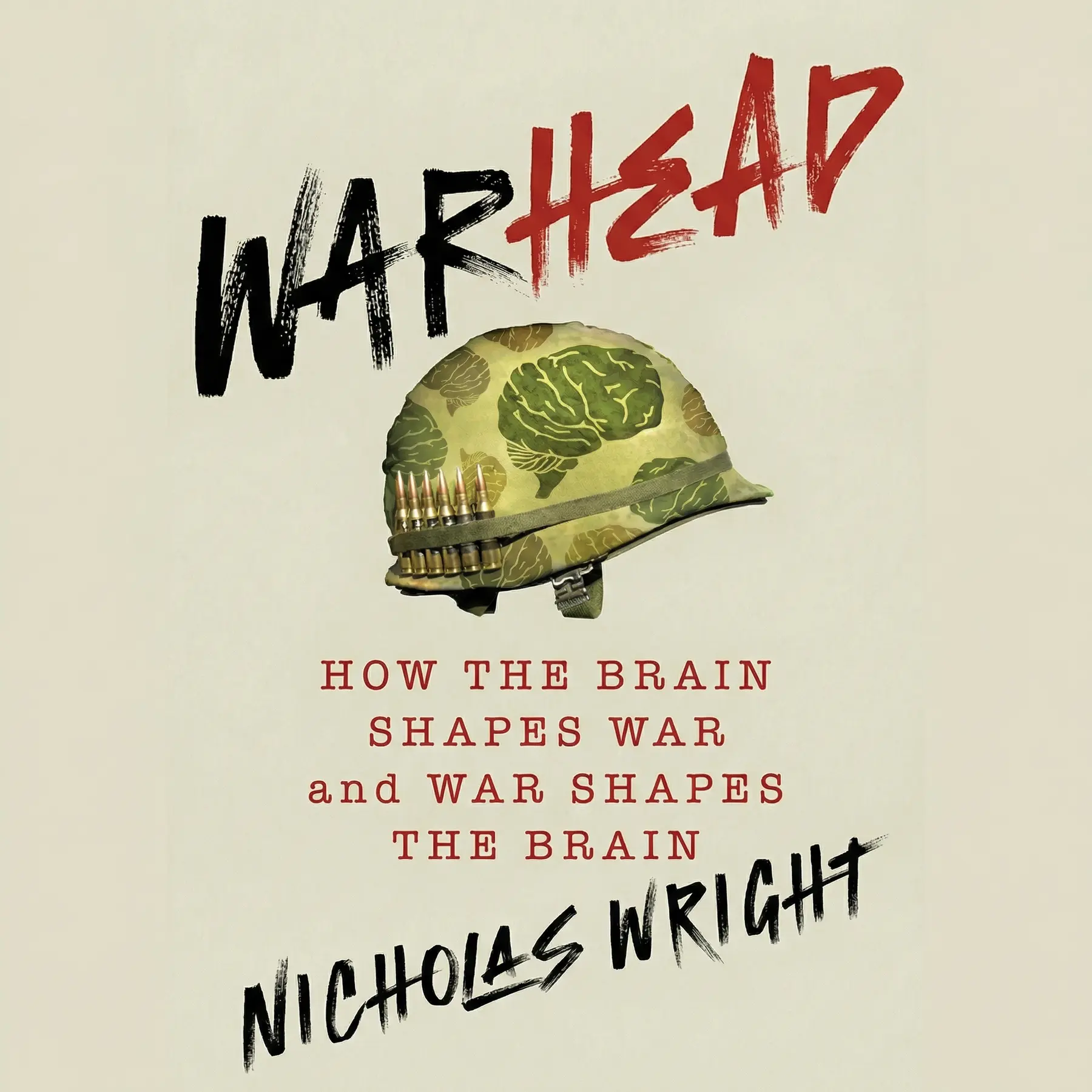
Warhead: How the Brain Shapes War and War Shapes the Brain
Warhead explores the biological foundations of human conflict, revealing how brain structures like the hypothalamus and amygdala influence military strategy, the psychological impact of surprise, and the historical inevitability of global warfare.
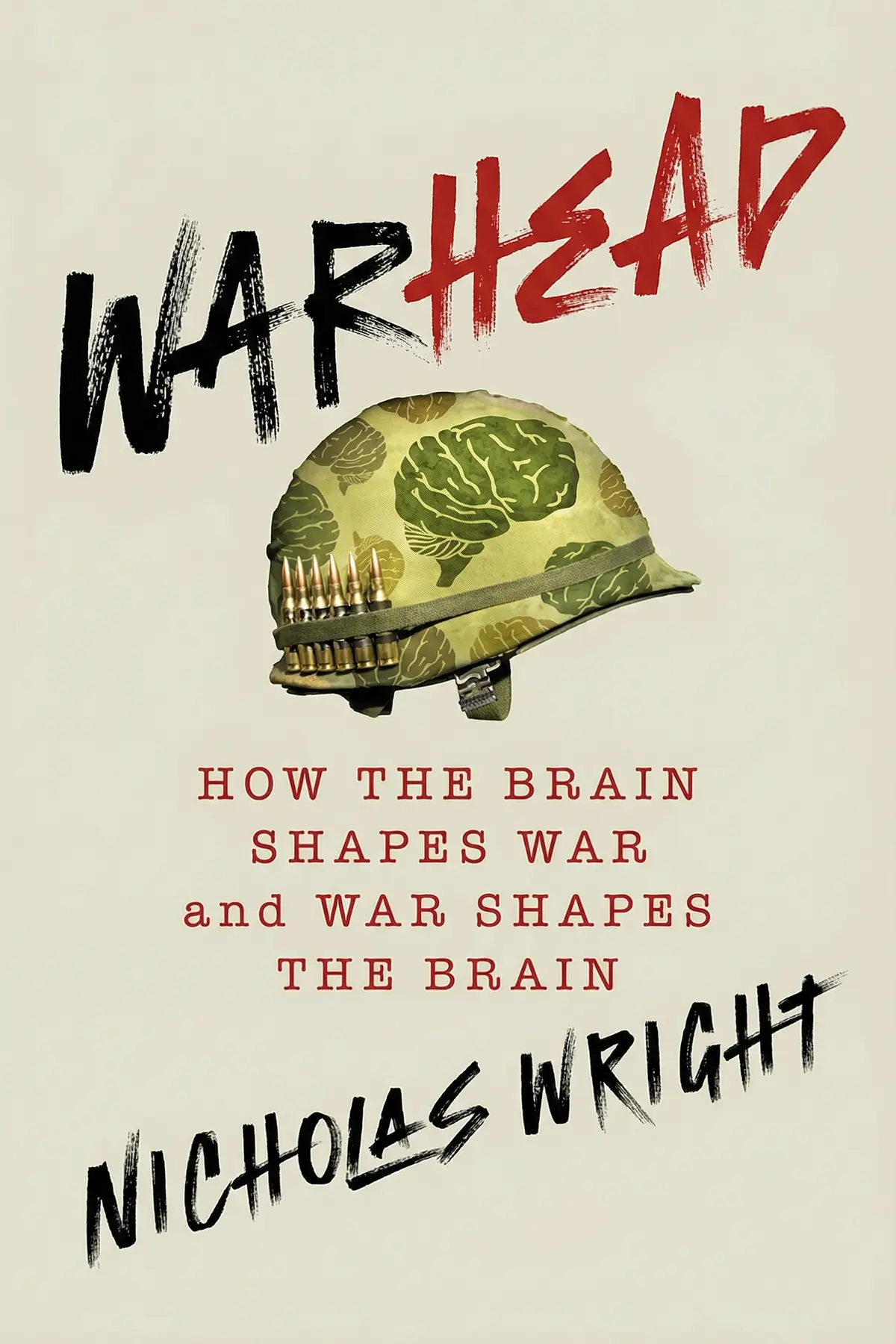
Table of Content
1. Introduction
1 min 33 sec
Not long ago, the idea of a major land war in Europe seemed like a relic of the past to many observers. When Dr. Nicholas Wright first mentioned he was researching the biological roots of conflict, he often met with skepticism—people assumed that humanity had moved beyond such primitive struggles. Yet, history has a way of upending our expectations. The 2022 invasion of Ukraine served as a stark reminder that war remains a constant potential in the human experience.
What Wright suggests is that we cannot understand war simply by looking at political maps or economic treaties. Instead, we have to look inward, at the three pounds of gray matter between our ears. Our brains are not just tools for thinking; they are historical artifacts shaped by millions of years of survival and competition. In this exploration, we are going to look at the ‘hardware’ of human conflict. We will see how the brainstem manages our survival models, how the hypothalamus drives our most basic needs, and how the amygdala processes the fear that can either save us or lead to catastrophe.
By the time we finish, you will see that self-knowledge is more than a philosophical goal—it is a strategic necessity. If we can understand the neurological triggers that lead us to the battlefield, we might finally find the tools to steer ourselves away from it. This is the story of how our brains shape war, and in a very real sense, how war has shaped the very evolution of our brains. Let’s begin this journey through the landscape of the human mind to discover why we fight and how we might one day stop.
2. Predictive Modeling and the Psychology of Surprise
2 min 54 sec
Discover how your brain builds a simulation of reality and why a single ‘prediction error’ can cause a powerful military to suddenly collapse in the face of an unexpected attack.
3. The Biological Engine of Logistics and Vital Drives
2 min 57 sec
Explore the tiny command center in your brain that regulates hunger, thirst, and sleep, and learn how these basic needs dictate the success or failure of global empires.
4. Fear, Rage, and the Biological Sense of Fairness
2 min 45 sec
Uncover the role of the amygdala in managing terror and how a deep-seated, biological rejection of unfairness can spark revolutions and drive the brutality of war.
5. The Inevitability of Conflict and the Power of Metacognition
2 min 59 sec
Is peace even possible? Learn why our brain’s wiring makes war a recurring reality, but also discover the unique human ability that gives us hope for a more stable future.
6. Conclusion
1 min 36 sec
As we have seen, the roots of war are not found in the soil of the battlefield, but in the neural pathways of the human brain. From the brainstem’s predictive modeling to the hypothalamus’s vital drives and the amygdala’s management of fear, our biology is built to navigate a world of competition and threat. We have explored how the suddenness of an attack can crash our internal models and how the biological rejection of unfairness can spark global revolutions.
Yet, the final takeaway is one of empowerment. Nicholas Wright reminds us that while we may be hardwired for conflict, we are also uniquely equipped with the tools of metacognition and higher reasoning. We have the ability to observe our instincts and choose a different path. The throughline of this journey is that self-awareness is the ultimate strategic asset.
To move forward, we must stop viewing war as an inexplicable tragedy and start seeing it as a predictable outcome of specific biological and psychological triggers. By recognizing these triggers in ourselves and our leaders, we can foster a world that prioritizes restraint, teamwork, and long-term stability. The next time you see a conflict brewing on the world stage, remember that it is not just a clash of nations—it is a clash of brains. And the more we know about how those brains work, the better our chances are of building a future where the warhead remains a memory of the past rather than a threat to our future. Mark this as finished, and carry this new self-knowledge with you as you navigate the complexities of the world around you.
About this book
What is this book about?
Warhead investigates the intersection of neuroscience and geopolitics to answer a fundamental question: Why do humans continue to engage in war? By examining the physical architecture of the brain, neuroscientist Nicholas Wright explains how our most basic instincts for survival, reproduction, and fairness drive international relations and military decisions. The book moves from the brainstem, which manages our life-support systems and internal models of reality, up to the prefrontal cortex, where higher-level cognition and metacognition occur. Through historical examples—ranging from the Peloponnesian War to the 2022 invasion of Ukraine—Wright demonstrates how biological needs like hunger and sleep can be weaponized and how the brain’s reaction to surprise can cause entire armies to collapse. The promise of the book is that by understanding the neurological triggers of aggression and fear, we can develop more effective strategies for leadership and diplomacy, potentially creating a more stable and peaceful global future despite our innate inclinations toward conflict.
Book Information
About the Author
Nicholas Wright
Dr. Nicholas Wright is a neuroscientist who operates at the intersection of biology and global strategy. He holds research positions at University College London and Georgetown University and serves as a senior associate at the Center for Strategic and International Studies in Washington DC. His expertise is highly sought after by world leaders, including his role as an advisor to the Pentagon Joint Staff. Wright is a frequent contributor to major publications such as Foreign Affairs, Foreign Policy, and The Atlantic, where he explores how human nature shapes modern geopolitics.
Ratings & Reviews
Ratings at a glance
What people think
Listeners find this a stimulating examination of how neuroscience overlaps with military history. Although views on the book’s structure differ—specifically, some listeners believe the shifts from brain biology to historical stories are occasionally sudden—the majority value the author's deep background as both a neuroscientist and a Pentagon advisor. Furthermore, the wide-ranging examples, from the Battle of Waterloo to contemporary global politics, are often cited as a significant highlight. They also remark that the work provides deep perspectives on human choices, with one listener noting it successfully reframes warfare as an extension of our neural architecture rather than just an external event.
Top reviews
Win
The chapter on the brain stem and how it connects to our survival instincts in combat was absolutely mind-blowing. I’ve always viewed warfare as a matter of politics and logistics, but Wright makes a compelling case that it’s actually a matter of biology and decision-making. Seeing the parallels between a rat’s defensive reaction and a soldier’s response to trauma provided a visceral perspective I hadn't considered before. This book isn't just for military buffs; it's a deep dive into what makes us human and why we struggle so much with conflict. The writing is clear, authoritative, and surprisingly accessible for such a complex subject. Frankly, it changed how I look at the news every night. I highly recommend it for anyone who wants to understand the 'why' behind the world's most violent events. It is a true five-star achievement.
Show moreTalia
Picked this up during a long commute and ended up finishing the audiobook in record time because the content was so engaging. Nicholas Wright has a way of making high-level neuroscience feel personal, especially when discussing how war shapes the brain over generations. As someone with family in the military, the sections on how we build trust—and how easily it breaks—really resonated with me. It’s not just a book about combat; it’s a book about the fragile institutions we build to keep our darker impulses in check. The metaphor of the rat in the corner chasing its pursuer stuck with me as a perfect illustration of trauma. This is essential reading for anyone trying to make sense of why humanity keeps repeating its mistakes. Powerful stuff.
Show morePan
Finally got around to reading this, and I’m honestly impressed by the breadth of knowledge Wright brings to the table. Most books on war focus on the weapons or the generals, but this focuses on the organ that controls both. The way he links the biological capacity for reconciliation to the need for better international diplomacy was a highlight for me. It’s rare to find a book that is this grounded in hard science while remaining so deeply humane and optimistic about our future. Some might find the lack of a singular, driving thesis frustrating, but I enjoyed the wandering journey through psychology and history. A truly fascinating read that I've already recommended to several friends who work in policy. Five stars for the ambition alone.
Show moreSienna
Nicholas Wright’s expertise as a Pentagon advisor really shines through in the way he dissects military strategy through a biological lens. It’s a fascinating look at how our neural architecture influences everything from the Battle of Waterloo to modern-day tensions in the Taiwan Strait. I found the discussion on why France collapsed in WWII particularly gripping, as it challenges the traditional view of firepower versus tactics. While the transitions between the hard neuroscience and historical anecdotes are sometimes a bit jarring, the core argument is incredibly persuasive. It reframes war not as some external catastrophe, but as an inevitable output of how our brains are wired. If you enjoy books that bridge the gap between science and history, this is a solid choice. Just be prepared for some heavy lifting when the technical jargon starts flying. It is a dense but rewarding read.
Show moreWittaya
As a history buff, I found the way this book re-examines the Red Army and Churchill's decision-making through neuroscience to be quite fresh. We often attribute military success to "instinct," but Wright breaks down exactly what those instincts look like in the prefrontal cortex. It’s a thought-provoking exploration that makes you realize how much our biological limitations shape our national security policies. There are moments where the science feels a bit dense, and I did feel the author glossed over certain historical nuances to fit his model. However, the overall impact is strong and the section on how we can potentially use this knowledge to foster peace was surprisingly optimistic. It’s a heavy read, but one that pays off if you’re willing to sit with the complexity and the occasional academic dry spell.
Show moreArm
After hearing about Wright’s work with the Pentagon, I had high expectations for "Warhead," and for the most part, it delivered. The exploration of how our brains process surprise and shock during an invasion is terrifyingly relevant in today’s world. I particularly appreciated the discussion on how different cultures, like China, perceive threats and how that’s rooted in collective neural processing. Some of the transitions are definitely abrupt, and you might find yourself re-reading sections to find the thread of the argument. But the insights into human behavior and the future of conflict are too good to pass up. It's a gritty, intellectual look at the most dangerous part of our anatomy. Definitely worth the time if you're interested in global strategy.
Show moreTippawan
Ever wonder why some armies fail despite having every tactical advantage? This book argues that the answer lies in the cognitive models leaders use to navigate high-stress environments. Wright does an excellent job explaining how uncertainty can hijack our circuitry, leading to the kind of catastrophic miscalculations we saw in WWII. The structure is unique, moving from basic brain functions up to complex social behaviors, which helps ground the theory. My only gripe is that it can be a bit repetitive in its "brain-as-a-weapon" theme. Still, it’s an ambitious project that offers plenty of "aha!" moments for curious readers. It’s definitely not your typical military history book, and I learned more than I expected.
Show moreLucas
To be fair, I expected a more traditional "war stories" book, but what I got was a sophisticated look at the intersection of biology and strategy. The author's background as a doctor and advisor gives him a unique vantage point that you don't often see in the genre. I loved the case study on Shaka Zulu and how it contrasted with modern wargaming at the Pentagon. It’s a lot to process, and the formatting could be a bit cleaner to help the reader navigate the dense information. But the insights into how we "model" the world—and how war shatters those models—are worth the effort. It’s a dense, rewarding challenge that will leave you thinking long after the final page.
Show moreYothaka
I really wanted to like this, especially given the author’s credentials, but the lack of organization made it a chore to finish. One minute we’re talking about neurotransmitters and the next we’re suddenly at the Battle of Waterloo without a clear bridge between the two. Truth is, the book feels more like a collection of disjointed essays than a cohesive argument about how the brain shapes war. I was hoping for a more focused discussion on trauma and recovery, but the author drifts into geopolitics and AI far too often. It’s clear that Wright is brilliant, but he needs a much stronger editor to keep the narrative on track. For a 400-page book, I expected more solid evidence and fewer speculative leaps. Not gonna lie, I was disappointed by the execution.
Show moreSirichai
This was a major disappointment because I was expecting a rigorous academic study on trauma and instead got a book of opinions. The writing made me unhappy; it jumps from concept to concept without building a logical case for the reader to follow. There are no proper inline references, which makes the author's claims about "brain wiring" feel more like pop-psychology than actual science. I felt like the historical examples were cherry-picked to suit a specific narrative rather than being analyzed objectively. To be fair, the author has a great resume, but that doesn't excuse the lack of academic rigor here. If you're looking for a serious discussion on neuroscience, you're better off looking elsewhere. This felt like a missed opportunity to bridge two important fields and I barely finished it.
Show moreReaders also enjoyed

Abolish Rent: How Tenants Can End the Housing Crisis
Tracy Rosenthal

Abortion: Our Bodies, Their Lies, and the Truths We Use to
Jessica Valenti

Adults in The Room: My Battle With Europe’s Deep Establishment
Yanis Varoufakis

21 Lessons for the 21st Century
Yuval Noah Harari
A Life Decoded: My Genome: My Life
J. Craig Venter
AUDIO SUMMARY AVAILABLE
Listen to Warhead in 15 minutes
Get the key ideas from Warhead by Nicholas Wright, plus 5,000+ more titles in English and Thai.
- 5,000+ titles
- Listen as much as you want
- 7-day free trial
- Cancel anytime







