
27 min 10 sec
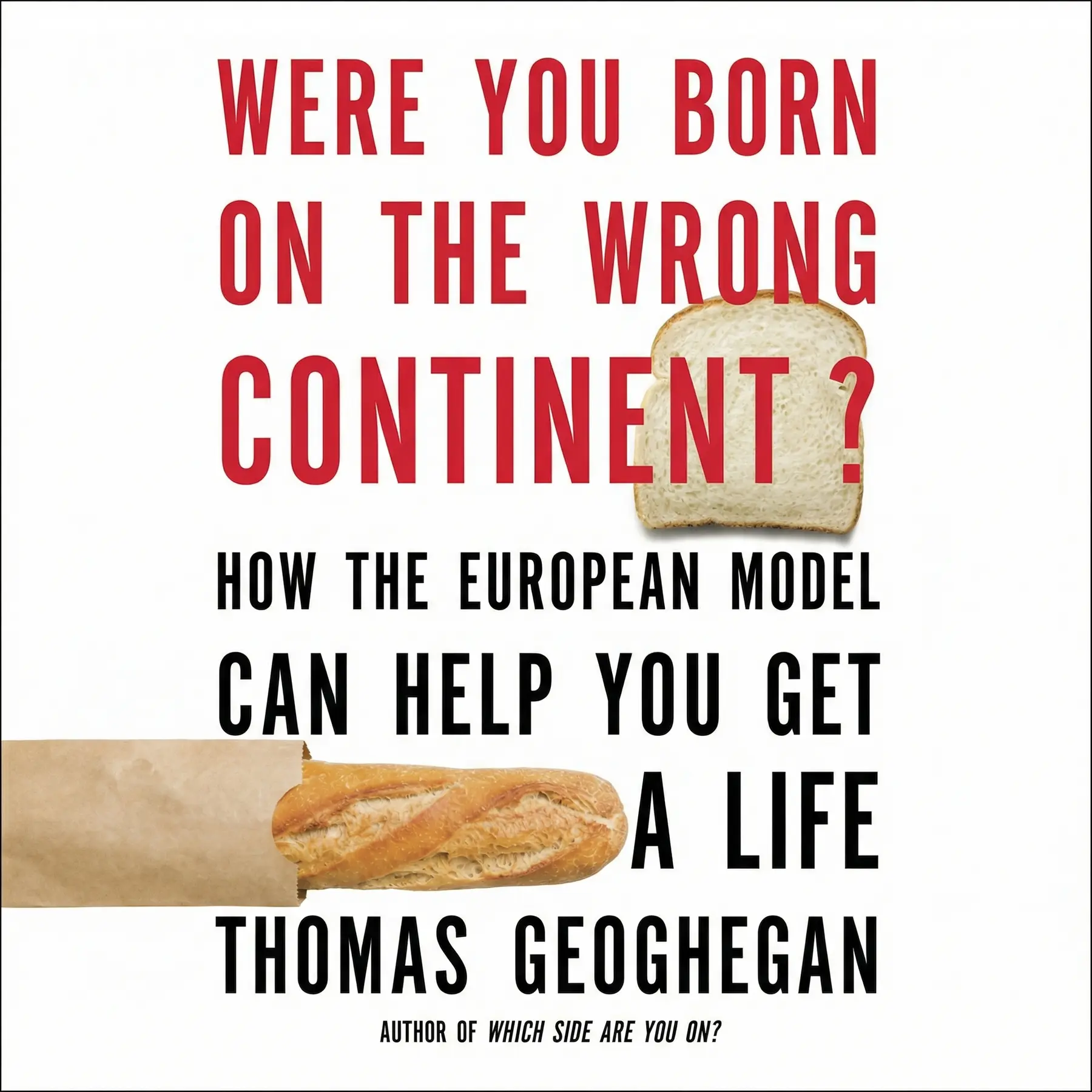
Were You Born on the Wrong Continent?: How the European Model Can Help You Get a Life
Thomas Geoghegan examines the profound differences between American and European social models, arguing that Europe’s emphasis on labor rights and social democracy creates a significantly higher quality of life for its citizens.
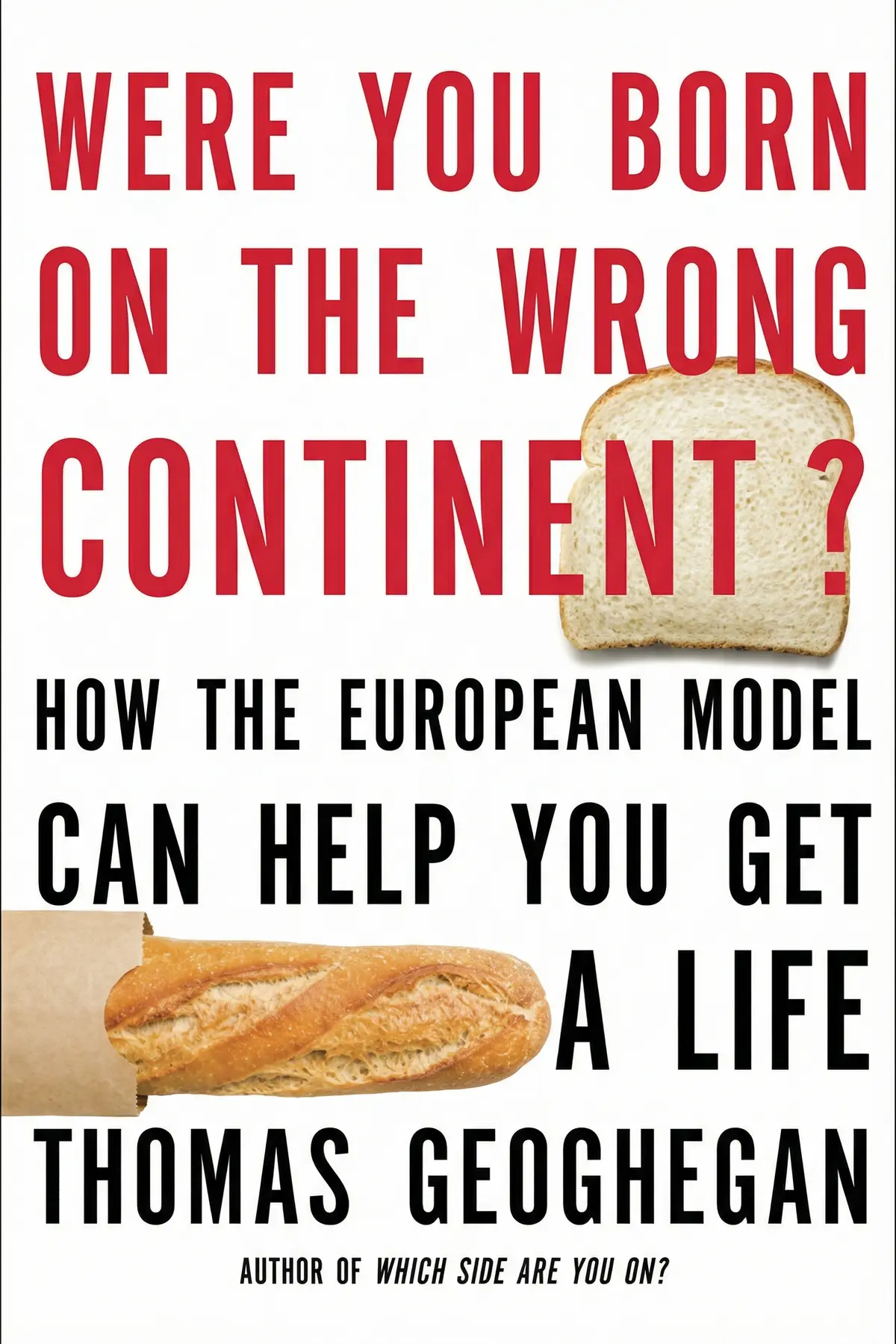
Table of Content
1. Introduction
2 min 17 sec
Imagine waking up in a society where your health, your education, and your retirement are not sources of constant anxiety, but rather guaranteed pillars of your existence. For many Americans, this sounds like a distant utopia or perhaps a dangerous experiment. We are often told that the high-octane, low-regulation environment of the United States is the ultimate engine of prosperity, and that Europe, with its shorter work weeks and higher taxes, is a continent in slow-motion decline. But is that story actually true? Or are we missing a fundamental shift in how human happiness and economic stability are achieved?
In the following exploration of Thomas Geoghegan’s insights, we are going to look at the sharp contrast between the American way of life and the social democracies of Western Europe, particularly Germany. We often see headlines predicting the imminent collapse of the European model, yet when travelers step onto the streets of Zurich, Berlin, or Copenhagen, they don’t find ruin. Instead, they find pristine public squares, thriving local shops, and a populace that seems remarkably less stressed than their counterparts in New York or Chicago.
This isn’t just about having more vacation days, though that is certainly part of the equation. It is about a different philosophy of the social contract. It’s about understanding why a higher gross domestic product doesn’t always translate into a better life for the average person. We will examine how the way we build our cities, the way we fund our public services, and even the way we read the morning news can drastically alter our well-being.
As we journey through these ideas, we’ll see how Europe’s commitment to labor rights and collective investment serves as a stabilizer, not just for the individual, but for the entire economy. We’ll investigate the “German miracle” and how it was ironically shaped by American influence after World War II. Ultimately, we are asking a central question: What does it really mean to have a life, and could a different set of policies help us get there? Let’s dive into the reality behind the rhetoric and see if, perhaps, the grass really is greener on the other side of the Atlantic.
2. The Perception Gap
2 min 48 sec
Media outlets often paint a bleak picture of European economic health, but a closer look at everyday reality reveals a very different, far more vibrant story.
3. The True Cost of Lower Taxes
2 min 49 sec
Americans might pay less in taxes than Europeans, but the lack of social benefits in return creates a hidden financial and psychological burden.
4. Geography, Commutes, and Contentment
2 min 51 sec
The physical layout of European cities encourages health and social connection, while American suburban sprawl leads to isolation and high expenses.
5. The Mirage of Prosperity Metrics
2 min 55 sec
Standard economic indicators like GDP and unemployment rates often mask the underlying financial struggles of the American workforce.
6. The German Industrial Miracle
2 min 52 sec
Germany’s unique form of social capitalism has allowed it to remain a global manufacturing powerhouse while maintaining high wages and long vacations.
7. Democracy in the Workplace
2 min 37 sec
German workers have a legal right to participate in company decision-making, leading to a more equitable and stable business environment.
8. The Literacy of Democracy
2 min 40 sec
A thriving social democracy requires an engaged and informed citizenry, a quality reflected in Europe’s robust culture of news consumption.
9. Weathering the Economic Storm
3 min 00 sec
Europe’s social safety nets and manufacturing focus provided a level of resilience during financial crises that the debt-heavy American model lacked.
10. Conclusion
2 min 21 sec
As we look back at the contrast between the American and European ways of life, the central throughline is one of security versus precarity. Thomas Geoghegan’s analysis suggests that we have been sold a bill of goods in the United States. We have been told that we are the freest and wealthiest people on earth, yet we work longer hours, have less time for our families, carry more debt, and face a far more uncertain future than our peers in European social democracies. We have prioritized the freedom of the market over the freedom of the individual to live a stable, dignified life.
The European model, particularly the one found in Germany, shows us that a different path is not only possible but highly successful. By investing in public goods—healthcare, education, transit—and by giving workers a real voice in their workplaces, these nations have created a middle class that is more resilient and more content. They have proven that you can be a global economic powerhouse without sacrificing the well-being of your citizens. They have shown that higher taxes, when returned in the form of meaningful benefits, are not a burden but a bargain.
The takeaway for us isn’t necessarily that we must move to Europe, but that we must re-evaluate our own priorities. We can choose to advocate for the kind of policy shifts that prioritize the human experience. We can support the revitalization of labor rights, the protection of public services, and a more sustainable approach to urban design. The “German miracle” was not an accident of history; it was a deliberate choice to build a society based on cooperation rather than competition.
So, were you born on the wrong continent? Perhaps. But continents can change, and so can the laws that govern them. The reality of the European experience provides us with a powerful set of tools and a vivid example of what life can look like when we decide that having a life is more important than just having a job. It’s a call to look past the financial headlines and start demanding a society that works for everyone, every day, in the most practical and beautiful ways possible.
About this book
What is this book about?
Were You Born on the Wrong Continent? offers a deep dive into the socio-economic structures that define life in the United States versus Western Europe, with a particular focus on the German model. Thomas Geoghegan challenges the common American narrative that higher taxes and robust labor unions lead to economic stagnation. Instead, he presents a world where these factors contribute to more leisure time, better health, and a more stable middle class. The book promises to reshape how you view your own paycheck, your commute, and your future. By looking past the surface-level financial statistics, Geoghegan reveals how European policies on healthcare, education, and workplace democracy foster a level of security and contentment that many Americans find elusive. It is a provocative look at how choosing a different political path can lead to a more balanced and fulfilling life.
Book Information
About the Author
Thomas Geoghegan
Thomas Geoghegan is an American labor lawyer. Based in Chicago, he is the author of several books and articles on labor law and politics.
Ratings & Reviews
Ratings at a glance
What people think
Listeners find that this book offers remarkable perspectives, especially regarding disparities in healthcare systems. Feedback on its readability is divided, as some consider it highly engaging while others describe the experience as a chore to read. The author's prose style draws criticism, with one listener labeling it as whimsical. Opinions on the caliber of information and its delivery are also mixed; one listener notes it is not fact-based, and another finds the work over-dramatized.
Top reviews
Orm
This book is a revelation for anyone feeling the burnout of the American hustle. Geoghegan explores why Germany keeps its industrial base while the US lets it rot. I loved the point about how their education system actually prepares people for trades rather than just shoving everyone into unnecessary college degrees. It’s written with a whimsical, conversational flair that makes complex labor law feel accessible. Truth is, reading about their thirty days of mandatory vacation made me want to pack my bags immediately. Even if some parts felt a bit anecdotal, the core argument about social democracy providing a higher quality of life is hard to ignore.
Show moreEnd
Finally, a book about economics that actually made me laugh out loud! Geoghegan is a genuinely funny writer who manages to turn dry topics like union-busting and tax rates into something entertaining. His observations on how Americans are obsessed with being '#1' while ignoring our crumbling infrastructure are spot-on. I particularly enjoyed the section on Zurich—it really makes you question why our cities are so 'Gulag-like' by comparison. It’s a fast-paced, witty, and deeply human look at what a functioning social contract looks like. If you're tired of dense, academic jargon, this is the book for you.
Show moreElan
The chapter comparing middle-class women in Germany and the US is genuinely upsetting. It lays bare exactly how much we sacrifice for our supposed 'freedom' in America. From subsidized child care to mandatory parental leave, the European model seems designed for humans, whereas ours is designed for corporations. Geoghegan’s perspective as a labor lawyer adds a layer of expertise that grounds his more whimsical observations. He argues that without an industrial base, democracy dies, and he makes a convincing case for it. This book changed how I view my own tax bill and what I should be getting for it.
Show moreMeen
Ever wonder why we work so much for so little? Geoghegan provides a compelling look at how the other half lives—specifically the German middle class. The way he describes their works councils and how labor has a seat at the corporate table is eye-opening. It’s a complete reversal of the US 'every-man-for-himself' philosophy. I did find his chatty style a bit much at times, and some of the references to people by their first initials got confusing. However, the substance is there. It’s a necessary countervailing view to the free-market fundamentalism we’re fed daily.
Show moreKofi
Picked this up after a trip to Germany left me questioning everything. The book captures that specific feeling of seeing a public transport system that actually works and wondering why we can’t have that. Geoghegan breaks down the 'why' by looking at how power is distributed in their corporations. The fact that workers occupy half the seats on corporate boards is a game-changer. I appreciated the informal tone, as it made the subject matter less intimidating. There are some minor criticisms to be made regarding his reliance on personal travel tales, but the overall message is powerful and incredibly relevant.
Show moreJob
A fascinating, if somewhat flawed, look at comparative politics. The author, a Chicago labor lawyer, brings a unique perspective to the table. He’s clearly biased toward the European model, but he makes some strong points about healthcare and child care. The comparison between the German education tracking system and the US 'college for everyone' approach was particularly sharp. However, the tone is incredibly informal. At times, it feels more like a travelogue than a serious economic critique. It’s an interesting read for the ideas, but be prepared for a lot of meandering stories about train rides and chance encounters.
Show moreCarlos
Not what I expected, but still worth a look. I found the writing to be a bit of a chore because of the constant tangents. One minute he's talking about the decline of the Roman Empire on a train, and the next he's discussing Chicago urinals. It’s a lot to process. That said, the information quality regarding the German labor model—the works councils and the apprenticeship programs—is quite good. It’s an interesting counter-narrative to the idea that European social services are failing. It’s not the most rigorous book, but it’s a thought-provoking comparison that will make you rethink the 'American Dream.'
Show moreMaria
I really wanted to love this, but the execution was lacking. The concept is great—comparing the social safety nets of Europe with the precariousness of American life. But Geoghegan’s writing is just too breezy for such a serious topic. It felt like he spent more time walking around streets and making assumptions than actually digging into the fiscal realities of these systems. Is the German model sustainable? He says yes, but provides very little hard data to back it up. To be fair, his passion for labor rights is clear, but the anecdotal nature of the book makes it hard to take seriously as a political study.
Show moreJames
Geoghegan’s breezy approach really undermined the weight of his argument. While I agree with the author’s general sentiment that the US needs a better social contract, I found the lack of fact-based research frustrating. He spends chapters recounting conversations with random people in Paris or Berlin but skips over the actual budget numbers that would make his case stronger. It’s very anecdotal and, in my experience, a bit outdated in its view of the European economy. The writing style is too chatty for my taste; it felt like reading a long-winded blog post rather than a published work of non-fiction.
Show moreJeeranan
Total snooze fest. A lawyer trying to be a travel writer is a recipe for disaster. The style is incredibly meandering and, frankly, annoying after the first fifty pages. He relies way too much on 'I met a guy named J. on a train' instead of actual economic indicators. It’s all vibes and no substance. I kept waiting for the witty insights promised on the blurb, but they never arrived. If you want a rigorous look at European economics, look elsewhere. This is just a chatty, over-dramatized diary of a guy who likes Zurich.
Show moreReaders also enjoyed
Abolish Rent: How Tenants Can End the Housing Crisis
Tracy Rosenthal
Abortion: Our Bodies, Their Lies, and the Truths We Use to
Jessica Valenti
21 Lessons for the 21st Century
Yuval Noah Harari

Age of Anger: A History of the Present
Pankaj Mishra

A Different Kind of Power: A Memoir
Jacinda Ardern
Age of Propaganda: The Everyday Use and Abuse of Persuasion
Anthony Pratkanis
1929: Inside the Greatest Crash in Wall Street History--and How It
Andrew Ross Sorkin
AUDIO SUMMARY AVAILABLE
Listen to Were You Born on the Wrong Continent? in 15 minutes
Get the key ideas from Were You Born on the Wrong Continent? by Thomas Geoghegan, plus 5,000+ more titles in English and Thai.
- 5,000+ titles
- Listen as much as you want
- 7-day free trial
- Cancel anytime







