
A Splendid Exchange: How Trade Shaped the World
William J. Bernstein
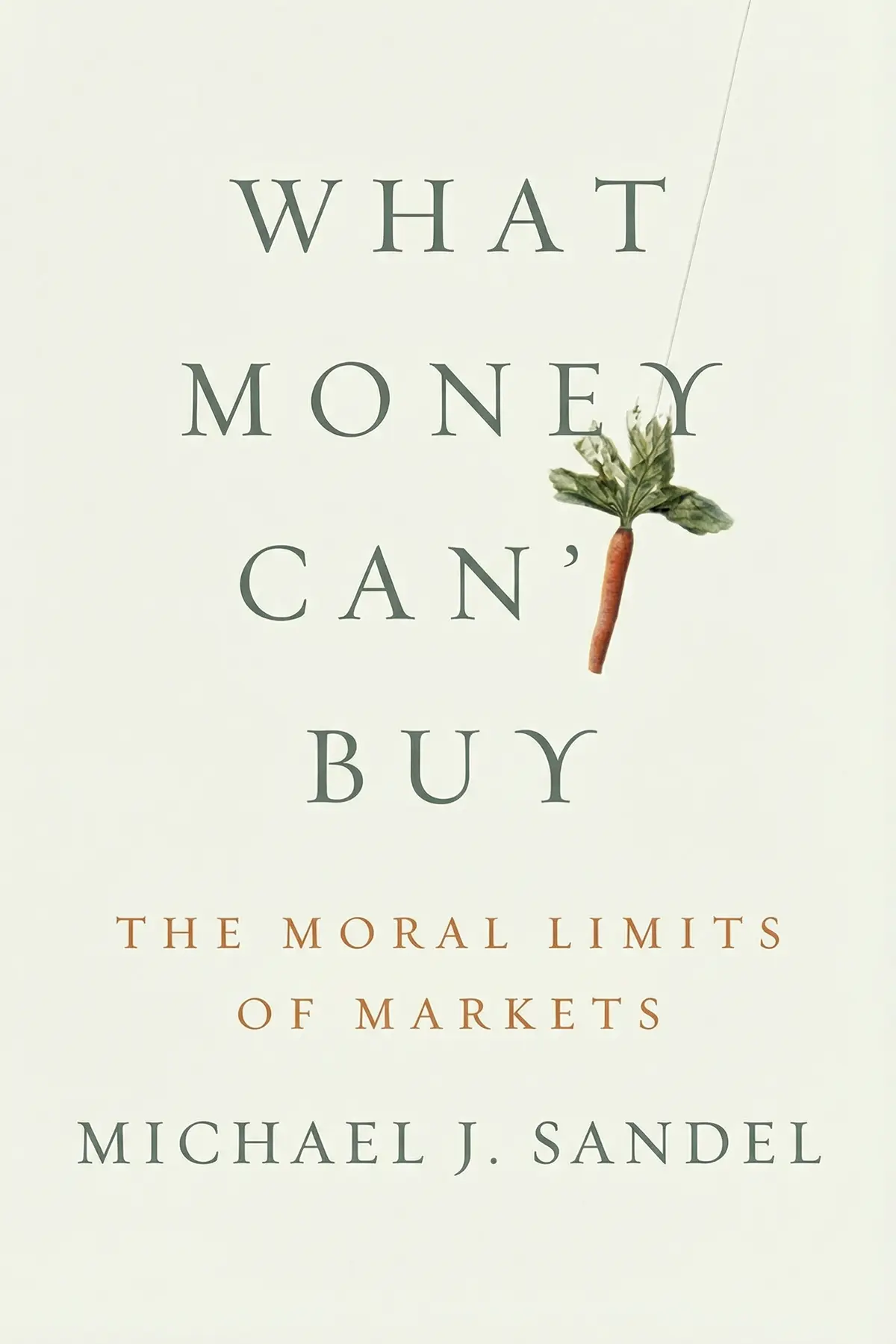
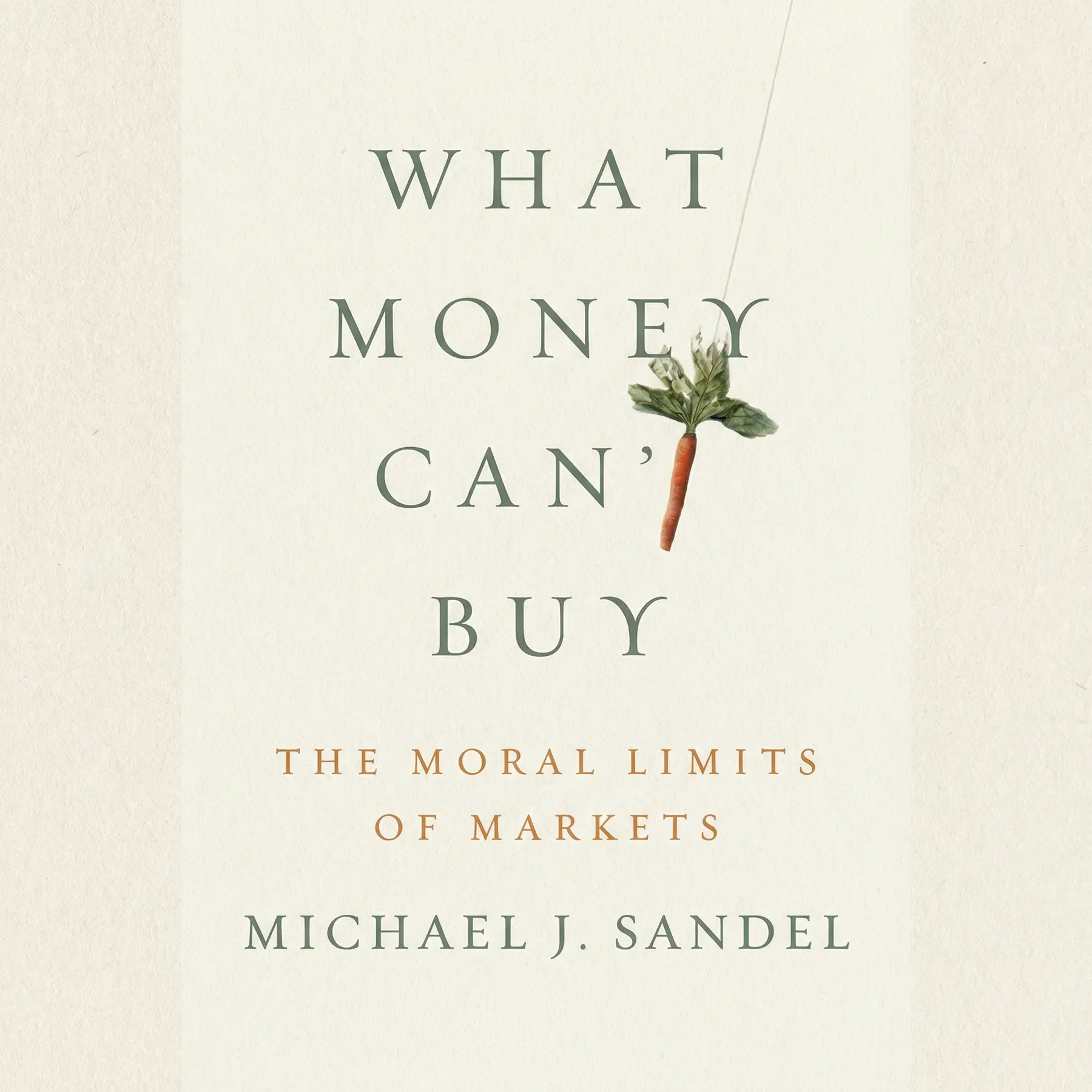
What Money Can't Buy examines the ethical consequences of a world where everything is for sale. It explores how market values have shifted from the economy into our social and civic lives.
1 min 57 sec
Imagine for a moment that you are stuck in a career that drains your spirit, a job you genuinely dislike or perhaps even find ethically questionable. Why do you stay? For most people, the answer is a simple, practical one: you need the income to survive. Now, consider the alternative. If you possessed a vast fortune, that choice would vanish. You would have the freedom to leave. This reality points to a deeper, more uncomfortable truth about our modern world—the idea that our time, our effort, and even our tolerance for unpleasantness can be purchased if the price is right.
This is the starting point for a journey into the moral limits of the marketplace. For the last several decades, we have lived through a quiet but profound transformation. We have moved from having a market economy—a tool for organizing productive activity—to becoming a market society, where almost every aspect of human interaction is governed by the logic of buying and selling. It is a world where market values have seeped into spheres of life where they once had no place, from the way we raise our children to the way we manage our health and even the way we honor our national holidays.
In the following discussion, we are going to explore why this shift matters so deeply. We will look at how the expansion of the market affects social justice, how it potentially corrupts the very things we value most, and why the simple introduction of a financial incentive can sometimes destroy the moral motivations we rely on to keep society functioning. Through a series of thought-provoking examples, we will see that the most important questions of our time aren’t just about economic efficiency, but about the kind of people we want to be and the kind of society we want to build together. What happens when everything has a price tag? And more importantly, what are the things that money simply shouldn’t be able to buy?
2 min 47 sec
Have you noticed how many parts of your daily life now resemble a transaction? We explore the invisible shift that turned a market economy into a market society over three decades.
2 min 31 sec
If everything is for sale, what happens to those who can’t afford the price? We examine the profound impact that marketizing social goods has on equality and human dignity.
2 min 28 sec
Putting a price on an experience changes the experience itself. Discover why charging for Fourth of July fireworks or paying for sterilization can destroy the values they represent.
2 min 37 sec
You might think a reward always boosts motivation, but sometimes it does the opposite. We look at why paying children to read or fining parents for lateness produces unexpected results.
2 min 32 sec
Economists often treat their field as value-neutral, but is it really? Learn why relying solely on efficiency and self-interest ignores the deeper moral questions of fairness and safety.
2 min 22 sec
Is kindness a limited resource we should save for emergencies? We challenge the economic view of human nature and explore why virtue might actually be a muscle that needs exercise.
2 min 07 sec
How do we decide where markets belong and where they don’t? We conclude by looking at why we must have difficult conversations about the kind of society we want to build.
1 min 35 sec
We have spent much of the last thirty years living under the assumption that the market is a neutral tool, one that can be applied to almost any human problem without consequence. But as we have seen, the reality is far more complex. When we turn social goods into commodities, we change their meaning. We risk increasing inequality, corrupting our shared values, and crowding out the moral motivations that are essential for a healthy society.
The path forward requires a conscious effort to rethink the role of the market in our daily lives. It starts with each of us asking difficult questions about the transactions we see around us. When we encounter a new market-based solution to a social problem—whether it’s incentivizing health behavior with cash or privatizing a public service—we must look past the promised efficiency and ask what the moral cost might be.
Ultimately, the throughline of this exploration is that there are some things money simply shouldn’t be able to buy. To protect those things, we must be willing to engage in the hard work of democratic debate. We must decide which values are worth protecting and where the boundaries of the market should be drawn. By doing so, we move closer to building a society that isn’t just wealthy in a financial sense, but rich in the things that truly matter: justice, community, and the shared pursuit of a good life. Start today by looking at the world around you and considering which parts of your life you want to keep sacred, shielded from the logic of the marketplace.
In this exploration of modern ethics, the narrative dives into the shift from having a market economy to becoming a market society. It questions the assumption that market mechanisms are the most efficient way to organize every aspect of human life, from healthcare and education to law enforcement and personal relationships. The promise of this work is to provide a framework for thinking about the moral boundaries of the market. It challenges us to consider what values are corrupted when they are turned into commodities. By examining real-world examples—like paying for doctor access or incentivizing students with cash—the summary reveals the hidden costs of our market-driven culture and asks what it means to live the good life in a commercialized world.
Michael J. Sandel is a professor of government at Harvard University as well as a political philosopher. He has been an influential author in the field of justice and ethics for three decades and is famous for his free online course, Justice: What's the Right Thing to Do?
Listeners find the work to be an exceptional and fast-paced read, offering deep insights into moral and philosophical concepts alongside engaging examples. Furthermore, the writing is clearly expressed, and listeners value the way it sparks significant discussions. Nevertheless, opinions on the overall value are divided; some are satisfied with the cost, while others note that money cheapens the value of things. In addition, perspectives on the strength of the reasoning vary, as some find the points persuasive while others remain unconvinced.
Ever wonder why we feel a lingering sense of 'ick' when everything gets a price tag? Sandel articulates that feeling perfectly, showing how the introduction of money into civic life actually crowds out our better instincts. I was especially struck by the study showing that people are less likely to donate blood when they are paid for it. It proves that money doesn't just incentivize; it changes the very nature of the act itself. This is a brilliant, quick read. It managed to put words to my own vague frustrations with modern consumerism. Highly recommended for anyone who feels like our social fabric is fraying at the edges.
Show moreWow, this really changed how I view everyday transactions and the subtle ways our values are being eroded. Sandel’s point about 'corruption' isn't about bribes. It's about how treating a good according to the wrong norm diminishes its value. Selling the right to hunt endangered walruses to rich tourists is a perfect, albeit horrifying, example of this. The book is remarkably easy to digest and doesn't get bogged down in overly dense academic jargon. It’s a call to action for us to start having a serious public dialogue about where the market should end. Truly insightful and remarkably timely.
Show moreTo be fair, I expected a dry philosophy text, but I ended up finishing this in just two sittings because it was so engaging. The way Sandel explains how market incentives can actually backfire, like the Israeli daycare that started charging parents for late pickups, was eye-opening. Once the fine was introduced, parents saw the late pickup as a service they could buy, and lateness actually increased! It’s such a simple but profound observation about human psychology and moral duty. This book is a must-read for anyone interested in how our society is changing under the pressure of 'efficiency.' Five stars.
Show moreSandel’s exploration of market morality provides a necessary gut-check for our modern world. He argues convincingly that we have drifted from simply having a market economy to becoming a total market society. The examples he uses, like the 'line-standing' services for congressional hearings, are both fascinating and deeply irritating to read about. It’s a quick, articulate read that forces you to question if efficiency is always the highest good. To be fair, he doesn't offer a perfect roadmap for where the limits should be drawn, but he starts the right conversation. This is the kind of book that stays with you long after you close the cover.
Show moreAfter hearing Sandel’s lectures online, I finally picked this up and was impressed by how well his teaching style translates to the page. He focuses heavily on how market mechanisms are creeping into areas where they simply don't belong, like the 'naming rights' for public spaces. The writing is incredibly clear, making complex moral philosophy accessible to a general audience. Look, the book isn't going to dismantle capitalism, but it does make you pause before accepting the 'market-based solution' for every social ill. I did find some sections on queue-jumping a bit repetitive, but the overall message is powerful.
Show moreThe chapter on incentivizing drug-addicted women to undergo long-term sterilization was particularly haunting and well-handled. It really highlights the central theme: just because we can buy something doesn't mean we should. Sandel writes with a clarity that is rare for a philosophy professor, avoiding the usual traps of academic fluff. I appreciated the way he differentiated between 'inequality' and 'corruption,' showing that even if we were all equal, marketizing certain goods would still be wrong. I wish there was more discussion on how to implement these limits in a practical way. Overall, it’s a thought-provoking contribution to modern social thought.
Show moreNot what I expected from a prestigious professor, as it felt much more grounded in real-world examples than abstract theory. I spent a lot of time thinking about the 'queue-jumping' section and whether my own use of 'Fast Passes' at theme parks is part of the problem. Sandel makes a compelling case that these small conveniences are actually eroding our sense of shared citizenship. While I agree with the core sentiment, I think he sometimes ignores the fact that different markets have always existed for different classes. Still, the writing is sharp and the questions he poses are essential for any functioning democracy.
Show moreIs it just me, or did this feel a bit like a long-form essay stretched into a book? I found the specific stories about the Arctic Grand Slam walrus licenses and corporate 'dead peasant' insurance policies to be genuinely shocking. However, Sandel spends way too much time on these colorful anecdotes and not enough on the underlying economic theory. Truth is, economists have always known markets are amoral tools for allocation. I wanted more substance on what the actual alternatives look like in a globalized world. It’s an easy read and great for sparking debate, but I left feeling slightly unsatisfied by the lack of a rigorous conclusion.
Show moreFrankly, the book is a great collection of anecdotes but is frustratingly short on actual solutions or rigorous economic pushback. I enjoyed reading about the bizarre world of 'death pools' and 'life settlements,' but I felt like Sandel was just preaching to the choir. He doesn't really engage with the argument that markets are often the most equitable way to manage scarcity in a flawed world. His nostalgia for a 'common life' where everyone bumps into each other in line feels a bit romanticized and impractical. It's a decent conversation starter, but if you’re looking for a deep dive into political economy, you might be disappointed.
Show moreWhile the premise is fascinating, the execution feels incredibly elitist and hypocritical in ways that are hard to ignore. Sandel laments the fact that the affluent and the modest lead separate lives, yet he writes from the ivory tower of Harvard. He complains about the 'marketization of everything' while being a product of one of the most competitive, market-driven educational systems on the planet. The anecdotes about 'concierge doctors' and 'VIP lanes' are annoying, sure, but they aren't exactly new revelations. I found the tone a bit condescending, as if the author is shocked by a world the rest of us have lived in for decades.
Show moreWilliam J. Bernstein
Yanis Varoufakis
William B. Irvine
Andrew Ross Sorkin
AUDIO SUMMARY AVAILABLE
Get the key ideas from What Money Can’t Buy by Michael J. Sandel, plus 5,000+ more titles in English and Thai.







