
17 min 15 sec
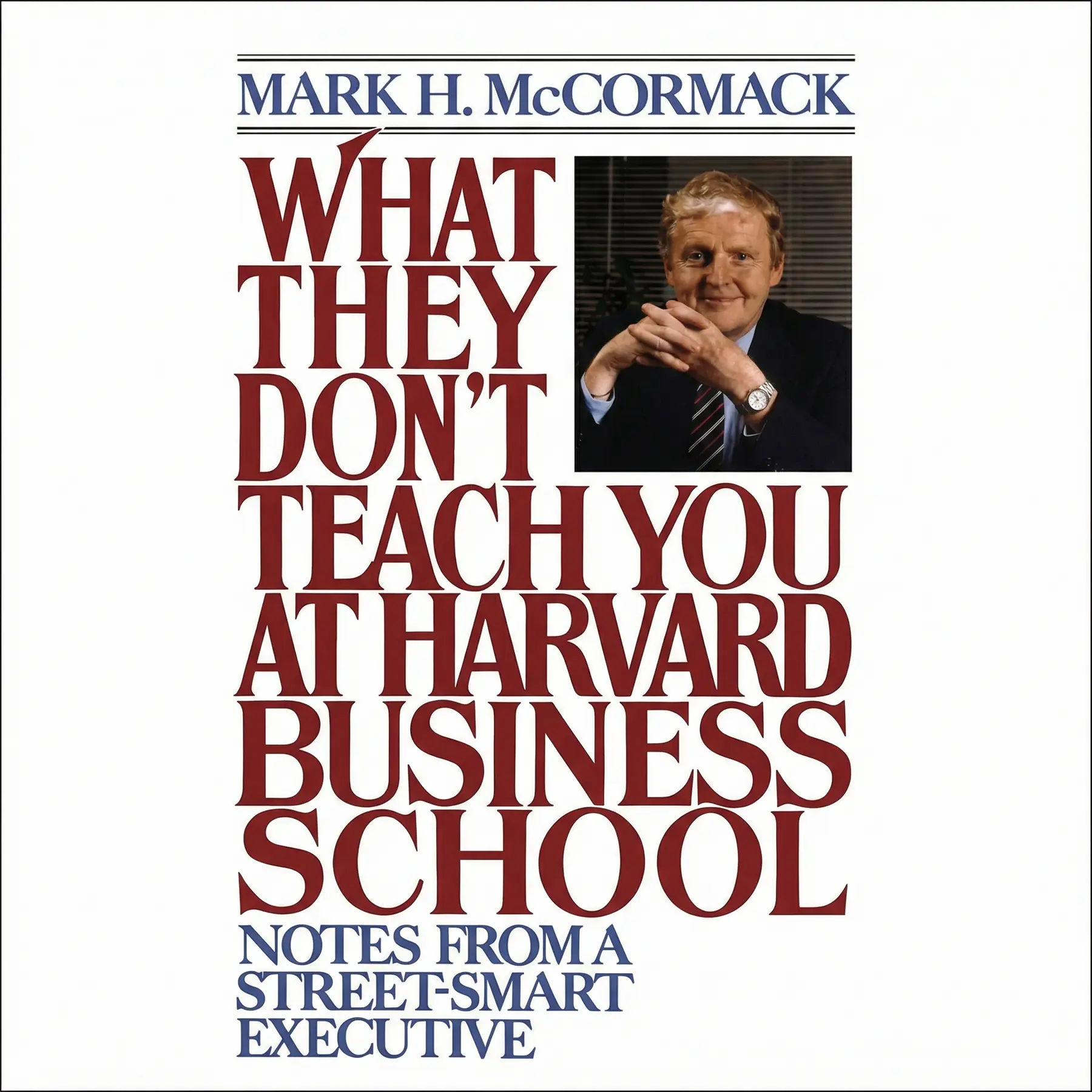
What They Don’t Teach You at Harvard Business School: Notes From a Street-Smart Executive
Mark H. McCormack reveals the essential street-smart skills that business schools overlook. Learn how to read people, master negotiation, and build a successful company using intuition and real-world observation.
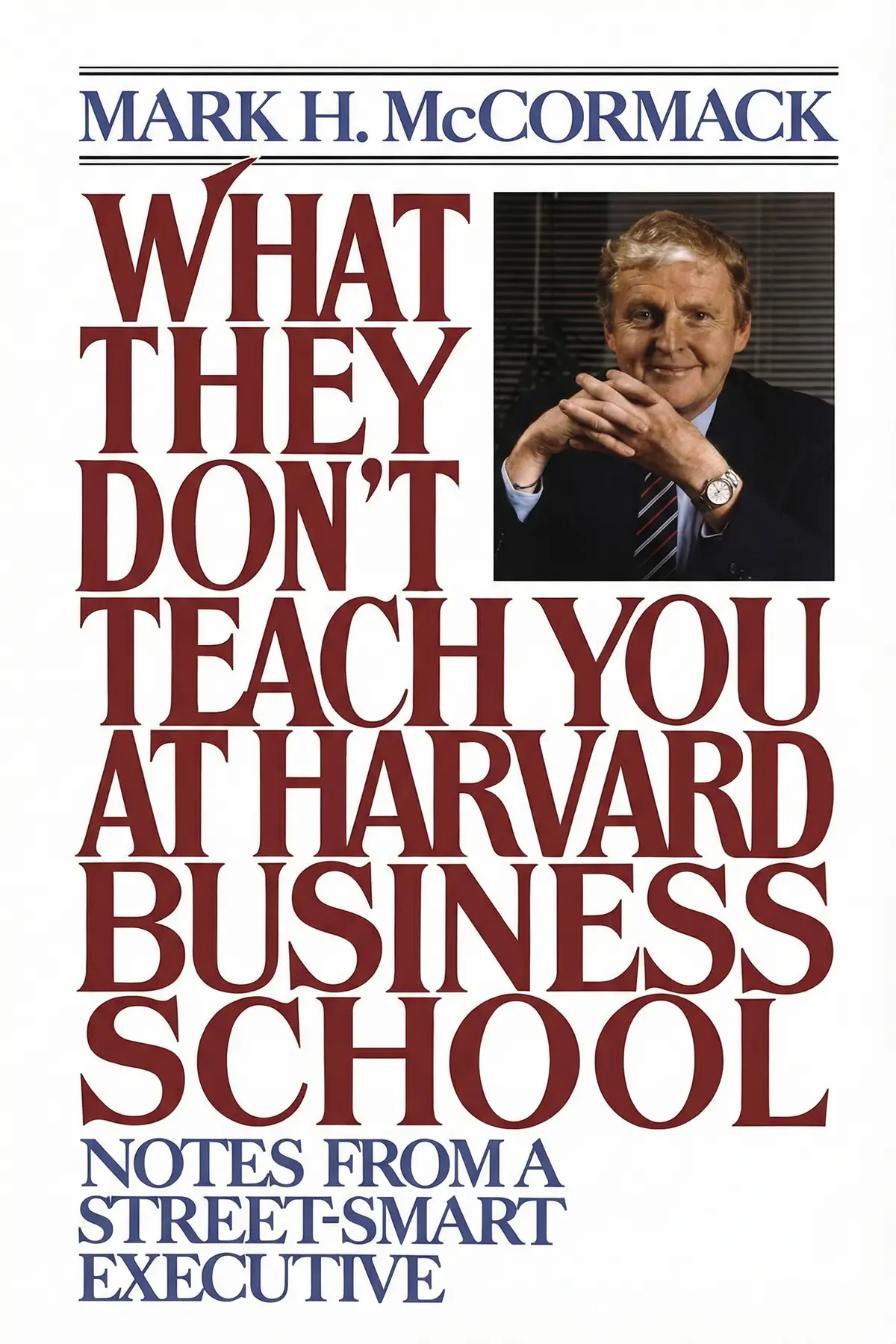
Table of Content
1. Introduction
1 min 28 sec
Picture a bright-eyed graduate stepping out of an Ivy League lecture hall, diploma in hand. They know everything there is to know about market equilibrium, compound interest, and organizational charts. But then they walk into a high-stakes boardroom, and suddenly, the textbooks feel very thin. This is because the most critical element of any transaction—the human element—isn’t something you can easily graph on a chalkboard. This gap between theory and practice is exactly what we are exploring today.
Mark H. McCormack’s insights are rooted in the reality of the ‘street’ rather than the ivory tower. As the founder of IMG, he built an empire by understanding the nuances of human behavior that often elude academic study. He recognized that while a degree can get you in the door, it’s your ability to read a room, sense an opening, and manage your own impulses that keeps you there. This journey is about moving beyond the numbers to understand the heartbeat of business: people.
Throughout this discussion, we will uncover why the most successful negotiators are often the quietest people in the room and why your gut feeling might be more valuable than a decade of data. We’ll see how a legendary beverage company won over a fast-food giant not through price points, but through empathy. We will also learn why growing a business too fast can be its downfall and how the most organized executives find time for leisure without sacrificing their goals. By the end, you’ll have a toolkit of street-smart strategies that can’t be found in any syllabus.
2. The Power of Active Observation
2 min 29 sec
Discover why the best business intelligence doesn’t come from a computer screen, but from paying close attention to the human beings sitting right across from you.
3. Mastering the Art of First Impressions
2 min 18 sec
Learn how to stand out in a crowded market by defying expectations and adding a personal touch to every interaction.
4. The Strategic Use of Discomfort and Rejection
2 min 16 sec
Discover why your gut feelings and even your failures are actually secret weapons that can guide you to better decisions.
5. Navigating Timing and the Power of Silence
2 min 34 sec
Explore why the best ideas can fail if the timing is wrong, and why saying less is often the most effective way to sell.
6. The Strategy of Quality and Measured Growth
2 min 24 sec
Understand why building a solid foundation of excellence is more important than chasing rapid expansion at any cost.
7. Discipline in Time and Schedule
2 min 27 sec
Learn the secrets of the most effective executives who manage to get everything done while still making time for themselves.
8. Conclusion
1 min 19 sec
As we wrap up our look at the practical wisdom of the business world, the central theme is clear: the most valuable skills aren’t found in a ledger, but in the way we interact with ourselves and others. While a formal education provides the language of business, it is street smarts that provide the intuition and discipline needed to succeed. We’ve seen that the real world of commerce is built on a foundation of people, and those who take the time to truly observe, listen, and empathize are the ones who ultimately win.
Success is not just about the big wins or the rapid growth; it’s about the quality of your relationships and the integrity of your process. It’s about knowing when to speak and when to stay silent, when to push forward and when to wait for the right timing. Most importantly, it’s about the self-discipline to manage your own time and emotions so that you can show up at your best every single day.
If you want to put these ideas into immediate action, start with a simple exercise in observation. In your next meeting, don’t just focus on the agenda. Look at the people. Pay attention to their body language, the way they are dressed, and how they react when someone else is speaking. Try to identify one thing about their personality that isn’t on their resume. By becoming a student of human nature, you will find that the ‘secrets’ of the business world are hiding in plain sight, waiting for someone with the street smarts to see them.
About this book
What is this book about?
This summary explores the practical wisdom of Mark H. McCormack, the founder of International Management Group. While traditional business education focuses on spreadsheets and theoretical models, McCormack argues that the real world of commerce is driven by human psychology and interpersonal dynamics. You will learn why active listening is your most powerful sales tool and how to use counter-intuitive behavior to gain the upper hand in negotiations. The book provides a blueprint for managing your time, building a business on the foundation of quality rather than just speed, and turning the sting of rejection into a motivational force. It’s a guide to gaining a competitive edge by mastering the 'people' side of the corporate world.
Book Information
About the Author
Mark H. McCormack
Mark H. McCormack (1930-2003) was a visionary executive who founded and chaired the International Management Group (IMG). Under his leadership, IMG became a global powerhouse in consulting, marketing, and management for sports icons and celebrities. Originally an aspiring golfer, McCormack transitioned into law and then business, where he pioneered the sports marketing industry. He was also a prolific writer, known for his candid advice in works such as The Terrible Truth About Lawyers.
Ratings & Reviews
Ratings at a glance
What people think
Listeners find the book's advice practical and full of wisdom, with one listener noting it provides direction on essential professional capabilities. Furthermore, the material is simple to digest and relevant to many different scenarios. However, listeners disagree on the pacing; some find it engaging, while others find it dull. Additionally, there are varied perspectives regarding the physical state of the product and its overall value.
Top reviews
Uraiwan
McCormack offers a masterclass in the nuances of human interaction that you simply won't find in a traditional syllabus. While the examples involving Arnold Palmer and 80s sports stars might feel a bit dated to a modern reader, the underlying principles of "reading people" remain timeless. The truth is, business is about relationships and psychology rather than just spreadsheets and data points. I found his advice on "staying in business" and managing time to be incredibly practical for my own daily workflow. Some might call it common sense, but common sense is rarely common in the heat of a high-stakes negotiation. It’s an easy read that focuses on the soft skills that actually get deals signed. If you are looking for a guide on how to handle "quasi-business" social situations where guards are lowered, this is it.
Show morePreeda
The chapter on the power of silence changed how I handle meetings almost immediately. We are often taught to fill every gap in conversation, but McCormack demonstrates how listening can be a far more powerful tool for control. This book captures the "unwritten rules" of the business world—the stuff about creating impressions and taking the edge that professors usually ignore. I love that it focuses on the human element of commerce, which is often lost in modern, data-driven management styles. Even though it was written in the 80s, the psychological insights into how people make decisions are still 100% relevant today. It’s the kind of book you want to keep on your shelf and revisit whenever you feel stuck in a rut.
Show moreBee
Picked this up during a career transition and found it immensely grounding. It’s easy to get lost in the jargon of modern business, but McCormack reminds us that it all comes down to basic human psychology. The way he breaks down "marketability" and "negotiation" through real-world examples is much more effective than any theory-based lecture I’ve attended. I especially liked the bit about preferring an "instant no" to a "long maybe"—it’s a huge time-saver that I’ve started implementing in my own life. This isn't just for business people; it's for anyone who wants to understand how the world actually works. It's a classic for a reason, and the wisdom here is distilled into very manageable, actionable bites.
Show moreGun
Ever wonder why some people just seem to 'get' how to navigate a room while others struggle despite having top-tier credentials? This book attempts to bridge that gap by focusing on the intangible street smarts of the corporate world. I particularly appreciated the section on sales and the concept of "positioning facts" to create the right impression. It’s a grounded perspective from a guy who built a massive agency from the ground up, and that experience shows on every page. Although the pacing slows down significantly in the middle sections, the overall utility of the advice is high. Not everything here is a "secret," but hearing it from someone of McCormack's stature gives it weight. It’s a solid addition to any professional’s library, even if some of the corporate culture mentioned feels a bit old-fashioned.
Show moreLillian
As someone working in a corporate office, I found the advice on reading people surprisingly astute. McCormack understands that business doesn't just happen at a desk; it happens over dinner, on the golf course, and in the "informal" moments where guards are down. The writing is casual and easy to digest, making it a great choice for a commute or a quick weekend read. While I didn't agree with every tactic—some felt a little too close to "con-artist" behavior for my taste—most of the stratagems are solid. It provides a broad applicability that many technical business books lack. It’s not perfect, and the physical quality of the print could be better, but the wisdom is definitely there if you look for it.
Show moreKiattisak
Look, if you want a textbook on macroeconomics, go elsewhere, because this is all about the "art of the deal." I found the section on "Running a Business" particularly insightful for entrepreneurs who are struggling to stay afloat. It highlights the importance of getting things done and not letting the administrative side of a company kill the creative spark. The tone is very much that of a mentor speaking to a protégé, which makes the information feel very accessible. My only real gripe is that it feels a bit repetitive toward the end, echoing the same points about timing and patience. Still, for the price, it’s a high-value read that offers a perspective you won't get from a purely academic background.
Show moreNattapong
This book is essentially a collection of street-smart wisdom that many people eventually pick up through trial and error over a twenty-year career. If you are a student or just starting out, McCormack’s anecdotes about building IMG will provide a helpful roadmap for professional conduct. However, if you've been in the trenches for a while, you might find yourself nodding along to things you already know. The advice on not reacting immediately to a crisis is probably the most valuable takeaway for me personally. On the downside, the physical condition of the paperback I received was a bit lackluster, and the prose is definitely of its time. It’s a decent read, but don’t go in expecting a revolutionary framework that will change your life overnight.
Show moreSuthida
After hearing so much about this business classic, I finally dove in, but I have mixed feelings about the experience. On one hand, the sections on negotiation and the power of waiting for a "no" are brilliantly simple and effective. On the other hand, the book suffers from a serious pacing issue and could have used a much more aggressive editor. McCormack spends a lot of time bragging about his high-profile connections, which can be grating after a few chapters. Is it useful? Yes, to an extent. Is it boring? At times, absolutely. It feels more like a collection of grandfatherly advice than a rigorous business strategy guide. I'd recommend it as a supplemental read, but it shouldn't be your only source of professional development.
Show moreSelin
To be fair, the title is a bit of a marketing trap designed to lure in ambitious young professionals like myself. I felt like I was spending more time reading about McCormack’s lunch dates with celebrities than actually learning actionable business strategies. The writing style is incredibly long-drawn-out, often taking ten pages to explain a concept that could be summarized in a single paragraph. While there are a few nuggets of wisdom regarding silence in negotiations, much of the content feels like an ego-driven memoir disguised as a self-help book. In the age of social media and instant information, these "secrets" feel like relics from a bygone era of country clubs and handshakes. It isn't necessarily bad, but it certainly isn't the "bible" it claims to be.
Show moreVilaiporn
Not what I expected at all, and frankly, quite a letdown given the legendary status of the author. I fell for the "Harvard" branding and expected a series of high-level case studies or tactical frameworks for scaling a business. Instead, I got a rambling series of anecdotes about golf and famous athletes that felt more like a brag-sheet than a teaching tool. The advice is so basic that it borders on the nonsensical for anyone with a modicum of life experience. "Be organized" and "admit when you are wrong" are not exactly groundbreaking revelations that justify a 250-page book. It’s outdated, slow, and largely serves as a monument to the author's own ego. Save your money and just watch a few free lectures online instead.
Show moreReaders also enjoyed
A Year with Peter Drucker: 52 Weeks of Coaching for Leadership Effectiveness
Joseph A. Maciariello
Acting with Power: Why We Are More Powerful Than We Believe
Deborah Gruenfeld
60 Seconds & You’re Hired!
Robin Ryan
All In: How Great Leaders Build Unstoppable Teams
Mike Michalowicz
AUDIO SUMMARY AVAILABLE
Listen to What They Don’t Teach You at Harvard Business School in 15 minutes
Get the key ideas from What They Don’t Teach You at Harvard Business School by Mark H. McCormack, plus 5,000+ more titles in English and Thai.
- 5,000+ titles
- Listen as much as you want
- 7-day free trial
- Cancel anytime







