
14 min 39 sec
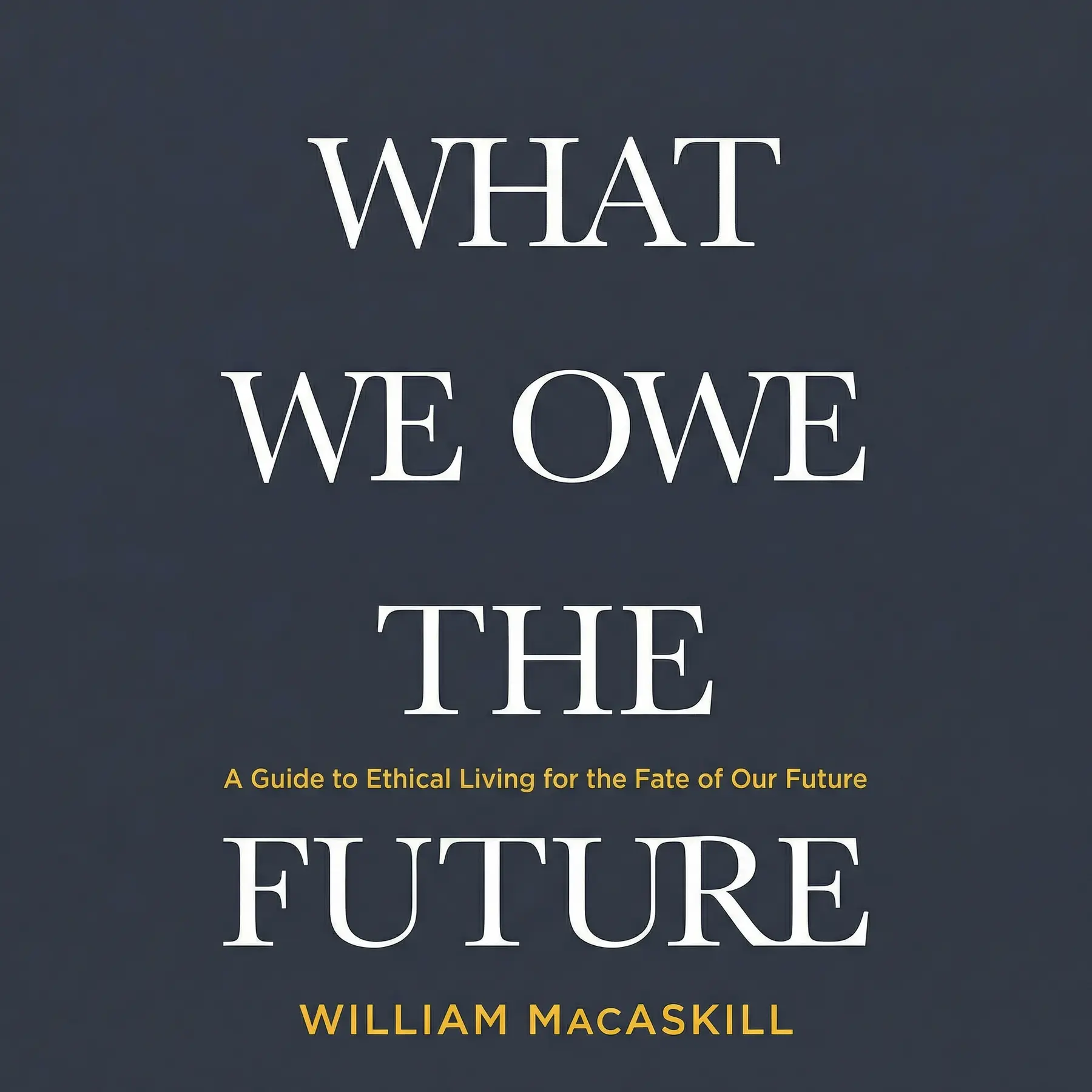
What We Owe the Future
What We Owe the Future examines the moral necessity of longtermism, arguing that our current era holds a unique power to shape the well-being of trillions of people yet to be born.
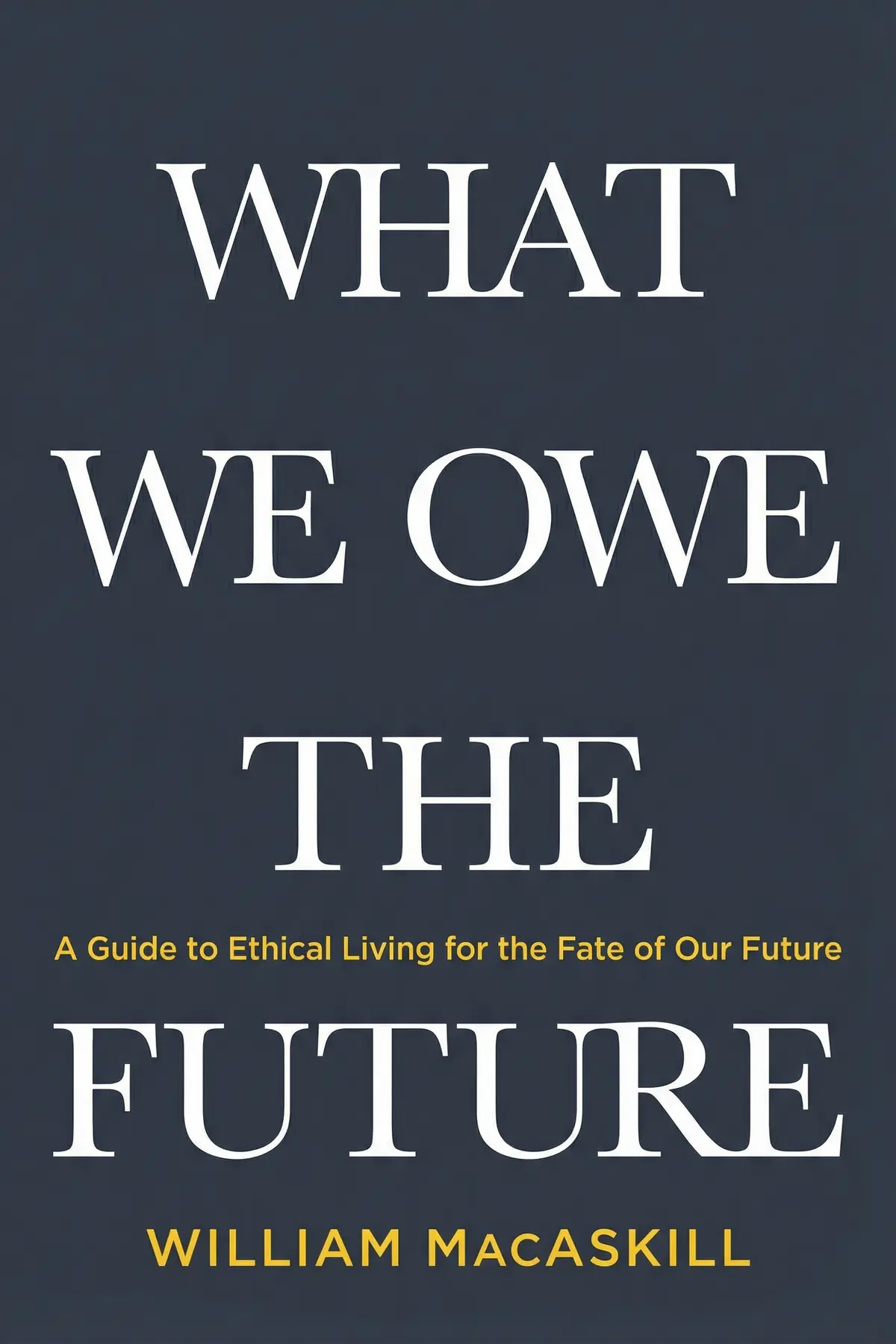
Table of Content
1. Introduction
1 min 38 sec
Picture yourself on a quiet hike through a lush, green forest on a bright spring morning. As you move along the trail, you inadvertently knock over a glass bottle, and it shatters into dozens of sharp fragments on the path. Now, consider a hypothetical scenario: if you leave those shards where they lie, a child will eventually walk this same path and suffer a painful injury because of them.
Does it matter to you whether that child walks by tomorrow, ten years from now, or even a century into the future? If you are like most people, your moral intuition says the timing doesn’t change the tragedy. Pain is pain, regardless of when it occurs. A person’s welfare is just as significant whether they are alive today or won’t be born for another thousand years. This simple realization forms the bedrock of a philosophy known as longtermism.
Longtermism suggests that people who don’t exist yet deserve our moral consideration. They are real people with the potential for joy, suffering, and dreams. Because there could be so many more people in the future than there are today, our impact on their world is perhaps the most important legacy we can leave. We are at a unique juncture in the human story where our choices might determine if the future is one of immense flourishing or one of catastrophic loss. This summary will guide you through how we can navigate these high stakes to ensure that the fate of our future is a bright one, establishing a throughline of responsibility that spans generations.
2. The Vast Scale of Potential Life
1 min 55 sec
Think of the human story as a giant book where we are only on the first page. Discover why the sheer number of future lives dwarfs our current population.
3. The Fragility of Moral Progress
2 min 00 sec
We often assume the world naturally gets better over time, but history suggests that our best values were never guaranteed to win.
4. The Long-Term Risks of Artificial Intelligence
2 min 03 sec
Artificial Intelligence is more than just a tool for productivity; it could be the mechanism that locks our current values into place forever.
5. Protecting the Future from Biological Threats
1 min 43 sec
Asteroids are scary, but the greatest threat to our survival might come from a laboratory rather than deep space.
6. The Insurance of Natural Resources
1 min 52 sec
Why the fossil fuels we leave in the ground today might be the essential ‘starter kit’ for a future civilization trying to rebuild.
7. The Paradox of Growth and Stagnation
1 min 38 sec
Having children is often framed as a burden on the planet, but it might actually be the key to solving our most complex problems.
8. Conclusion
1 min 50 sec
In the end, the philosophy of longtermism invites us to see ourselves as a small part of a much larger narrative. We are like the early chapters of an epic novel; what we do now sets the tone for everything that follows. The core takeaway is simple but profound: future people count. They are currently disenfranchised—they cannot vote, they cannot protest, and they have no voice in our markets. Yet, they are the ones who will inherit the consequences of our carbon emissions, our technological risks, and our moral choices.
Safeguarding that future requires us to move beyond small, symbolic gestures. While personal lifestyle changes are admirable, they often pale in comparison to systemic impact. For example, a single strategic donation to a highly effective charity can often do more for the world than a lifetime of personal sacrifices. We must prioritize the issues with the highest stakes: managing the rise of AGI, preventing engineered pandemics, and avoiding civilizational stagnation.
One of the most powerful tools you have is your career. The average person spends about 80,000 hours working over their lifetime. If you treat those hours as a resource to be invested in the future, your potential for impact is enormous. Don’t just settle for a job that feels good; look for the role where you can best contribute to these existential challenges. Whether it’s through political activism, spreading transformative ideas, or pursuing high-impact research, your individual efforts are the building blocks of a better world. We have the opportunity to ensure that the light of consciousness continues to burn brightly for millions of years to come. Let’s make sure we don’t let it go out on our watch.
About this book
What is this book about?
What does it mean to live ethically in an age of unprecedented technological power? This exploration introduces the philosophy of longtermism—the idea that our most important moral priority should be ensuring the long-term future of humanity. The book argues that we are currently living through a pivotal moment in history, a time when our choices regarding technology, biology, and social values could echo for millions of years. By examining potential existential threats—from artificial intelligence to engineered pandemics—and the risks of moral stagnation, the text provides a framework for evaluating the impact of our actions across vast timescales. It moves beyond short-term fixes to offer a vision of how we can safeguard civilization and ensure that the lives of those who come after us are characterized by flourishing rather than suffering. This is a call to take responsibility for the vast potential of the human story.
Book Information
About the Author
William MacAskill
William MacAskill is a philosopher and ethicist working as an associate professor and senior research fellow at the University of Oxford. He co-founded three organizations: Giving What We Can, the Center for Effective Altruism, and 80,000 Hours, all of which aim to produce long-term social and economic impact. He is also the co-author of Moral Uncertainty, a book about decision-making, and the author of Doing Good Better, about effective altruism.
Ratings & Reviews
Ratings at a glance
What people think
Listeners find the work to be intellectually stimulating and meticulously researched, with one listener mentioning that it is packed with intriguing case studies. They view it as a straightforward yet absorbing listen that is both brief and skillfully composed. Listeners categorize it as exceptionally vital, and one listener emphasizes its creative perspectives on human extinction. The text receives varied reactions concerning its overall academic rigor and narrative arrangement.
Top reviews
Pear
Picked this up on a whim after seeing the cover, and I’m genuinely glad I did. MacAskill uses this brilliant analogy of humanity being like molten glass that is currently malleable but destined to cool and set into a rigid shape. That image haunted me throughout the chapters on moral lock-in. It’s a sobering thought that the values we choose to prioritize today—or the ones we ignore—could become the permanent foundation for trillions of people yet to come. The book is meticulously documented but stays incredibly readable, even when diving into the dense world of population ethics. I particularly enjoyed the section on how the abolition of slavery wasn't an economic inevitability but a contingent moral choice. It makes you realize that our current 'normal' is just as fragile. This is the kind of big-picture thinking we desperately need right now.
Show moreWei
Finally got around to this long-termist manifesto and it’s a total perspective shifter. Truth is, I haven't been able to stop thinking about the 'contingency' of our values since I finished it. We like to think that society just naturally gets better over time, but MacAskill proves that progress is often the result of lucky breaks and small groups of dedicated people. It’s empowering and terrifying all at once. The writing is concise and avoids the usual academic jargon that kills these types of philosophy books. I loved the bits about keeping coal in the ground not just for the climate, but to ensure future civilizations have the resources to rebuild if we collapse. It’s a wild, sweeping, and ultimately hopeful book. If you want to feel a sense of agency in a chaotic world, read this. It is a massive achievement.
Show morePalm
Wow. This is arguably one of the most important books I’ve read this decade. MacAskill presents a compelling, sometimes frightening, look at existential risk that refuses to settle for easy doomerism. The analogy of humanity as a teenager—full of potential but lacking impulse control—is pitch-perfect. We have so much to lose. While some sections on moral value contingency were a bit dense, the overall message of responsibility is impossible to ignore. Truly transformative stuff for anyone worried about our legacy. It changed how I view my career and my daily impact. A must-read.
Show moreLaor
After hearing MacAskill on a few podcasts, I expected a dry lecture on statistics, but this was surprisingly soulful. The way he frames humanity as an imprudent teenager—full of potential but prone to self-destruction—is a masterstroke of communication. He argues that we are at a unique crossroads where our decisions have outsized influence on the long-term future. The chapter on technological stagnation was particularly eye-opening for me. We assume progress is an inevitable escalator, but he shows how easily we could stall out or backslide. My only gripe is that he occasionally brushes off the 'partiality' argument too quickly. Look, I care about the future, but I’m always going to care about my own family more than a trillion hypothetical people in the year 30,000. Still, it's a compelling and extraordinarily important read for our era.
Show moreAhmed
What We Owe the Future is a dense but surprisingly readable dive into how our current choices might echo for millennia. MacAskill is at his best when he’s describing the risks of 'value lock-in,' particularly with the rise of AI. The idea that a single, flawed ideology could be enforced forever is the stuff of nightmares. I found his defense of population growth to be the most controversial but also the most thought-provoking part of the book. Even if you don't agree that 'more happy people is always better,' he forces you to reckon with the logic of your own intuitions. The book is full of interesting case studies—like the Glyptodons or the specific history of sugar taxes—that keep the abstract philosophy grounded. It's not a perfect blueprint, but it's a vital conversation starter for anyone who cares about our species' legacy.
Show morePensri
As someone who generally finds Effective Altruism a bit cold, I was surprised by how much heart MacAskill managed to inject into these pages. He handles the heavy lifting of population ethics with a lightness that avoids the usual academic sludge. The chapter on technological stagnation really stuck with me. We often assume progress is an infinite, upward-climbing escalator, but he argues quite persuasively that it might be more like a ladder we could easily fall off. This book is essentially a call to action to become 'moral entrepreneurs.' While I don't buy into every statistical model he presents—especially the ones regarding animal neuron counts—the overarching message is hard to argue with. We are the ancestors of a vast future, and we are currently acting like terrible ones. This book is a much-needed nudge to grow up and start taking our long-term survival seriously.
Show morePui
Is this book overly optimistic or just deeply naive? MacAskill’s central idea—that we should plan for trillions of humans who don't exist yet—is intellectually stimulating but feels profoundly out of touch with the struggle of the present. Personally, I found the suggestion to simply 'pick a progressive career' to be a bit of a slap in the face for people without Oxford degrees. To be fair, the research is top-notch and the case studies are genuinely fascinating. The historical deep-dives into social movements were the highlight for me. However, I can't shake the feeling that this brand of 'kinder capitalism' is just moving the deck chairs on the Titanic. It’s a well-written book with some innovative ideas about human extinction, but it smells a lot like Ivory Tower navel-gazing. Useful for a debate, but maybe not for real-world change.
Show moreKung
The central premise here is undeniably fascinating, yet the execution feels like a series of missed connections. MacAskill wants us to treat the future as a moral priority. That makes sense. But the math feels hollow when applied to the messy, unpredictable reality of human behavior. Frankly, the section on 'expected-value theory' felt like trying to use a ruler to measure the taste of an apple. It’s too clinical for the subject matter. He talks about nuclear holocaust as a statistical probability, which somehow strips away the actual human tragedy of the lives already here. I appreciated the deep dive into the history of the British abolitionist movement, which was a great example of 'moral entrepreneurship.' However, the book as a whole feels like a collection of very high-quality blog posts that don't quite cohere into a singular, practical guide.
Show moreAnawin
Gotta say, the first half of this book is electric, but it loses a lot of steam toward the end. The opening chapters on the sheer scale of the potential future are mind-blowing. It really puts our current political squabbles into perspective. However, when MacAskill starts getting into the weeds of 'population ethics' and the 'Repugnant Conclusion,' it starts feeling like philosophical masturbation. He spends so much time on hypothetical trillion-person civilizations that he loses sight of the world we’re actually living in. I found myself agreeing with the concept of longtermism but rolling my eyes at the proposed implementations. Donating a percentage of your salary to funky charities feels like a very 'Oxford' solution to global catastrophe. It’s an interesting thought experiment, but as a practical guide for the average person, it falls short. Interesting to look at, but the substance is a bit dry.
Show moreEleni
Not what I expected from an Oxford philosopher. While the book starts with a noble premise, it quickly devolves into some really questionable logic regarding the value of sentient life. I was particularly frustrated by his attempt to measure suffering through neuron counts. To suggest that a human's pain matters more than a farm animal's simply because of 'receptor quantity' is a logic that many psychotherapists and activists would find absurd. It feels like he’s trying to 'solve' morality with a calculator. The discussion on identity was equally puzzling, making big claims about how small decisions completely change who we are. Not gonna lie, it felt like the author was laundering some pretty cold, utilitarian ideas through a friendly narrative. There are better books on the future that don't treat living beings like units of currency. It’s polished, but fundamentally flawed in its moral core.
Show moreReaders also enjoyed
A Guide to the Good Life: The Ancient Art of Stoic Joy
William B. Irvine
A Little History of Philosophy
Nigel Warburton
A Theory of Justice
John Rawls
AUDIO SUMMARY AVAILABLE
Listen to What We Owe the Future in 15 minutes
Get the key ideas from What We Owe the Future by William MacAskill, plus 5,000+ more titles in English and Thai.
- 5,000+ titles
- Listen as much as you want
- 7-day free trial
- Cancel anytime







