
24 min 19 sec
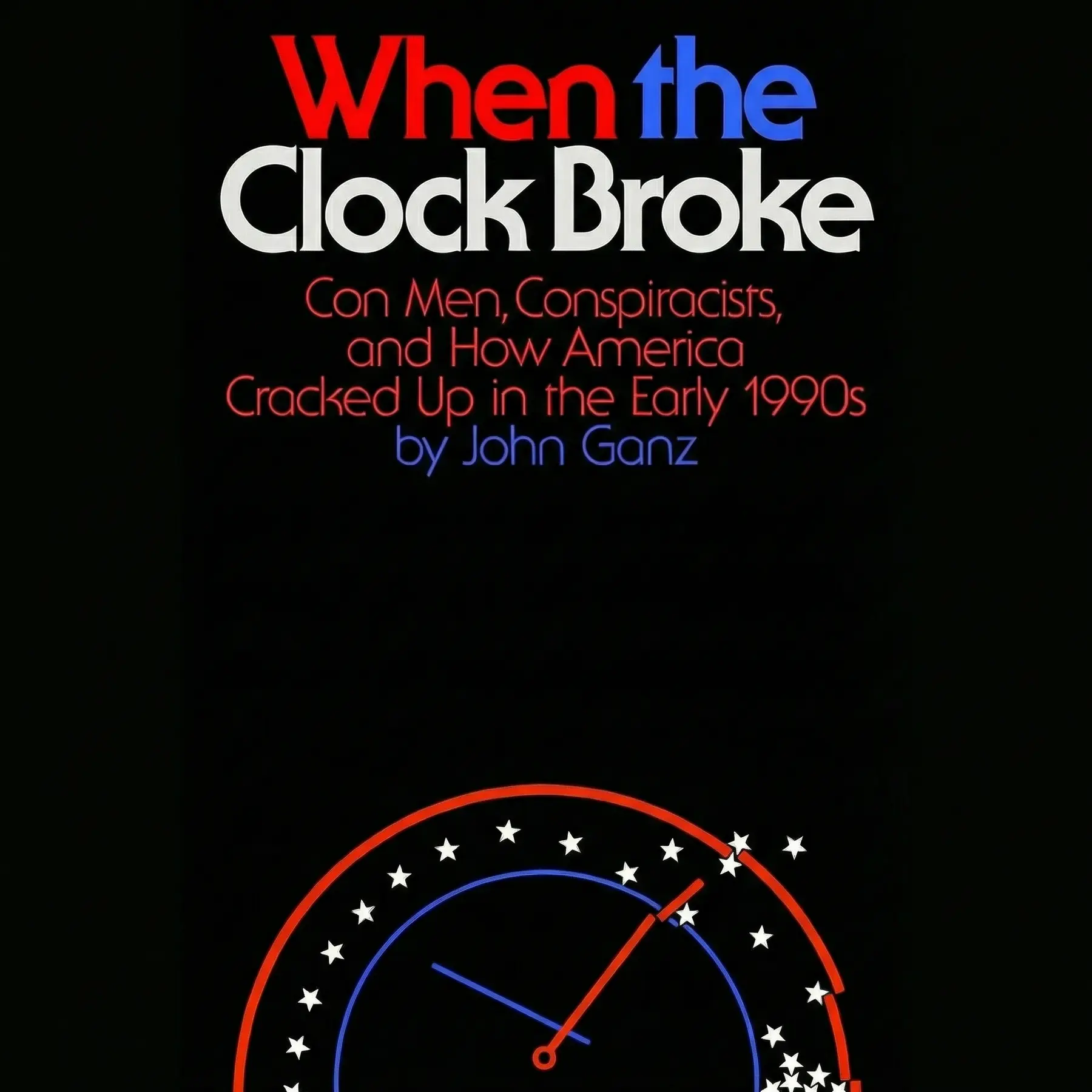
When the Clock Broke: Con Men, Conspiracists, and How America Cracked Up in the Early 1990s
By John Ganz
This analysis of the early 1990s explores how economic decline and cultural tensions shattered the political status quo, laying the groundwork for the rise of modern American right-wing populism and nationalism.
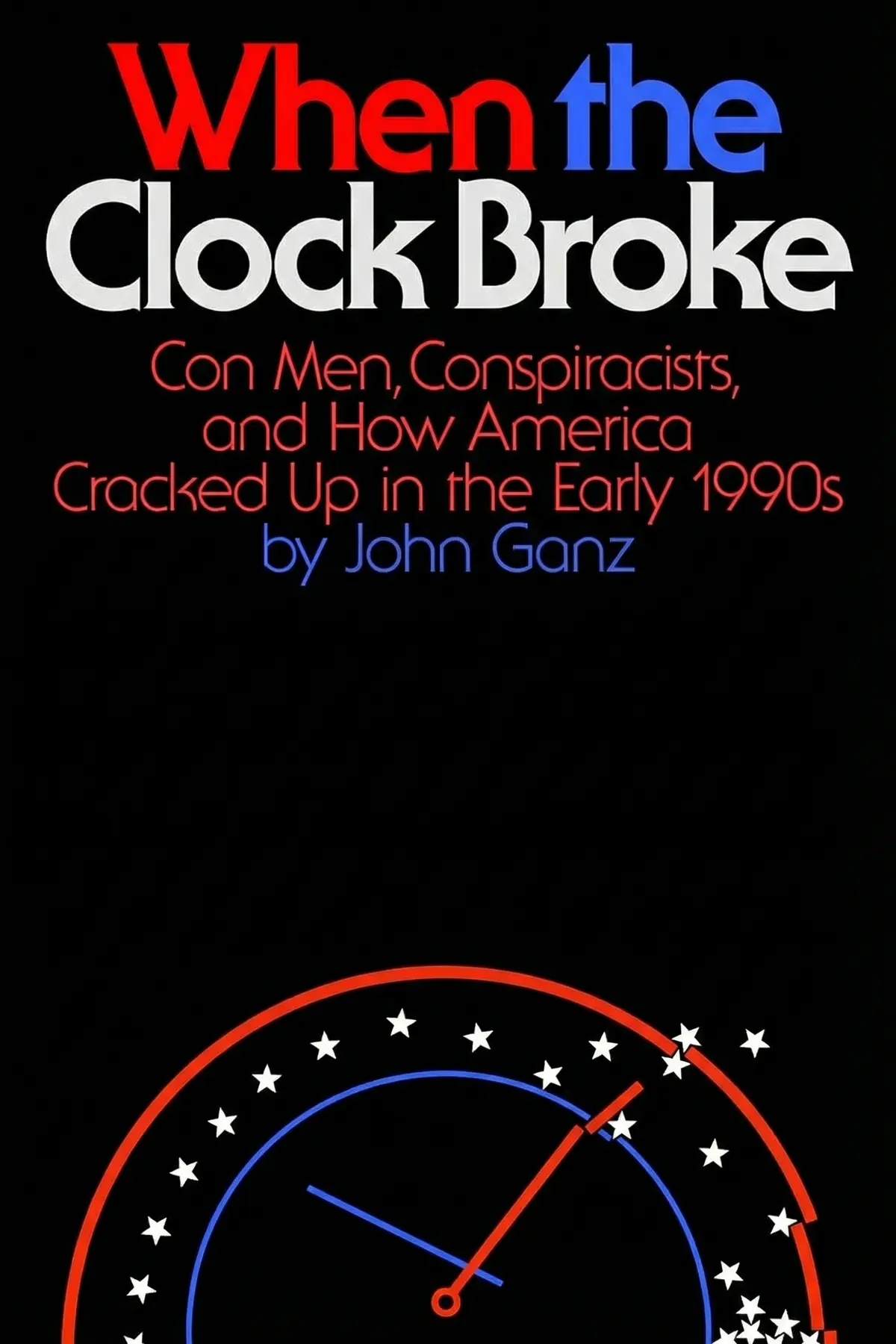
Table of Content
1. Introduction
1 min 51 sec
In the early 1990s, the United States stood at a strange and uncomfortable crossroads. The Cold War had ended, and the nation should have felt like it was on top of the world. Yet, inside the borders of the country, a different story was unfolding. The economic engine was sputtering, unemployment was climbing, and a sense of deep disillusionment was beginning to settle over the American public. People were looking at their leaders in Washington and seeing a group of elites who seemed completely out of touch with the struggles of ordinary citizens. It was in this environment of decay and distrust that a new kind of movement began to take shape—one that didn’t just want to reform the system, but wanted to dismantle the very foundations of the post-war order.
This movement was a volatile mix of hardline right-wingers, libertarians, and populists who felt betrayed by the Republican establishment of George H. W. Bush. At the heart of this group was a desire for something much more radical than traditional conservatism. They weren’t interested in the slow progress of social democracy or the grand visions of a Great Society. Instead, they were ready for a total break. As one influential leader of the time put it, the goal was no longer to simply turn back the hands of time to a simpler era; the goal was to break the clock itself.
This transformation started in earnest during the 1992 presidential election cycle. While that election is often remembered for the victory of Bill Clinton, its true legacy lies in the seeds that were planted by those who lost. By looking back at the early nineties, we can see the blueprints for the political landscape we inhabit today. We see the rise of nationalism, the power of populist anger, and the emergence of a political identity built on resentment and the rejection of expertise. This is the story of how America’s political consensus began to crack, and how the con men and conspiracists of the nineties paved the way for a new kind of American politics.
2. The Rise of David Duke
2 min 16 sec
A former extremist leader finds unexpected political success in Louisiana, signaling a shift in how racial resentment could be used to mobilize voters during times of economic distress.
3. The Intellectual Framework of Radicalism
2 min 05 sec
Discover how influential thinkers began to envision a new revolutionary force made up of disillusioned middle-class citizens, aiming to overthrow the established elite order.
4. The Vulnerability of the Establishment
2 min 02 sec
Economic stagnation and the end of the Cold War left the incumbent presidency struggling to maintain its grip on an increasingly frustrated and anxious public.
5. The Emergence of a Nationalist Alternative
2 min 09 sec
A seasoned political operative steps into the ring, offering a sharp, confrontational message of ‘America First’ that unites disparate factions against the political center.
6. The Power of Talk Radio
1 min 57 sec
Explore how a new medium provided a voice for the lonely and alienated, creating a powerful alternative to mainstream media and fueling populist anger.
7. The Tech Billionaire as Folk Hero
2 min 07 sec
An independent candidate uses a unique blend of nostalgia and business acumen to capture the imagination of a frustrated electorate, challenging the two-party system.
8. A City on the Brink
2 min 05 sec
Racial tensions and a sense of systemic injustice culminate in one of the most significant urban uprisings in the nation’s history, highlighting deep societal fractures.
9. The Opening Salvos of the Culture War
2 min 07 sec
Candidates from both parties begin to use cultural symbols and popular entertainment as battlegrounds, attempting to define the nation’s moral character.
10. The Search for the Strongman
2 min 05 sec
In a climate of urban chaos and perceived lawlessness, the public begins to look toward authoritative figures who promise to restore order through any means necessary.
11. The End of the Clock and the New Horizon
2 min 17 sec
The results of the 1992 election reveal a deeply fractured nation, where the seeds of future radicalization have been successfully planted across the political spectrum.
12. Conclusion
1 min 18 sec
The early 1990s were far more than just a brief period of economic recession and a change in presidential administrations. They represented the moment when the cohesive story of America as a stable, consensus-driven democracy began to unravel. Through the rise of figures like David Duke and Pat Buchanan, we see how racial and cultural resentment were transformed from fringe grievances into a powerful political engine. The emergence of talk radio and the disruption caused by Ross Perot showed that the old ways of communicating with the public were becoming obsolete, replaced by a more direct, aggressive, and polarized form of engagement.
By the time the 1992 election concluded, the blueprint for our modern political landscape was already in place. The desire for a strongman, the rejection of the global elite, and the use of culture as a primary battleground were no longer just the ideas of radical intellectuals; they were the driving forces of a growing movement. What we see in the present is the full realization of the forces that were unleashed thirty years ago. The lesson of that era is that when the social contract is perceived to be broken, the public will not just look for new leaders—they will look for a new way of being, even if it means breaking the very foundations of the system they once trusted.
About this book
What is this book about?
When the Clock Broke provides a compelling historical examination of a pivotal moment in the American story: the early 1990s. While popular memory often frames the end of the Cold War as a period of national triumph and stability, John Ganz argues it was actually the era when the traditional political consensus began to disintegrate. The book traces the emergence of a new, more aggressive brand of conservatism that intentionally distanced itself from the establishment policies of the Reagan and Bush administrations. Through a narrative that connects disparate figures like David Duke, Pat Buchanan, and Ross Perot, Ganz illustrates how racial resentment, economic anxiety, and a deep-seated distrust of elites coalesced into a potent new political force. The promise of the book is to reveal the true origins of our contemporary political landscape by looking back at the con men, conspiracists, and cultural upheavals that occurred three decades ago. It demonstrates that the roots of current volatility were planted long before recent election cycles, during a time when some political actors decided it was no longer enough to turn back the clock—they wanted to break it entirely.
Book Information
About the Author
John Ganz
John Ganz is a prominent American journalist and historian recognized for his insightful analysis of contemporary politics and history. His work has been featured extensively in respected publications such as The New Republic and The Washington Post. Ganz specializes in exploring the complex intersections of culture, economics, and political change, providing a nuanced perspective on the historical forces that continue to shape the American experience.
Ratings & Reviews
Ratings at a glance
What people think
Listeners find the account both engaging and educational, with one listener noting that it provides an exceptional perspective on the social and political shifts of the 1990s. Furthermore, the book is praised for its accessibility and strong craftsmanship, with listeners describing it as brilliantly written.
Top reviews
Narongrit
After hearing Ganz on a few podcasts, I had high expectations, and this didn’t disappoint. He manages to weave together the disparate threads of the early 90s into a coherent, if terrifying, tapestry of how the modern right was born. The section on Pat Buchanan’s 1992 campaign is particularly enlightening, showing how the 'culture war' wasn't just a slogan but a deliberate strategy. Ganz writes with a witty, sharp prose that makes dense political theory feel like a page-turner. It’s a brilliant look at the losers of history who actually ended up winning the long game. My only gripe is that it can feel a bit NYC-centric at times, but the L.A. and Louisiana chapters balance it out.
Show moreGoy
Wow, what a wild ride through the so-called Bozosphere. I wasn’t expecting a history book to be this entertaining, but Ganz treats the figures of the 90s like characters in a prestige drama. Seeing the early links between Rudy Giuliani, John Gotti, and a younger Donald Trump was eye-opening and deeply relevant to everything happening now. The way the author connects the Ruby Ridge incident to a broader loss of trust in government is masterful. It’s rare to find a book that balances deep intellectualism with such a readable, almost cinematic style. If you want to understand the seeds of the current conservative movement, this is required reading.
Show moreKung
The chapter on David Duke alone is worth the price of admission for its sheer insight into American populist anger. Ganz doesn't just recount facts; he builds a forensic analysis of how the Republican party began to cannibalize itself from the right. I loved the focus on the 'losers' of history because, as it turns out, their ideas are the ones currently running the show. The prose is smooth, blending erudition with a biting wit that kept me engaged through some pretty grim subject matter. It’s a vital contribution to our understanding of the 'culture war' and its origins in the post-Cold War vacuum. Definitely one of the most important history books I’ve read this year.
Show moreSiraporn
Finally got around to reading this and it’s an absolute banger of a history book. The way Ganz frames the 1990s as a period of 'breaking the clock' of the New Deal and the Great Society is genius. I was fascinated by the story of the Weaver family at Ruby Ridge and how it fueled a specific brand of anti-government rage that still exists today. The book is witty, fast-paced, and filled with the kind of 'wait, that really happened?' details that I love in narrative non-fiction. It’s a brilliant inquiry into the 'Bozosphere' that gave us our current political reality. Highly recommended for anyone who likes their history with a side of sharp social commentary.
Show moreSven
This book is essentially an autopsy of the American Dream's slow decay in the early nineties, and it's fascinating. I was particularly struck by the focus on the 'fearsome toad' Sam Francis; it’s a name I hadn't heard much, but his influence on paleoconservatism is undeniable. Ganz has a knack for highlighting the foibles of these politicians without making them into caricatures. The parallels between the 1992 election and our current landscape are startling, especially regarding the populist anger fueled by economic instability. At times the book gets a bit bogged down in the minutiae of New York City police politics, but it recovers quickly. It’s a solid, erudite piece of history that explains the roots of our 'cold civil war' quite effectively.
Show moreLook
As someone who came of age during the Bush senior years, reading this felt like looking at old family photos through a much darker lens. Ganz does an incredible job of showing how the seeds of our current political divisions were planted during the 1992 election cycle. The analysis of David Duke’s 'bulletproof' campaign was particularly chilling, showing how he used white grievance as a political tool. The book is well-researched and avoids being dry, though I did find some of the theoretical sections on libertarianism a bit dense. Still, the way he weaves together cultural, social, and economic threads is impressive. It’s an enlightening, albeit sobering, look at how the 'clock' of social democracy began to break.
Show moreSarocha
Ever wonder how we actually got to where we are today? Ganz provides a brilliant view of the 1990s that makes our current 'unprecedented' era look very precedented indeed. I was particularly interested in the sections on the NYC police riots and how Rudy Giuliani used that chaos to build his brand. It’s a smooth blend of political analysis and cultural history that avoids being too academic or too superficial. My only real complaint is that I wanted more on the fallout after 1992, as the book ends somewhat abruptly. Still, the depth of knowledge on display here is staggering. It’s a great piece of near-past history writing that feels incredibly timely.
Show moreOak
I really wanted to love this, but frankly, it felt like a lot of information I had already processed elsewhere. While Ganz makes a compelling case for Louisiana being a bellwether for our current national sickness, I found the narrative a bit disjointed. He covers characters like David Duke and Ross Perot with great detail, yet the connections to today are sometimes left so implicit they feel vague. To be fair, the writing is high-quality and there’s a lot of deep-cut research here. If you aren't familiar with figures like Murray Rothbard, you’ll likely get more out of it than I did. It’s an okay read, just not the revelation I was hoping for.
Show moreElan
There is no denying that Ganz is a brilliant writer, but this book felt a bit like a collection of very long blog posts. I enjoyed the individual chapters on people like Ross Perot and Rush Limbaugh, but the overarching thesis felt a little buried under the sheer volume of characters. It’s a thorough inquiry, almost too thorough, and I found myself losing the thread during the deep dives into 19th-century Louisiana history. Not gonna lie, it’s a bit of a slog if you aren’t already obsessed with political theory or the specific era. However, his ability to draw parallels between the early 90s recession and our modern economy is sharp. A decent read, but it requires a lot of patience.
Show moreJeeranan
Look, I found this book deeply depressing, which I suppose is the point. It highlights how we as a society seem to keep making the same mistakes and falling for the same populist conmen over and over. While the writing is excellent and Ganz clearly knows his stuff, I felt like the book confirmed my worst fears rather than offering new insights. The connections between the 1992 election and the 2016 election are undeniable, but I’m not sure we needed 400 pages to prove it. Personally, I found the chapters on Murray Rothbard and the Paleolibertarians to be the most unique part of the book. It’s a well-made work, but it left me feeling quite cynical about the future.
Show moreReaders also enjoyed
A Promised Land
Barack Obama
A River in Darkness: One Man’s Escape from North Korea
Masaji Ishikawa
A Splendid Exchange: How Trade Shaped the World
William J. Bernstein
A Theory of Justice
John Rawls
A Spy Among Friends: Philby and the Great Betrayal
Ben Macintyre
AUDIO SUMMARY AVAILABLE
Listen to When the Clock Broke in 15 minutes
Get the key ideas from When the Clock Broke by John Ganz, plus 5,000+ more titles in English and Thai.
- 5,000+ titles
- Listen as much as you want
- 7-day free trial
- Cancel anytime







