
19 min 42 sec
Whiplash: How to Survive Our Faster Future
Whiplash examines the principles necessary to navigate a world defined by exponential technological growth and unpredictability, offering a toolkit for thriving through decentralization, resilience, and creative disobedience.
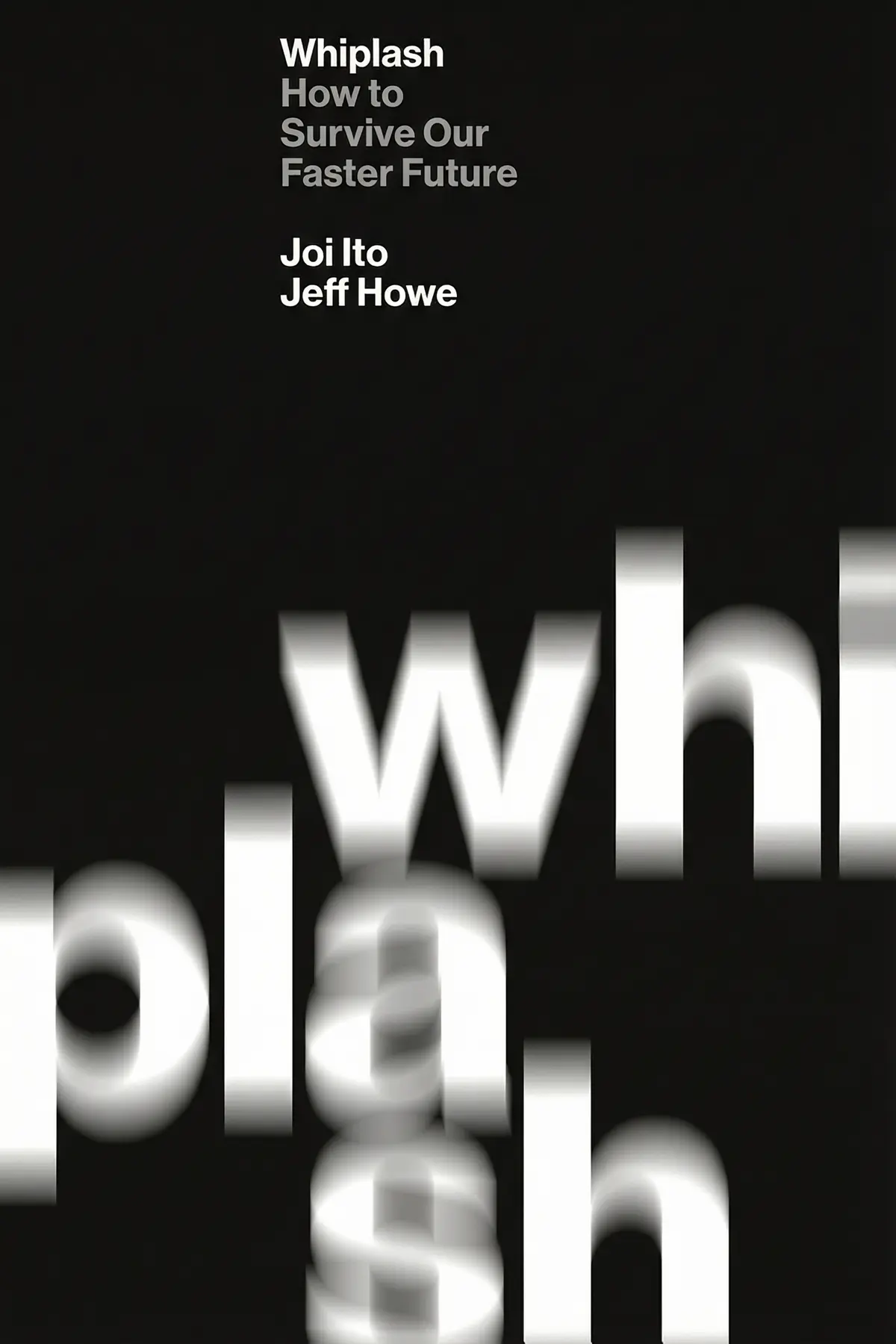
Table of Content
1. Introduction
1 min 41 sec
Imagine for a moment that you are standing on a moving train. For a long time, the train traveled at a steady, predictable pace across a flat landscape. You could plan your next move, walk down the aisle with confidence, and even look out the window to see exactly where you would be in an hour. But suddenly, the train begins to accelerate. The landscape starts to blur. The track begins to twist and turn in ways you never expected. This sensation of sudden, jarring acceleration is what we call whiplash, and it is the defining characteristic of our modern era.
Only a few decades ago, the professional world operated on a foundation of stability. If you secured a position at a reputable company and performed your duties well, you were essentially set for life. You could expect a steady climb up the corporate ladder and a comfortable retirement at the end of the line. But that old world has evaporated. Today, we live in a reality where information, power, and even the way we create value are becoming increasingly decentralized. The old rules of the game don’t just feel outdated—they have become actively dangerous to follow.
In this exploration of our faster future, we are going to look at why the structures that used to keep us safe are now the very things holding us back. We will dive into why it’s better to be flexible like a reed than strong like an oak, and why the most innovative breakthroughs often come from those who choose to ignore the rulebook. Through the lenses of technology, science, and social change, we will uncover a new set of survival skills designed for a world that refuses to slow down. By the end of this journey, you’ll understand how to transform the chaos of the present into a platform for future innovation.
2. The Power of Paradigms
2 min 55 sec
Discover how our deepest beliefs can act as blinders, preventing us from seeing the revolutionary potential of new inventions right in front of us.
3. The Acceleration of History
2 min 53 sec
Explore the staggering speed of modern change and why our traditional methods of predicting the future are no longer reliable.
4. The Rise of Emergence
2 min 34 sec
Learn how the decentralization of information is stripping power from traditional authorities and giving it to the collective.
5. Pulling vs. Pushing Resources
2 min 32 sec
Understand why the old way of stockpiling resources is being replaced by a more agile, on-demand strategy for crisis management.
6. The Necessity of Disobedience
2 min 29 sec
Why following the rules can sometimes be the biggest risk to your success and how ‘positive deviance’ fuels breakthrough thinking.
7. Resilience over Strength
2 min 51 sec
Discover why being ‘unbreakable’ is a liability and how the ability to fail gracefully is the secret to long-term survival.
8. Conclusion
1 min 47 sec
As we look back at the terrain we’ve covered, one thing is abundantly clear: the world we were trained for no longer exists. The faster future isn’t something that’s coming; it’s something that is already here, and it demands a new way of thinking. We’ve seen how old paradigms can blind us, how the speed of history is accelerating beyond our ability to predict it, and why the power of the crowd is eclipsing the power of the individual. We’ve learned that the secret to thriving isn’t found in having the most resources or the strongest walls, but in being the most adaptable, the most curious, and sometimes, the most disobedient.
If there is one final principle to take away from this, it is to always favor practice over theory. In a world that is changing this quickly, waiting until you have a perfect plan is a recipe for irrelevance. The cost of trying something and failing has dropped so low that it is almost always better to just start building. Theory is what we use to explain the past, but practice is how we discover the future. This is why companies like Google allow their employees to spend a chunk of their time on personal experiments—it’s an investment in the unknown that led to breakthroughs like Gmail.
So, as you step back into your own professional and personal life, stop looking for the ‘right’ answer in a textbook or a manual. Instead, start looking for small ways to experiment. Build a prototype, join a decentralized community, or question a rule that no longer makes sense. Don’t worry about being the strongest person in the room; focus on being the one who can bounce back the fastest. The future may be moving at a breakneck pace, but if you embrace the chaos and lean into the principles of resilience and emergence, you won’t just survive the whiplash—you’ll lead the way.
About this book
What is this book about?
The world is moving faster than ever before. This summary explores the seismic shift from a predictable, top-down society to a decentralized, chaotic, and rapidly evolving landscape. It argues that the strategies which served us in the past—such as rigid planning, centralized authority, and a focus on brute strength—are now liabilities. Instead, it proposes a new set of principles for the twenty-first century. Through a series of compelling narratives involving scientific breakthroughs, technological pivots, and social movements, the text demonstrates how to embrace emergence, prioritize resilience over strength, and favor practice over theory. Readers will learn why rule-breaking is often the catalyst for innovation and how the ability to 'pull' resources on demand is more effective than 'pushing' them from the top. Ultimately, the book provides a roadmap for staying agile and innovative in an era of constant change.
Book Information
About the Author
Joi Ito
Joichi Ito is a renowned technology expert, entrepreneur, and the former director of the MIT Media Lab. He has also shared his expertise as a visiting professor at Harvard Law School and served on the boards of major organizations like the New York Times Company. Jeff Howe is an assistant professor at Northeastern University and a frequent contributor to major publications like Wired, TIME, and the Washington Post. He is most famous for coining the term crowdsourcing in 2006.
Ratings & Reviews
Ratings at a glance
What people think
Listeners find the work insightful, as one listener highlights how its core principles are showcased through vignettes, and they appreciate its engaging narratives and readability. Feedback on the writing quality is varied, including one listener who describes it as very poor. The book’s arrangement and structure also elicit mixed reactions, with some finding it interestingly organized while others disagree.
Top reviews
Manee
Picked this up because I follow the MIT Media Lab, and I was not disappointed by the visionary scope of these nine principles. Ito and Howe manage to capture the frantic energy of our "faster future" through a series of vignettes that are both terrifying and deeply inspiring. I particularly resonated with the idea of "compasses over maps," because in a world this complex, rigid plans are essentially a recipe for disaster. While some critics argue it’s a bit light on academic rigor, the book functions more as a philosophical toolkit than a technical manual. It’s highly readable, though you might find yourself pausing every few pages to digest the sheer scale of the shift they’re describing. If you want to understand how innovation actually works in the age of the internet and synthetic biology, this is an essential starting point for your journey.
Show moreSangduan
Finally got around to finishing this, and the concept of "diversity over ability" really changed my perspective on how to build a successful team. Ito and Howe make a compelling case that in a complex world, a group of diverse individuals will almost always outperform a group of "experts" with similar backgrounds. The writing is accessible and filled with interesting stories that help illustrate their points without getting bogged down in overly technical jargon. Not gonna lie, I was worried it would be too dry, but the pacing is excellent and the chapters are perfectly sized for a daily commute. It’s rare to find a business-adjacent book that actually feels like it’s opening new doors in your mind rather than just repeating the same old clichés. This is a must-read for anyone trying to survive the modern era.
Show morePui
Wow, what a wild ride through the modern landscape of innovation, from the inner workings of cells to the global scale of the internet. This book perfectly captures the feeling of living through a historical pivot point where the old rules simply no longer apply to our daily lives. The authors use a mix of emotional storytelling and analytical reasoning to show why "disobedience" and "resilience" are the keys to future success. I found myself highlighting dozens of passages, especially in the sections regarding emergent behavior and the power of networks. It’s a beautifully designed book that manages to be both intellectually stimulating and surprisingly easy to get through in a weekend. If you’re feeling overwhelmed by the pace of change, this guidebook will help you find your footing again.
Show moreNathan
As someone who works in tech, I found the vignettes about Safecast and the Shenzhen hardware scene truly gripping and enlightening. The authors argue that we need to embrace "disobedience over compliance," which is a tough pill for most corporate types to swallow. Frankly, the writing style can feel a little disjointed at times, jumping from biology to bitcoin in a single breath, but the core message remains powerful. It’s an interesting organization of thoughts that forces you to rethink how you approach problem-solving in your own career. I did feel that some sections leaned a bit too heavily on MIT-specific cheerleading, making it feel slightly like a promotional brochure for the Media Lab. However, the insights on "resilience over strength" are more relevant now than ever before in this volatile market.
Show moreArthit
Ever wonder why some organizations thrive during chaos while others crumble under the weight of their own rigid structures? Whiplash explores this through the lens of nine fundamental principles that challenge everything we thought we knew about management and innovation. I loved the section on "practice over theory," especially the "demo or die" mentality that defines the MIT Media Lab’s unique culture. The prose is snappy and engaging, although it occasionally retreats into the kind of abstract jargon that plagues the future-studies genre. Despite that, the real-world examples, from the Arab Spring to the rise of open-source software, provide a necessary anchor for the loftier philosophical claims. It’s a thought-provoking read that will definitely leave your brain buzzing with new ideas about our hyper-connected world and the systems we inhabit.
Show moreSophia
The chapter on "Systems over Objects" is worth the price of admission alone, as it brilliantly explains why we need to stop thinking in silos. We live in an era where everything is interconnected, and the authors use a series of insightful vignettes to prove that point quite effectively. While I found the section on "disobedience" a bit romanticized, the overall framework provides a very useful lens for viewing current technological trends. Some might find the writing style a bit disjointed, but I actually appreciated the fast-paced, almost frantic energy of the narrative. It mirrors the very "whiplash" effect that the title suggests, which I assume was a deliberate choice by the authors. It’s a solid 4-star read that offers plenty of food for thought for the modern professional seeking to stay relevant.
Show moreMax
Look, this isn't a traditional textbook, it's a total mindset shift that requires you to leave your old assumptions at the door. I particularly enjoyed the discussion on how Moore's Law is fundamentally changing the cost of innovation and lowering the barrier to entry for everyone. The authors do a great job of blending philosophy with practical examples, even if the writing is occasionally a little bit repetitive. Truth is, the world is moving too fast for traditional "maps," and this book provides the "compass" you need to stay afloat. I did feel that the focus on the MIT Media Lab was a bit excessive toward the end, but the core principles are sound. It’s a readable, engaging, and ultimately hopeful look at where we are headed as a species in this networked age.
Show moreOrathai
To be fair, this book feels more like a collection of high-budget TED talks than a cohesive manual for navigating the future. I appreciated the emphasis on "pull over push" and the interesting stories about the iGEM competition, but the actual substance was often overshadowed by business buzzwords. At times, it felt like a typical fluffy business book where the anecdotes were skewed to fit a pre-existing narrative. The typography and layout are excellent, which makes for a quick read, but I was left wanting a bit more "meat" on the bones of these theories. It isn’t a bad book by any means, but if you’re looking for a deep dive into the technical aspects of these shifts, you might be disappointed. It’s a decent primer for the uninitiated, but seasoned technologists might find it a bit too general for their needs.
Show moreIngrid
After hearing so much hype about Joi Ito’s leadership at MIT, I found the actual substance of Whiplash to be a bit thin on the ground. The nine principles are certainly interesting, but the book spends far too much time on introductory anecdotes and not enough time on the actual "how-to" of surviving the future. Some of the chapters, like the one on "resilience over strength," felt like they were just scratching the surface of much deeper concepts. It’s an easy read, but I often felt like I was being sold a lifestyle rather than being taught a discipline. To be fair, the stories about synthetic biology and the blockchain are fascinating, but they don't quite save the book from its own lack of depth. It’s a fine book for a long flight, but don’t expect it to change your life overnight.
Show moreSuda
Not what I expected from the director of a world-renowned lab; this was a disorganized mess of truisms and vapid generalities. The writing quality is remarkably poor for a book with this much hype behind it, often feeling like a first draft that desperately needed a heavy-handed editor. I found the anecdotes to be mostly skewed reflections of a very specific, privileged worldview that doesn’t apply to the majority of the global population. Instead of providing a clear roadmap, the authors hide behind vague metaphors like "gardening vs. engineering" without offering any actionable data. It’s the kind of book that uses a hundred words to say what could be communicated in ten, making the experience of reading it feel like a waste of time. Save your money and just watch a few YouTube videos on these topics instead.
Show moreReaders also enjoyed
AUDIO SUMMARY AVAILABLE
Listen to Whiplash in 15 minutes
Get the key ideas from Whiplash by Joi Ito, plus 5,000+ more titles in English and Thai.
- 5,000+ titles
- Listen as much as you want
- 7-day free trial
- Cancel anytime







