
Abolish Rent: How Tenants Can End the Housing Crisis
Tracy Rosenthal
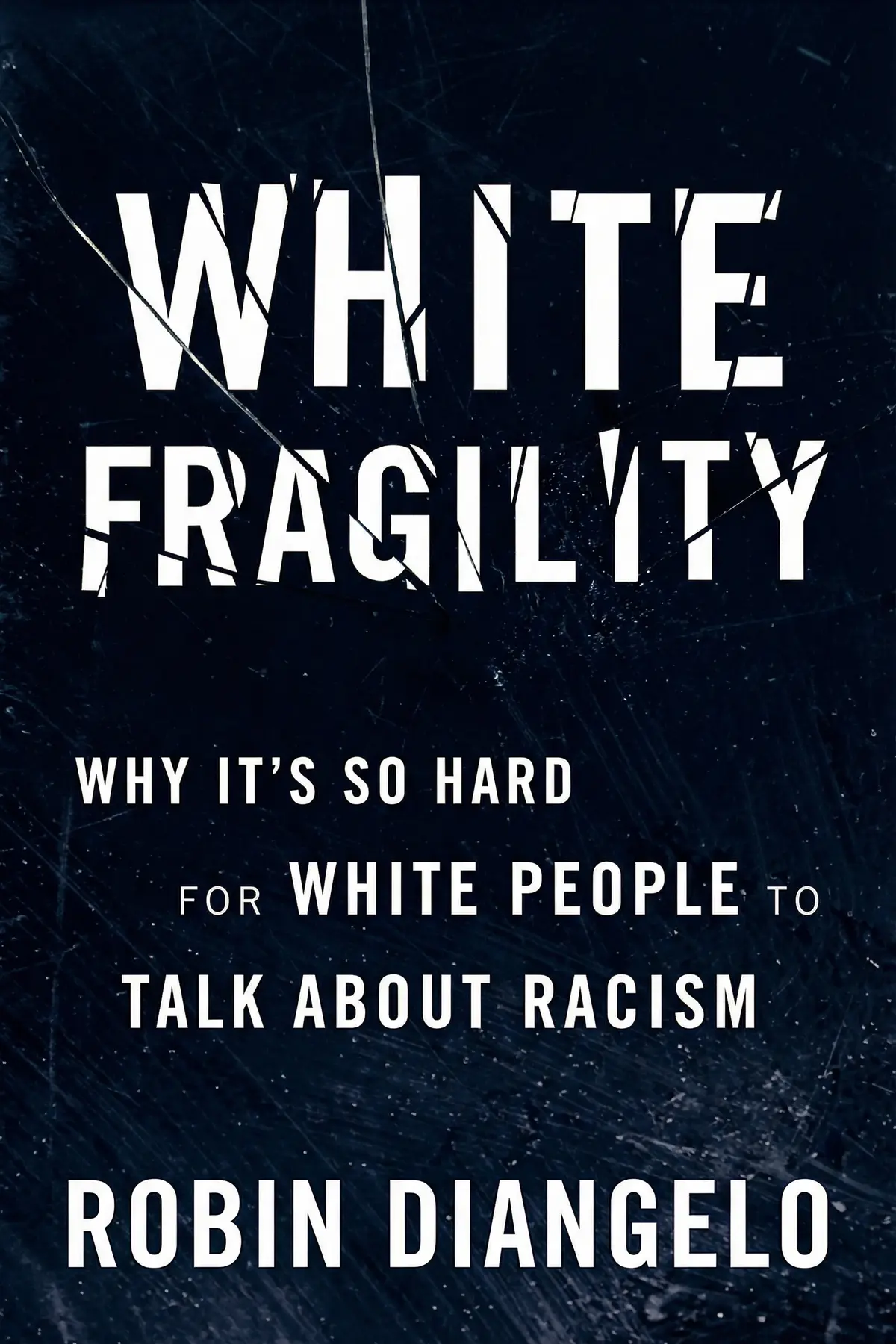
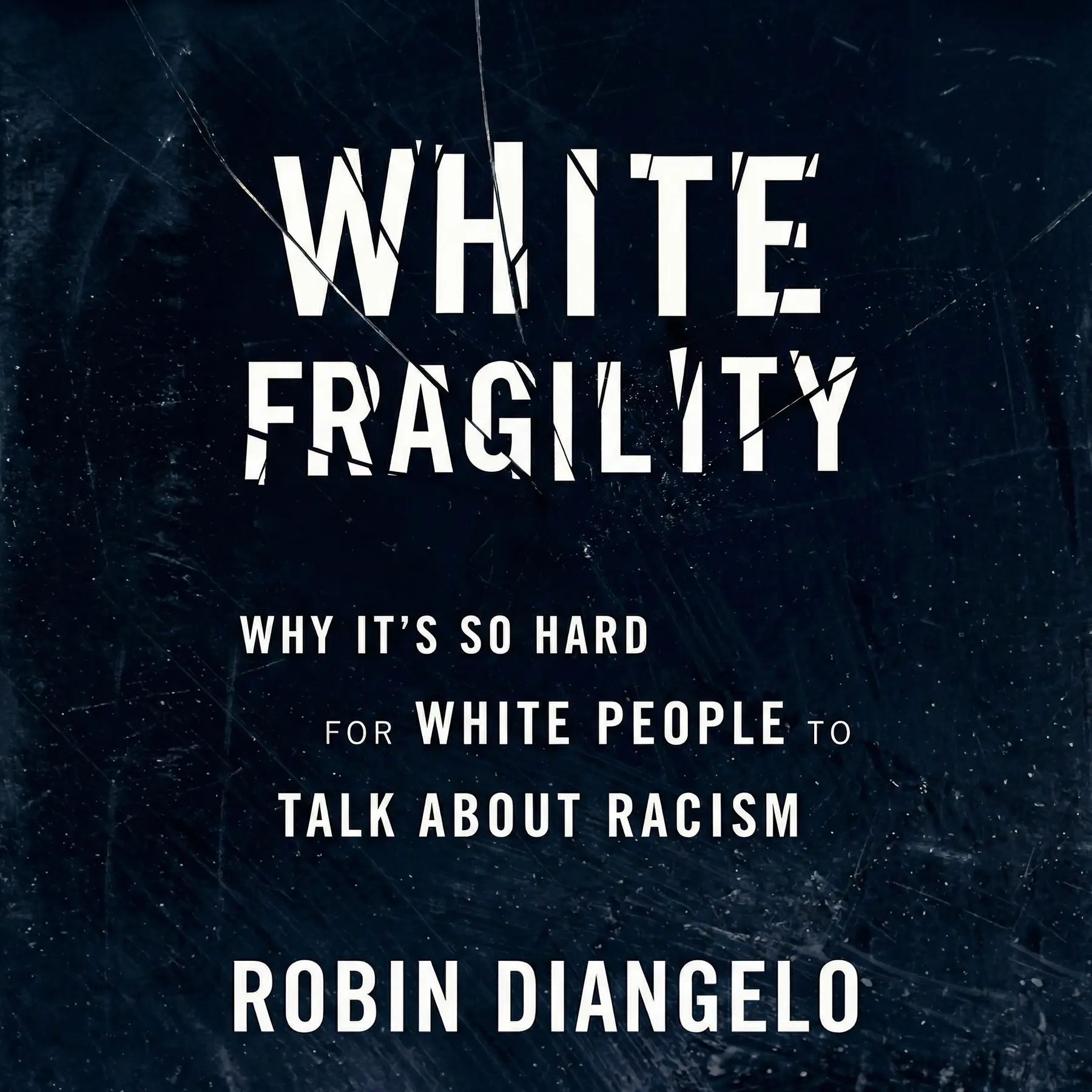
White Fragility examines why white people often become defensive when discussing race. It explores the systemic nature of racism and provides tools for more productive conversations and genuine racial progress.
2 min 06 sec
When we talk about race in modern society, the air often becomes thick with tension. For many white people, being labeled as a racist is one of the most painful and offensive accusations imaginable. It isn’t just a critique of behavior; it feels like a total condemnation of one’s character. When even the mildest suggestion is made that a white person’s words or actions might have a racial dimension, the immediate response is often a wall of anger, tears, or total withdrawal. This reaction is so widespread and predictable that it has been given a specific name: white fragility.
At first glance, this might look like simple oversensitivity, but that’s a surface-level interpretation. In reality, this fragility is a multifaceted phenomenon that reaches deep into the history and structure of society. To truly understand why it is so difficult for white people to talk about racism, we have to look past individual feelings and examine the invisible water we are all swimming in. This journey requires us to rethink everything we think we know about race, from its supposed biological roots to the very way we define what a ‘good person’ looks like.
In this exploration, we’re going to look at how the concept of race was manufactured to solve a political problem and how the definition of ‘whiteness’ has shifted over centuries to maintain social power. We will examine the difference between simple prejudice and the massive, systemic engine of racism that powers our institutions. Along the way, we’ll uncover the psychological tools and cultural ideologies—like the American dream of individualism—that make it so hard for people to see their own participation in this system.
The goal here isn’t to assign blame or point fingers. Instead, it’s about gaining the racial literacy necessary to have a real conversation. By the time we reach the end, you’ll see how this fragility actually works to keep racism in place by preventing us from ever addressing it. This summary is designed to set the stage for a new kind of throughline: one where discomfort isn’t something to be avoided, but a necessary gate we must pass through to reach genuine progress.
2 min 14 sec
Discover why race is a cultural invention rather than a biological reality and how it was designed to resolve a deep contradiction.
2 min 10 sec
Whiteness has not always included everyone we consider white today; explore how the legal system shaped racial identity.
2 min 02 sec
Learn the vital difference between personal prejudice and the systemic power that transforms discrimination into racism.
2 min 07 sec
Explore how the Civil Rights era created a narrow definition of racism that now hinders honest self-reflection.
2 min 02 sec
Understand the logic white people use to distance themselves from racism, from ‘good intentions’ to the claim of ‘colorblindness.’
2 min 06 sec
Examine how race-neutral words can hide racial bias and how physical separation leads to ‘racial insulation.’
2 min 09 sec
Delve into the concept of privilege, focusing on the powerful ‘sense of belonging’ and ‘presumption of innocence.’
1 min 56 sec
Understand why it’s impossible to grow up in a racist society without internalizing some of its biases.
2 min 05 sec
Learn how the ‘American Dream’ ideals of individualism and meritocracy can actually serve to blind white people to systemic inequality.
1 min 55 sec
Explore why the psychological ‘contraption’ of white fragility is so unstable and why it leads to such explosive reactions.
1 min 54 sec
See the predictable patterns of white fragility in action and learn how they serve to derail the fight against racism.
2 min 26 sec
As we reach the end of this journey through the concept of white fragility, we are left with a powerful realization: racism is not just a series of isolated, mean-spirited acts. It is a complex, pervasive system that we are all born into and shaped by. For white people, the first step toward change is acknowledging that ‘whiteness’ is not a neutral position, but a specific social location that comes with institutional power and psychological protection. The defensiveness that so often arises when race is discussed isn’t a sign of individual failure, but a predictable result of a society that teaches white people to associate racism with personal immorality while simultaneously insulating them from its realities.
The throughline here is clear: to move forward, we must dismantle the ‘good/bad’ binary that makes us so afraid of the word ‘racist.’ We must recognize that having racial bias is a universal human experience in a systemically unequal world. The goal isn’t to reach a state of perfection where we never make mistakes; the goal is to develop the racial stamina to acknowledge those mistakes, learn from them, and change our behavior. This requires a fundamental shift in how we approach discomfort. Instead of seeing tension as something to be avoided or shut down, we should see it as a signal that we are finally touching on something real and important.
So, what can you do with this information? The most actionable advice is to start embracing your own discomfort. The next time you feel that surge of anger, guilt, or the urge to explain away a racial comment, take a breath and lean in instead of pulling back. Ask yourself: ‘Why is this bothering me? What part of my identity feels threatened?’ If you are white, remember that your comfort is not the priority when discussing systemic oppression. Use these moments as an opportunity to listen more than you speak. If you are a person of color, remember that while this work is vital, it is not your burden to carry for white people. They must find their own path toward resilience.
Ultimately, white fragility is a wall that keeps us separated and keeps the status quo in place. By understanding how that wall was built—through history, law, language, and ideology—we can begin to take it down, brick by brick. Real racial progress isn’t found in being ‘colorblind’ or in insisting on our own goodness. It’s found in the hard, honest work of seeing the world as it truly is and choosing to stay at the table until everyone can sit there as equals.
White Fragility addresses a specific and pervasive phenomenon in American discourse: the discomfort, defensiveness, and anger that many white people experience when the topic of racism is raised. The book argues that this reaction is not just a personal quirk but a result of deep-seated socialization within a systemically unequal society. By breaking down the components of this fragility, the work offers a roadmap for understanding how racial identity is formed and how it impacts our interactions. The promise of this summary is to move beyond the simplistic view of racism as merely individual acts of meanness. Instead, it invites listeners to look at the historical, legal, and social frameworks that have shaped the racial landscape. By the end, you will understand how various ideologies—like individualism and meritocracy—actually hinder our ability to address racial inequality. Most importantly, it provides a lens through which white individuals can begin to dismantle their own defensiveness, paving the way for more authentic and effective racial justice work.
Robin DiAngelo is an experienced consultant and educator who has spent more than two decades working on issues of social and racial justice. She has led numerous workshops on these topics and is a prolific writer, having authored articles and books such as What Does It Mean to Be White? Developing White Racial Literacy. DiAngelo is currently a lecturer at the University of Washington and formerly served as a tenured professor of multicultural education at Westfield State University.
Listeners consider the book stimulating and informative, labeling it essential reading, with one listener highlighting the clear formatting and excellent writing style. Furthermore, the work encourages emotional and intellectual openness, enhancing understanding and consciousness while acting as a vital learning tool. Nevertheless, views on the tempo are varied; some appreciate the directness, whereas others perceive it as confrontational. Perspectives also differ regarding its accuracy and framing of racial issues; some value the way it characterizes and tackles racism for white individuals, yet others argue the content is offensive to black people.
Wow. This book completely shattered my self-perception as a 'good' person who isn't part of the problem. DiAngelo dismantles the idea that racism is only about individual mean-spirited acts, forcing you to look at the entire systemic framework. I found the section on 'aversive racism' particularly convicting because it describes exactly how progressive people avoid true accountability. While the writing is blunt and sometimes feels aggressive, that discomfort is precisely the point. It’s an excellently written guide for anyone willing to move past their defensive instincts. I think every white person should sit with this discomfort for at least a week after finishing it. It serves as a vital educational device that opens the heart to deeper empathy.
Show moreFinally got around to this bestseller after seeing it everywhere for years. As a white person who thought they 'got it,' I was surprised by how much I still needed to learn about my own reactions. The simple format makes complex sociological concepts easy to digest without feeling like a textbook. DiAngelo explains the difference between prejudice and systemic racism in a way that is hard to argue against if you’re being sincere. To be fair, she repeats herself occasionally, but the repetition helps drive home the foundational principles of anti-racism. It isn’t always a fun read, yet it feels entirely necessary for our current social climate. My perspective on racial equity has shifted significantly since turning the final page. Highly recommended for those starting their journey.
Show moreThis book should be required reading in every high school and workplace across the country. DiAngelo has a way of cutting through the excuses we make for our own fragility and defensiveness. I’ve never seen the 'good/bad' dualism explained so clearly, or why it’s so detrimental to progress. It opens both minds and hearts by asking us to sit with our discomfort instead of running away from it. Is it aggressive? Maybe, but perhaps that’s exactly what is needed to wake people up to systemic realities. I walked away with a much deeper sense of awareness and a desire to actually listen more. It’s an essential education device for anyone who wants to be a better ally.
Show morePicked this up during a period of self-reflection and it didn't disappoint. It’s one of those rare books that makes you rethink every interaction you’ve ever had regarding race and privilege. DiAngelo’s writing is excellently structured, making it easy to follow even when the subject matter gets heavy and emotional. I felt my own defensiveness rising at various points, only to realize she was describing that exact reaction on the next page. This book is a must-read because it moves beyond guilt and toward a more active form of awareness. It doesn't just point out the wound; it asks why we keep picking at it instead of letting it heal. I’m grateful for the clarity this provided for my own personal growth. Truly a foundational text for anyone interested in social justice.
Show moreThe way this book defines racism as a system rather than a personal slur is a game changer. Most people are stuck in a 'good/bad' binary, but DiAngelo explains why that mindset actually prevents us from making any real progress. I found the simple format and direct tone to be exactly what I needed to grasp these complex social dynamics. It isn’t always comfortable to read, but the truth rarely is when it involves self-examination. This is a necessary education device for anyone who wants to move beyond surface-level diversity and into actual antiracist action. It truly opens the heart to the pain others endure while giving us the tools to handle our own emotional responses better. An absolute must-read that I will be recommending to my entire family.
Show moreThe chapter on white tears was particularly illuminating, even if it was difficult to stomach at times. DiAngelo writes with a candor that is refreshing, though I understand why some find it off-putting or even confrontational. Truth is, the book does feel a bit like a corporate workshop transcribed onto paper, which makes sense given her background as a consultant. This leads to some circular reasoning and repetitive phrasing that could have been edited down for a smoother flow. However, the core message about how we uphold systems of inequality is too important to ignore. It provides a solid Racism 101 foundation that encourages you to stop proving your innocence and start doing the work. It’s a thought-provoking tool that helps bridge the gap between intent and impact.
Show moreAs someone who has always identified as a progressive, I found this deeply challenging in ways I didn't anticipate. DiAngelo effectively argues that well-intentioned liberals often cause the most daily damage because they refuse to acknowledge their internal biases. Personally, I appreciated how she defined racism as a system backed by institutional power rather than just individual animus. Look, the book isn't perfect; it occasionally feels like it’s centering whiteness a bit too much, which some critics have rightfully pointed out. But as a starting point for self-reflection, it’s incredibly effective at dismantling that 'why-I-m-not-racist' pedestal we often build for ourselves. It forces a level of honesty that is rare in modern discourse. Not a perfect book, but a necessary one for the times we are in.
Show moreAfter hearing about 'White Fragility' for years, I finally dived in. It’s a solid read if you’re looking to understand why white people get so defensive during discussions about systemic inequality. Gotta say, the chapter on the history of racism in the U.S. was a great refresher, even if most of it can be found elsewhere. DiAngelo’s candor is impressive, and she doesn't pull any punches when describing the 'nice' racism of liberal circles. My only real gripe is that it focuses almost entirely on the white experience, which can feel a bit narrow at times. Still, it provides a practical way forward for those of us who want to stop being part of the problem. It’s a thought-provoking exercise in self-awareness that I’m glad I took the time to finish.
Show moreEver wonder why certain conversations about race feel like walking through a minefield? DiAngelo tries to answer that, and while her theories on fragility are interesting, I had mixed feelings about the execution. The book is incredibly repetitive, hitting the same three or four points over and over again until they lose some of their punch. At times, the tone feels more like a lecture than a dialogue, which might push away the people who need to hear the message most. In my experience, the anecdotes from her workshops were the most engaging parts, yet they weren't used enough to ground the dense theory. It’s a decent first step for those who are totally new to these concepts, but it lacks the historical depth of other writers. It’s helpful, but arguably limited in its scope.
Show moreNot what I expected after hearing all the massive hype surrounding it. Frankly, the book relies far too heavily on anecdotal evidence and what feels like circular reasoning to prove its points. If you disagree with the author, she simply labels you as 'fragile,' which makes it impossible to have a nuanced or critical discussion about her claims. I found the way she speaks for all people of color to be somewhat patronizing, almost as if she’s playing the white savior role she claims to despise. While it aims to address racism, I worry it uses the very tools of racial stereotyping and prejudice it seeks to dismantle. The pacing is sluggish because the same ideas are rehashed in every single chapter without much new insight. It just didn't feel like a productive way to foster genuine racial unity or understanding.
Show moreTracy Rosenthal
Jessica Valenti

Johny Pitts
bell hooks

Fay Bound Alberti
Daniel Goleman
AUDIO SUMMARY AVAILABLE
Get the key ideas from White Fragility by Robin DiAngelo, plus 5,000+ more titles in English and Thai.







