
18 min 58 sec
Who Can You Trust?: How Technology Brought Us Together – and Why It Could Drive Us Apart
Who Can You Trust? explores the radical shift from trusting large institutions to trusting strangers through digital platforms, analyzing how technology rewrites our social contracts and reshapes the foundations of human cooperation.
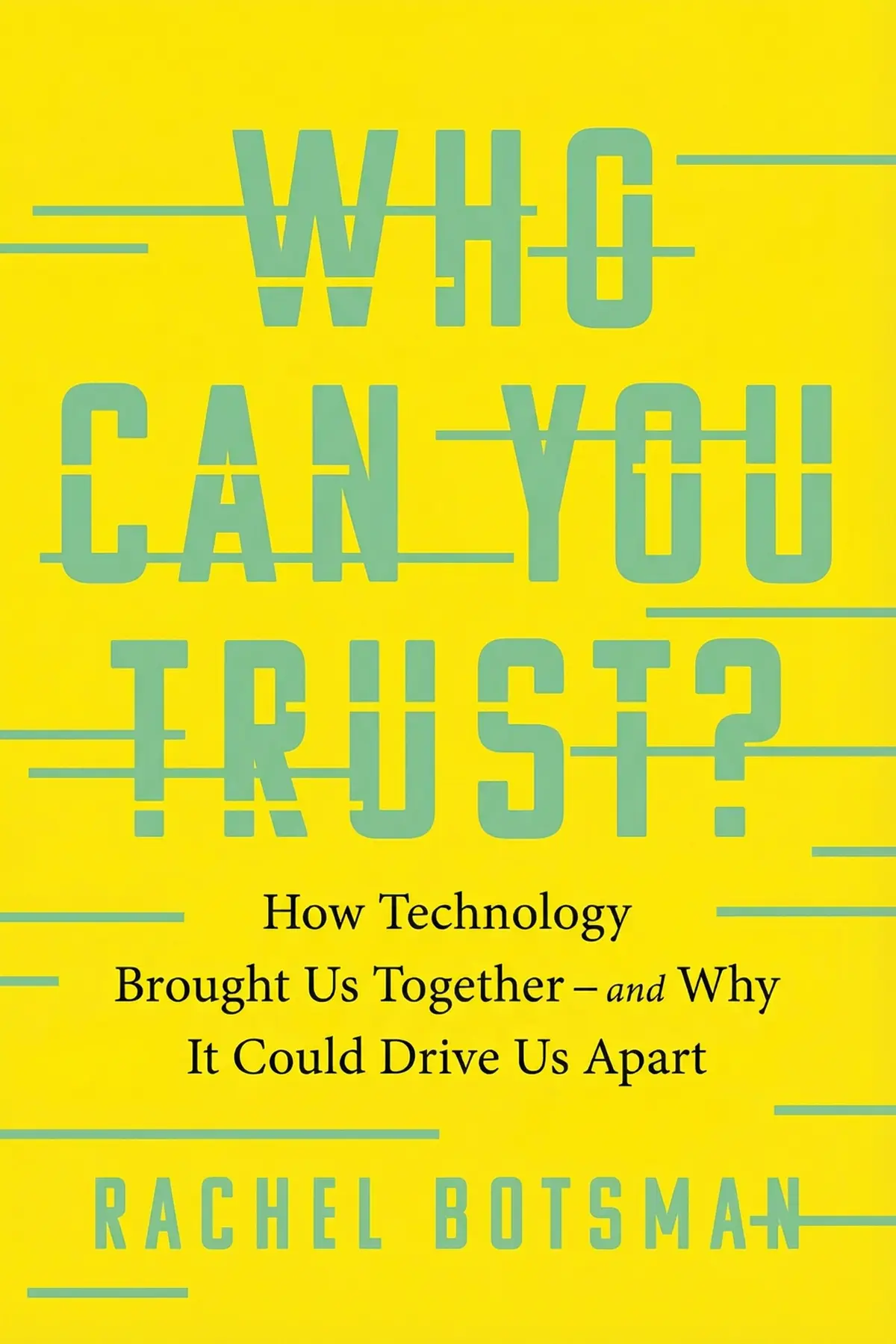
Table of Content
1. Introduction
1 min 34 sec
Think about the last time you summoned a ride through an app or booked a stay in someone’s apartment halfway across the globe. Just a few decades ago, the idea of getting into a total stranger’s car or handing over your house keys to someone you found on the internet would have seemed not only reckless but socially unthinkable. Yet today, millions of us do this every single day without a second thought. What changed? The answer isn’t just about better smartphones or faster internet; it is about a fundamental revolution in the way human beings trust one another.
In this exploration of our modern social landscape, we delve into how trust has become the primary currency of the digital age. We are witnessing a monumental shift away from the big, centralized institutions that once defined our sense of security—banks, governments, and corporate giants—toward a more horizontal, peer-to-peer system. This journey takes us from the ancient marketplaces of the eleventh century to the cutting-edge world of blockchain technology. Along the way, we will see how trust acts as a bridge to the unknown, allowing us to take ‘trust leaps’ that expand our world. We will also examine the darker side of this shift, where reputation becomes a tool for state control. By the end, you’ll have a new perspective on why you trust who you do, and how technology is bringing us closer together while simultaneously threatening to pull us apart. This is the story of the three great revolutions of trust and what they mean for our collective future.
2. The Mechanism of Trust
2 min 08 sec
Trust is often misunderstood as a feeling, but it is actually a practical tool that allows us to navigate risks and expand our personal horizons.
3. The Three Eras of Trust
2 min 31 sec
Human history can be divided into three distinct stages of trust, moving from the local village to the global institution, and finally to the digital peer.
4. The Erosion of Institutional Faith
2 min 17 sec
Traditional institutions are facing a crisis of confidence, driven by a loss of transparency and the rise of digital information.
5. How the Sharing Economy Manufactures Trust
2 min 13 sec
The success of companies like Airbnb and Alibaba isn’t just about their products; it’s about the trust-building systems they’ve built.
6. The Power of the Reputation Trail
2 min 08 sec
In a world of distributed trust, our digital footprints act as a modern-day moral compass, keeping us honest through the power of ratings.
7. The Dark Side of Digital Ratings
1 min 58 sec
The shift toward distributed trust is not without its perils, as demonstrated by the rise of state-sponsored social credit systems.
8. Blockchain and the Future of Trust
2 min 15 sec
The next frontier of this revolution is blockchain technology, which promises to remove the ‘middleman’ and automate trust through mathematics.
9. Conclusion
1 min 54 sec
As we have seen, the landscape of human trust is being completely rewritten. We have traveled from the intimate, face-to-face trust of the ancient village, through the massive and impersonal towers of institutional trust, and into a new, vibrant, and sometimes unsettling era of distributed trust. This shift is empowering us to collaborate with people across the globe, to share our resources in ways our ancestors never could have imagined, and to build a world that is more connected and transparent. But it also presents us with a new set of challenges. We must be wary of how our digital reputations can be manipulated and how the tools of trust can be turned into tools of surveillance.
The throughline of this journey is that trust is always evolving to meet the needs of the moment. We are currently in a period of transition, where the old systems are failing and the new ones are still being refined. The key to navigating this change is to be proactive. We cannot simply blindy trust the algorithms or the headlines we see on social media. As institutions lose their grip on the truth, the responsibility for discerning what is real and who is reliable falls back onto us.
Your actionable takeaway from this is to become your own ‘trust architect.’ Don’t just accept the star ratings or the viral stories at face value. Dig deeper, look for the recorded facts, and understand the systems that are managing your reputation. We are living through a trust revolution, and like all revolutions, it offers both great peril and great promise. By understanding the mechanics of how we trust, we can ensure that technology continues to bring us together rather than driving us apart. The future of trust is not just something that happens to us; it is something we are building together, one interaction at a time.
About this book
What is this book about?
At its heart, this book is an exploration of the invisible glue that holds society together: trust. For generations, we placed our confidence in massive, top-down institutions like banks, governments, and established brands. However, a profound shift is occurring. We are moving into an era of distributed trust, where technology allows us to place our faith in peers and algorithms rather than traditional authorities. This transformation explains why we are comfortable sleeping in a stranger’s spare room or hopping into a car with someone we’ve never met. The promise of the book is a deeper understanding of this high-tech evolution. It tracks the movement from local village trust to institutional systems, and finally to the decentralized models of today. By looking at the mechanics of reputation, the rise of the sharing economy, and the potential of blockchain, it provides a roadmap for navigating a world where the old rules of credibility no longer apply. It also warns of the risks, from digital surveillance to the loss of truth, offering a balanced perspective on how we can rebuild trust in a fractured age.
Book Information
About the Author
Rachel Botsman
Rachel Botsman is a writer and speaker whose work has been published in Wired, the New York Times and Harvard Business Review as well as many other publications. Her TED talks have been viewed more than four million times and are available in 29 languages. Botsman is also the author of What’s Mine Is Yours.
Ratings & Reviews
Ratings at a glance
What people think
Listeners find the material to be deeply researched and insightful, featuring high-quality stories that bring important themes to life. Furthermore, they regard it as required reading for anyone looking to build trust, with one listener describing it as an essential guide to the digital landscape. The book also earns praise for its accessible writing style and excellent overall value.
Top reviews
Isaiah
Picked this up to better understand how we interact with apps like Airbnb and Uber, and Botsman delivered a masterclass on the "trust shift." The stories, like the one about the family Volvo being used in a heist by a nanny, are absolutely wild and keep the pages turning. While some people might find the academic citations from places like Oxford or Harvard a bit much, I found them grounding. It makes the transition from institutional trust to distributed trust feel inevitable rather than just a theory. If you're running a business or just trying to navigate the digital world, this is mandatory reading. She explains complex ideas like blockchain and China’s social credit system in a way that actually makes sense to a layperson. Truth is, we are trusting strangers more than ever, and this book explains why that's not as crazy as it sounds.
Show moreSara
Wow, I didn't expect to be so gripped by a book about social psychology, but this was a total page-turner. Botsman takes the reader from the history of local trust in small villages to the massive, anonymous networks of the dark web. The way she handles the "trust shift" is nothing short of expert, making it clear that we are in the middle of a massive societal evolution. One of the highlights for me was the discussion on self-driving cars and the moral dilemmas of trusting a machine with your life. It’s a mandatory read for anyone who wants to understand how the digital environment is reshaping human behavior. The prose is clean and engaging, making even the dryer academic bits feel vital and immediate. Truly a 10/10 recommendation for my business colleagues.
Show moreRung
Finally got around to reading this, and it’s easily one of the most important books on my shelf right now. The way it explains the transition from institutional trust to the "wild west" of the internet is incredibly lucid. I loved the breakdown of the "trust stack" and how we move from trusting the idea, to the platform, to the individual person. It’s well-researched and cited, which I appreciate as someone who dislikes fluff in non-fiction. The stories, especially about the early days of AirBnB, were both entertaining and educational. This isn't just a tech book; it’s a manual for understanding how humans are going to live and work together in the future. Highly recommend it to anyone who feels overwhelmed by the pace of change.
Show moreSakura
As someone who works in tech, I found Botsman’s exploration of how algorithms are replacing human judgment both fascinating and slightly terrifying. The chapter covering the Black Mirror episode "Nosedive" was a bit of a retread if you've seen the show, but it served its purpose in illustrating the dangers of social credit. I appreciated the deep dive into the "trust leap"—that moment we decide to get into a stranger's car or let them sleep in our guest room. The writing is incredibly polished, though sometimes it leans a bit too heavily on personal anecdotes about the author's privileged tech experiences. Still, the breakdown of how the Silk Road created a high-trust environment for illegal goods was a revelation. It’s a solid 4-star read that offers plenty of "aha" moments for those curious about our digital future.
Show moreWorawit
Ever wonder why you're willing to eat at a restaurant based on a stranger’s Yelp review but don't trust your local politician? Botsman tackles this head-on, weaving together academic research from Stanford and MIT with relatable stories about her grandmother’s ring. The concept of "distributed trust" is explained brilliantly, showing how technology has decentralized our faith in systems. It’s a well-researched piece that feels especially relevant in an era of misinformation and institutional decay. I did think the section on dating apps was a missed opportunity, as she could have explored the commodification of relationships much further. Regardless, the book is a valuable tool for anyone trying to build a brand in the digital age. Not gonna lie, the way she explains blockchain actually made the lightbulb go off for me.
Show moreSaovapa
The chapter on "distributed trust" is worth the price of the book alone, providing a clear lens to view the chaos of the modern world. Rachel Botsman explains how we’ve moved away from trusting big institutions toward trusting peer-to-peer systems like eBay or Airbnb. I particularly enjoyed the section on the California roll—it was a clever analogy for how we need a "bridge" to accept new, scary ideas. While the book is very well-researched, it does occasionally feel a bit exhibitionist with the personal stories. Do I really need to know about the author's commute or every detail of her affluent lifestyle? Probably not. But the insights into the 2016 Uber driver shooting and the vulnerability of these new systems are too important to ignore. It’s a thought-provoking look at the trade-offs we make for convenience.
Show morePornpimon
A must-read for the digital age that manages to be both informative and accessible. Botsman is clearly an expert, and her ability to aggregate stories about Bitcoin, Wikileaks, and the Iraq War into a single narrative about trust is impressive. The book helps you realize that trust isn't disappearing; it’s just moving to a different house. My only real gripe is that it feels a bit repetitive in the middle sections, especially if you already follow tech news closely. Look, you might know the examples, but you likely haven't seen them connected this way. It’s a great value for the money and serves as an excellent conversation starter for anyone interested in sociology. The writing style is conversational yet authoritative, which is a hard balance to strike.
Show moreLaddawan
Botsman’s writing is sharp and her examples are perfectly chosen to illustrate the shift in how we grant our confidence. From the way Alibaba revolutionized trade in China to the intricacies of cryptocurrencies, the book covers an immense amount of ground. Personally, I found the analysis of the 2008 financial crisis through the lens of broken trust to be the most compelling section. There are moments where the prose gets a little dry, and the inclusion of the Peeple app felt like a weak point given its lack of real-world success. However, the overall message is powerful: we are in a new era of "trust leaps." It’s an essential guide for anyone trying to navigate the complexities of our hyper-connected world without losing their mind.
Show moreYuki
This book is a decent primer on modern trust, but it often feels like a curated collection of things you've already read on long-form blogs. I was hoping for more original data or a new framework, but instead, we get a lot of retelling of the 2008 financial crisis and the rise of Alibaba. To be fair, Botsman is a great writer and her definition of trust is the best I've encountered so far. However, I felt some sections, particularly the parts on China’s social credit system, stayed on the surface when they should have gone deeper. It’s a very easy read, perfect for a flight, but if you're already plugged into the tech world, you won't find many surprises here. The constant name-dropping of brand-name universities started to grate after the third chapter.
Show moreA
After hearing so much hype about Rachel Botsman, I expected something a bit more groundbreaking than what was presented here. The book is essentially a summary of the last decade of tech headlines through a psychological lens. If you haven't heard of the Silk Road or how Airbnb works, you will find this mind-blowing, but for the rest of us, it’s mostly review. Frankly, the depth on the blockchain was lacking, and the tone felt a bit too much like a series of TED talks stitched together. I liked the author's personal voice, but the constant references to McKinsey and Bain felt like a reach for unearned authority. It’s not a bad book, just a middle-of-the-road one that summarizes rather than innovates.
Show moreReaders also enjoyed
AUDIO SUMMARY AVAILABLE
Listen to Who Can You Trust? in 15 minutes
Get the key ideas from Who Can You Trust? by Rachel Botsman, plus 5,000+ more titles in English and Thai.
- 5,000+ titles
- Listen as much as you want
- 7-day free trial
- Cancel anytime







