

Flash Boys: A Wall Street Revolt
Michael Lewis
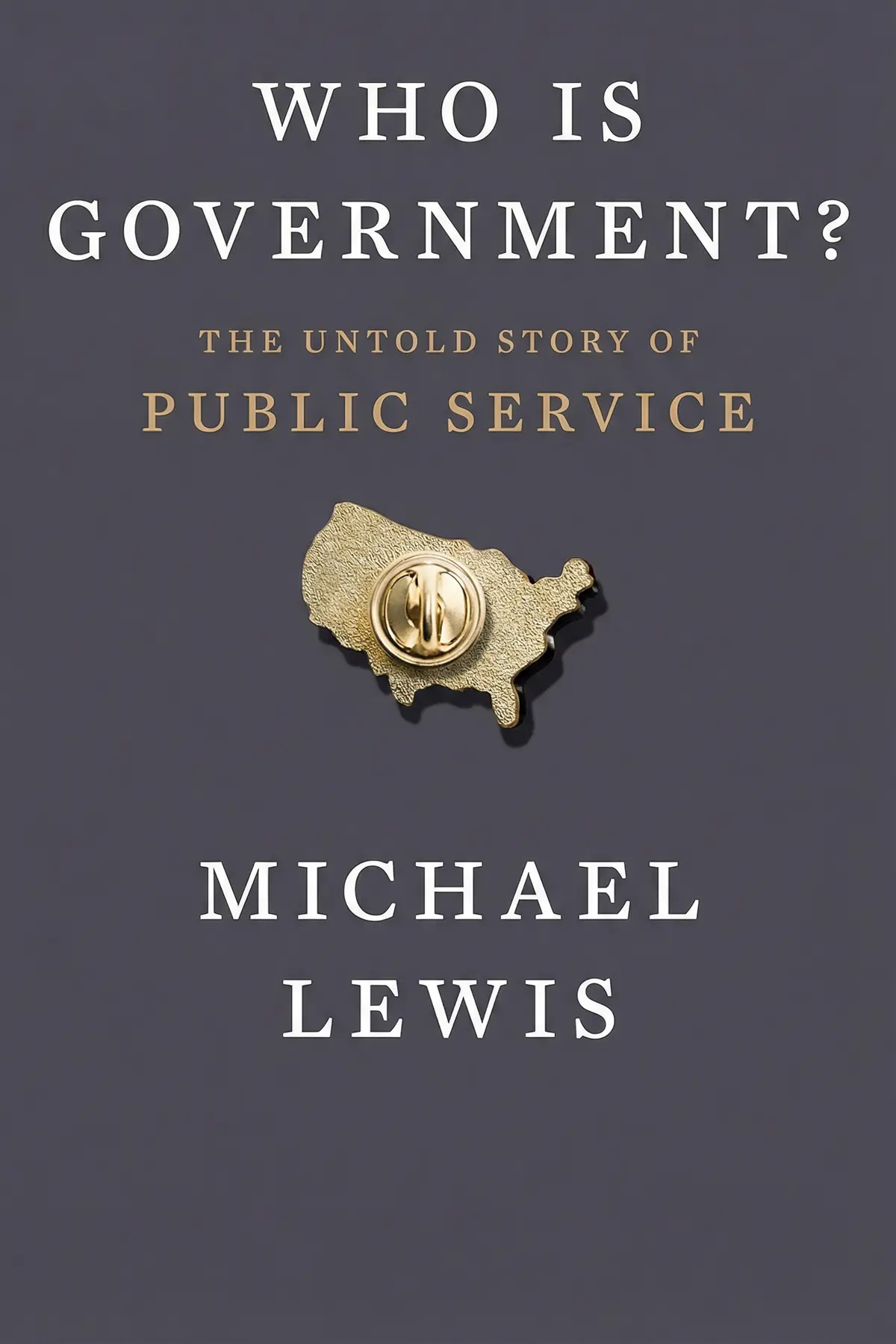
This summary explores the vital, often invisible work of civil servants, revealing how dedicated experts protect our safety, preserve our history, and explore the furthest reaches of the cosmos.
1 min 50 sec
When we think about the United States government, we often picture grand buildings, heated debates on television, or perhaps the singular figure of the president. But there is a massive, intricate machinery operating behind the scenes that most of us rarely consider until something goes wrong. In late 2016, as Donald Trump prepared to enter the White House, a significant disconnect became apparent between the incoming political leadership and the actual functions of the state.
Both political parties usually spend months preparing for a transition, assembling teams to learn the inner workings of the fifteen massive federal departments and the hundreds of smaller agencies that keep the country stable. However, shortly after his victory, the president-elect took the unconventional step of dismissing the five hundred people who had been working on his transition team. There were reports that he believed a task of this magnitude could be handled by just a couple of people.
This move highlighted a fundamental misunderstanding of what the civil service is. When Rick Perry was appointed to lead the Department of Energy, it was particularly telling, as Perry had previously suggested the department shouldn’t even exist. He, like many others, seemed unaware that the Department of Energy’s primary role isn’t just about oil or gas; it’s about managing the nation’s nuclear arsenal and conducting high-level scientific research.
To understand the government, we have to move past the rhetoric and look at the people—the individuals who show up every day to solve problems that the private sector won’t touch. These are the experts who manage risks we don’t even know exist. By looking at the lives and careers of several dedicated civil servants, we can begin to see the true value of the public sector. The following journey takes us from the depths of coal mines to the edges of the galaxy, revealing that the government isn’t just a collection of rules—it’s a collection of people whose work defines our safety, our history, and our future.
2 min 39 sec
Discover how one man’s journey from a radical activist to a federal engineer transformed one of the world’s most dangerous jobs into a significantly safer profession.
2 min 30 sec
Explore the immense logistical and emotional undertaking of the National Cemetery Administration as they fulfill a century-old promise to bring every soldier home.
2 min 25 sec
Learn how the IRS uses digital ledgers to track the world’s most sophisticated criminals, proving that the most effective weapon against crime is often a calculator.
2 min 26 sec
Follow the evolution of the National Archives from a vulnerable collection of papers to a digital gateway that allows every citizen to touch history.
2 min 23 sec
Go behind the scenes at NASA to see how the next generation of space telescopes is poised to answer one of humanity’s oldest questions: Are we alone?
1 min 18 sec
The stories of Chris Mark, Ron Walters, Jarod Koopman, Pamela Wright, and Vanessa Bailey show us that the government is far more than a set of abstract policies or political talking points. It is a vital network of experts who manage the ‘unseen risks’ of our modern world. These individuals take on tasks that are too big, too expensive, or too long-term for any private company to handle. They work in the shadows, often without thanks, to ensure that mines don’t collapse, that veterans are buried with honor, that criminals are caught, that history is preserved, and that we continue to explore the universe.
When we dismiss the civil service as a ‘bureaucracy,’ we overlook the immense specialized knowledge that keeps our society stable. The throughline in all these stories is a commitment to the public good—a belief that some things are worth doing simply because they make the world safer and more enlightened. As we move forward, the greatest risk we face might not be a specific disaster, but the loss of the expertise required to prevent it. By recognizing the ‘who’ behind the government, we can better appreciate the ‘what’ and ‘why’ of the institutions that protect us every day. The next time you see a government building or hear a debate about federal spending, remember that behind those walls are people whose lifelong dedication is the silent engine of our progress.
The government is frequently discussed as a faceless bureaucracy, but it is actually powered by individuals with deep expertise and a commitment to public service. This exploration looks behind the curtain of massive federal departments to profile the people who keep the world running. From the engineers preventing mining disasters to the archivists making history accessible on your smartphone, the book uncovers the essential missions of the civil service. It promises to shift your perspective on what government actually does, highlighting why these roles are critical to modern life and what happens when their importance is overlooked by political leadership.
Michael Lewis is a best-selling nonfiction author. His titles include Flash Boys, Liar’s Poker, and The Big Short, which was adapted into an Oscar-winning film.
Michael Lewis
Michael Lewis

Michael Lewis
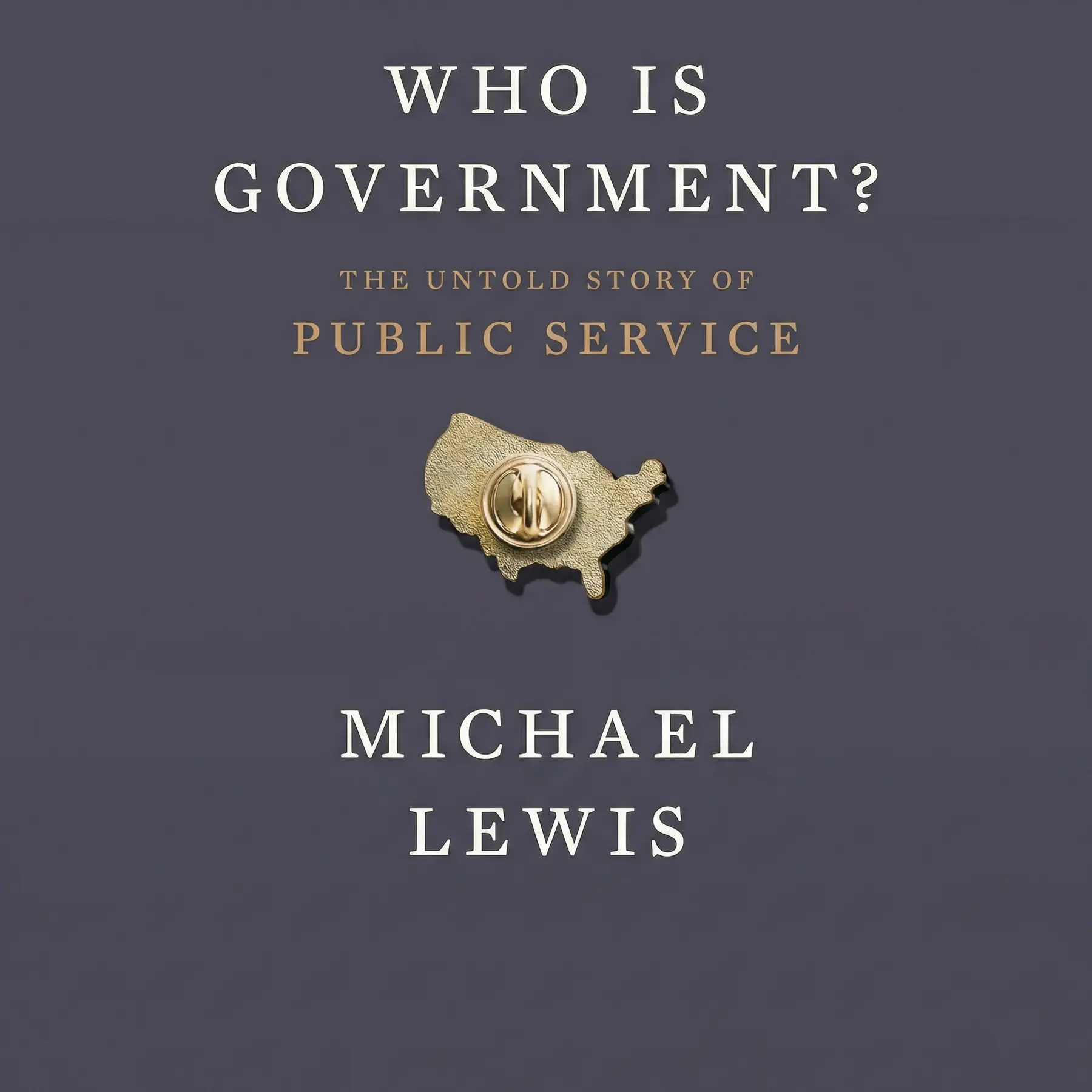
Listeners find this book to be an excellent listen featuring gripping accounts of federal employees. The prose is viewed as intelligent, and listeners value the educational quality, with one review pointing out revelatory facts about various agencies. They appreciate how relevant it is to modern politics and its overall impact, with one listener observing that the work frequently saves lives. Listeners also praise the way individuals are portrayed, with one review highlighting the commitment of public servants.
Wow. I didn’t expect a book about government employees to be this tender and heartwarming. Michael Lewis curates a beautiful collection that humanizes the faceless bureaucrats we often hear about in negative political ads. These aren't just "middle managers" or "efficiency problems"—they are people like Christopher Mark, saving lives in mines, or Ronald Walters, ensuring veterans get the dignity they deserve in death. The writing styles vary between the authors, which keeps the pace fresh, though some chapters feel more urgent than others. It’s a timely reminder that when government works perfectly, you don’t notice it because the water is clean and the ceilings don't collapse. We owe these people more than our tax dollars; we owe them our gratitude.
Show moreEver wonder how many lives are saved by people you’ve never heard of? "The Canary" by Michael Lewis is a masterclass in narrative non-fiction, focusing on Christopher Mark’s work in coal mine safety. It’s fascinating how Lewis can take a topic as niche as mine ceiling collapse and make it feel like a high-stakes thriller. This entire book is a love letter to the people who choose a life of service over a life of profit. Personally, I found the anecdote about Trump wondering why anyone would work for "two hundred grand tops" to be the perfect framing for why this book exists. It’s about the mission, not the money. The writing is sharp, evocative, and deeply necessary right now.
Show moreAfter working in the public sector for twenty years, I felt seen. This book captures that specific brand of "existential humility" that defines career civil servants. We don't do it for the fame or the bonuses; we do it because someone has to make sure the records are digitized and the coal mines are safe. The profile of Pamela Wright at the National Archives was a standout for me. Sarah Vowell captures the quiet intensity of preserving history perfectly. The book is published at just the right time, acting as a refutation of the idea that government is just "fraud and abuse." It’s an anthology of competence in a world that often feels chaotic. Every American should read this before complaining about the 'deep state'.
Show moreFinally got around to reading this, and it’s essentially a much-needed defense of the workers who actually keep the lights on. From the IRS agent catching child sex traffickers to the engineers preventing mine collapses, the book showcases a level of dedication that is frankly inspiring. It’s a direct challenge to the "DOGE" narrative that government is inherently wasteful. The writing is intelligent and the character development is surprisingly deep for such short essays. If you’re worried about the current decimation of government staffing, this book will both validate your fears and give you reasons to hope. It’s a short, punchy, and incredibly relevant read for today’s climate. I finished it in two sittings and immediately recommended it to my book club.
Show moreAs someone who follows Sarah Vowell's work, I was thrilled to see her contribution in "The Equalizer." This anthology provides such a vital counter-narrative to the current rhetoric surrounding the "DOGE" crew and the dismantling of federal agencies. It’s an intelligent, if occasionally uneven, exploration of the quiet machinery that keeps society functional. The IRS chapter was particularly eye-opening, showing how these workers aren't just bean counters; they're hunting down cyber-criminals and protecting our financial infrastructure. Truth is, the book can feel a bit like a highlight reel of previously published work, but the curation is top-notch. It successfully makes the argument that civil service is a mission, not just a paycheck for those who choose it.
Show morePicked this up because of all the talk about government efficiency lately. Frankly, it’s the best argument for the status quo I’ve read. Lewis and his contributors focus on "The Searchers" and "The Sentinel," highlighting agencies like the National Cemetery Administration that perform deeply emotional, essential tasks with zero fanfare. The tone is earnest and surprisingly hopeful despite the looming threats of budget cuts and staffing decimation mentioned in the introduction. Some of the data-heavy sections toward the middle slowed me down slightly, but the human interest stories—especially the one about mine safety—more than made up for it. It really highlights the "existential humility" of those who serve the public interest every single day.
Show moreThe chapter by Casey Cep really hit me hard. I never thought I’d spend my Sunday afternoon getting emotional over the National Cemetery Administration, but that’s the power of this collection. It’s a fast read, but the impact lingers long after you finish. My only minor gripe is that because the essays are written by different people—from W. Kamau Bell to Geraldine Brooks—the tone shifts quite abruptly at times. However, the core message remains consistent: government is made of individuals who genuinely care. In an era where "bureaucrat" is often used as a slur, Lewis gives us names and faces to respect. Highly recommend for anyone feeling cynical about our institutions and wanting to see where their taxes actually go.
Show moreThe final section regarding the FDA and the treatment for Balamuthia was absolutely gripping. Michael Lewis has a way of taking complex scientific coordination and turning it into a human interest story that feels urgent and personal. I’d read about the case in the news, but the depth provided here—showing how public servants across agencies coordinated to save lives—was new to me. I appreciated the variety of voices in this collection, especially Dave Eggers’ contribution. While a few of the essays felt a bit shorter than I would have liked, the overall impact is a powerful defense of the administrative state. It’s informative, slightly provocative, and very well-researched. This book makes a strong case for why we can't let these agencies be hollowed out.
Show moreTo be fair, I expected a bit more new material from Michael Lewis himself, rather than an anthology of mostly previously published essays. If you’ve read "The Fifth Risk," some of this might feel like a retread of familiar themes regarding the ignorance of leadership. That said, Dave Eggers and John Lanchester bring fresh perspectives that broaden the scope beyond Lewis’s typical style. The book serves its purpose as a defensive wall against the current political climate, though it can occasionally veer into being overly sentimental. I found the chapter on the Bureau of Labor Statistics a bit dry compared to the riveting story of the IRS cyber-superhero Jarod Koopman. It’s a solid 3-star read for the information, but maybe a 4 for the timing.
Show moreLook, I love Michael Lewis, but not every essay in here is a page-turner. The Bureau of Labor Statistics chapter was a bit of a slog, even if the work they do is objectively important for our economy. I also felt that some of the political commentary regarding the second Trump administration felt a little rushed, even if the sentiments are valid. However, the story of the Balamuthia infection treatment in the final chapter was absolutely incredible. It’s a sobering reminder that private pharmaceutical companies simply won't invest in research for rare diseases because there’s no profit in it. That’s why we need the FDA. It’s an imperfect book, but the highlights are definitely worth the price of admission if you skip the filler.
Show more
James Comey
Anthony Pratkanis


Barack Obama
Masaji Ishikawa
John Rawls

Miles Taylor
AUDIO SUMMARY AVAILABLE
Get the key ideas from Who Is Government? by Michael Lewis, plus 5,000+ more titles in English and Thai.







