
Flash Boys: A Wall Street Revolt
Michael Lewis
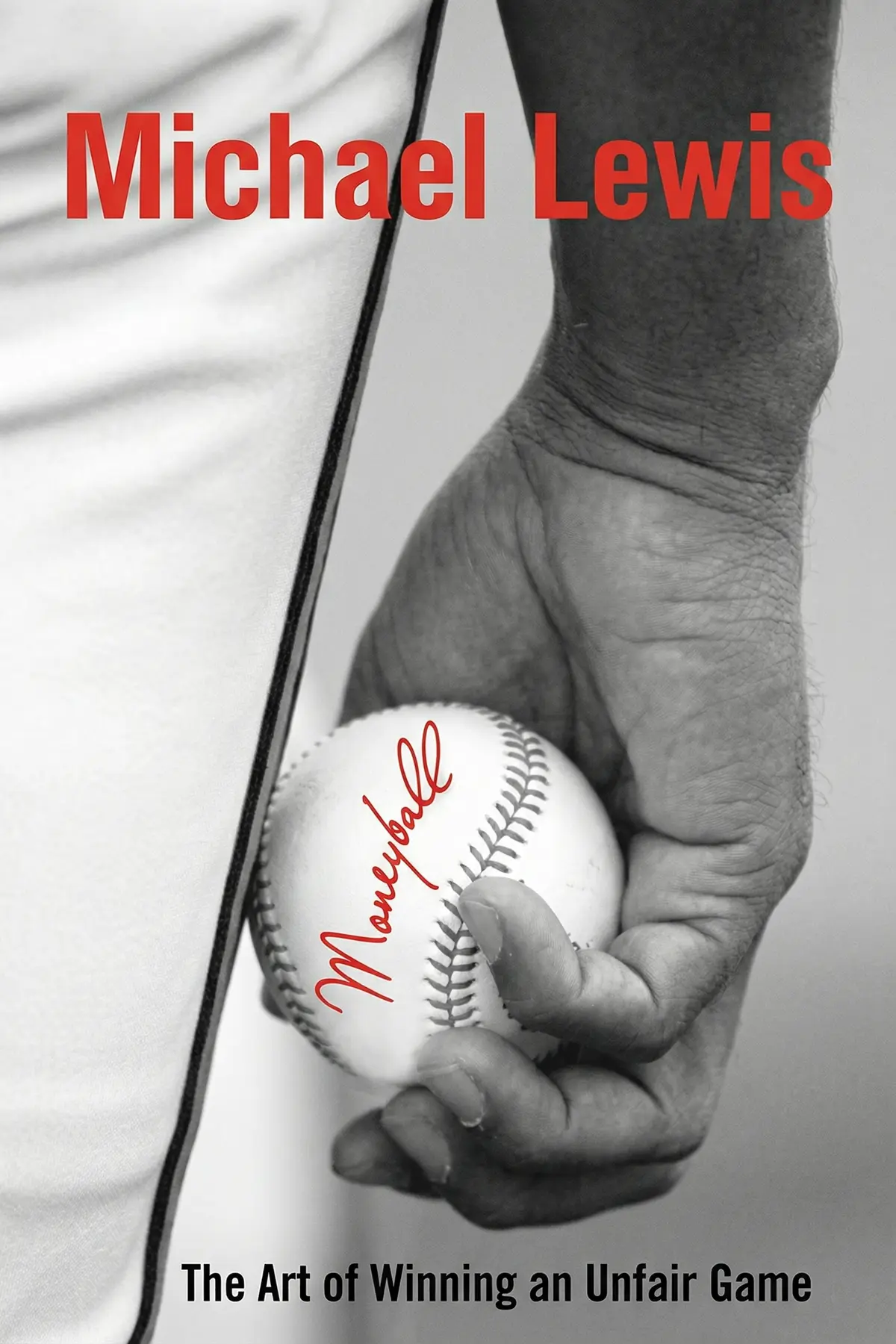
Explore how the Oakland Athletics revolutionized baseball by using data-driven statistics to outmaneuver wealthier opponents, proving that innovation and objective analysis can overcome even the most significant financial disadvantages.
58 sec
In the world of professional sports, it’s often assumed that the team with the deepest pockets will naturally dominate the standings. By the early 2000s, this wasn’t just a theory in Major League Baseball—it was a harsh, mathematical reality. The financial gap between elite franchises and small-market teams had become a canyon, making it seemingly impossible for teams with lower budgets to compete. For the Oakland Athletics, operating on the second-lowest payroll in the league, the situation looked dire. They were essentially being asked to play a game where the rules were stacked against them, facing off against powerhouse clubs that could simply outspend them for every marquee star.
But this environment of scarcity forced a radical transformation. This is the story of how General Manager Billy Beane decided to stop playing the game by the old rules and started looking at the numbers instead. It’s a journey into how innovation emerges from necessity and how challenging the traditional wisdom of an entire industry can lead to unprecedented success.
1 min 32 sec
Discover why the traditional methods of evaluating talent were fundamentally broken and how a new set of metrics began to reveal the hidden truth behind winning baseball games.
1 min 25 sec
Learn how the Oakland A’s exploited market gaps by choosing overlooked players who didn’t fit the athletic mold, proving that physical appearance is often a deceptive indicator of skill.
1 min 18 sec
Explore the intense institutional resistance faced by the architects of this data revolution and how their perseverance eventually changed the landscape of professional sports forever.
1 min 04 sec
Ultimately, the success of the Oakland Athletics silenced the harshest of their critics. The team didn’t just survive; they thrived, eventually setting a stunning American League record of twenty consecutive victories. This feat proved that their methods weren’t just a statistical fluke but a valid new way of understanding the sport of baseball.
The philosophy established in Oakland eventually spread far beyond the A’s organization, with major franchises like the Boston Red Sox adopting similar data-driven frameworks to win their own championships. Today, the influence of these techniques can be seen in almost every professional sport and even in the corporate world, where data-driven decision-making has become the gold standard for efficiency.
Whether you view it as a democratization of the game or a cold shift toward numbers, the legacy of this era is undeniable. In an unfair game, the most powerful tool you have is the willingness to look at the world differently. By embracing innovation and letting go of outdated beliefs, it is possible to achieve greatness, no matter the size of your budget or the weight of the odds against you.
Moneyball tells the fascinating story of how the Oakland Athletics, a team with one of the smallest budgets in Major League Baseball, managed to compete with—and often beat—the giants of the sport. At the start of the 2000s, General Manager Billy Beane realized that the traditional methods of scouting and player evaluation were fundamentally flawed. By turning to the world of statistics and data analysis, Beane found a way to identify undervalued players that other teams had overlooked based on physical appearance or outdated metrics. This summary explores the birth of Sabermetrics and the rise of a data-driven culture that challenged a century of baseball tradition. It reveals the strategic brilliance required to find market inefficiencies and the immense personal courage needed to stand up against an industry that was hostile toward change. The promise of this story is a blueprint for any underdog: it shows how a commitment to objective truth and a willingness to disrupt the status quo can level a playing field that seems hopelessly unfair. It is a powerful lesson in how logic can triumph over intuition in both sports and business.
Michael Lewis is a distinguished writer celebrated for his deep dives into the worlds of finance and economics. He possesses a unique gift for taking intricate financial concepts and making them accessible to a wide audience. His impressive list of best-sellers includes influential titles like The Big Short, Liar's Poker, and Flash Boys.
Michael Lewis
Michael Lewis

Listeners find this title to be a marvelous and captivating listen, full of statistical analysis and quality data-driven insights. Additionally, they like how it explores both business and baseball, with one listener highlighting that it offers behind-the-scenes insight. The content also includes fantastic baseball stories throughout and is written with a sense of excitement that makes it well worth the price.
Michael Lewis has an incredible ability to turn dry spreadsheet data into a narrative that feels like a high-stakes heist movie. Before reading this, I thought baseball was just about home runs and scouts with "good eyes," but Lewis reveals the hidden math of the game. He dives into how the Oakland Athletics exploited market inefficiencies by valuing on-base percentage over flashy physical traits. Truth be told, the insights into Billy Beane's psychology—especially his fear of failure based on his own stunted career—add a poignant layer to the cold statistics. It’s a masterclass in how an underdog can dismantle a rigged system through pure intellectual rigor. If you have any interest in how modern businesses can disrupt established industries using data-driven insights, this is essential reading. The writing is sharp, witty, and deeply engaging from cover to cover.
Show moreWow, this reads more like a thriller than a non-fiction book about sports metrics and front-office management. Michael Lewis manages to make the act of drafting a college player feel like a life-or-death gamble. I was particularly struck by how the book challenges our assumptions about what "talent" actually looks like. It turns out that being "too fat" or having a "weird delivery" doesn't matter if you can actually get on base. Personally, I found the chapters on the 20-game winning streak incredibly exciting even though I already knew the outcome of the season. The book is well worth the price for the business lessons alone, specifically regarding how to identify value where others see flaws. It is a wonderful and engaging read that proves stats can be just as exciting as a walk-off home run.
Show moreFinally got around to this after years of hearing the term "Moneyball" thrown around in every business meeting I’ve ever attended. It’s easy to see why this became a cultural touchstone because the core concept of challenging institutional dogma is universal. Lewis captures the Oakland A's struggle against the "unfair game" of baseball finance with such clarity and wit. I was particularly interested in how the Boston Red Sox and John Henry eventually adopted these same principles to break their curse. The book is filled with data-driven insights that are as applicable to a boardroom as they are to a dugout. Gotta say, even the minor characters like Jeremy Brown are rendered with such vivid detail that they jump off the page. It’s a fantastic look at how to win when you're outgunned and outspent by the competition.
Show morePicked this up for the baseball but stayed for the incredible lesson in market inefficiency and contrarian thinking. Michael Lewis is the only author who could make a trade deadline negotiation feel as intense as a Game 7 World Series matchup. The way he describes Beane manipulating other GMs to get the players he wants is pure entertainment. This book is an amazing resource for anyone in management, proving that you don’t need the biggest budget to win if you have the best information. I loved every page of this, from the background on Bill James to the dramatic 20-game win streak that silenced the critics. It’s a brilliant, exciting, and deeply insightful look at how to win an unfair game. Even if you hate math, the stories of these undervalued players will win you over.
Show moreEver wonder how a team with a tiny budget competes against the Goliath payrolls of the New York Yankees? Moneyball explains exactly how the Oakland A's pulled it off by embracing the "heresy" of Bill James and his statistical revolution. The book offers a fascinating behind-the-scenes look at the front office during the 2002 season. I loved the focus on "misfit" players like Scott Hatteberg, who were discarded by the rest of the league but became central to Beane’s strategy. While some of the scouting scenes get a bit repetitive, the overall excitement of seeing a theory proven right on the field is infectious. It’s not just a sports book; it’s a brilliant study in decision-making under pressure. Frankly, it makes you realize how often we value the wrong things in life just because of tradition.
Show moreAs a casual fan, I didn’t think I’d care much about "sabermetrics" or complex batting percentages. However, Michael Lewis creates such a compelling portrait of Billy Beane that you can't help but get swept up in the drama. The book highlights the tension between the "old school" scouts who rely on gut feelings and the new breed of math nerds using computers to find value. I found the segments on Beane’s own failed playing career particularly moving, as it explains why he was so eager to burn the traditional scouting model to the ground. Sometimes the technical descriptions of OPS and slugging can slow things down, but the human stories keep the momentum going. It's a solid, informative read that provides amazing baseball stories and a real sense of excitement. Definitely worth the price for the behind-the-scenes access.
Show moreThe chapter on Scott Hatteberg’s transition from a catcher with a dead arm to a first baseman is worth the price of admission alone. It perfectly encapsulates Beane’s philosophy: find a specific skill that is undervalued and exploit it relentlessly. This book is a wonderful blend of sports history and economic theory, though it never feels dry or academic. My only real gripe is that it occasionally ignores the role of the A's star pitchers like Zito and Mulder, focusing almost exclusively on the hitters to fit the narrative. Nevertheless, it provides incredible behind-the-scenes access to a revolution that changed the sports world forever. It’s a must-read for anyone who loves an underdog story where the hero wins using his brain instead of his wallet. Lewis proves that being a "smart alec college boy" can actually pay off in the big leagues.
Show moreFrankly, I expected more of a traditional biography on Billy Beane, but what I got was something much more innovative and thought-provoking. The book is really about an idea—the idea that the world is full of "expert" opinions that are actually based on nothing but tradition and inertia. Lewis uses the 2002 A's season to show how dangerous it is to ignore data in favor of "the eye test." I especially enjoyed the scenes where Beane interacts with his scouts; the clash of cultures is both hilarious and frustrating. The writing style is punchy and moves at a fast pace, making it hard to put down. It really changed the way I look at professional sports and how we measure success in any field. If you like stories about people shaking up an established system, this is for you.
Show moreLook, the story is legendary, but the writing is surprisingly dense and leans heavily into technical non-fiction territory. I was hoping for more of a human-interest story about the players, but instead, it felt like I was auditing a statistics course at times. While it’s fascinating to see how Billy Beane challenged the curmudgeons of the MLB, the argument for walks and on-base percentage becomes quite repetitive after the first hundred pages. To be fair, Lewis is a gifted writer, and his character sketches of Bill James and Paul DePodesta are sharp. However, if you aren't already a baseball nerd or a data enthusiast, you might find yourself skimming the middle sections. It’s a good book with interesting data-driven insights, just not the life-changing experience I anticipated after seeing the film. It feels a bit dated now that every team uses these tactics.
Show moreNot what I expected given the hype of the movie, which focused much more on the emotional bond between the characters. The book is far more analytical and spends a great deal of time on the history of statistical analysis in baseball. While I appreciate the depth, I think the narrative gets bogged down in the minutiae of the amateur draft and repetitive arguments about why bunting is bad. Truth is, I found some of the sections on the "math nerds" to be a bit dry compared to the actual game action. However, the insight into how the Oakland front office operated under financial pressure is still quite valuable for any business student. It’s a 3-star read for me—historically important and well-written, but it definitely feels more like a technical manual than a narrative at points.
Show more
Joseph A. Maciariello

Jonathan Eig
Deborah Gruenfeld
Mike Michalowicz
AUDIO SUMMARY AVAILABLE
Get the key ideas from Moneyball by Michael Lewis, plus 5,000+ more titles in English and Thai.







