
Flash Boys: A Wall Street Revolt
Michael Lewis
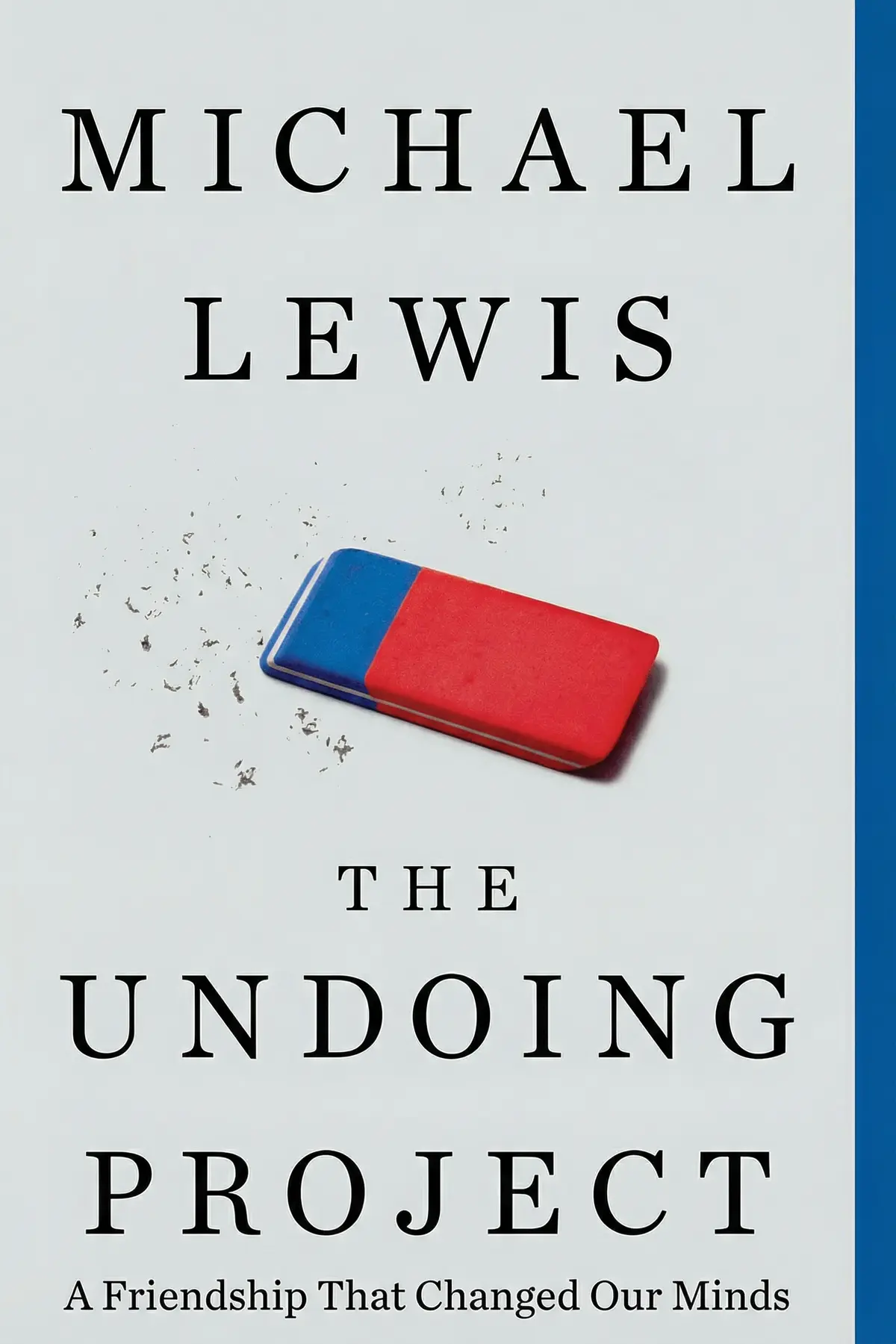
The Undoing Project explores the transformative collaboration between Daniel Kahneman and Amos Tversky. It reveals how their research into human psychology challenged economic theories and exposed the hidden biases influencing every decision we make.
57 sec
We often like to think of ourselves as the masters of our own logic. We believe that when we face a choice—whether it’s a career move, a financial investment, or even a simple daily purchase—we weigh the facts and choose the most beneficial path. But what if our minds are actually wired to lead us astray? For a long time, the world of economics was built on the idea that humans are naturally rational creatures.
This story is about the two men who proved that assumption wrong. By looking at the remarkable partnership between Daniel Kahneman and Amos Tversky, we begin to see the architecture of our own errors. Their work didn’t just change psychology; it upended how we understand everything from medicine to government policy. As we walk through their journey, we’ll see how their unique bond allowed them to “undo” the traditional view of the human mind, revealing a world of biases and emotional shortcuts that dictate our lives more than we ever realized.
1 min 31 sec
Explore how the early life experiences of Daniel Kahneman led him to question the reliability of human judgment and military stereotypes.
1 min 29 sec
Discover how two vastly different personalities combined their strengths to create a world-changing intellectual collaboration starting in 1968.
1 min 18 sec
Understand the concept of heuristics and how our brains use mental models to simplify complex decisions, often with surprising results.
1 min 14 sec
Learn about Prospect Theory and why the human brain reacts more intensely to the threat of loss than the hope of gain.
1 min 13 sec
Examine how the way information is presented can completely flip our decisions, even when the underlying facts remain the same.
55 sec
The legacy of Daniel Kahneman and Amos Tversky is a profound shift in how we view ourselves. They took the pedestal of human reason and gently moved it aside, showing us a more realistic—and more human—portrait of the mind. Their collaboration proved that while we are capable of great things, we are also subject to invisible biases, emotional triggers, and flawed shortcuts.
By understanding the concepts of heuristics, loss aversion, and the framing effect, we gain a new set of tools for navigating the world. We can start to question our own “gut feelings” and recognize when a situation is being presented to manipulate our fears. The story of their friendship reminds us that by questioning the status quo and working together, we can uncover truths that change the world forever. As you move forward, remember that being aware of your own irrationality is, paradoxically, the first step toward becoming a more rational person.
This book tells the captivating story of two brilliant Israeli psychologists, Daniel Kahneman and Amos Tversky, whose friendship and professional partnership fundamentally altered our understanding of the human mind. For decades, traditional economics operated on the assumption that humans are rational actors who consistently make logical choices based on data. However, Kahneman and Tversky dismantled this notion. Through The Undoing Project, you will see how their work identified the systematic errors and mental shortcuts—known as heuristics—that lead us astray. The narrative promises to explain not just the mechanics of Prospect Theory and Loss Aversion, but also the deeply human story of how two very different personalities joined forces to challenge the status quo. By the end, you will gain a profound awareness of the invisible forces, from emotional framing to cognitive biases, that shape your own judgments and the world's most complex systems.
Michael Lewis is a highly regarded journalist, author, and financial commentator celebrated for his ability to translate complex systems into compelling human narratives. He has authored several acclaimed bestsellers, most notably Moneyball and The Big Short, both of which became major motion pictures. Lewis is widely recognized as a leading voice in contemporary nonfiction, known for his deep dives into economics, finance, and the nuances of human behavior.
Michael Lewis
Michael Lewis
Michael Lewis
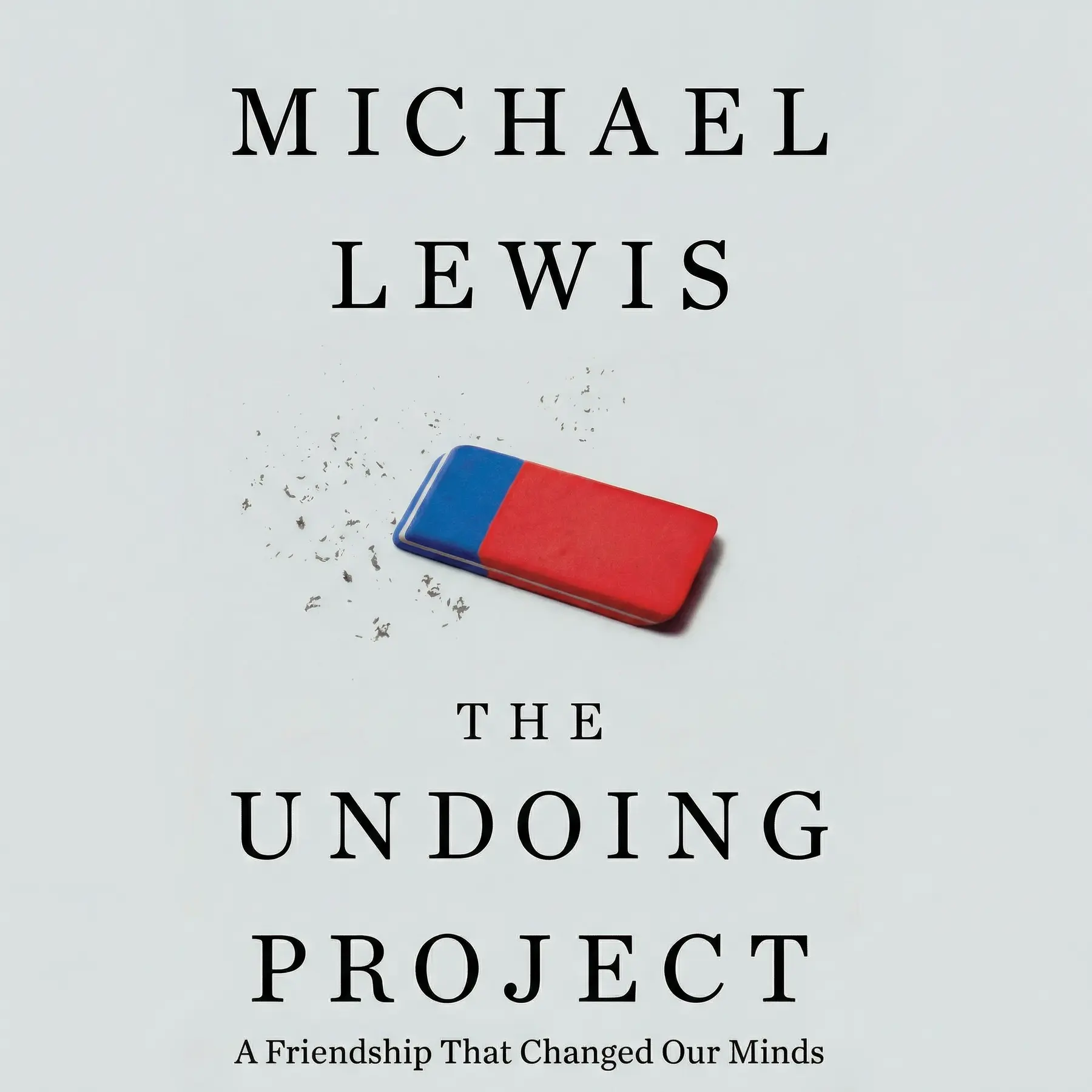
Listeners find this work to be an engaging experience with superb prose, and one listener mentions that it is a fast listen. They value the thorough portrayal of the bond between the two protagonists and their academic research, with one review emphasizing how it reinforces the power of data. Listeners consider the narrative intellectually stimulating, with one noting how it jolts readers' thinking about "thinking," while another points out how it connects a wide variety of subjects.
This book is essentially a brilliant "intellectual love story" that happens to explain the foundations of behavioral economics. Michael Lewis manages to capture the friction and the magic between Daniel Kahneman and Amos Tversky, two men who were complete opposites yet functioned as a single mind for years. You find yourself invested in their friendship just as much as their groundbreaking theories on human error. To be fair, the technical parts about probability can get dense, but the emotional payoff at the end left me deeply moved. It is rare for a book about psychology to make you feel this much. Lewis demonstrates how our minds are flawed, yet our connections are what truly define us. By the time I finished the final chapter, I was literally in tears.
Show moreWow, Michael Lewis has done it again by taking a subject that should be boring and making it feel like a high-stakes drama. The way he describes the pairing of Kahneman and Tversky—the messy introvert and the organized optimist—is just masterly. It’s a beautiful depiction of how two people can be more than the sum of their parts. The scientific studies mentioned, specifically how we prioritize minimizing regret over maximizing happiness, are absolute game-changers for how I view my own life. I found myself highlighting passages on every other page because the insights were so profound. This isn't just a book about psychology; it is a book about what it means to be human in an uncertain world. It is easily one of the best things I've read this year.
Show moreFew writers can humanize complex mathematical psychology like Michael Lewis does in this work. He takes the groundbreaking research of Kahneman and Tversky and turns it into a gripping narrative about the fragility of human relationships. The irony of two men who studied human error being unable to save their own partnership from personal bias is incredibly moving. I was fascinated by the exploration of how we are all "geniuses of rationalization," connecting dots after the fact to make life seem inevitable. The book is beautifully written, with crystalline prose that makes even the most difficult concepts feel intuitive. It’s a must-read for anyone who wants to understand why we do the things we do. It truly is a remarkable achievement in nonfiction storytelling.
Show moreEver wonder why we make such terrible decisions even when the facts are staring us in the face? Lewis tackles this by profiling the two Israelis who changed how we view the human mind. The opening chapter on the NBA and the Houston Rockets is classic Lewis, grounding complex theories in something as relatable as a basketball draft. Frankly, the shift from sports to high-level psychology is a bit jarring, but it works because the writing is so crystalline. He explains heuristics like "availability" and "representativeness" in a way that doesn't feel like a dry textbook. My only complaint is that the middle sections on Israeli faculty politics felt a bit long. Otherwise, it is a fascinating look at how we "undo" our own logic.
Show moreAs a fan of Moneyball, I was curious to see where Lewis would take his interest in data and intuition next. This book is the logical predecessor to that story, explaining the science behind why the "experts" often get it wrong. The relationship between Kahneman and Tversky is the heart of the narrative, and Lewis depicts their collaborative genius with a great sense of irony. It’s amazing to think that two psychologists could revolutionize the field of economics. The book does a wonderful job of showing how their work influenced everything from medical diagnoses to the Israeli Air Force. While some of the mathematical puzzles were a bit of a hurdle, the clarity of the prose kept me engaged. It really makes you second-guess your own gut instincts.
Show morePersonally, I find behavioral economics usually puts me to sleep, but Lewis has a gift for accessibility. He turns the "Undoing Project" into a page-turner by focusing on the intense human bond between these two geniuses. The book reinforces the power of data over intuition, showing how even the smartest people are prone to systematic errors. I especially enjoyed the parts about how framing a problem can completely change our decision-making process. The tension of their eventual estrangement was handled with such poignancy that I felt like I was watching a tragedy unfold. My only minor issue was the first chapter on basketball, which felt a bit like a recycled article. Aside from that, it is an excellent and thought-provoking read for anyone who thinks they are a logical person.
Show moreThe chapter on the Israeli military and how Kahneman developed tests for soldier recruitment was worth the price of the book alone. It provides such a unique context for how these world-changing ideas were born out of necessity during times of war. Lewis balances the heavy science with lighthearted anecdotes, creating a narrative that is both informative and entertaining. I loved learning about the "A over B" logic and how our minds create stories to make the world seem predictable. The book is a quick read despite the complexity of the themes involved. It’s a great reminder that our minds are essentially deterministic devices thrown into a probabilistic universe. This is a solid four-star effort that will definitely change the way you think about thinking.
Show morePicked this up on a whim after seeing so much buzz on my Goodreads feed. It really jolts your thinking and forces you to confront the cognitive illusions that bias your daily choices. The way Lewis ties together medical diagnoses, NBA draft picks, and the Nobel Prize is nothing short of brilliant. Even though some of the biographical stuff about their time in Israel felt a bit dense, the overall message about the weakness of expert judgment is powerful. It’s a quick read that packs a heavy intellectual punch. I came away from it feeling much more skeptical of my own "gut feelings." If you want to understand the modern world, you need to understand the work of these two men. Lewis is the perfect guide for that journey.
Show moreWhile the subject matter is undeniably fascinating, the execution felt a little disjointed compared to Lewis’s previous hits. The author tries to mirror the confusion of his subjects by occasionally making the narrative feel a bit scattered. Truth is, I struggled to get through the thicket of academic history at the beginning before the real story took hold. I wanted more about the actual experiments and less about the granular details of their childhoods in war-torn Europe. However, once the book focuses on their "love story" and eventual breakup, it becomes much more compelling. It is a decent read for those interested in the history of ideas, but it lacks the narrative drive of The Big Short. It’s a bit of an academic slog in places.
Show moreNot what I expected from a Michael Lewis book, to be quite honest. I was hoping for a punchy analysis of modern decision-making, but instead, I found myself bogged down in the minutiae of 1960s faculty politics. The pacing is incredibly slow, and the biographical sections felt like they could have been trimmed by a hundred pages. Look, I understand that Kahneman and Tversky are giants in their field, but the level of detail regarding their specific personality quirks was overkill. I actually preferred Kahneman’s own book, Thinking, Fast and Slow, which covers the same scientific ground with more focus. If you are looking for a fast-paced thriller about the world of finance or sports, this is not it. It felt like a biography masquerading as a science book.
Show more
Masaji Ishikawa
Ben Macintyre

Richard Wiseman

James Shapiro

AUDIO SUMMARY AVAILABLE
Get the key ideas from The Undoing Project by Michael Lewis, plus 5,000+ more titles in English and Thai.







