

Abortion: Our Bodies, Their Lies, and the Truths We Use to
Jessica Valenti
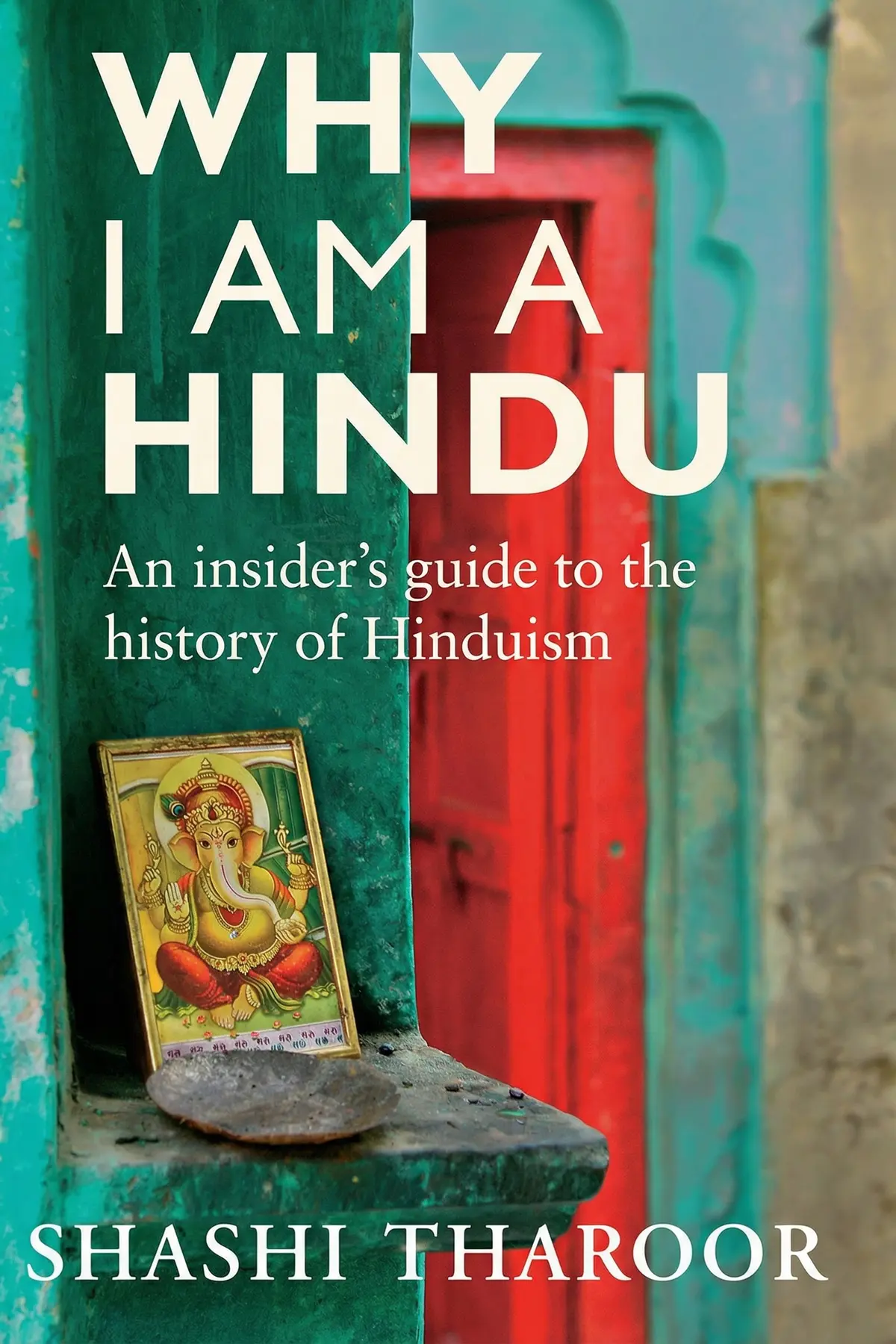
A profound exploration of Hindu identity that contrasts the religion’s ancient tradition of pluralism with the rising tide of exclusionary nationalism, offering a vision for a more inclusive future for India.
2 min 13 sec
When we think about the concept of secularism, those of us in the West often envision a strict wall between the church and the state. It is an idea rooted in the removal of religious influence from public governance. However, if you look at the history of India, you find a very different interpretation of that same word. For centuries, India has been a vibrant tapestry of Hindus, Buddhists, Muslims, Sikhs, and many others living side by side. In this context, secularism wasn’t about the absence of religion, but rather about the state’s refusal to favor one faith over the others. It was a commitment to pluralism.
Today, that foundational ideal is facing a significant challenge. Shashi Tharoor, in his insightful exploration of his own faith, argues that the soul of India is currently being contested. At the heart of this struggle is the rise of Hindutva, or “Hinduness,” an ideology championed by the nation’s current ruling party. This movement seeks to redefine what it means to be Indian, shifting the national identity away from multiculturalism and toward a narrow, religious definition that often excludes or marginalizes non-Hindu citizens.
The consequences of this shift are visible in the headlines and on the streets: a rise in social friction, episodes of intolerance, and even the literal neglect of historical monuments that don’t fit the new nationalist narrative. But Tharoor suggests that the answer to this modern crisis isn’t to abandon religion, but to truly understand it. By looking back at the millennia-old history of Hinduism, we find a tradition that is defined not by rigid rules or exclusion, but by an incredible capacity for diversity and tolerance.
In the following discussion, we will explore why Hinduism is fundamentally different from the monotheistic faiths of the West, how it historically embraced other religions as brothers rather than enemies, and where the current nationalist movement draws its controversial inspirations. This is a journey through the past to find a better path for the future—a reminder that being a proud Hindu can, and perhaps should, go hand in hand with being a champion of universal acceptance.
2 min 32 sec
Discover how Hinduism differs from other major world religions by prioritizing personal spiritual exploration over rigid dogmas, allowing every believer to chart their own unique path.
2 min 38 sec
Explore the historical roots of Hindu tolerance and learn how the faith has traditionally viewed other religions as valid and valuable sources of spiritual wisdom.
2 min 37 sec
Uncover the origins of the Hindutva movement and how it seeks to replace India’s pluralistic identity with a more rigid and exclusionary religious nationalism.
2 min 21 sec
Examine how the current political climate in India has led to the marginalization of minorities and the neglect of the country’s diverse cultural heritage.
2 min 31 sec
Understand the broader societal costs of religious fundamentalism, from the reversal of progressive social values to the distortion of scientific history.
2 min 25 sec
Learn why the future of India depends on Hindus speaking out against extremism and returning to their religion’s core values of inclusivity and scientific curiosity.
1 min 37 sec
The central message of this exploration is that Hinduism is a faith of vast depth and ancient tolerance, but it is currently being hijacked by political interests that favor exclusion over inclusivity. This shift doesn’t just threaten the well-being of religious minorities; it endangers the very foundation of India as a democratic and innovative society. For thousands of years, the Hindu tradition has been an “open-source” spiritual path, allowing for an incredible variety of beliefs and practices. It is a religion that has historically welcomed other faiths as brothers, contributing to a rich, multicultural identity.
However, the rise of Hindutva has introduced a rigid, dogmatic nationalism that seeks to narrow the definition of what it means to be Indian. By tracing the ideological roots of this movement and observing its impact on modern governance—from the neglect of historical monuments to the rise of social violence—we see a clear departure from the religion’s true spirit. The author’s call to action is clear: to save both the faith and the nation, Hindus must reclaim their tradition of pluralism.
Being a proud Hindu doesn’t mean rejecting others; it means embracing the diversity that has always been the religion’s greatest strength. By speaking out against extremism and returning to the values of intellectual curiosity and universal respect, the people of India can ensure that their future is as bright and inclusive as the best parts of their past. The path forward lies in recognizing that the true strength of a culture is measured not by how it excludes, but by how much it can hold within its heart.
Why I Am a Hindu offers a comprehensive examination of one of the world's oldest religions from the perspective of an active practitioner and intellectual. Shashi Tharoor delves into the expansive history of Hinduism, illustrating its unique status as a faith without a single dogma or centralized authority. He highlights the religion's historical capacity for absorbing different ideas and respecting diverse paths to spiritual truth, contrasting this with the modern political movement known as Hindutva. The book serves as both a cultural history and a political critique. Tharoor explains the core tenets of Hindu philosophy—such as the search for self-realization and the concept of Brahman—while simultaneously addressing the challenges posed by contemporary religious fundamentalism. By tracing the roots of nationalist ideology back to its early twentieth-century proponents, the author warns against the abandonment of India’s secular and pluralistic heritage. Ultimately, it is a call to reclaim a version of Hinduism that is rooted in acceptance, intellectual curiosity, and true spiritual freedom, promising a way forward that honors tradition without succumbing to bigotry.
Shashi Tharoor is an Indian parliamentarian, author, and former diplomat. He has served as a member of the Indian National Congress party and has represented the district of Thiruvananthapuram in Kerala since 2009. His extensive body of work includes the novel Riot, published in 2001, and An Era of Darkness, a 2017 study regarding the impact of British colonial rule in India. Tharoor’s career spans high-level international diplomacy and domestic politics, making him a prominent voice on Indian history and identity.
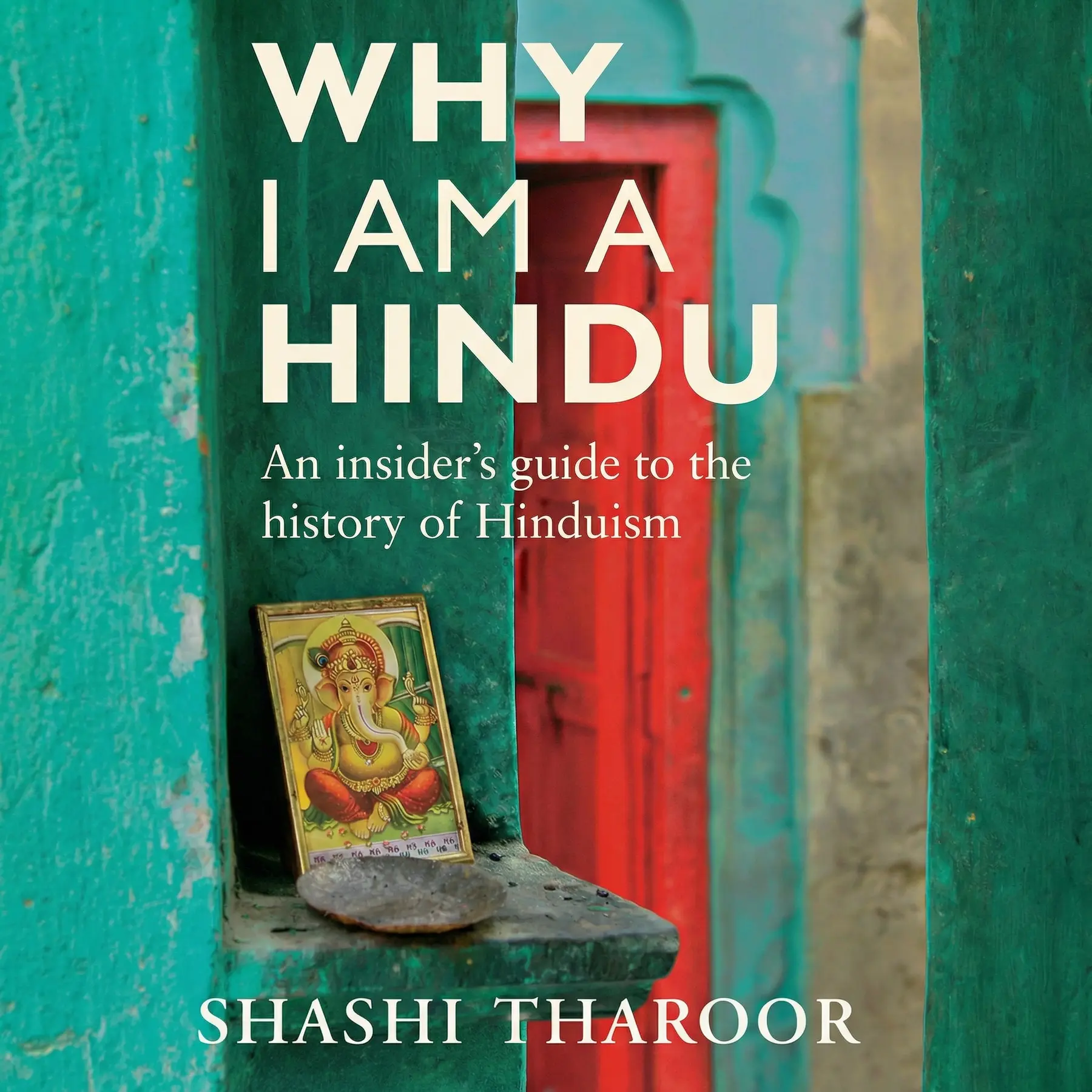
Listeners find the book immensely pleasurable and appreciate the engaging survey of Hinduism it provides. The title's instructional benefit meets with varied reactions.
This book is a refreshing and deeply personal exploration of a faith that is often misunderstood in the modern era. Shashi Tharoor manages to articulate the vast, pluralistic nature of Hinduism with a grace that is rare in contemporary non-fiction. I was particularly moved by his explanation of 'Ekam Sat Vipra Bahudha Vadanti'—the idea that truth is one, though the sages call it by many names. It captures the inclusive spirit I grew up with but couldn't always put into words. While some might find his vocabulary a bit daunting, I found it added a layer of intellectual richness to the theological discussions. It is more than just a religious text; it is a call to reclaim a heritage of tolerance from those who seek to narrow it. Every chapter on the great reformers like Swami Vivekananda felt like a necessary history lesson for our times.
Show moreFinally got around to reading this, and I must say it’s a masterclass in articulating a personal philosophy. Tharoor beautifully contrasts the inclusive, 'way of life' Hinduism with the more restrictive political versions we see today. The way he traces the growth of the religion from the all-pervading Brahman to the legends of the Ithihasas is simply masterful. I found myself reliving the stories told to me as a child, but with a new intellectual framework to support them. Truth is, we need more voices that highlight the pluralistic and open-ended nature of our heritage. It’s an eye-opener that makes you feel a suppressed pride in the intellectual depth of our ancestors. While the political sections are sharp and relentless, they serve as a necessary warning about how easily faith can be misused. This is essential reading for both Hindus and non-Hindus alike.
Show moreEver wonder how a religion as ancient as Hinduism remains so incredibly flexible? This book provides a fascinating overview that is both educational and deeply engaging. Tharoor does an excellent job of distilling complex concepts from the Gita and the Puranas into something digestible for a modern audience. Personally, I appreciated the sections on the 'Great Souls' of the faith; reading about Adi Shankara and Ramakrishna Paramahamsa was riveting. My only real gripe is that the author occasionally repeats himself, which makes the middle section drag a bit. It’s almost as if he’s trying too hard to reinforce his points about plurality. Despite the heavy political tilt in the latter chapters, the book remains a vital read for anyone looking to understand the core tenets of Hindu thought beyond the headlines.
Show moreAs someone who grew up in a traditional household, I found the early chapters incredibly nostalgic and well-researched. Tharoor has a gift for taking the abstract concepts of the Upanishads and making them feel relevant to a 21st-century reader. The educational value here is quite high, even if the style is occasionally a bit wordy. I loved the exploration of how Hinduism assimilated various beliefs into its fold over millennia. However, the transition into 'Political Hinduism' was a bit of a let-down for me. It felt less like a book about religion and more like a polished campaign speech toward the end. Still, the first two sections are so well-written that they justify the purchase. It’s a bold attempt to reclaim a narrative that has been hijacked by extremists, and for that, Tharoor deserves credit.
Show moreAfter hearing so much buzz about this release, I decided to dive into Tharoor’s take on his own faith. I found it to be a compelling and timely reminder of what Hinduism actually stands for—inclusion, tolerance, and a search for individual truth. The way he distinguishes between the 'Brahman' of the Upanishads and the anthropomorphic gods of the Vedas was particularly enlightening. It’s a thick book with some very long sentences, but the intellectual payoff is worth the effort. My only criticism is the lack of a glossary for some of the more obscure philosophical terms. Occasionally, I felt like I was groping in the dark during the deeper theological passages. Overall, it’s a solid 4-star read that successfully highlights why a 'way of life' is still relevant in a world of rigid dogmas.
Show morePicked this up during a long flight and found myself totally engrossed in the historical anecdotes and the evolution of the Puranas. Tharoor’s intellect is on full display here, and his ability to track the possible roads Hinduism took to evolve into its current form is a pleasure to read. Not gonna lie, the political sections in the latter half were a bit jarring, but they are clearly rooted in a genuine concern for the country's future. It’s an ambitious book that tries to bridge the gap between ancient wisdom and current events. While the second part can feel like a bit of a lecture, the overall message of plurality is one that needs to be heard. It’s an enjoyable, educational, and at times provocative look at a religion that defies easy definition.
Show moreTharoor’s prose is, as usual, a dense forest of sophisticated vocabulary that can be both a delight and a distraction for the average reader. The first half of the book is a masterclass in theological history, tracing the evolution from the Vedas and Upanishads to the more relatable anthropomorphic deities. I learned quite a bit about the philosophical underpinnings of my own culture. However, the narrative takes a sharp, almost jarring turn in the second half. It shifts from a dispassionate chronicler of faith to a politician’s critique of his rivals. To be fair, his analysis of Hindutva is logically sound, but it felt like I was reading two completely different books stitched together. The constant focus on political entities like the RSS and BJP eventually felt like a monotonic rant that detracted from the spiritual 'Why' promised by the title.
Show moreThe chapter on Swami Vivekananda was the absolute highlight for me, hitting home with a searing effect that felt very contemporary. Shashi Tharoor is undeniably adroit at explaining complex ideas with logical reasoning, and his passion for the subject shines through in the first hundred pages. But frankly, the book suffers from a bit of an identity crisis. Is it a theological guide or a political critique? The author dons the garb of a politician too heavily in the final sections, and the objectivity of the topic suffers because of it. I was hoping for more personal anecdotes about his own practice rather than a dissection of his political rivals. It’s an interesting read for the historical context, but be prepared for a heavy dose of partisan rhetoric once you get past the midway point.
Show moreFrankly, I think the author tries to do too much in one volume. The first part is a beautiful, almost poetic tribute to the diversity of Hindu thought, which I thoroughly enjoyed. It made me want to go back and read the Bhagavad Gita with fresh eyes. But then, the tone shifts into a repetitive critique of the RSS and BJP that feels like it belongs in a different book entirely. While his points about cow vigilantism and communal violence are important, they create a monotonic rant that overshadows the earlier spiritual insights. To be fair, Tharoor writes with a level of eloquence that few can match, but the 'deception' of the title remains a nagging issue. It’s an okay overview, but I wouldn't call it his best or most balanced work.
Show moreNot what I expected from the title at all, and I feel somewhat let down by the execution. The book starts with a promising premise of explaining why the author is a Hindu, but it quickly devolves into a political manifesto. It’s a classic case of moving north but aiming south; you expect a spiritual journey, but you get a lecture on the failures of the current government. Tharoor’s smug diction and elite articulation often feel like they are masking a lack of objective depth in the religious sections. Look, I don't mind political critique, but when it takes up nearly 30% of a book that claims to be about faith, it feels like a deception theory in practice. If you’re looking for a deep, unbiased dive into Hindu philosophy, you might find this account a bit too colored by the author’s day job as a politician.
Show moreJessica Valenti
Marianne Williamson

Yanis Varoufakis
Deepak Chopra
Yuval Noah Harari
Pico Iyer

Jacinda Ardern

Pankaj Mishra

Alcoholics Anonymous World Services
AUDIO SUMMARY AVAILABLE
Get the key ideas from Why I Am a Hindu by Shashi Tharoor, plus 5,000+ more titles in English and Thai.







