
15 min 40 sec
Why We Do What We Do: Understanding Self-Motivation
Explore the profound psychology of human motivation and discover why external rewards often backfire. This summary reveals how nurturing autonomy and competence leads to more creative, fulfilling, and authentic lives.
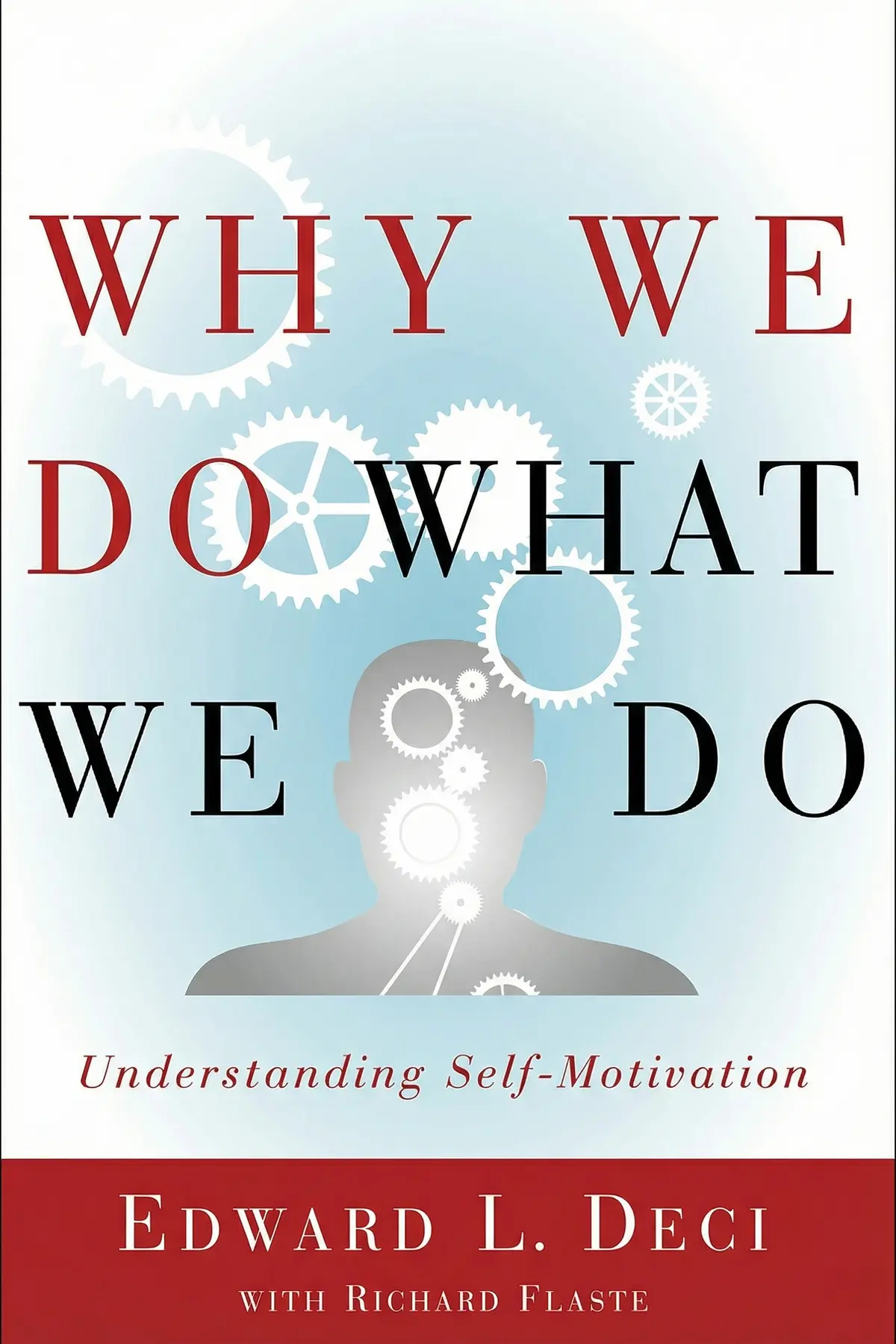
Table of Content
1. Introduction
2 min 04 sec
Think about the last time you felt truly excited about a project. Maybe you were lost in a hobby, or perhaps you were tackling a difficult problem at work that you genuinely cared about. In those moments, time seems to vanish. You aren’t checking the clock, and you certainly aren’t thinking about a paycheck or a gold star. You are doing the task for the simple, pure joy of doing it. This is what psychologists call intrinsic motivation, and it is the hidden engine behind our greatest achievements.
However, in our modern world, we often try to motivate people by doing the exact opposite. We use bonuses, grades, deadlines, and the threat of punishment to get things done. We assume that if we want more of a behavior, we should reward it, and if we want less, we should penalize it. But what if this approach is actually fundamentally flawed? What if the very tools we use to inspire performance are actually the things that drain our energy and kill our creativity?
In this exploration of Why We Do What We Do, we are going to dive deep into the science of self-motivation. We will look at why the traditional methods of control often backfire and how they can turn a passionate student into an indifferent one or a dedicated employee into a clock-watcher. We will uncover the three essential human needs—autonomy, competence, and relatedness—that must be met for us to truly thrive.
The central throughline of this journey is that humans are not passive machines that need to be pushed and pulled by external forces. We are active, growth-oriented organisms. When we understand how to support that natural drive rather than trying to control it, we unlock a version of ourselves that is more responsible, more productive, and significantly more satisfied. Whether you are a leader trying to inspire a team, a parent trying to guide a child, or simply someone looking to reclaim your own sense of purpose, understanding these psychological mechanics is the key to a more authentic life. Let’s begin by looking at the surprising way that external rewards can actually get in our way.
2. The Hidden Downside of External Rewards
2 min 39 sec
Discover why offering money or prizes for a task someone already enjoys can actually decrease their long-term interest and turn play into work.
3. The Power of Autonomy and Choice
2 min 21 sec
Uncover how providing meaningful choices and acknowledging perspectives can transform a controlling environment into one that fosters genuine engagement.
4. The Importance of Feeling Competent
2 min 07 sec
Learn why the thrill of mastery is a primary driver of behavior and how the right kind of feedback can fuel a state of flow.
5. Internalizing Values and Growing the Self
2 min 22 sec
Explore how we adopt society’s rules and make them our own, distinguishing between doing things out of guilt versus doing them out of true conviction.
6. The False Self and the Quest for Authenticity
2 min 19 sec
Analyze how societal pressures can create an ego-driven ‘false self’ and why true self-esteem is independent of external achievements.
7. Conclusion
1 min 48 sec
As we wrap up our look at Why We Do What We Do, the core message is clear: the way we try to motivate ourselves and others is often fundamentally misaligned with how our brains and hearts actually work. The ‘carrot and stick’ approach might yield short-term compliance, but it comes at the cost of long-term creativity, passion, and well-being. By treating people like pawns to be moved, we rob them of their vitality and their sense of agency.
The alternative is to foster environments that support autonomy, competence, and relatedness. This doesn’t mean a lack of structure or a world without rules. Rather, it means creating structures that people can understand, participate in, and eventually integrate into their own sense of self. It means offering choices whenever possible, providing informational feedback that helps people master their craft, and acknowledging the human perspective in every interaction.
Whether you are a manager, a teacher, or simply someone trying to navigate your own life, the shift from control to autonomy support is transformative. It allows you to move away from the stress of ‘shoulds’ and ‘musts’ toward the freedom of ‘wants’ and ‘values.’ When we support the natural human drive for growth and self-determination, we don’t just get better results. We create a world where people are more authentic, more responsible, and more connected to what truly matters. The next time you find yourself reaching for a reward or a threat to get something done, take a moment to pause. Ask yourself: how can I support autonomy here instead? That simple shift in perspective could be the start of a much more fulfilling journey.
About this book
What is this book about?
Have you ever wondered why some goals keep you energized for months while others feel like a heavy chore from day one? This exploration of human behavior challenges the traditional carrot-and-stick approach to motivation that dominates our schools and workplaces. Instead of relying on bonuses or threats, it presents a compelling case for intrinsic motivation—the drive that comes from within when we feel truly in control of our actions. By examining the core psychological needs of autonomy, competence, and relatedness, you will learn how environments can either stifle or ignite human potential. The promise of this work is a roadmap for parents, managers, and individuals to move beyond mere compliance and toward genuine engagement. It explains how to foster a sense of responsibility that isn't fueled by guilt or pressure, but by a deep alignment with one's personal values. Ultimately, it’s about shifting from a life of being controlled to a life of authentic self-determination, where success is measured by more than just external benchmarks.
Book Information
About the Author
Edward L. Deci
Edward L. Deci is a renowned psychologist and professor recognized for his groundbreaking development of self-determination theory. He has spent decades researching how autonomy and competence influence human growth. Richard Flaste is an experienced writer and former editor at The New York Times, where he helped shape significant science coverage. Together, they combine rigorous academic research with accessible storytelling to explain the complexities of the human mind.
Ratings & Reviews
Ratings at a glance
What people think
Listeners consider this work a fundamental resource for grasping human actions, filled with the latest research and especially useful for educators and parents. They value the emphasis on internal drive and honoring personal independence, as one listener points out its effectiveness in assessing the motivation of students. Opinions on the prose are divided; while some consider it well-crafted, others characterize the language as overly scholarly and dull. The book’s tempo also draws varied responses, with some finding it engaging while others find the insights to be truly astonishing.
Top reviews
Narumon
Deci and Flaste have crafted a foundational text that should be required reading for every educator and parent. The way they break down the science of intrinsic motivation—specifically the needs for autonomy, competence, and relatedness—is nothing short of eye-opening. For years, I relied on praise and rewards to get my students to focus, but this book explains exactly why that backfires. It’s dense with data, yet the central message remains clear: we can't force people to be motivated; we can only create the conditions for them to motivate themselves. Some chapters felt a bit academic, but the insights into human behavior far outweigh the dry spells. If you want to understand the 'why' behind the choices we make, this is the book to pick up.
Show moreManop
After hearing about Self-Determination Theory for years, I finally went to the source, and I wasn't disappointed. This isn't just about 'how to get people to do stuff'; it’s a profound look at what it means to live an authentic life. The way Deci describes the 'master-slave' relationship we often have with ourselves was particularly haunting and accurate. It made me realize how much of my own behavior is driven by 'introjects' rather than genuine interest. It’s a dense read, but if you’re willing to take your time, it’s one of those rare books that can actually change how you interact with your children, your spouse, and yourself. Essential reading for anyone interested in the human psyche.
Show moreEleanor
Finally got around to reading this classic and it’s easy to see why it’s still referenced by every major psychologist today. The depth of the research into how rewards undermine intrinsic interest is staggering. It’s not just a 'feel-good' book; it’s backed by decades of laboratory experiments that challenge everything we think we know about management and education. I particularly appreciated the focus on 'competence' and how crucial it is for people to feel capable in order to stay motivated. Some might call the writing dry, but I found it refreshing to read something that prioritizes substance over flashy storytelling. It’s an essential addition to any social science library.
Show moreEnd
Wow. This isn't just a business or psychology book; it’s a manual for human dignity. Not gonna lie, I expected something a bit more 'how-to,' but what I got was a deep philosophical and scientific defense of the human spirit. The distinction between compliance and autonomy is something I’ll be thinking about for a long time. It really makes you question all the ways society tries to control us through 'carrots' and 'sticks.' While the academic language can be a bit much at times, the payoff is a much deeper understanding of what makes us tick. If you're tired of shallow self-help and want something with real meat on its bones, this is it.
Show moreKung
Ever wonder why carrots and sticks usually fail in the long run? This book provides a fascinating deep dive into why external rewards actually destroy the curiosity we’re born with. I’ve read a lot of pop-psychology books like Daniel Pink’s 'Drive,' but going back to the source material was well worth the effort. The discussion on how 'controlling' environments breed either compliance or defiance resonated with my own experiences in the corporate world. To be fair, it’s a bit dated—it was written in 1995—so some of the 'cutting-edge' research feels like common knowledge now. Still, the distinction between being autonomous and being independent is a nuance that most modern books miss.
Show morePalm
As a manager struggling with team engagement, this was a breath of fresh air. Look, we all know that money isn't everything, but Deci actually explains the mechanics of why that is. The concept that deadlines and surveillance actually drain enthusiasm was a tough pill to swallow, but it explains so much about our current office culture. The book provides a solid framework for how to support autonomy without losing control or accountability. My only gripe is that it gets a bit repetitive toward the end, and the tone shifts from 'scientist' to 'life coach' in a way that didn't always work for me. Still, the practical takeaways for leadership are invaluable.
Show moreHenry
Picking this up as a parent was the best decision I've made all year. The advice on limit-setting in an 'autonomy-supportive' way is worth the price of the book alone. It’s not about letting kids do whatever they want; it’s about acknowledging their perspective and providing choices so they can develop their own sense of responsibility. Truth is, the book is quite academic and definitely shows its age in the formatting, but the data is still incredibly relevant. I found the sections on the American vs. Bulgarian motivational models fascinating, even if they felt a little outside the main scope of the book. A solid, thought-provoking read that requires some mental heavy lifting.
Show moreSudarat
While the core message about self-determination is life-changing, the prose often feels like wading through thick mud. I appreciate the rigorous scientific backing, but the author repeats the same technical terms like 'autonomy' and 'introject' until they lose all meaning. Frankly, the first half of the book is brilliant and grounded, but the second half drifts into some questionable, pseudo-scientific territory regarding 'true spirits' and human nature. It feels like Deci wanted to turn a solid psychological study into a moral manifesto. It’s a 5-star concept trapped inside a 3-star reading experience. Recommended if you have the patience for dry, repetitive academic writing, but you might find yourself skimming the later chapters.
Show moreNadia
The first hundred pages are absolute gold, but the rest of the book feels like it's spinning its wheels. Deci presents a brilliant case for intrinsic motivation early on, but then he spends the remainder of the text repeating the same points with slightly different anecdotes. Personally, I found the tone a bit too 'preachy' in the later sections where he starts theorizing about the 'inner nature' of humans. It’s hard to stay engaged when the author uses the word 'autonomy' on every single page. That said, the core idea—that rewards often kill interest—is so important that I still think it's worth a look. Just don't feel guilty if you start skimming once you've gotten the gist.
Show moreBoss
I really wanted to like this, but the repetition of terms like 'autonomy' and 'introject' became unbearable by chapter five. The writing is incredibly dry and lacks the engaging examples you’d expect from a book aimed at a general audience. It felt more like reading a textbook than a guide to human motivation. The author's insistence on proving that humans are 'inherently good' felt less like science and more like wishful thinking. While the central idea that rewards can be harmful is interesting, the book is overlong and could have been summarized in a twenty-page essay. Unless you’re an academic in the field, this is a bit of a slog to get through.
Show moreReaders also enjoyed
59 Seconds: Change Your Life in Under a Minute
Richard Wiseman
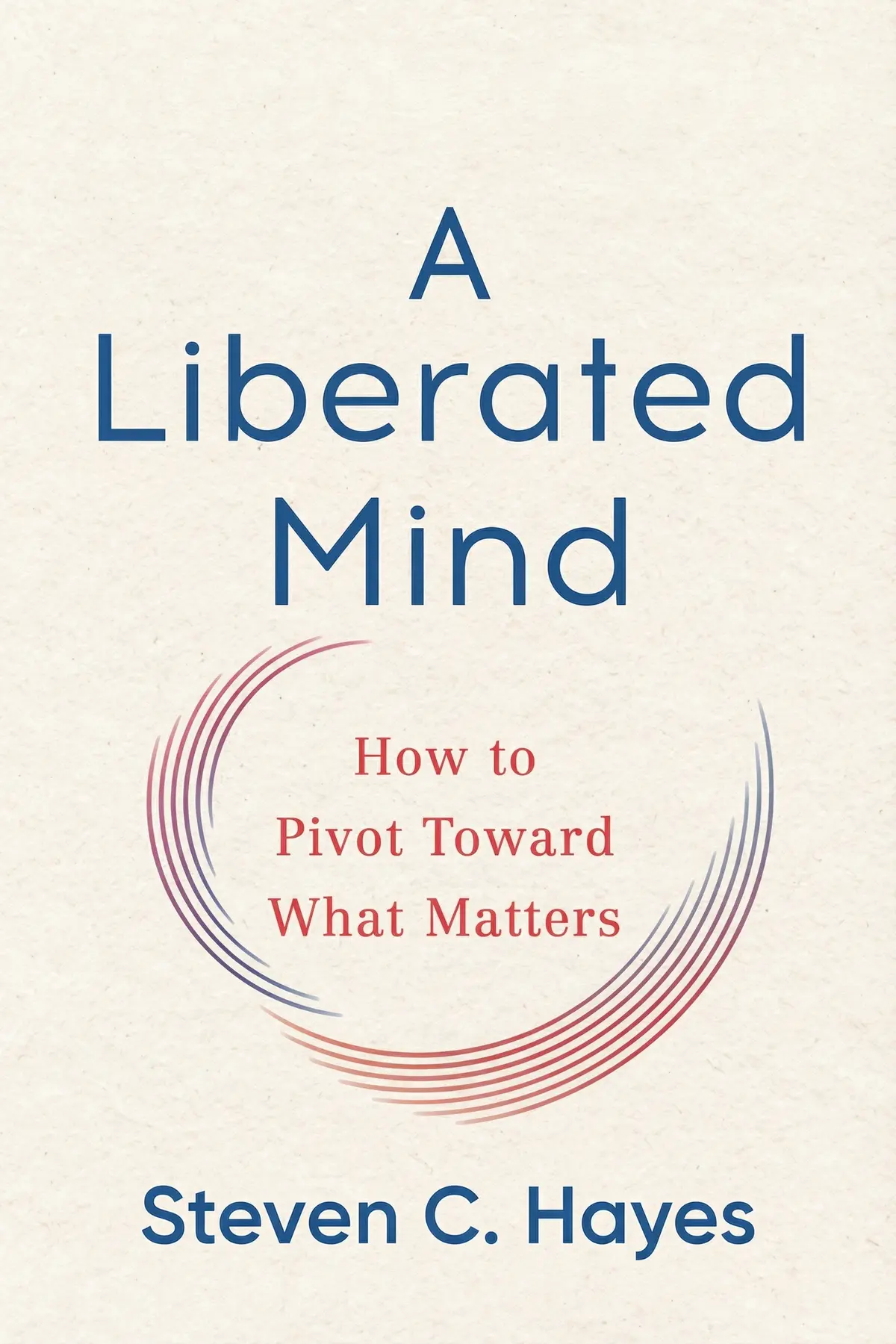
A Liberated Mind: How to Pivot Toward What Matters
Steven C. Hayes
Acting with Power: Why We Are More Powerful Than We Believe
Deborah Gruenfeld
Age of Propaganda: The Everyday Use and Abuse of Persuasion
Anthony Pratkanis
AUDIO SUMMARY AVAILABLE
Listen to Why We Do What We Do in 15 minutes
Get the key ideas from Why We Do What We Do by Edward L. Deci, plus 5,000+ more titles in English and Thai.
- 5,000+ titles
- Listen as much as you want
- 7-day free trial
- Cancel anytime







