
21 Lessons for the 21st Century
Yuval Noah Harari
Explore how socialist policies can foster genuine gender equality. This summary examines the link between economic independence and personal fulfillment, showing how social safety nets transform women's professional and romantic lives.
2 min 22 sec
Have you ever stopped to wonder how the broad, sweeping rules of a country’s economy might trickle down into the most private corners of your life? We often talk about socialism and capitalism in terms of tax brackets, industrial regulations, or the stock market. But what if these systems also shaped your relationships, your sense of security, and even your experiences behind closed doors?
In recent years, the conversation around socialism has seen a massive resurgence. For many, it represents a potential solution to the crushing weight of modern economic instability, offering a vision of a world where healthcare, education, and housing aren’t just for those who can afford them, but are guaranteed rights for everyone. But there is a specific angle to this debate that often gets overlooked: the way these economic structures affect women.
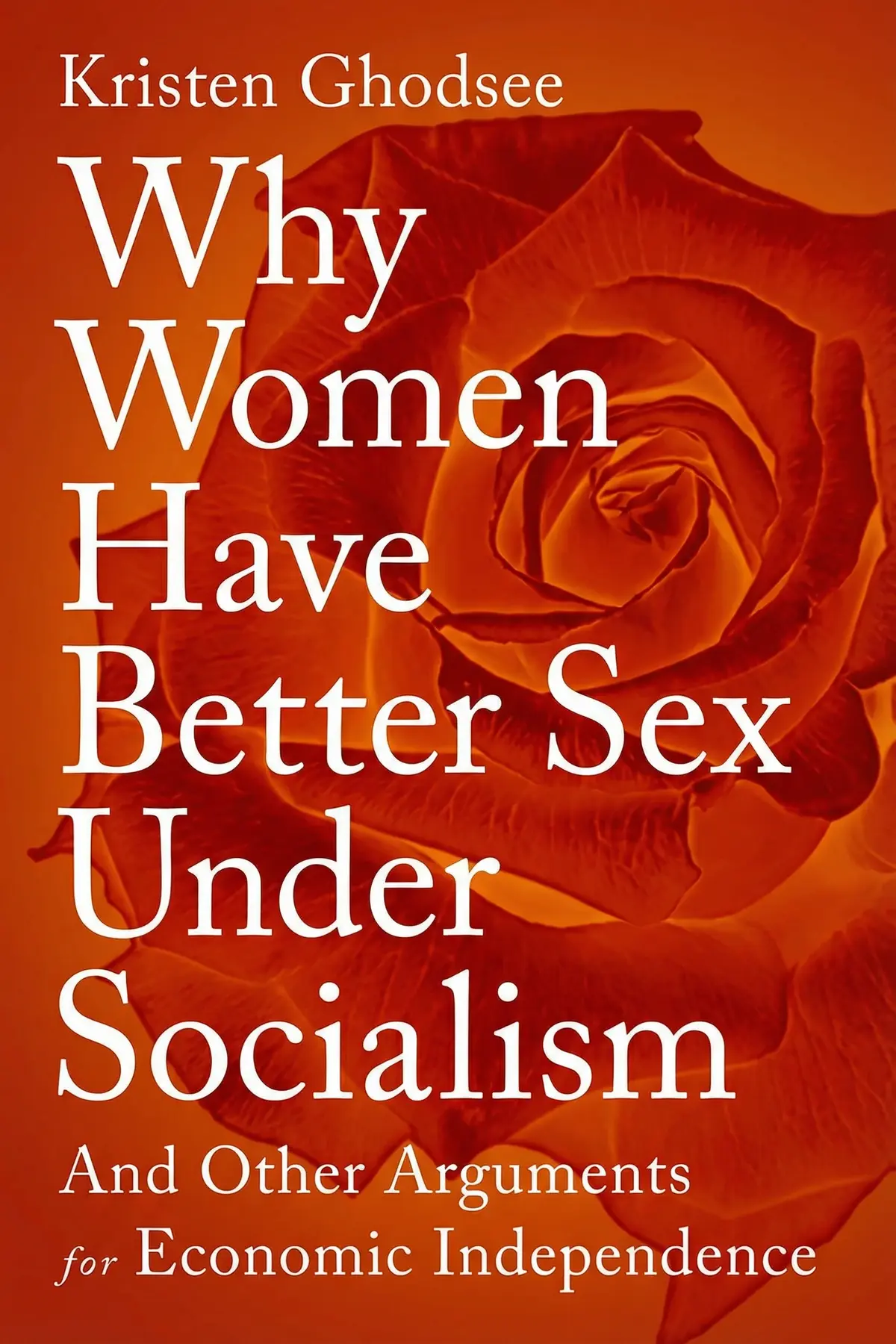
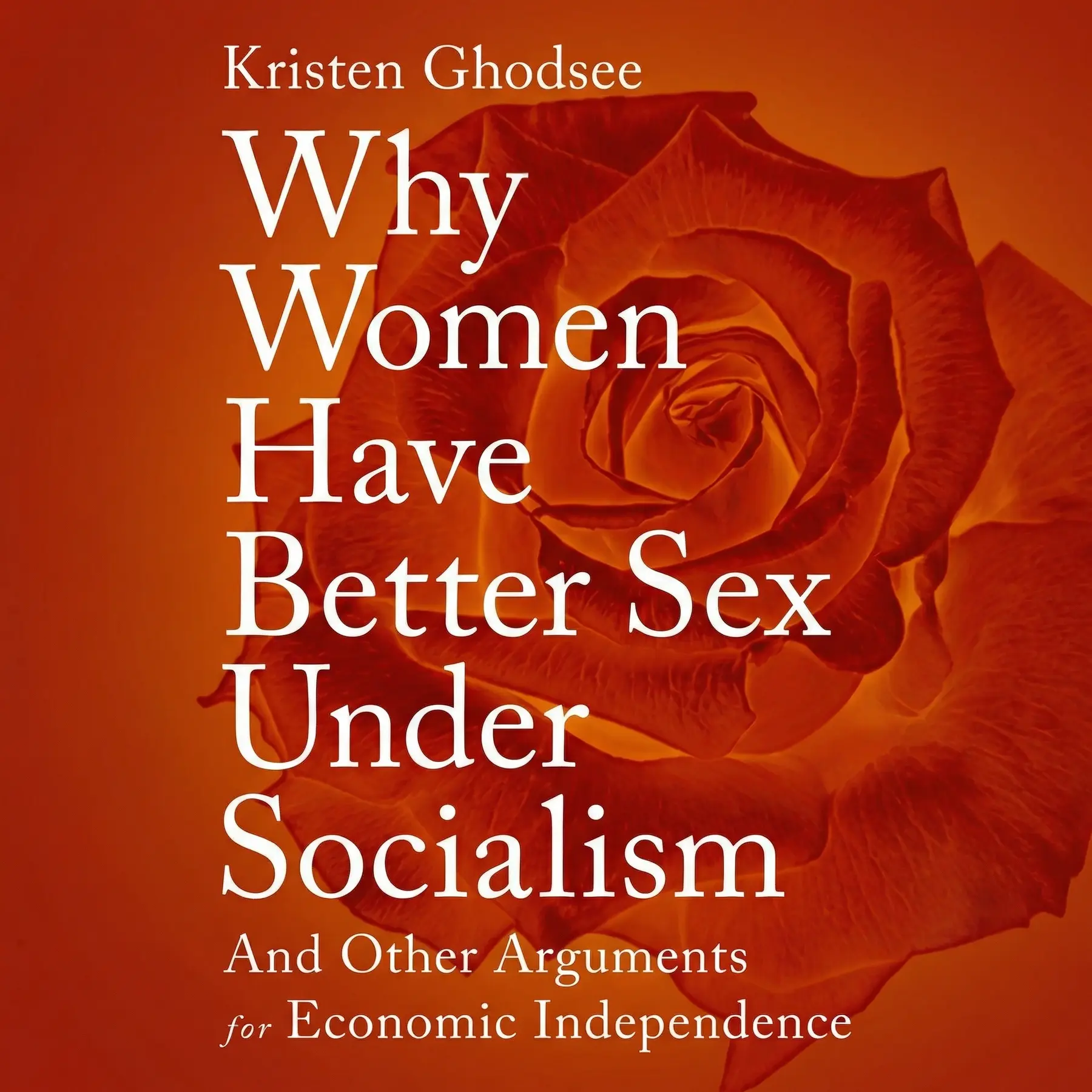
The title of the book we are exploring today, Why Women Have Better Sex Under Socialism, might sound like a provocative hook, but it points to a much deeper and more serious investigation. It’s not just about the physical act; it’s about the foundation of independence and equality that allows a person to truly thrive in every area of their life. When we look at the way capitalism operates, especially in its modern ‘neoliberal’ form, we see a system that often relies on the unpaid labor of women and keeps them in a state of financial vulnerability. This vulnerability isn’t just a professional hurdle; it alters the power dynamics in the home and the bedroom.
Over the course of this summary, we’re going to look at the different shades of socialism—from the rigid state-controlled versions of the past to the democratic models we see in Northern Europe today. We’ll explore why the ‘free market’ often isn’t so free for women, how the ‘double burden’ of work and home life weighs them down, and why having the economic freedom to walk away from a bad situation is the ultimate prerequisite for a good life.
By the end, you’ll see that the argument for socialist policies isn’t just about redistributing wealth; it’s about redistributing power and dignity. We will dive into historical data, examine the hidden costs of motherhood in capitalist societies, and look at a fascinating ‘natural experiment’ that occurred when Germany was split in two. This isn’t a dry lecture on economics; it’s an exploration of how we can build a society where every individual has the autonomy to pursue their own happiness, free from the constraints of financial desperation. Let’s begin this journey by clarifying exactly what we mean when we talk about the ‘S-word.’
2 min 32 sec
Understand the crucial differences between authoritarian regimes and democratic welfare states to see how we can adopt beneficial policies for a more equitable future.
2 min 14 sec
Discover how state-supported childcare and career advancement once allowed women in socialist countries to achieve remarkable professional milestones and financial autonomy.
1 min 59 sec
Explore how the ‘free market’ uses demographic assumptions to systematically underpay women, creating a cycle of financial dependence that is difficult to break.
1 min 49 sec
Examine the ‘second shift’ phenomenon where working mothers shoulder the majority of unpaid domestic labor, leading to systemic professional disadvantages and burnout.
1 min 49 sec
Consider the long-term career damage caused by periods of stay-at-home parenting and why private solutions often fail to bridge the financial divide.
1 min 51 sec
Analyze how neoliberalism dismantles social support systems, leaving women uniquely vulnerable to economic shifts and personal crises.
1 min 56 sec
Uncover why women’s work is often valued less by the market and how legislative intervention is necessary to correct systemic pay imbalances.
1 min 59 sec
Learn how mandatory representation requirements in democratic socialist countries break the glass ceiling more effectively than voluntary measures.
1 min 55 sec
Analyze how capitalist economies rely on the free domestic labor of women to sustain themselves, effectively subsidizing corporate profits with personal sacrifice.
2 min 21 sec
Contrast the romantic lives of women in East and West Germany to see how economic independence directly correlates with relationship satisfaction and personal freedom.
2 min 12 sec
As we reach the end of this exploration, it becomes clear that the argument for socialist policies is far more than a debate about tax rates or government size. It is a fundamental question about what kind of lives we want to live and what kind of freedom we value. Through the lens of Kristen Ghodsee’s work, we’ve seen how the structures of our economy—the ways we handle childcare, healthcare, and wages—reach deep into our personal identities and our most private relationships.
We’ve looked at the history of state socialism, not to advocate for its authoritarianism, but to recognize that it successfully solved certain problems that capitalism still ignores. We’ve seen how democratic socialism in Scandinavia provides a modern blueprint for a society that balances market efficiency with human dignity. And we’ve examined the harsh realities of neoliberalism, which often leaves women choosing between their professional survival and their family responsibilities.
The throughline of all these ideas is autonomy. True freedom isn’t just the absence of a dictator; it’s the presence of the resources you need to live a life of your own choosing. When a woman is not economically dependent on a partner or a predatory employer, she is free to pursue her passions, to advocate for her own needs, and to build relationships based on mutual respect and desire rather than financial necessity.
So, what is the actionable takeaway from all of this? It is to recognize that our personal struggles—the burnout, the pay gap, the lack of work-life balance—are not individual failures. They are systemic outcomes of an economic model that treats care-work as a free resource. Moving forward, we can advocate for policies that socialized these burdens: universal childcare, paid parental leave, and strong labor protections.
By building a stronger social safety net, we aren’t just improving the economy; we are improving the quality of human connection. We are creating a world where every person, regardless of their gender, has the security to be bold, the freedom to be independent, and the opportunity to find true fulfillment. The path to a better life, and indeed a better romantic life, begins with the realization that we are all better off when we look out for one another. Thank you for listening to this BookBits summary.
Why Women Have Better Sex Under Socialism investigates the intersection of political economy and intimate life. It argues that the pressures of neoliberal capitalism—such as high childcare costs and the gender pay gap—create a state of dependency that limits women's autonomy. By looking at historical examples from the Eastern Bloc and contemporary models in Scandinavia, the book explores how state-supported services like universal healthcare and mandated parental leave can alleviate these burdens. The promise of the book is a provocative look at how shifting toward democratic socialism could improve everything from career trajectories to the quality of romantic relationships. It provides a nuanced perspective on what we can learn from past regimes while advocating for a future where economic security allows for more authentic and equal human connections.
Kristen R. Ghodsee is a professor of Russian and East European Studies at the University of Pennsylvania. An expert on gender and post-socialist life, she has authored six scholarly books and written for major outlets like The New York Times, Foreign Affairs, Jacobin, and Dissent.
Listeners find the text highly accessible and value the caliber of its research, while one listener specifically praises the detailed investigation into socialism throughout Eastern Europe.
As someone who grew up in the US during the tail end of the Cold War, the history of Eastern Europe was always presented through a very specific, grim lens. This book completely flipped the script for me. Ghodsee is an academic historian, and her research into the state-sponsored programs of the Eastern Bloc is genuinely eye-opening. She explores how guaranteed employment, state-funded childcare, and legal protections for mothers actually provided women a level of autonomy that many in the West still lack today. Truth is, when you aren't tethered to a partner just for healthcare or rent, your romantic choices change entirely. The writing is accessible and doesn't get bogged down in dense jargon, making it a quick but profound read. It’s not about praising dictatorships, but about looking at what actually worked for women's independence. I highly recommend it if you’re tired of the 'girlboss' version of feminism that only helps those at the top.
Show morePicked this up because the title made me laugh, but I stayed for the rigorous deep-dive into how economic structures dictate our most intimate choices. Ghodsee’s explanation of sexual economics theory is a total game-changer for anyone trying to understand why dating feels so broken right now. When women have their own sources of income and the state guarantees social security, they don't have to stay in unfulfilling or abusive relationships for survival. The book is incredibly readable and the research quality is top-notch, pulling from decades of work in Eastern Europe. I loved the way she dispels the myth that everyone under socialism was just a miserable prisoner. It turns out that when your basic needs are met, you actually have the mental space to enjoy your life and your partners. It’s an essential read for anyone interested in the intersection of politics and personhood.
Show moreThe chapter on sexual economics theory was a total revelation for me. I’ve always felt that the 'American model' of dating was weirdly transactional, but I couldn't put my finger on why until reading this. Ghodsee explains that in a system where women are economically dependent on men, sex becomes a commodity to be traded for security. In contrast, under systems with strong safety nets, sex can just be... sex. In my experience, this is one of the few 'feminist' books that actually looks at the root cause of inequality rather than just telling women to 'lean in' or work harder. It’s a short, punchy book that doesn't waste any time getting to the point. Even if you don't agree with every one of her conclusions, the data she presents about women's happiness in the former Eastern Bloc is impossible to ignore.
Show moreWow, I didn't realize how much my financial anxiety was actually killing my libido until I read this. It sounds like a joke, but Ghodsee makes a scientifically grounded case for why the stress of capitalism is fundamentally bad for our sex lives. The book is packed with data from the Cold War era that shows women in East Germany reported much higher levels of sexual satisfaction than their counterparts in the West. Why? Because they had job security, free childcare, and didn't have to worry about being homeless if they dumped a mediocre boyfriend. This book is a quick, engaging read that manages to make complex economic theories feel totally relevant to your everyday life. It’s not just a history lesson; it’s a blueprint for a better way of living. If you’ve ever felt like your relationship was being crushed by the weight of bills and housework, you need to read this.
Show moreThis book is far more nuanced than that provocative, clickbaity title might lead you to believe. Instead of a salacious tell-all, it’s a grounded analysis of 'sexual economics theory' and how capitalism turns our intimate lives into a series of transactions. I really appreciated how Ghodsee compared the Soviet models with the modern Nordic model, showing that social safety nets aren't just about 'free stuff'—they are about the freedom to leave a bad relationship. My only gripe is that the writing style felt a bit messy in the middle chapters, jumping between historical data and personal anecdotes in a way that was sometimes hard to follow. To be fair, she makes a compelling case for why American women are uniquely disadvantaged by our current lack of paid parental leave and affordable daycare. It’s a solid 4-star read that will definitely spark some intense conversations at your next book club.
Show moreEver wonder why a book about sex spends so much time talking about public transportation, laundry facilities, and universal childcare? It’s because Ghodsee successfully argues that these boring policy details are the actual foundation of a satisfying personal life. Look, the title is definitely meant to grab your attention, but the content is a serious look at how the 'winner-take-all' brand of capitalism in the US ruins our relationships. I found the sections on how the Eastern Bloc countries promoted women into high-ranking roles particularly interesting, even if it was partially for propaganda purposes. Some of the humor felt a little forced and 'academic trying to be cool,' but the overall message is vital. It’s a readable, well-researched argument that challenges the idea that the free market is the best way to organize our private lives. Definitely worth picking up.
Show moreLook, Ghodsee is an academic historian, and that expertise shines through in her use of data from former socialist countries, though the writing leans toward the casual side. It’s a weird mix, but it mostly works. She’s very clear that she isn't an apologist for Stalinism or the various human rights abuses of the 20th century. Instead, she’s performing a sort of 'salvage operation' to see which policies actually benefited women. The idea that capitalism relies on women's unpaid domestic labor is nothing new, but seeing the historical alternatives laid out so clearly was fascinating. I did find some of her 'recommended reading' a bit random, and the final chapter’s focus on voting felt a little weak compared to the radical history she had just spent 200 pages describing. Still, it’s a necessary intervention in US political discourse that moves beyond the typical 'socialism is scary' talking points.
Show moreFrankly, I expected to love this, but I ended up feeling pretty conflicted. As an avowed Marxist, I found Ghodsee’s focus on 'powerful women' in leadership roles to be a bit too close to the neoliberal feminism she claims to despise. The point of socialism isn't just to get a few elite women into high-ranking positions; it’s about the liberation of the entire working class. I also thought her writing style was a bit messy and repetitive in places. She spends a lot of time talking about the Nordic model, which is great, but that’s still capitalism with a safety net, not true socialism. To be fair, the book is very accessible and will probably be a good 'gateway' text for people who are new to these ideas. However, if you’re already familiar with socialist feminist theory, you might find this a bit surface-level and intellectually inconsistent.
Show moreFinally got around to reading this and I am torn. On one hand, the central thesis—that our romantic lives are inextricably linked to our economic security—is absolutely vital and needs to be discussed more. On the other hand, the writing style felt incredibly messy and sometimes a bit immature for an academic. I found the chapter on getting women into powerful leadership positions to be a bit of a 'lean in' distraction from the real issues facing the working class. Also, what was up with those weird jokes about AI? They felt really out of place. Personally, I think the final chapter was written from a position of privilege and could have used a much more intersectional lens. It’s an interesting read with some great research on Eastern Europe, but it tries to do too much and ends up being a bit of a disappointment.
Show moreNot what I expected, and frankly, quite a letdown. This book feels like it is built on a foundation of cherry-picked data and romanticized views of the Eastern Bloc that simply do not match the historical reality of living under those regimes. Ghodsee never actually lived in these countries, yet she uses their old state propaganda to argue that women were better off, ignoring the scarcity, the endless queues for food, and the lack of basic appliances like washing machines that made life a living hell for women. If you want a real account of life under communism, read something like Alexievich instead of this mystical preaching. It's a provocative title for a book that ultimately feels like a bunch of false info that cannot be proven scientifically. To write a book with such a misleading premise is one thing, but ignoring the human rights abuses of these dictatorships is another. Total disappointment.
Show moreYuval Noah Harari

Jacinda Ardern

Pankaj Mishra

Johny Pitts
James Comey
Anthony Pratkanis
AUDIO SUMMARY AVAILABLE
Get the key ideas from Why Women Have Better Sex Under Socialism by Kristen Ghodsee, plus 5,000+ more titles in English and Thai.







