
13 min 22 sec
Win Every Argument: The Art of Debating, Persuading, and Public Speaking
By Mehdi Hasan
Explore the sophisticated world of persuasion with a guide that moves beyond dry logic. Learn how to combine emotional resonance, storytelling, and strategic confrontation to effectively win over any audience.
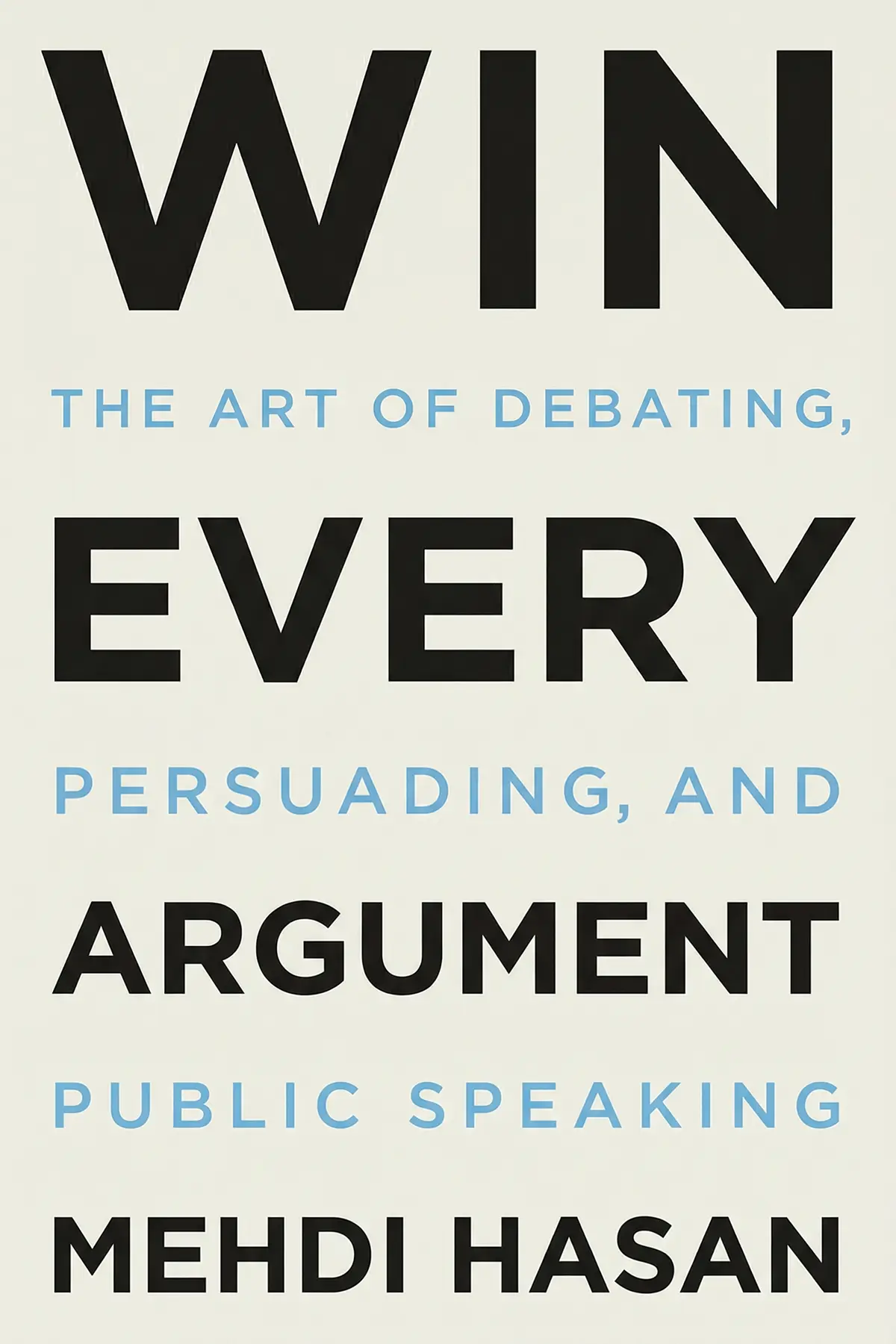
Table of Content
1. Introduction
2 min 05 sec
Every day, we find ourselves in the middle of a struggle for influence. Whether you are trying to convince a colleague of a new strategy, debating politics at a dinner table, or presenting a case to a large audience, the core activity is the same: you are arguing. For many of us, the word argument carries a negative connotation, bringing up images of shouting matches and frustration. But what if we shifted our perspective? What if we saw arguing not as a conflict to be avoided, but as a vital, vibrant tool for uncovering the truth and participating in the world around us?
Professional communicators and journalists who spend their careers in the public eye see the act of debating as the very essence of a functioning society. It is the mechanism by which we test ideas, challenge assumptions, and eventually move toward better solutions. If you only understand your own perspective, your grasp of the world remains incredibly limited. To truly own an opinion, you must be able to defend it against scrutiny and show why it holds more weight than the alternative. Beyond the philosophical benefits, mastering this skill is perhaps the most durable form of power an individual can possess. It is a soft skill that transcends industries and social circles, offering a level of influence that is often more lasting than formal authority.
In the following minutes, we are going to deconstruct the mechanics of successful persuasion. We will move beyond the simple idea that being right is enough. We will look at why human beings are often resistant to cold, hard data and how you can bridge that gap. By looking back at ancient wisdom and combining it with modern insights into how our brains work, we can develop a toolkit for communication that is both effective and authentic. We’ll explore why the heart often leads the head, how the structure of a story can do more than a spreadsheet ever could, and how to navigate the messy, often personal nature of public discourse. This isn’t just about winning for the sake of victory; it’s about becoming a communicator who can actually change the world by changing minds.
2. The Three Pillars of Persuasive Rhetoric
2 min 31 sec
Ancient wisdom suggests that logic is only one-third of a successful argument. Discover why your character and emotional connection are just as critical as your facts.
3. Understanding the Thinking Feeling Machine
2 min 19 sec
Modern neuroscience challenges the idea that we are purely rational beings. Learn why our decisions are deeply rooted in our emotional processing.
4. The Persuasive Power of a Single Life
2 min 16 sec
Statistics often fail to move us, but stories never do. Learn how to use narrative to turn abstract concepts into compelling reality.
5. When the Messenger Matters
2 min 31 sec
Is it ever fair to attack an opponent personally? Explore the strategic and ethical use of challenging your adversary’s character.
6. Conclusion
1 min 40 sec
As we have seen, the art of winning an argument is a multifaceted craft that requires much more than just a firm grasp of the facts. It demands an understanding of human psychology, an appreciation for the history of rhetoric, and the courage to engage with the world in a way that is both logical and deeply emotional. To be a truly effective communicator, you must learn to balance the pillars of credibility, feeling, and reason. You must recognize that your audience is made up of individuals who need to feel a connection to your message before they will accept your data.
We have explored how storytelling can bridge the gap between abstract concepts and personal reality, and how even the most controversial rhetorical tactics can be used responsibly to reveal the truth. Argument is not just about conflict; it is about the exchange of ideas that allows us to grow as individuals and as a society. By refining these skills, you aren’t just learning how to ‘win’ in a competitive sense; you are learning how to be a more impactful presence in your professional and personal life.
The next time you find yourself in a disagreement or preparing for a presentation, remember that you are doing more than just sharing information. You are telling a story, building trust, and appealing to the very core of what makes us human. Don’t be afraid to bring your passion to the table, to use narrative to illustrate your points, and to hold your opponents to a high standard of integrity. When you master the art of persuasion, you gain the ability to turn words into action and ideas into reality. Go out and use that power to advocate for what you believe in, and remember that every argument is an opportunity to lead others toward a better understanding of the world.
About this book
What is this book about?
Many people believe that winning a debate is simply a matter of having the better facts. However, human psychology suggests otherwise. This exploration into the art of persuasion reveals that while truth and logic are essential foundations, they rarely succeed on their own. To truly shift minds and win arguments, one must master the ancient tools of rhetoric, understand the emotional triggers that drive human decision-making, and learn how to present a narrative that resonates on a personal level. Through a deep dive into the strategies used by history’s most effective communicators, the listener discovers why feelings often trump facts in the heat of a debate. The promise of this guide is to transform the way you communicate, moving from a style of dry recitation to a dynamic, persuasive approach. You will learn how to build credibility, when to use a personal anecdote to make a point, and even how to handle the controversial tactic of challenging an opponent's character when their motives are in question.
Book Information
About the Author
Mehdi Hasan
Mehdi Hasan is a prominent British American journalist and broadcaster who has gained international recognition as an anchor and interviewer. Known for his work on MSNBC and his previous roles with the New York Times and the Washington Post, he has built a career around high-stakes public discourse. His background includes serving as a political editor for the New Statesman and contributing to the Intercept. Win Every Argument is his second book, drawing on years of professional experience in the media landscape.
Ratings & Reviews
Ratings at a glance
What people think
Listeners find this guide on debating to be both educational and well-crafted, with one noting it provides research techniques that can win debates. The work successfully demonstrates how arguments are won, and listeners appreciate its clear prose as a quick listen. They value the author’s professional expertise and find the book engaging, with one review highlighting its combination of rhetorical history.
Top reviews
Audrey
Aristotle meets MSNBC in this fast-paced guide to rhetoric that covers everything from ancient history to modern-day viral clips. Hasan is a master of the 'rule of three,' and he uses it here to great effect to explain how to structure your thoughts under pressure. I loved the deep dive into ethos, pathos, and logos, as it provided a much-needed theoretical backbone to his very practical tips. Look, the guy is obviously brilliant, even if his confidence borders on arrogance at times. He shares some incredible stories about catching interviewees off guard through sheer preparation. It’s an essential read for anyone who wants to understand how the media landscape really works. You might not agree with his politics, but you can’t argue with his results.
Show moreKanchana
Ever wonder why some people just seem to dominate every conversation? Hasan breaks it down through the lens of a professional interrogator, focusing heavily on the power of intense preparation and research. The chapter on 'the rule of three' alone is worth the price of admission for anyone who does public speaking. I particularly loved the behind-the-scenes look at how he handled high-profile guests like Michael Flynn and John Bolton. It isn't just about being right; it is about having the receipts and knowing exactly when to deploy them. This is a masterclass in modern rhetoric that feels both ancient and incredibly relevant for today’s media landscape. Highly recommended for those who want to level up their communication skills.
Show moreRotjanee
Rarely do I find a book that manages to be this entertaining while teaching actual skills. Mehdi Hasan is a polarizing figure, but you cannot deny his effectiveness in a debate setting. He breaks down the psychology of how people process information, emphasizing that preparation is the ultimate weapon against a liar. I found the anecdotes about catching politicians in their own contradictions to be the highlight of the text. The book moves quickly. It never drags. By the end, you’ll feel like you’ve inherited a secret toolkit for every social interaction you’ll ever have. It’s brilliant, sharp, and incredibly useful. It combines rhetorical history with very modern research techniques that can actually win debates.
Show morePia
Wow, this was exactly what I needed to step up my game during office meetings. Hasan provides a fascinating look at how to structure an argument using the rule of three, which makes even complex ideas feel digestible. I used to think arguing was just about having the best facts, but this book taught me that performance and preparation are just as vital. The writing is punchy and direct. Not gonna lie, I’ve already started practicing his tips on eye contact and posture during my Zoom calls. It’s rare to find a book that is both this entertaining and this practical for a professional setting. Highly recommended for anyone who wants to speak with more authority and win over their audience.
Show moreRung
If you listen to the audio version, you’re in for a treat because Hasan actually includes clips from his famous interviews. Hearing him deploy a zinger in real-time against a defensive politician adds a layer of depth you just won't get from the printed page alone. He focuses on the 'mechanics' of a good performance—everything from how you breathe to how you maintain eye contact under pressure. While some might find his confidence a bit grating, the techniques he teaches are objectively effective. It is much more than a simple guide; it is an exploration of how to command a room. The emphasis on research and structure provides a solid foundation for anyone nervous about public speaking. Just be prepared for some strong political opinions along the way.
Show moreWeera
Picked this up to help with my presentation skills at work, and I walked away with much more than I expected. The book explores the 'rule of three' and other rhetorical devices that help a message stick. However, I did have some reservations about the overall philosophy of winning at all costs. The truth is, sometimes discourse should be about finding a middle ground rather than just crushing an opponent. Hasan is a fierce debater, but his style can feel a bit predatory if applied to every friendship or casual conversation. That said, the section on debunking the 'naked audience' myth was both funny and practical. It’s a solid resource for performance, even if I disagree with the 'winner-takes-all' ethos.
Show moreKanokwan
Most debate books tell you to play fair, but Hasan takes off the gloves in a way that feels refreshing and realistic. His defense of the ad hominem attack is controversial, yet he explains perfectly why questioning someone's character is sometimes a necessary part of a public argument. You have to be able to protect your own credibility while pointing out the flaws in your opponent’s authority. This isn't a dry academic textbook; it's a field manual for the verbal trenches of the 21st century. The writing is snappy, though I could have done with a bit less of the author's self-congratulatory tone. Still, the practical advice on using 'zingers' and keeping your cool is gold. If you want to stop being a doormat in discussions, read this.
Show moreWit
As someone who hates conflict, I found this surprisingly empowering and easy to follow. Hasan goes all the way back to ancient Greece to explain why certain arguments work, yet he keeps the tone modern and accessible. One of my favorite suggestions was to randomly challenge a friend to a friendly argument just to build up your 'debate muscles.' It sounds a bit chaotic, but it actually works for building confidence! The book is a quick read that doesn't get bogged down in too much jargon. I do wish the author spent a little more time on the 'logos' or logical side of things, but he makes a compelling case that emotion and character are what actually move an audience. Truly helpful stuff.
Show moreVilaiporn
To be fair, the title is a bit of a misnomer because this isn't really about logic as much as it is about theater. Hasan is an incredibly talented performer, but his personal political agenda frequently bleeds into the advice, which might alienate readers looking for a neutral guide. I appreciated the sections on ethos and the ancient Greek foundations of debate, yet the 'win at all costs' mentality felt a bit hollow at times. If you want to learn how to crush an opponent in front of an audience, this is perfect. However, if you are looking for a way to have a productive, truth-seeking conversation with a friend, you might find this approach too aggressive. It’s a fast read, but the bias is impossible to ignore.
Show moreStella
The truth is, there is no bigger fan of Mehdi Hasan than the man himself. While the tips on ethos and logos are standard fare, the constant self-promotion becomes a chore to read through after three chapters. He clearly knows his stuff, yet he can't seem to stop reminding us of his own brilliance in every single paragraph. I wanted a guide on logic, but I got a manifesto on his political worldview instead. It’s a shame because the technical advice is buried under layers of unearned arrogance and heavy-handed bias. If you can stomach the ego, there are a few nuggets of wisdom, but there are better books on debate out there that don't feel like an extended MSNBC audition.
Show moreReaders also enjoyed
AUDIO SUMMARY AVAILABLE
Listen to Win Every Argument in 15 minutes
Get the key ideas from Win Every Argument by Mehdi Hasan, plus 5,000+ more titles in English and Thai.
- 5,000+ titles
- Listen as much as you want
- 7-day free trial
- Cancel anytime







