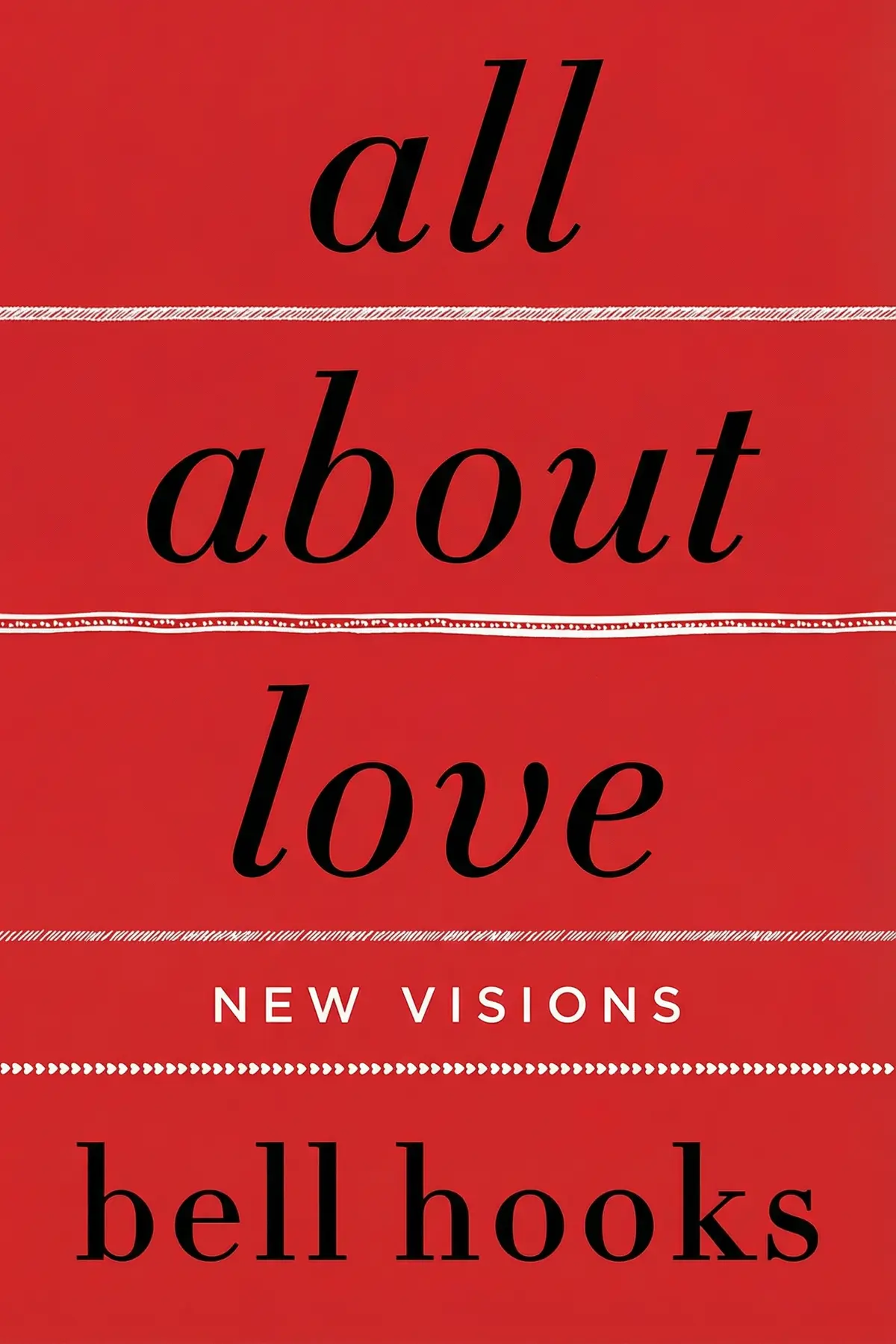
All About Love: New Visions
bell hooks
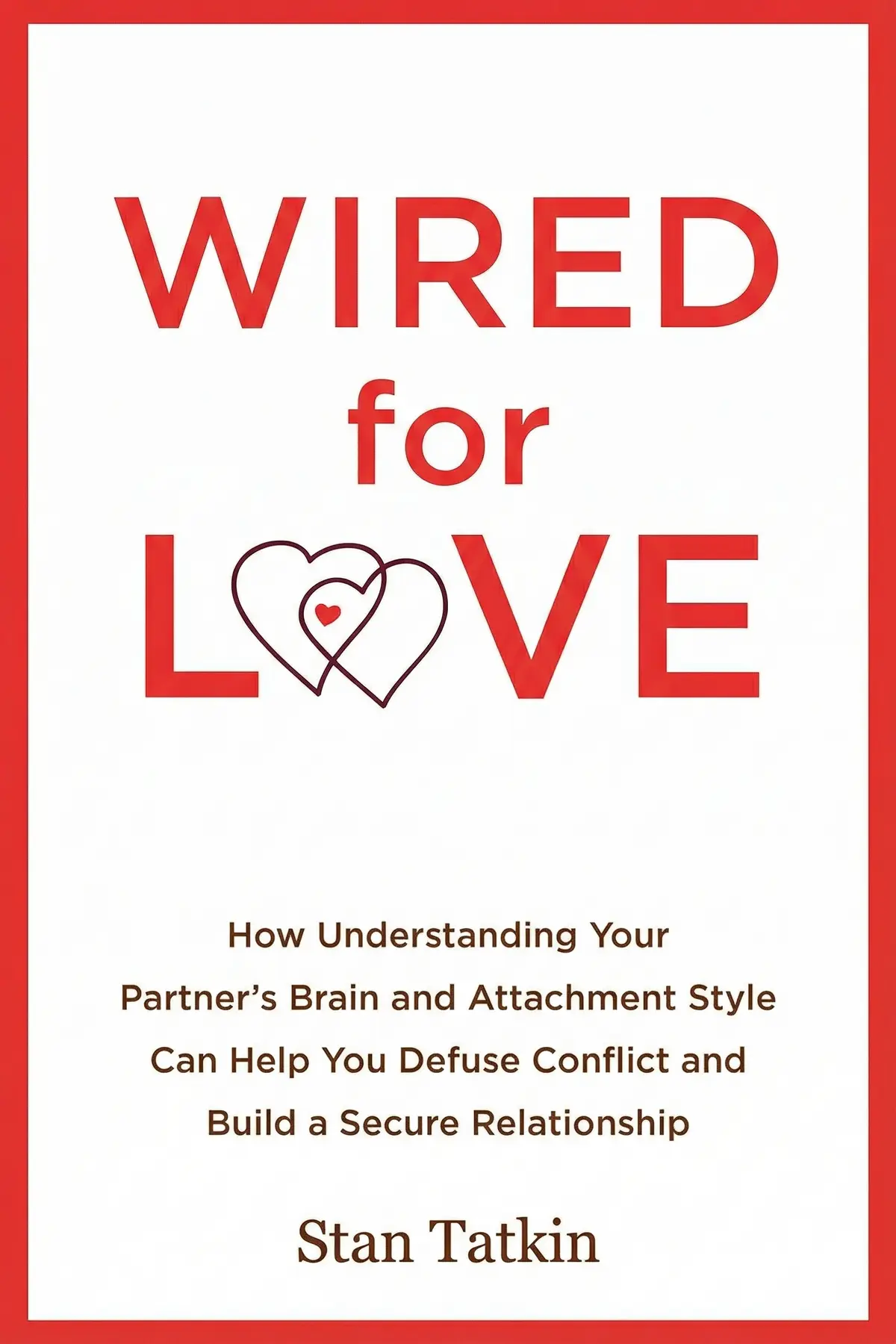
Wired for Love explores how neuroscience and attachment theory can transform your relationship. Learn to build a secure couple bubble by understanding your partner's brain and creating lasting habits of mutual support.
1 min 46 sec
Imagine your relationship as a sanctuary—a private, invisible fortress where you and your partner are safe from the pressures and stresses of the outside world. This isn’t just a romantic fantasy; it’s what neuroscientist and therapist Stan Tatkin calls a couple bubble. In this space, you are each other’s primary source of comfort, protection, and security. But for many of us, maintaining this bubble is incredibly difficult. We find ourselves caught in repetitive arguments, feeling misunderstood, or fearing that our partner might pull away at any moment.
Why does love feel so precarious? The answer lies deep within the architecture of the human brain. We are biological creatures with ancient survival systems designed to protect us from predators and social exclusion. When those systems get triggered by a partner’s tone of voice or a perceived lack of attention, our brains react as if we are facing a life-threatening danger. We shift into fight-or-flight mode, and the intimacy we’ve worked so hard to build evaporates in an instant.
In this summary, we are going to explore how understanding the mechanics of the brain can help you stop reacting like a threatened animal and start relating like a loving partner. We’ll dive into attachment styles to see how your earliest childhood memories set the stage for your adult romance. We’ll look at the specific structures of the brain that govern conflict and learn how to recruit our internal ambassadors to maintain peace. Most importantly, we’ll see how small, daily rituals can reinforce your connection and ensure that you and your partner remain wired for love. By the end of this journey, you’ll have a new framework for understanding not just your partner, but the very nature of human connection.
2 min 50 sec
Your earliest experiences with caregivers created a psychological map that dictates how you navigate intimacy and security in your current romantic life.
2 min 40 sec
Conflict often stems from primitive brain structures that prioritize survival over love, triggering defensive reactions before we even realize there is a problem.
2 min 42 sec
By activating the more evolved parts of our brain and utilizing our nervous system’s natural calming mechanisms, we can de-escalate tension and restore intimacy.
2 min 41 sec
The way a couple handles the beginning and end of their day significantly impacts their overall sense of security and relationship satisfaction.
2 min 35 sec
True relationship security comes from a mutual agreement to be each other’s primary support system, available at all times without the fear of being a burden.
1 min 51 sec
Building a lasting, healthy relationship is not just a matter of luck or finding the perfect person; it is a skill rooted in understanding our biological nature. We have seen how our childhood blueprints and our primitive brain structures can work against our desire for intimacy, creating cycles of conflict and withdrawal. However, we have also discovered that we possess the tools to override these instincts. By recruiting our brain’s ambassadors—empathy, non-verbal communication, and co-regulation—we can soothe our partner’s insecurities and our own.
The throughline of a successful partnership is the creation and maintenance of the couple bubble. This is a sacred space built on the rituals of connection, the power of shared transitions, and a steadfast commitment to being each other’s primary support system. When you prioritize your partner’s sense of security as much as your own, you create a feedback loop of safety that makes the relationship stronger over time. You move from a state of being ‘wired for war’ to being truly ‘wired for love.’
As you move forward, remember that the most profound changes often come from the smallest actions. You don’t need a grand gesture to repair your bond; you just need a willingness to be present and responsive. Try this: tonight, focus on your partner’s non-verbal cues. If they look stressed, offer a long hug or a gentle word without waiting to be asked. Commit to being the person who makes them feel safe. By doing so, you aren’t just improving your relationship; you are building a sanctuary that will sustain you both for a lifetime. Start tonight by creating one small ritual of connection, and watch how it begins to transform the world within your bubble.
Have you ever wondered why the person you love most can sometimes be the person you fight with most intensely? Wired for Love addresses this fundamental human mystery by blending the latest findings in neuroscience with established psychological attachment theories. The book introduces the concept of the couple bubble, a protective psychological space that partners create to ensure mutual safety and security in a world that often feels threatening. Through the lens of brain biology, the guide explains how our primitive survival instincts often sabotage our romantic connections. It identifies three primary attachment styles—Anchors, Islands, and Waves—and provides a roadmap for how different personalities can learn to soothe one another. The promise of this work is a practical set of tools to help couples move from a state of high-alert conflict to a deep, biological sense of belonging and peace. By focusing on non-verbal cues, daily rituals, and a commitment to being each other’s primary support system, partners can rewire their connection for lifelong intimacy.
Stan Tatkin is a clinician and researcher who has developed the psychobiological approach to couple therapy. He works with family medicine residents at Kaiser Permanente in Woodland Hills, California. He is the author of six other books, including the bestselling Wired for Dating (2016).
Listeners find this title to be a simple, pleasant listen that offers useful perspectives, specifically for comprehending their own behaviors and those of their partners. Additionally, the content delivers actionable tips on strengthening bonds and is beneficial for both partners and professionals. Listeners value the natural flow of the writing, with one noting it's well-suited for a lay audience. Furthermore, the guide examines various attachment styles, and listeners report that it genuinely changed their marriages.
The concept of the 'couple-bubble' changed everything for my husband and me. We used to let outside stress—work, in-laws, and even our own hobbies—leak into our private space, but Tatkin explains why guarding that connection is vital for our biology. It’s not just romantic fluff; he backs it up with how our brains are literally wired for safety. Some of the scripts felt a bit cheesy, but the underlying logic about being each other’s primary support system is undeniable. Truth is, we started prioritizing eye contact and morning rituals, and the tension in our house has dropped significantly. It’s a quick read, but the impact is lasting if you actually do the work to protect your partner.
Show moreFinally, a relationship book that feels grounded in neuroscience rather than just fluff or religious 'shoulds.' Stan Tatkin’s approach to the couple-bubble is revolutionary because it treats the relationship as a biological necessity that needs constant protection. I especially loved the emphasis on non-verbal cues and sustained eye contact. We often forget that our nervous systems are constantly scanning our partners for signs of safety or threat. By learning how to soothe each other’s 'primitive brains,' we’ve managed to stop small bickers from escalating into full-blown wars. It's written in an incredibly accessible way, making it easy to digest even if you aren't a clinical expert. Highly recommended for anyone wanting to build a secure, lasting foundation.
Show moreI'm a therapist, and I find myself recommending this to almost every couple I see. It’s rare to find a book that translates complex PACT principles into something a layperson can actually use on a Tuesday night. The way Tatkin describes the 'Anchor' style gives people a clear goal to strive for. Not gonna lie, some of the dialogue examples are cringe-worthy, but if you look past the 'moist eyes' comments, the clinical backbone is incredibly strong. It’s about creating a safe harbor in a chaotic world. It has genuinely helped several of my clients move from high-conflict cycles to a place of mutual protection and security. This should be required reading for anyone getting married soon.
Show moreIt’s refreshing to read a self-help guide that doesn’t feel like it was written in the 1950s. Tatkin includes same-sex couples and uses inclusive language, which is a huge plus. The focus here is on the 'how' of relating, not just the 'why.' By treating the relationship as a 'couple-bubble' that both partners are responsible for maintaining, it removes the blame game. We’ve started implementing the 'profoundly moving' compliments he suggests, and while it felt silly at first, it actually works. The truth is, we all want to feel like the most important person in our partner's world. This book shows you exactly how to make that happen through small, daily actions. Absolute game-changer for our communication.
Show moreAs someone who has always struggled with intimacy, this felt like a roadmap to my own brain. Understanding whether you are an 'island,' a 'wave,' or an 'anchor' makes so much sense of those repetitive fights we all have. I’ve read a lot of self-help, and frankly, many authors get lost in abstract theories, but Tatkin stays grounded in neurobiology. The focus on Chapter 8 regarding how to 'fight well' was worth the price of the book alone. I do wish there was more discussion on how neurodiversity or mental illness impacts these attachment styles, as it felt a bit 'one size fits all' at times. Still, it’s a solid resource for any couple looking to fine-tune their bond.
Show moreEver wonder why every argument with your partner feels like a life-or-death struggle? Tatkin explains that it’s because our brains are literally wired to perceive a partner’s withdrawal as a mortal threat. This book provides practical, actionable advice on how to de-escalate those moments before the 'animal brain' takes over. I found the specific exercises on sustained eye contact to be awkward at first, but surprisingly effective at restoring a sense of connection. The writing is conversational and easy to follow, which I appreciated. My only gripe is that it feels very heteronormative in its examples, though he does use the term 'partner' frequently. It’s a great starting point for couples who feel stuck in old patterns.
Show moreTatkin's breakdown of 'islands' and 'waves' made so much sense for my marriage. I realized I’ve been an island for years, retreating into my own world whenever things got stressful, while my wife is a total wave. No wonder we were constantly missing each other! The book gave us a shared language to talk about our needs without it feeling like an attack. Some of the stuff about needing to be 'in the know' about everything your partner does felt a bit restrictive, but the core message of mutual care is beautiful. It’s a nurturing read that focuses on the 'we' instead of just the 'me.' Definitely worth a read if you want to understand your partner’s unique quirks.
Show morePicked this up after a particularly rough month, and it was the reset we needed. To be fair, I went in skeptical because I usually find self-help books to be a bit 'rah-rah,' but this was different. It feels more like a manual for a complex machine—the machine being your relationship. The idea that we are 'vulnerable to each other' by design is a powerful shift in perspective. I especially liked the tips on how to greet each other after a long day to reset the nervous system. It’s simple, intuitive, and doesn't require a PhD to understand. I'm knocking off one star because the author’s tone can be a bit 'gosh-golly' and overly sentimental in parts.
Show moreLook, there's some decent stuff here, but it definitely needs a major disclaimer. On one hand, the explanation of how the brain reacts during a fight is genuinely illuminating and helped me realize why I shut down during arguments. On the other hand, the author’s insistence that your partner should be your entire world is a bit much. In my experience, healthy relationships also require outside friendships and individual interests, which this book seems to view as threats to the 'bubble.' Also, the section where he implies bad marriages cause autoimmune diseases felt like a massive stretch. It’s a useful tool if you take it with a grain of salt, but don't make it your only Bible for relating to others.
Show morePardon me while I roll my eyes at the dialogue in this book. While I appreciate the attempt to simplify complex attachment theory for a lay audience, the 'scripts' provided between the fictional couples, Mary and Pierce, felt incredibly forced and saccharine. Does anyone actually speak like that? Beyond the tone, I found it deeply concerning that Tatkin almost entirely ignores the concept of healthy boundaries or external trauma. He seems to suggest that you should be your partner’s everything at all times, which feels like a recipe for codependency rather than a healthy marriage. If you’re in a secure relationship and just want some fun tips, maybe it’s fine, but for anyone with real issues, this feels dangerously oversimplified.
Show moreAUDIO SUMMARY AVAILABLE
Get the key ideas from Wired for Love by Stan Tatkin, plus 5,000+ more titles in English and Thai.