
21 min 39 sec
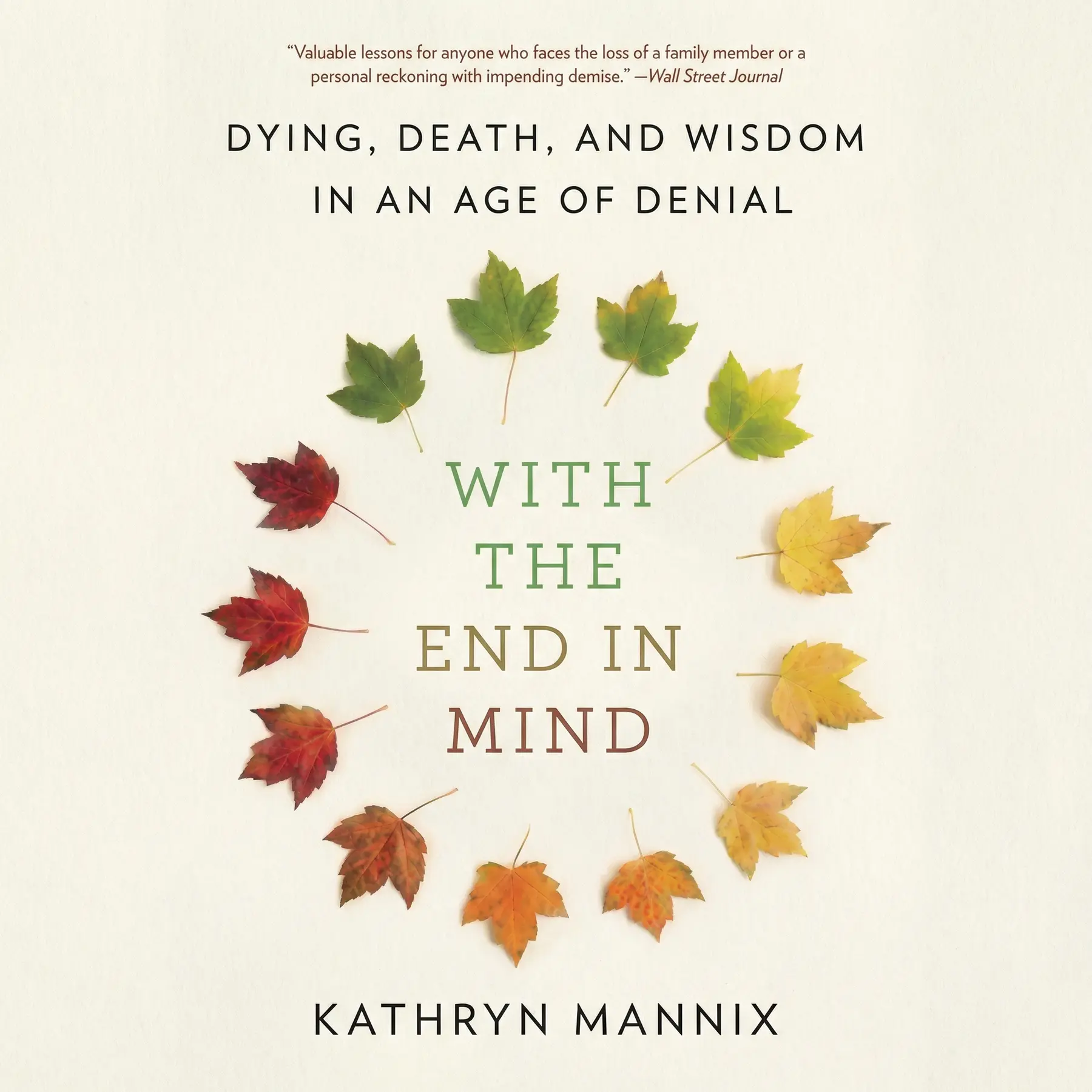
With the End in Mind: Dying, Death and Wisdom in an Age of Denial
Palliative care expert Dr. Kathryn Mannix demystifies the process of dying through moving stories, revealing that the end of life is often a peaceful, manageable, and deeply meaningful experience.
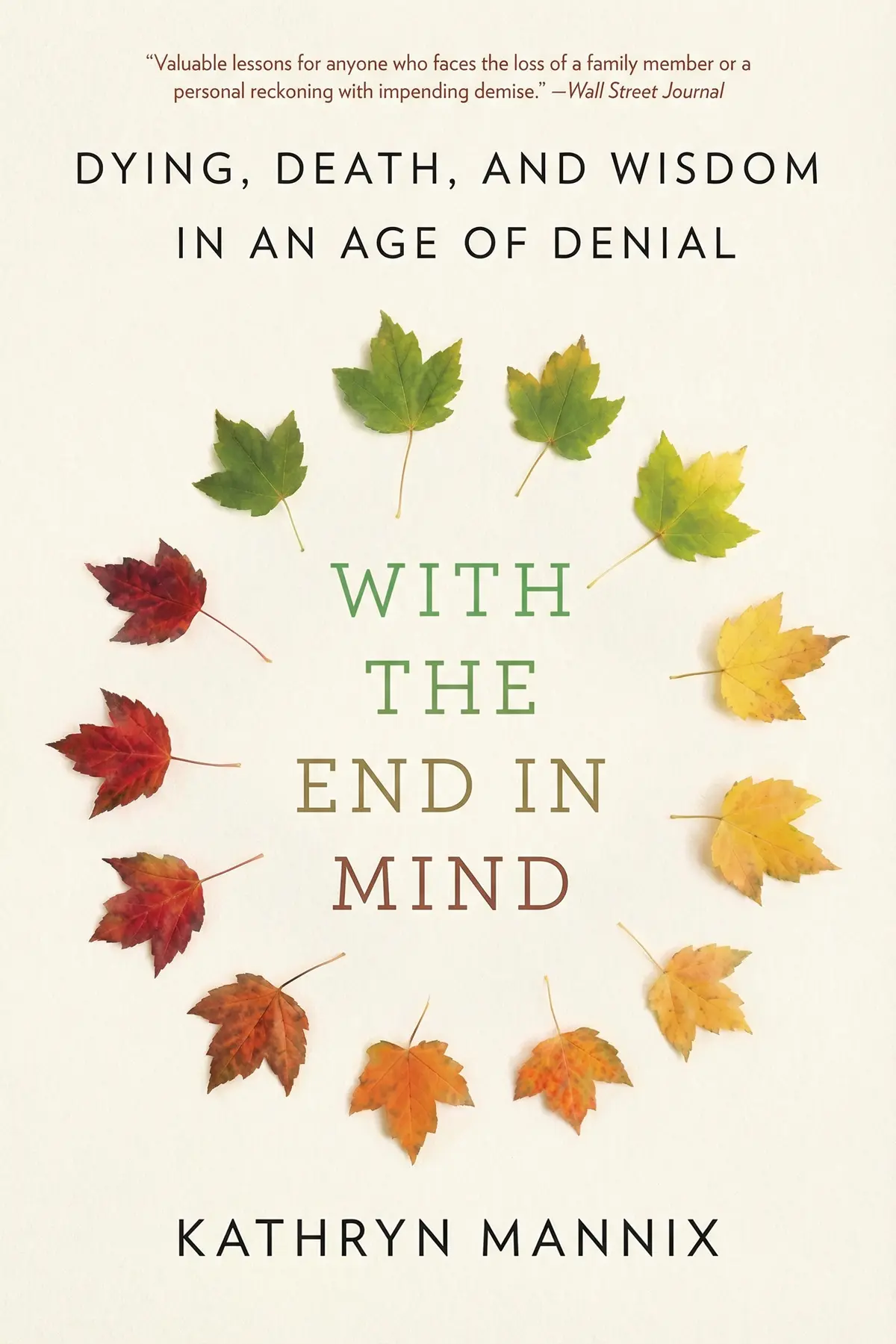
Table of Content
1. Introduction
1 min 54 sec
Imagine for a moment the stories our ancestors might have told. Just a few generations ago, the end of life wasn’t a sterilized secret kept behind hospital curtains or inside the frantic hum of an ambulance. It happened at home. It was witnessed by children, neighbors, and kin. Because it was visible, it was understood. There was a collective knowledge of what it looked like to fade away—a familiarity that, while somber, stripped away much of the terror of the unknown.
Fast forward to today, and that familiarity has vanished. We have outsourced dying to professionals and institutions. This shift has created a strange paradox: we are more technologically advanced in our medical care than ever before, yet we are more terrified of the inevitable conclusion of our lives because we no longer know what it looks like. We rely on dramatized, often inaccurate depictions from television and film, which tend to focus on the traumatic and the chaotic.
Dr. Kathryn Mannix wants to bridge this gap. With over three decades of experience at the bedside of the terminally ill, she has seen thousands of people make their exit. Her perspective is one of profound calm and deep clinical insight. She argues that by reclaiming our understanding of death, we don’t just prepare ourselves for the end; we actually enhance the quality of the life we have left.
In this exploration, we’re going to look at the predictable biological rhythm of dying, which is far more peaceful than you might imagine. We’ll see how people find unexpected reservoirs of strength when faced with their own mortality, and how modern therapeutic tools can help us navigate the psychological storms that often accompany a terminal diagnosis. Most importantly, we’ll see that the final chapter of a person’s story isn’t just about the ending—it’s about the living that happens right up until the very last breath.
2. The Natural Rhythm of the End
2 min 23 sec
Explore the predictable, biological sequence of a peaceful death, challenging the common fears that the final moments are filled with pain or panic.
3. Navigating the Outliers
2 min 28 sec
Understand how unexpected surges of energy or sudden shifts can disrupt the usual dying process and how to find peace even in these circumstances.
4. The Strength Found in Vulnerability
2 min 13 sec
Discover how individuals often find surprising resilience and new ways to experience joy, even when faced with debilitating terminal conditions.
5. The Utility of Denial and Pretend
2 min 01 sec
Learn why denial isn’t always a negative response and how ‘playing along’ with a patient’s hopeful narratives can sometimes be the most compassionate choice.
6. Rewiring the Cycle of Panic
2 min 17 sec
See how Cognitive Behavioral Therapy can be used to break the physiological and psychological loops of distress that terminally ill patients often face.
7. Rekindling Purpose Through Small Victories
2 min 13 sec
Understand how setting small, achievable goals can pull a person out of despair and create a ‘virtuous cycle’ of meaning and joy.
8. The High Cost of Silence
2 min 09 sec
Examine how the societal taboo around death can lead to ‘conspiracies of silence’ that isolate the dying and complicate end-of-life decisions.
9. The Final Chapter is Still Living
2 min 15 sec
Recognize that ‘dying’ is a distinct and valuable phase of life, offering unique opportunities for legacy, reconciliation, and profound connection.
10. Conclusion
1 min 46 sec
In the end, Dr. Kathryn Mannix provides us with something far more valuable than a clinical guide; she offers us a lens of compassion through which to view our own mortality. The overarching message is clear: death is not a failure of medicine, but a natural conclusion to the human experience. While our culture has largely forgotten how to die, the process itself remains a predictable and often peaceful journey that the human body is well-equipped to navigate.
We’ve seen that the fear of the end is often far worse than the reality. Whether through the natural easing of the body’s rhythms, the surprising resilience of the human spirit, or the strategic use of psychological tools like CBT, there are many ways to ensure that the final stage of life is characterized by dignity and comfort. We’ve also learned that the greatest obstacles to a ‘good death’ are often not physical pain, but the silence and denial that prevent us from connecting with those we love.
As you move forward from these insights, consider the invitation to live ‘with the end in mind.’ This isn’t a call to be morbid, but a call to be present. You don’t have to wait for a terminal diagnosis to ask yourself: What truly matters? Who needs to hear that I love them? What burdens can I set down?
A powerful way to begin this process is to write a legacy letter. Think of it as a gift to your future self and your loved ones. Address the things you’re grateful for, the values you hope to pass on, and the peace you wish for those you’ll eventually leave behind. By acknowledging the ending now, we free ourselves to live more vibrantly, more honestly, and more lovingly in the present. Death is inevitable, but as the patients in this book show us, a meaningful life continues right up until the very last moment.
About this book
What is this book about?
For many of us, death is a frightening mystery, hidden away in hospital wards and sanitized by medical terminology. This absence of direct experience has created a culture of fear and denial. With the End in Mind brings death back into the light, drawing on Dr. Kathryn Mannix’s thirty years of experience in palliative care to show that dying is a natural, predictable, and usually gentle process. The book offers a roadmap for the final journey, blending clinical wisdom with the intimate stories of patients who faced their mortality with courage and resilience. It promises to transform the way we think about the end of life, shifting the focus from the terror of the unknown to the profound opportunities for connection, legacy, and peace. By understanding what truly happens as we die, we can learn to live more fully and support our loved ones with confidence and compassion.
Book Information
About the Author
Kathryn Mannix
Kathryn Mannix is a British physician and cognitive behavior therapist with over thirty years of experience in end-of-life care. Specializing in palliative care since 1986, she has dedicated her career to reducing suffering. She pioneered the use of Cognitive Behavioral Therapy (CBT) in palliative settings, founding the UK's first dedicated CBT clinic for terminal patients and developing CBT First Aid training for medical professionals.
Ratings & Reviews
Ratings at a glance
What people think
Listeners find this book essential reading that offers profound perspective, with one listener highlighting the useful medical science breakdowns written in accessible language. Furthermore, the work exudes empathy and kindness, and one listener characterizes it as an elegantly crafted set of narratives told with sincere transparency. In addition, the prose is expertly composed, and listeners value its precision, with one noting the way it transforms anxiety into knowledge.
Top reviews
Alejandra
This book is a vital piece of literature that should be mandatory reading for every adult regardless of their current health status. Mannix manages to strip away the clinical coldness often associated with the hospital setting, replacing it with a warmth that is deeply reassuring. By explaining the physiological stages of dying in plain English, she effectively turns a universal fear into a manageable understanding of our own biology. I found the fictionalised case studies, particularly the one about Holly, to be heartbreaking yet profoundly instructive in their honesty. While some might find the 'Pause for Thought' sections a bit repetitive, they serve as helpful anchors for processing the heavy emotional weight of the narratives. It is rare to find a medical professional who writes with such a combination of technical precision and poetic empathy. Truly, this is an act of kindness bound in paper and ink.
Show moreRohan
Ever wonder why we are so terrified of the one thing that is guaranteed to happen to all of us? Mannix addresses this head-on by demystifying the dying process through a series of compassionate, beautifully woven stories. I was particularly struck by her description of the rhythmic patterns of breathing that signal the end, which helped me reframe my own memories of losing a parent. The way she translates complex medical science into accessible language makes this a perfect guide for anyone currently navigating a terminal diagnosis in their family. Truth is, I expected to feel depressed while reading this, but I actually walked away feeling a strange sense of peace and empowerment. It’s not just a book about death; it’s a manual for living with the end in mind. The stories of Sally and the headteacher with motor neurone disease will stay with me for a very long time.
Show moreMai
Picked this up during a difficult period in my life and found it to be one of the most uplifting things I’ve ever encountered. Mannix writes with a clarity that is both refreshing and comforting, especially when she describes the transition from active life to the quiet stillness of the end. The book is structured around case studies that feel like intimate conversations rather than dry medical files. I appreciated how she used her decades of experience to advocate for a more holistic approach to palliative care, emphasizing the importance of dignity and legacy. Not gonna lie, I cried through several chapters, but they weren't tears of despair so much as tears of recognition and relief. This is a must-read for anyone who wants to replace their anxiety about the unknown with actual, practical wisdom. It radiates a level of caring and compassion that is far too rare in modern healthcare literature today.
Show moreAria
The comparison between birth and death as two natural, biological bookends to life is a metaphor that Mannix returns to frequently, and I found it incredibly illuminating. We spend nine months preparing for a birth, yet we spend years running away from the reality of death until it is right on top of us. This book bridges that gap by providing a roadmap for what to expect when a body begins its final decline. Her honesty about the various emotional stages—denial, anger, and eventual acceptance—is shared with a gentleness that never feels clinical or detached. I think the plain English explanations of respiratory changes and restless energy are vital for families who might otherwise panic during a loved one's final hours. This is the kind of book you want to keep on your shelf and revisit when the world feels too heavy. It turns a terrifying mystery into a series of understandable, even sacred, moments.
Show moreLandon
Wow. This is a beautifully crafted collection of stories that managed to change my entire outlook on the end of life in just a few sittings. Mannix has a gift for capturing the small, quiet details that make a human life meaningful even in its final moments. I was particularly moved by the story of Sally, the young woman whose journey illustrates the complex struggle between hope and reality. The book is filled with a unique kind of wisdom that only comes from spending decades at the bedside of the dying. It’s clear that the author views her work as a privilege, and that sense of honor translates into every page of the prose. The clarity she provides regarding what actually happens when we die is a gift to anyone paralyzed by the 'what ifs' of the future. I cannot recommend this enough for its compassion and its sheer bravery in tackling such a taboo subject.
Show moreNiramai
Gotta say, I was skeptical about reading a 'death book,' but this turned out to be an incredible source of insight and comfort. The medical science is presented with such simplicity that you don't need a degree to understand the profound shifts happening within the human body. Mannix avoids the jargon that usually clutters medical memoirs, focusing instead on the emotional and spiritual needs of her patients and their families. While I can see why some readers might find her tone a bit authoritative, I actually found her 'Leader' persona to be a reassuring guide through very dark woods. The way she describes the 'tiptoe journey' toward the end is some of the most beautiful writing I've encountered in years. It’s a book that encourages us to talk, to plan, and ultimately, to not be afraid of the inevitable. This is truly essential reading for our age of denial.
Show moreElias
As someone who has always admired Atul Gawande’s Being Mortal, I was curious to see how a palliative care specialist would approach the same territory. Mannix offers a more anecdotal style that focuses heavily on the interpersonal dynamics between doctors, patients, and grieving families. While her expertise is undeniable, I did occasionally feel like the narrative was a bit too polished, as if the messy realities of the NHS were airbrushed out to make a point. The 'Pause for Thought' segments felt a little patronizing at times, assuming the reader needs a guided meditation to understand the preceding chapter. However, the core message about reclaiming death from the clinical machine is incredibly powerful and necessary in our age of denial. Even with my minor gripes about the tone, the clinical insights provided are invaluable for anyone looking to understand what a 'good death' actually looks like.
Show moreSue
After hearing so much praise for this title on various book blogs, I finally dove in and found myself completely absorbed by the narrative. Mannix uses her background in CBT to show how our thoughts about dying can actually change the physical experience of it. It’s a fascinating blend of psychology and palliative care that I haven’t seen explored quite this way before. I did find that some of the patients felt a bit generic at times, likely because they are composites of many different people, which occasionally pulled me out of the story. But the emotional core of the book remains strong throughout, especially when she discusses the importance of having difficult conversations before it's too late. It is a poignant reminder that we have a choice in how we face the end. If you’ve been avoiding this topic, please let this book be your introduction to a much healthier perspective on mortality.
Show moreAubrey
Finally got around to this one, and while I found parts of it a bit repetitive, the overall impact was undeniably profound. The structure of using fictionalised cases works well to cover a broad spectrum of deaths, from the sudden to the long-expected. I did find myself agreeing with some critics who pointed out the 'doctor-knows-best' hierarchy, which can feel a bit dated in an era of patient-centered care. However, the sheer volume of practical information about hospice care and pain management makes those minor irritations easy to overlook. The truth is that we need more voices like Mannix's to help us navigate the complexities of modern medicine and the limits of what it can achieve. It’s a poignant, informative, and deeply human look at the one experience we all share but rarely discuss with such honesty. This book doesn't just provide answers; it provides the language we need to ask the right questions.
Show moreBun
Not what I expected, and frankly, I have some serious reservations about the 'doctor-knows-best' attitude that permeates several of these stories. While the writing is undeniably eloquent and the patient stories are moving, the author often positions herself as the ultimate arbiter of what constitutes a 'natural' or 'good' death. I found the chapter on the Netherlands and assisted dying to be particularly one-sided, relying on hearsay rather than a balanced look at patient autonomy. It felt less like a medical exploration and more like propaganda for a specific hospice-centric ideology that doesn't always account for every patient's wishes. To be fair, her descriptions of the physical process of dying are helpful for demystifying the biology of the end. But the hierarchical tone and the simplistic 'Pause for Thought' endings made me feel more like a patient being lectured than an informed reader. It’s an interesting perspective, but I’d recommend reading it alongside Henry Marsh for a more self-critical view.
Show moreReaders also enjoyed
AUDIO SUMMARY AVAILABLE
Listen to With the End in Mind in 15 minutes
Get the key ideas from With the End in Mind by Kathryn Mannix, plus 5,000+ more titles in English and Thai.
- 5,000+ titles
- Listen as much as you want
- 7-day free trial
- Cancel anytime







