
22 min 48 sec
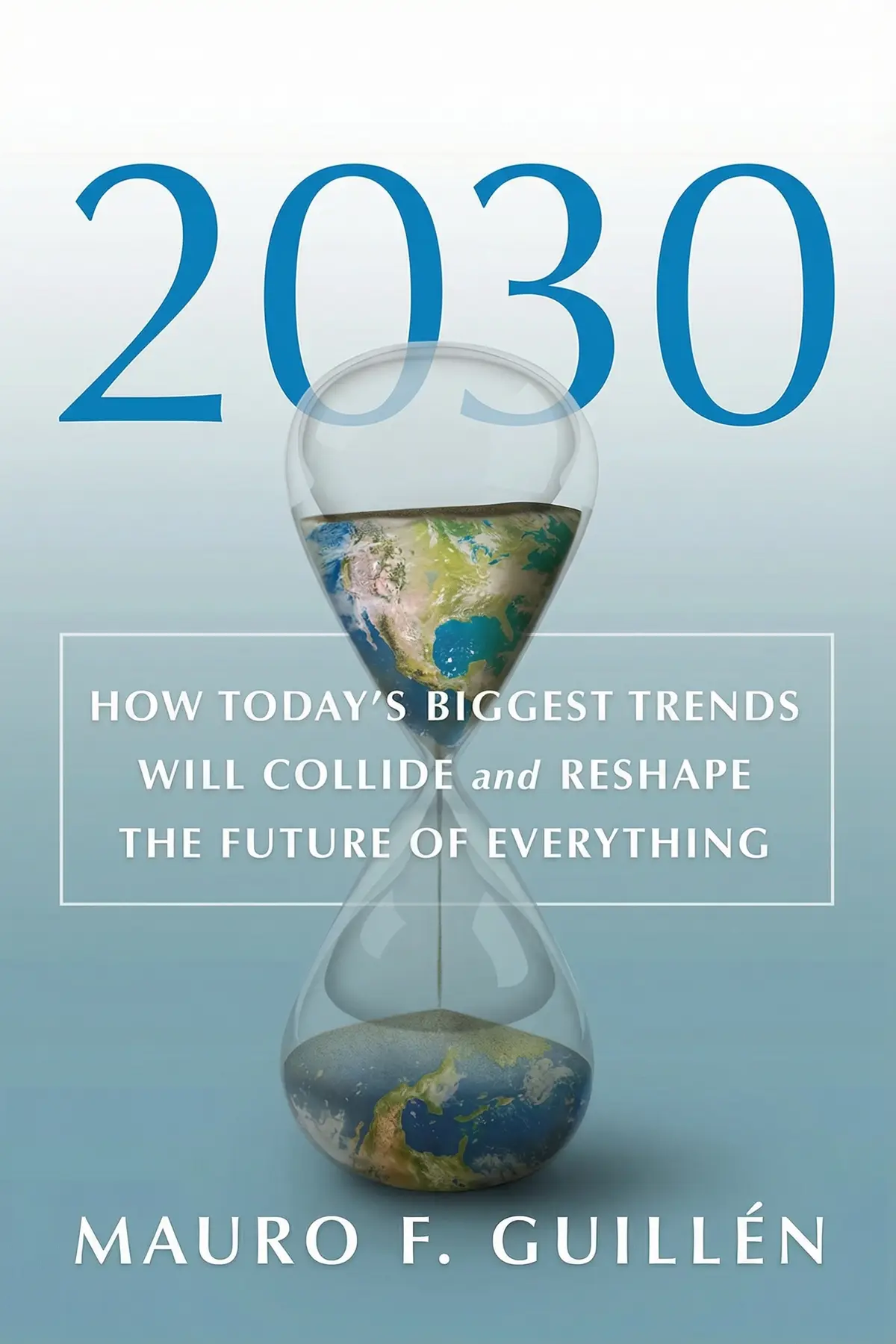
Work: A Deep History, from the Stone Age to the Age of Robots
By James Suzman
James Suzman traces the evolution of labor, revealing how biological needs and technological shifts transformed us from leisured foragers into modern workers obsessed with constant productivity and economic growth.
Table of Content
1. Introduction
1 min 57 sec
We live in an era where the definition of our worth is almost entirely tied to our employment. We wake up, we commute, we labor, and we repeat the cycle, often feeling that if we aren’t being productive, we are somehow failing. This modern work ethic is so deeply ingrained that it feels like a fundamental part of human nature. But is it? We are currently standing on the precipice of a new era, often called the fourth industrial revolution, where artificial intelligence and advanced robotics threaten to automate the very tasks that define our daily lives. This shift has sparked a global conversation filled with anxiety. If we aren’t working, who are we? To answer that, we have to look much further back than the invention of the steam engine or even the first cities.
In this exploration of human labor, we’re going to take a journey through time—not just centuries, but billions of years. We’ll look at the very physics of life and how energy capture became the primary driver of evolution. By examining the lives of our hunter-gatherer ancestors, the surprising origins of the first stone tools, and the dramatic shift caused by the discovery of fire, we will see that the way we work today is not the way we have always worked. In fact, for the vast majority of human history, our ancestors lived lives that would look to us like a permanent vacation.
This throughline—the transformation from a species that worked only to meet immediate needs to one that is obsessed with future scarcity—is the key to understanding our current predicament. We will discover how the agricultural revolution acted as a trap, how the domestication of animals paved the way for human inequality, and how the industrial age eventually decoupled our wages from our actual productivity. By the end of this journey, you’ll have a new perspective on your own relationship with the clock and the cubicle. You’ll see that our history isn’t just a story of progress; it’s a story of how we reimagined our place in the universe through the lens of effort and output. Let’s dive into the deep history of what it means to be a working animal.
2. Work as an Answer to Universal Chaos
2 min 38 sec
Discover how the laws of physics and the concept of entropy define the very essence of life as a process of energy capture and expenditure.
3. The Biological Impact of Ancient Tools
2 min 22 sec
Explore how the invention of stone tools and the control of fire didn’t just help us survive, but actually physically reshaped our brains and bodies.
4. The Original Affluent Society
2 min 16 sec
Learn why the transition from foraging to sedentary life wasn’t a step up in comfort, but a radical shift in how we perceive time and scarcity.
5. The Hidden Cost of the Agricultural Revolution
2 min 17 sec
Examine the ‘Malthusian trap’ and why the shift to farming actually made human life more difficult and less diverse.
6. The Invention of Debt and Future Value
2 min 13 sec
Discover how the seasonal nature of farming gave birth to our concepts of money, credit, and even our relationships with domestic animals.
7. Domestication as a Blueprint for Inequality
2 min 22 sec
Trace the dark connection between the way we treated farm animals as machines and the eventual rise of human slavery and rigid social hierarchies.
8. The Industrial Treadmill and the Consumer Illusion
2 min 21 sec
Investigate how the steam engine and modern advertising created a world where we work more to buy things we don’t need, while wages stay flat.
9. Redefining Value in the Age of Robots
2 min 23 sec
As we face a future of automation and environmental crisis, we must question whether our ‘born to work’ mentality is still serving us or leading to collapse.
10. Conclusion
1 min 59 sec
As we look back over the vast expanse of time—from the first bacteria capturing sunlight to the modern programmer training an AI—it becomes clear that work has never been a static concept. It has morphed from a biological necessity into a social ritual and, finally, into an all-consuming identity. We’ve seen that for most of our history, we were masters of leisure, working only as much as we needed to satisfy our immediate hunger. We’ve seen how the ‘trap’ of agriculture and the ‘treadmill’ of the industrial age slowly stripped away that freedom, replacing it with a constant, future-oriented anxiety.
The throughline of our story is that we are a species with an incredible capacity to harness energy, but we have lost our way in how we choose to expend it. We have become so efficient at working that we have forgotten how to stop. But as Suzman’s history suggests, our current situation is an anomaly, not the rule. The modern work ethic, with its long hours and massive inequality, is a relatively recent development, and it isn’t one that is particularly well-suited to our biological or psychological needs.
So, what is the takeaway for you, today? It’s an invitation to reclaim your time. It’s a call to recognize that your value as a human being is not equivalent to your economic output. As we move into an increasingly automated future, the most important work we can do might be the work of unlearning our obsession with productivity. We can choose to view technology not as a threat to our jobs, but as a tool to finally restore the balance between effort and ease. By looking to the deep past, we can find the inspiration to build a future where we work to live, rather than living to work. The journey of the human species has always been about adapting to new tools and new realities. Our next great task is to adapt to a world where we finally have enough, and to learn, once again, how to simply be.
About this book
What is this book about?
This summary examines the sweeping history of how humans have spent their energy over millions of years. It challenges the assumption that we are naturally destined for constant toil by looking at our hunter-gatherer roots, where leisure was more abundant than it is today. By tracing the transition from stone tools to the agricultural revolution and finally the industrial age, Suzman illustrates how our relationship with time and scarcity has been reshaped. The promise of this exploration is a radical perspective shift: by understanding that our current work ethic is a relatively recent cultural product rather than a biological necessity, we can begin to imagine a future where automation leads to more freedom rather than more anxiety. It’s an invitation to reconsider what it means to be productive in a world increasingly dominated by artificial intelligence and environmental challenges. It provides a deep historical context for the modern struggle to balance life, leisure, and the demands of the global marketplace.
Book Information
About the Author
James Suzman
James Suzman is a South African-born anthropologist and writer. He has published widely on the San people as well as the Ju/’hoansi bushmen of the Kalahari. In 2017, he published Affluence Without Abundance, based on 25 years working with the Ju/’hoansi in the field.
Ratings & Reviews
Ratings at a glance
What people think
Listeners find the writing both accessible and well-crafted, with one noting that it never feels like a chore to read. They also appreciate the historical depth, as one listener describes the book as an extensive account of the evolution of humankind and work. Furthermore, the philosophical reflections are valued, with one review emphasizing its pertinence to modern society. However, the content has sparked mixed opinions, including one listener who characterizes the text as utterly ignorant of certain fields.
Top reviews
Chatchai
Ever wonder why we’re so obsessed with being busy even when our basic needs are met? James Suzman offers a refreshing, albeit provocative, look at how our ancestors lived, specifically focusing on his time with the Ju/’hoansi people in Southern Africa. The book flips the script on the 'poverty-stricken' hunter-gatherer myth, showing that they actually worked far less than we do today. This wasn’t just a history lesson; it was a philosophical wake-up call about our modern addiction to productivity and the myth of chronic scarcity. Suzman’s writing is exceptionally fluid and never feels like a dry academic slog, even when he’s diving into deep evolutionary biology. It’s rare to find a book that manages to be both a comprehensive narration of human evolution and a biting critique of contemporary economic values. I finished this feeling like my entire relationship with my career had been challenged.
Show moreRome
Picked this up on a whim and was blown away by the sheer historical sweep of the narrative. James Suzman has managed to condense millions of years of human development into a readable, engaging story that makes you rethink everything about your 9-to-5. The insight into how the transition to farming fundamentally changed our psychology—forcing us to live in a perpetual state of 'future' worry—was brilliant. It explains so much about our modern anxieties regarding wealth and status. I particularly loved the sections on how 'boredom' served as a primary motivator for early human innovation. The book is never a slog; it moves at a steady pace and balances hard science with relatable anecdotes. This is essential reading for anyone trying to understand the intersection of human nature and our current economic structures. Truly a five-star experience.
Show moreRay
As someone who spends way too much time staring at spreadsheets, this was the existential wake-up call I needed. Suzman’s history of work is less about labor statistics and more about the human soul. He shows how we’ve been 'domesticated' by agriculture into believing that hard work is an inherent moral good, rather than just a survival strategy. The philosophical insights into why we find meaning in our jobs—and why that might be a problem in an era of AI—are profound. The writing is accessible and sharp, making complex anthropological theories easy to grasp. I appreciated how he wove his personal experiences in Namibia into the larger historical framework. It’s a comprehensive, well-written journey through time that left me questioning the very foundations of my daily life. Highly recommended for anyone feeling burnt out or disillusioned with the modern rat race.
Show moreBrahim
Suzman approaches the concept of work from a fascinatingly biological angle, defining it as the capture and conversion of energy. This isn't your typical labor history; it starts with single-cell organisms and moves through the mastery of fire as the first true labor-saving technology. The connection between cooking, larger brains, and the eventual creation of 'free time' was a major highlight for me. However, I did feel the thread connecting the prehistoric chapters to the industrial revolution was a bit thin at times. Some sections on modern economics felt slightly shallow compared to the rich anthropological detail of the first half. Still, the prose is engaging and the arguments about why we still work 40-hour weeks despite massive technological gains are incredibly timely. It’s a thought-provoking read that bridges the gap between science and social commentary quite effectively.
Show moreApichat
The chapter on the mastery of fire alone is worth the price of admission. Suzman argues that fire gave us the 'gift of time' by outsourcing the energy-intensive process of digestion, which is a mind-bending way to look at cooking. As someone who works in tech, I found his analysis of automation and the '40-hour week' myth particularly relevant. Why are we still grinding away when productivity has soared? The book doesn't offer easy answers, but it provides a necessary historical context for these questions. My only gripe is that the narrative occasionally drifts into loosely organized tangents that don't always feel essential. However, the author’s expertise as an anthropologist shines through when he discusses the Ju/’hoansi. It's a solid 4-star read that offers plenty of food for thought without being overly academic or dense.
Show moreEleanor
While the writing is fluid and easy to digest, much of the content felt like a retread of Sapiens or other popular anthropology hits. Frankly, if you’ve read any books in this genre over the last decade, you’ve likely heard about the 'original affluent society' and the 15-hour work week of hunter-gatherers dozens of times. The book doesn't always stick to a clear definition of work, drifting from cellular energy to the Great Wall of China without a strong macro-argument to hold it all together. I found the specific details about the Ju/’hoansi fascinating, especially their lack of interest in food storage, but the later chapters on AI and the future of work felt rushed. It’s a decent introductory text for someone new to the subject, but seasoned readers of evolutionary history might find it a bit too focused on well-discussed material.
Show moreRatchanee
Look, I have mixed feelings about this one. On one hand, the bit about humans being the 'marathoners' of the mammal kingdom was incredible—I had no idea our ability to sweat and dissipate heat allowed us to literally run deer to death. That kind of detail is where the book shines. On the other hand, the author’s tendency to get bogged down in needless details about energy transfer in cells was a bit much. I also felt like the book was a bit too male-centric, largely ignoring the history of domestic labor which is, obviously, work. The prose is good, and it’s never boring, but I left the book feeling like I’d read a lot of interesting facts without a clear sense of what the 'point' was. It’s a bit unfocused, like a long, winding conversation that never quite reaches its destination.
Show moreLeila
To be fair, Suzman is a talented storyteller, but he leans a bit too heavily on his specific field studies in Namibia at the expense of other global histories. The first half of the book is strong, focusing on the biological and evolutionary roots of activity. However, when he gets to the Industrial Revolution and modern times, the depth starts to disappear. It feels like he's skimming the surface of complex economic shifts that deserve much more scrutiny. I also found it strange that the book almost entirely skips over the history of work for women and the systemic devaluing of care. It’s an interesting read if you want a quick, readable overview of anthropology, but it lacks the rigorous focus I was hoping for in a 'history of work.' It's a solid 'liked it' but didn't 'love it' for me.
Show moreRatree
It’s hard to take a 'complete' history of work seriously when half the population is virtually invisible in the narrative. To be fair, Suzman is a gifted writer, but his failure to address care work, motherhood, and the domestic sphere is an inexcusable omission in 2021. This book reads like a history of work for men, by men, and largely about men. Where is the discussion on how care work is devalued despite being the literal backbone of our species? The chapters are often too brief to explore these nuances, preferring to stick to well-trodden anthropological chestnuts about hunting and tool-making. While the sections on the Khoisan are interesting, the overall scope is far too narrow to justify its grand title. If you’re looking for a balanced history that actually includes the female perspective, you’ll likely find this as frustratingly lopsided as I did.
Show morePruet
This book suffers from a serious lack of cohesion and focus. The author attempts to cover vast stretches of human history through what appears to be a series of randomly selected topics. One moment we are talking about the Big Bang, and the next we are discussing the Khoisan, with very little transition in between. The thread connecting the chapters is incredibly thin, and it feels like Suzman is trying too hard to link every single human activity to the word 'work.' Furthermore, the content is quite shallow on the nuances of industrial history and modern economics. It’s a collection of short essays that fail to form a compelling macro-argument. I also found it irritating that several chapters were based on commonly available material without adding any original viewpoints. It’s an easy read, sure, but it lacks the depth required for such an ambitious subject.
Show moreReaders also enjoyed
23 Things They Don’t Tell You About Capitalism
Ha-Joon Chang
A Little History of Economics
Niall Kishtainy

A History of Iran: Empire of the Mind
Michael Axworthy
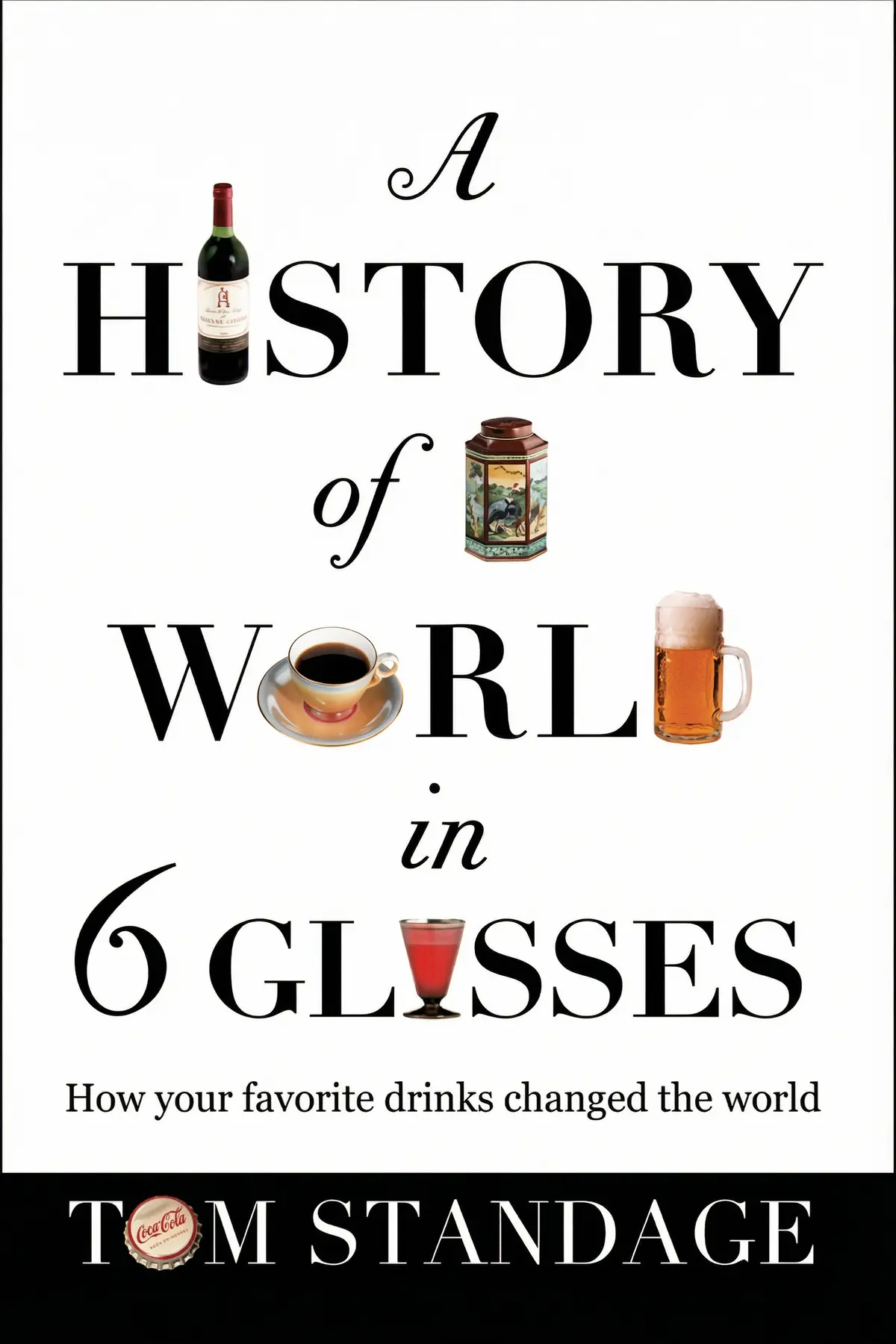
A History of the World in 6 Glasses
Tom Standage
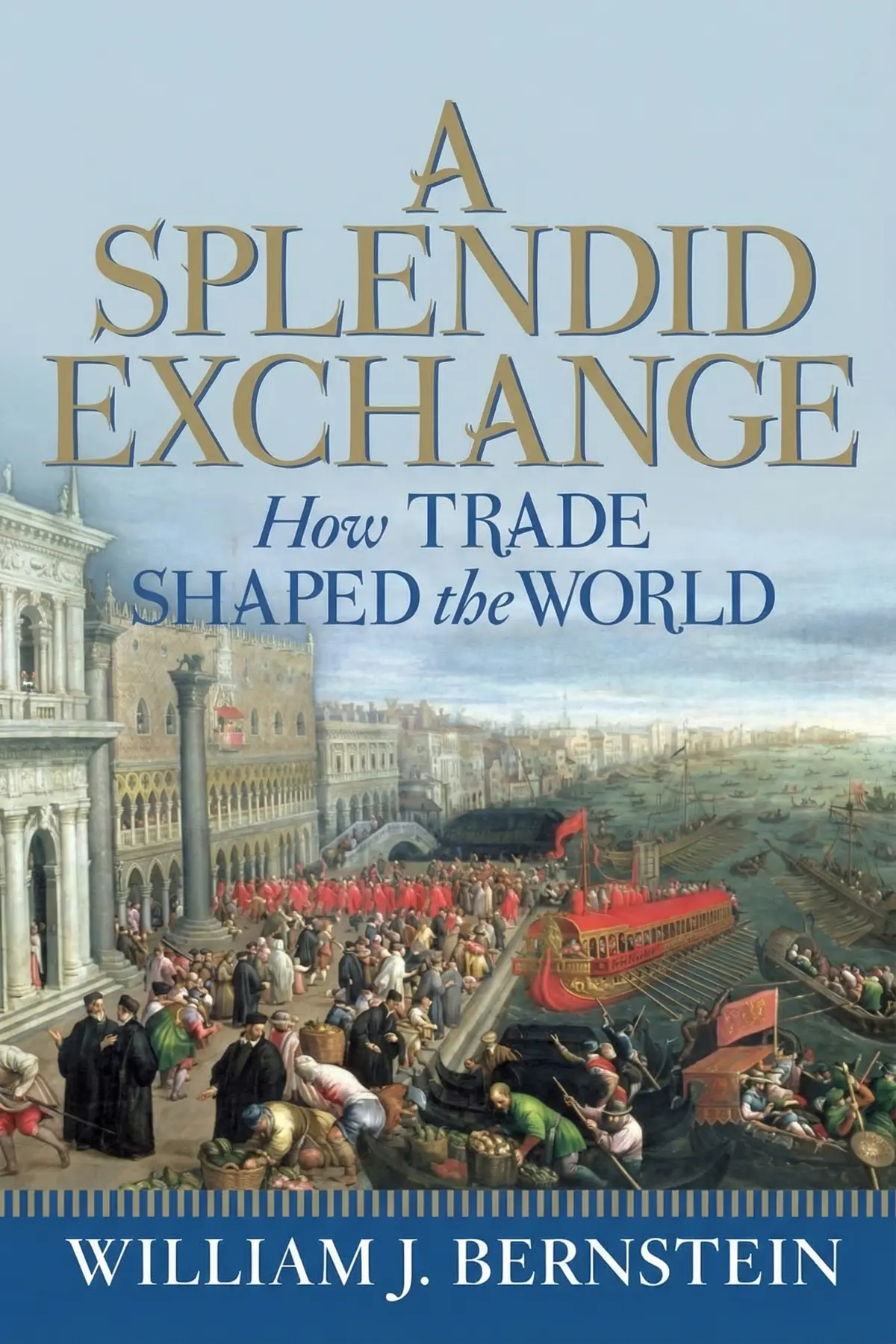
A Splendid Exchange: How Trade Shaped the World
William J. Bernstein

A Long Way Gone: Memoirs of a Boy Soldier
Ishmael Beah
AUDIO SUMMARY AVAILABLE
Listen to Work in 15 minutes
Get the key ideas from Work by James Suzman, plus 5,000+ more titles in English and Thai.
- 5,000+ titles
- Listen as much as you want
- 7-day free trial
- Cancel anytime







