
14 min 52 sec
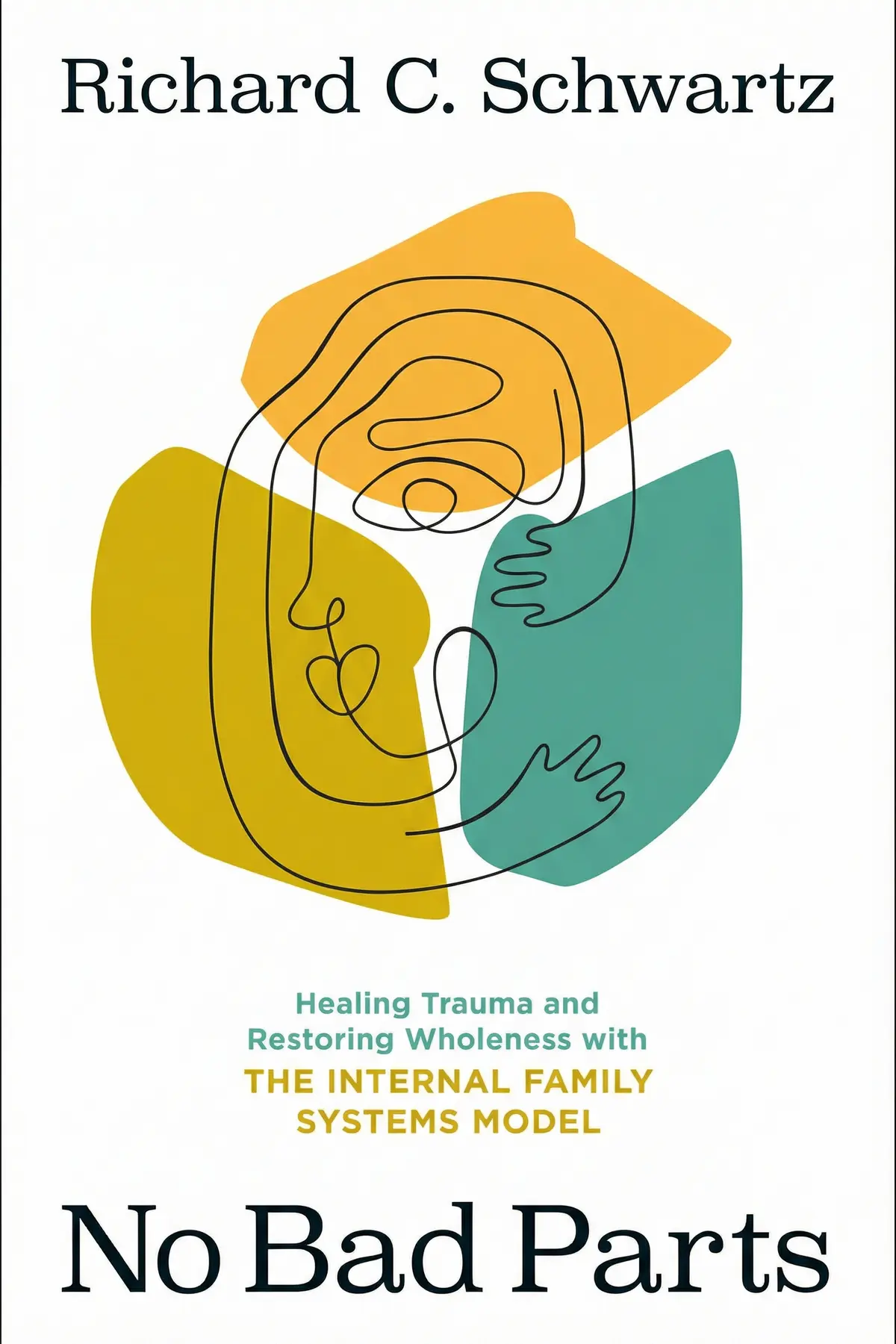
You Are the One You’ve Been Waiting For: Applying Internal Family Systems to Intimate Relationships
Discover how Internal Family Systems can transform your relationships. By healing your wounded inner parts and accessing your core Self, you can move from emotional dependency to a state of courageous, healthy intimacy.
Table of Content
1. Introduction
1 min 48 sec
We have all been there—standing in the wreckage of a relationship that seemed so promising at the start, wondering where it all went south. Conventional wisdom usually points to a few usual suspects. We’re told we didn’t communicate well enough, that we weren’t compatible, or that we simply hadn’t found ‘the one’ yet. This cultural narrative suggests that the right person is out there, somewhere, waiting to complete us and heal our old wounds. But what if this entire premise is backward? What if the reason our relationships struggle isn’t because of our partners, but because of the way we relate to ourselves?
In this exploration of the Internal Family Systems, or IFS, approach to intimacy, we are going to challenge the idea that a partner is supposed to be our primary source of emotional salvation. Developed by therapist Richard C. Schwartz, IFS suggests that our inner world is much like a family, populated by different ‘parts’ that hold our memories, fears, and desires. When we expect a romantic partner to manage these internal parts for us, we create a dynamic that is destined for friction.
Over the course of this summary, we will look at how our past experiences lead us to hide away our most vulnerable selves, and how those ‘exiled’ parts drive us toward unhealthy attachments. We will discover the ‘Self’—the compassionate core within everyone that has the power to lead and heal. By the end, you’ll see how shifting your focus from ‘fixing’ your partner to ‘parenting’ your own inner system can unlock a form of love that is courageous, resilient, and deeply fulfilling. You’ll learn that you don’t need to wait for someone else to save you, because, in a very real sense, you are the person you’ve been looking for all along.
2. The Inner Ecosystem of Parts
2 min 22 sec
Our minds are not a single unit but a complex system of sub-personalities, each with its own role, history, and goals for our emotional safety.
3. The Illusion of the Missing Piece
2 min 10 sec
We often enter relationships looking for an external source to feed our hungry inner parts, a dynamic that inevitably leads to disappointment.
4. The Three Projects of the Protectors
2 min 32 sec
When our partners fail to soothe our inner wounds, our protective parts launch ‘projects’ to fix the relationship, often causing more harm than good.
5. Speaking For Your Parts, Not From Them
2 min 07 sec
Transform your communication by learning to identify which internal part is speaking and choosing to express its needs from a place of calm Self-leadership.
6. Finding Freedom in Courageous Love
2 min 17 sec
True intimacy is possible only when we achieve internal security, allowing us to love our partners for who they are rather than what they can do for us.
7. Conclusion
1 min 36 sec
The journey through Internal Family Systems is ultimately a journey toward wholeness. We’ve explored how our minds are populated by a diverse cast of characters—parts that have been wounded by the past and protectors that have spent a lifetime trying to keep that pain at bay. We’ve seen how these internal dynamics are the true ‘hidden hand’ behind our relationship struggles, driving us to seek salvation in our partners and launching desperate ‘projects’ when that salvation fails.
But the core message of this approach is one of immense hope. Within each of us sits the ‘Self’—a leader who is naturally compassionate, curious, and calm. By making that ‘U-turn’ and focusing on our own internal family, we can stop the cycle of blame and dependency. We can learn to speak for our parts rather than being controlled by them, and we can cultivate a ‘courageous love’ that is resilient enough to handle the complexities of real human connection.
As you move forward, try to remember the image of the Magic Kitchen. Whenever you feel that familiar pull of resentment or the sting of abandonment, stop and look inside. Ask yourself which part of you is hungry, and see if you can be the one to offer it the attention and care it’s looking for. You don’t have to wait for your partner to change to find peace. You have the power to transform your inner world, and by doing so, you transform every relationship you touch. You are the one you’ve been waiting for, and your own Self is the greatest love of your life.
About this book
What is this book about?
Many people enter relationships hoping their partner will heal their deepest wounds or fill an emotional void. However, this often leads to a cycle of disappointment, conflict, and control. You Are the One You've Been Waiting For introduces the Internal Family Systems (IFS) model as a revolutionary way to approach love. Instead of looking outward for validation and rescue, this approach teaches individuals to look inward. The book explains that our minds are composed of various 'parts'—some that are wounded and 'exiled,' and others that act as 'protectors' to keep us safe. By accessing our 'Self'—a core of compassion and wisdom—we can provide the love and attention our internal parts crave. This shift allows us to stop placing impossible demands on our partners and instead engage in 'courageous love.' The promise of the book is a path toward relationships built on mutual support and genuine connection rather than survival and emotional hunger.
Book Information
About the Author
Richard C. Schwartz
Richard C. Schwartz is an academic and therapist specializing in families and relationships. He developed the Internal Family Systems (IFS) model, which focuses on the different parts within each individual, and how these parts relate to each other. His other books include Internal Family Systems Therapy and No Bad Parts: Healing Trauma and Restoring Wholeness with the Internal Family Systems Model.
Ratings & Reviews
Ratings at a glance
What people think
Listeners consider this work an essential guide that offers actionable techniques and assists in connecting theoretical ideas with real-world application. They value how the material fosters empathetic insight into romantic partners, while one listener points out its effectiveness in investigating inner struggles. The title earns praise for being genuine, easy to follow, and restorative, with one listener emphasizing how well it translates IFS principles into understandable terms.
Top reviews
Sawit
Schwartz has a way of turning the traditional 'you complete me' romantic ideal on its head, and frankly, it is the wake-up call I desperately needed. Instead of looking to my husband to fill the holes in my soul, this book taught me how to become the primary caretaker of my own 'parts.' The concept of the Self as a calm, centered leader is beautiful and, for once, actually feels attainable through the exercises provided. I loved the section on 'tor-mentors'—the idea that our partners trigger us not to be mean, but to show us where we still have internal healing to do. It shifts the entire dynamic from blame to curiosity. While some sections are a bit dense with IFS terminology, the overall message of courageous love is transformative. My relationship feels lighter now that I’m not demanding my partner carry my old baggage for me. Truly a must-read for anyone feeling stuck in the same old arguments.
Show moreJong
Ever wonder why the person you love most also happens to be the one who can drive you the most insane? This book explains that cycle better than any therapy session I’ve ever had. Schwartz describes our partners as emotional trailheads, leading us back to the 'exiles' or wounded inner children we’ve tried to hide away. The truth is, we often expect our significant others to prove we are lovable because we don't believe it ourselves. Reading this felt like someone finally handed me the map to my own internal chaos. The writing is accessible and avoids the overly clinical tone that usually bores me. It’s a very quick read, but I found myself pausing after every chapter just to process the implications for my own past relationships. If you’ve ever felt like your 'protector' parts were sabotaging your happiness, you need to read this. It’s about much more than just marriage; it’s about finally being at peace with yourself.
Show moreCooper
Picked this up on a whim after my therapist mentioned Internal Family Systems, and it’s been a total game-changer for my marriage. The way Schwartz explains how we 'speak from' our anger rather than 'speaking for' a part of us that is angry is such a simple but profound shift. It immediately lowers the temperature in the room during a fight. I’ve always been the 'needy' one in relationships, and seeing that as a basement child acting up was so much more helpful than just feeling ashamed of it. This book provides a practical bridge between psychological theory and real-world healing that actually sticks. I feel more confident navigating conflicts now because I know how to check in with my own Self-energy first. It’s an invaluable resource for anyone who wants to stop the cycle of attachment injury and start building something authentic and lasting.
Show morePia
After hearing my cousin rave about this for months, I finally bought a copy from the author's website. Wow. I’ve read a dozen books on the inner child, but none of them made it as clear as Schwartz does here. He doesn't just tell you to 'love yourself'; he gives you a framework for how to actually do it by engaging with the different voices in your head. The idea that we contain multitudes is so liberating. I realized that my 'manager' parts were actually the ones making me feel so exhausted and dissatisfied in my dating life. By learning to lead from the 'Self,' I’ve found a sense of calm I didn't think was possible. The book is short, but every page is packed with wisdom. I’ve already recommended it to three friends. It’s rare to find a book that offers such a compassionate understanding of why we hurt the ones we love.
Show moreSupatra
Personally, I think the idea of 'tor-mentors' is the most revolutionary thing I've read in years. We spend so much time trying to avoid conflict or find a partner who never triggers us, but Schwartz argues that those triggers are actually the 'spice' and the path to healing. It completely changed how I viewed my last big argument with my partner. Instead of seeing him as the enemy, I saw how he was accidentally stepping on an old wound that I hadn't tended to. The process of 'unblending' from my emotions has helped me remain the 'I' in the storm of our household stress. This book is authentic, deeply moving, and provides the kind of healing that feels permanent rather than just a temporary band-aid. It’s about becoming the person you’ve been waiting for all along. Highly recommended for anyone ready to do the deep work.
Show moreCharlotte
This book is essentially the manual for 'No Bad Parts' but specifically for those of us struggling in the romance department. It offers an incredibly accessible translation of complex IFS concepts into everyday language. I loved the focus on 'courageous love'—the ability to let your partner grow even if it feels threatening to your own security. It’s a very high bar, but Schwartz makes it feel like a journey worth taking. The writing style is warm and encouraging, which helps when you're digging into painful topics like 'exiles' and childhood burdens. I particularly enjoyed the sections on how our culture teaches us to distract ourselves from our unlovability rather than facing it. It's a short, punchy book that manages to be both a psychological guide and a spiritual wake-up call. I feel much better equipped to bring a 'sound self' to my next relationship after finishing this.
Show moreOtt
The concept of 'parts' isn't exactly groundbreaking if you've done any shadow work, but Schwartz’s execution here is top-tier compared to other self-help titles. He takes the Internal Family Systems model and applies it to intimacy in a way that feels both compassionate and intellectually stimulating. I especially appreciated the 'U-turn' concept, which encourages looking inward during a conflict rather than lashing out at a partner. To be fair, the book does get quite repetitive toward the end, and the lack of a formal index made it hard to go back and find specific definitions. I also found myself disagreeing with his claim that we don't need communication skills once we're 'Self-led.' Even with an open heart, sometimes you just need a better way to phrase a difficult boundary! Still, the insights into how we exile our own joy and spontaneity were eye-opening. It's a solid 4-star read that offers real tools for growth.
Show moreYongyut
Not what I expected, but exactly what I needed to hear. Most relationship books focus on how to change your partner or how to compromise until you’re both miserable, but Schwartz argues that the real work is entirely internal. He challenges the 'you complete me' paradigm in a way that feels empowering rather than cold. I really liked the distinction between being a primary and secondary caretaker for our internal parts. It takes so much pressure off the relationship! My only gripe is that the book feels a bit like an advertisement for IFS at times, using a lot of branded language that can feel a bit cult-adjacent if you aren't careful. However, the actual advice regarding 'courageous love' and unburdening our past traumas is undeniably powerful. The chapter summaries are excellent and help consolidate the main points. It’s an easy read that manages to deliver some very heavy, life-altering insights.
Show moreNarumon
To be fair, I struggled with the author's dismissal of traditional research and evidence-based studies in this particular volume. While the IFS framework is fascinating and clearly helps many people, I would have liked to see more data on how it stacks up against other modalities. The book functions more as a philosophical guide than a clinical manual, which might be exactly what some people want, but I found it a bit light on substance. Also, the personification of 'parts' as actual subpersonalities felt a little too 'woo-woo' for my taste at times. That said, the advice about not making your partner your primary source of worth is incredibly sound. It’s a short book and very repetitive, which makes the lack of an index even more frustrating. It's worth a skim for the core concepts, but I’m not sure it lives up to the massive hype surrounding it in some circles.
Show moreOrathai
Look, I really wanted to like this, but I found the repetitive nature of the chapters almost unbearable. The author says the same thing five different ways in every section. If you read the introduction and the chapter summaries, you’ve basically read the whole book. I’m also not a fan of the idea that we don’t need to learn communication skills. I think that's actually quite dangerous advice for some couples who are genuinely struggling to express their needs safely. The case studies felt a bit 'perfected' for the sake of the narrative, and I didn't find them very relatable to real-world messy situations. Maybe I’m just not the right audience for this specific brand of therapy, but it felt more like a long essay stretched into a book. It’s not a total waste of time, but there are better relationship guides out there that are more grounded in reality.
Show more
Readers also enjoyed

A Liberated Mind: How to Pivot Toward What Matters
Steven C. Hayes
ADHD an A-Z: Figuring It Out Step by Step
Leanne Maskell

All About Love: New Visions
bell hooks
AUDIO SUMMARY AVAILABLE
Listen to You Are the One You’ve Been Waiting For in 15 minutes
Get the key ideas from You Are the One You’ve Been Waiting For by Richard C. Schwartz, plus 5,000+ more titles in English and Thai.
- 5,000+ titles
- Listen as much as you want
- 7-day free trial
- Cancel anytime







