
19 min 29 sec
No Bad Parts: Healing Trauma and Restoring Wholeness with the Internal Family Systems Model
Explore a revolutionary therapeutic approach that views the mind as a system of parts. Learn how to heal trauma, calm your inner critics, and lead your life from a place of compassion.
Table of Content
1. Introduction
1 min 50 sec
Have you ever felt like there was a literal war going on inside your head? Perhaps one part of you is desperate to take a leap of faith and start a new career, while another part is shouting about all the ways you could fail and end up broke. Or maybe you find yourself reacting to a minor criticism with a level of rage that surprises even you, only to feel deep shame about it minutes later.
For a long time, the world of psychology and even our common sense have told us that we have one mind—a ‘mono-mind.’ This perspective suggests that if we have conflicting voices or urges, something is fundamentally broken or ‘disordered.’ We are told to use willpower to crush the parts of us we don’t like and to listen only to the ‘rational’ self. But what if that approach is exactly why we stay stuck?
In this summary of Dr. Richard C. Schwartz’s work, we are going to explore a completely different way of looking at our inner lives. We are going to look at the Internal Family Systems model, or IFS. The core premise is both radical and incredibly hopeful: there are no bad parts. Every single voice, urge, and personality trait inside you is there for a reason, and most of them are trying to help you, even if they are doing it in ways that cause pain.
Throughout this journey, we’ll move beyond the idea of suppressing our feelings and instead learn how to negotiate with them. We will see how our minds are actually built like a family or a team, and how trauma can force our internal members into roles that they never wanted to play. By the end, you’ll understand how to tap into your ‘Self’—a core essence that is already whole, calm, and capable of leading your internal system toward harmony and healing. Let’s begin by dismantling the myth that you are just one person.
2. The Fallacy of the Mono-Mind
2 min 29 sec
Discover why the traditional view of a single, unified personality might be holding you back and how recognizing your internal multiplicity is the first step toward health.
3. Understanding the Three Primary Roles
2 min 27 sec
Explore the internal taxonomy of Managers, Firefighters, and Exiles, and learn how trauma forces these parts into protective yet destructive roles.
4. The Indestructible Essence of the Self
1 min 59 sec
Learn about the ‘Self’—the compassionate leader within you that remains undamaged by trauma and is ready to heal your internal system.
5. The Art of Internal Reparenting
2 min 14 sec
Witness how the Self can heal wounded parts by acting as a loving, present caregiver to the ‘children’ living within your mind.
6. From Internal Conflict to Global Harmony
2 min 14 sec
Understand how the way we treat our internal parts dictates our external relationships and how inner healing can lead to a more peaceful world.
7. The Body as the Stage for the Internal Drama
2 min 18 sec
Discover the deep connection between your physical sensations and your internal parts, and why being ‘present’ is more than just a mental exercise.
8. Establishing a Daily Practice of Connection
2 min 24 sec
Practical steps to turn the theory of IFS into a life-changing habit, including the ‘Trailhead’ technique and mapping your internal family.
9. Conclusion
1 min 34 sec
As we wrap up our exploration of the Internal Family Systems model, the most important takeaway is the beautiful promise found in the book’s title: there truly are no bad parts. Everything inside you—the anger, the shame, the addiction, the criticism—originated as a way to protect you. These parts are your internal heroes who have been working in a war zone for far too long. They are exhausted, and they are waiting for someone to come and tell them that the war is over.
That ‘someone’ is you. Not the ‘you’ that feels broken or messy, but the ‘Self’ that is at your very core. By practicing the Eight Cs—especially curiosity and compassion—you can begin to transform your internal landscape. You don’t need to ‘fix’ yourself because your essence isn’t broken. You simply need to restore the natural harmony of your internal system by letting your Self lead.
This week, when you feel a strong emotion or an internal conflict, try to stop and say to yourself: ‘A part of me is feeling this.’ Notice where it is in your body. Ask it what it needs you to know. This small shift in language and perspective is the beginning of a profound journey toward wholeness. By welcoming all your parts back into the family, you don’t just heal yourself; you become a source of peace and clarity for everyone around you. You are more than your struggles, and your inner family is ready to come home.
About this book
What is this book about?
This summary dives deep into the Internal Family Systems (IFS) model, a transformative psychological framework developed by Dr. Richard C. Schwartz. It challenges the traditional view of a single, unified mind, suggesting instead that we are all composed of various internal 'parts'—sub-personalities that take on different roles, often as a result of past trauma. You will learn how these parts, though sometimes destructive in their behavior, are always trying to protect you. By identifying your 'Managers,' 'Firefighters,' and 'Exiles,' you can begin to understand the root of your internal conflicts. The book promises a path toward 'Self-leadership,' where your core essence—characterized by curiosity, compassion, and calm—takes charge of your internal family, leading to profound emotional healing and more authentic relationships with the world around you.
Book Information
About the Author
Richard C. Schwartz
Richard C. Schwartz, PhD, is the trailblazing psychologist who pioneered the Internal Family Systems (IFS) therapeutic method. He currently serves as the director of the Internal Family Systems Institute, an organization dedicated to sharing this healing work across the globe. Throughout his distinguished career, Dr. Schwartz has authored five influential books and published more than 50 articles in professional journals focused on therapy and psychology. He is widely recognized as a prominent and sought-after public speaker in the field of mental health.
Ratings & Reviews
Ratings at a glance
What people think
Listeners find this work to be transformative and accessible, noting that it provides a clear explanation of IFS alongside practical exercises. They value its therapeutic focus, with one listener pointing out its effectiveness for trauma recovery, while others emphasize how it encourages empathy for oneself and those around them. The prose is frequently praised for being well-written and succinct, although some find the content difficult to navigate.
Top reviews
Kung
Finally got around to reading Schwartz’s seminal work, and it’s shifted my entire internal dialogue. Instead of yelling at my anxiety, I’m now asking what it’s trying to protect me from. The 8 Cs—like compassion and curiosity—aren't just words here; they’re actually accessible states of being. Frankly, I was surprised by how much the 'Firefighter' concept resonated with my own history of binging when stressed. It’s a very gentle, affirming read that doesn't make you feel broken for having coping mechanisms. Some parts are a little 'new age' for my taste, but the results speak for themselves. If you’ve ever felt like you’re at war with yourself, this is the peace treaty you need to read.
Show moreNarongrit
As a long-time therapy seeker, I’ve found CBT and DBT to be helpful but often too clinical. This book fills that gap by offering a deeply emotional and compassionate framework for trauma work. Schwartz breaks down our internal world into Managers, Firefighters, and Exiles, which helped me identify why I revert to certain destructive behaviors. It’s about 'unburdening' those younger versions of ourselves rather than just trying to suppress them. My only gripe is that it makes the process look almost too easy in the transcripts; real-life healing is usually much messier and slower than what’s depicted here. Still, the message that there are 'no bad parts' is revolutionary for self-worth. It’s a must-read if you’re ready to stop being your own worst critic.
Show moreMethinee
Wow. Just wow. I didn’t realize how much I was judging my own protective parts until I read the chapter on 'Self' energy. The realization that every part of me—even the ones I hate—is actually trying to help is a complete game-changer for my mental health. Richard Schwartz has a very warm, personable writing style that makes complex psychological concepts feel like a conversation with a friend. The practical exercises at the end of the chapters are gold, though I’d recommend doing them in a quiet space where you won't be interrupted. I’ve started treating my 'Manager' parts with more gratitude, and the internal tension has noticeably dropped. This is the first 'self-help' book that didn't make me feel like I needed to change, but rather that I needed to listen.
Show moreRosa
This book completely reframed how I view my anxiety and my past. I used to think I was just a 'naturally anxious' person, but Schwartz helped me see that anxiety as a Part that has a job to do. The writing is clear, concise, and remarkably compassionate toward the reader. I found the 8 Cs of Self-leadership—things like Calm, Clarity, and Courage—to be a great roadmap for how I want to show up in the world. It’s not just about healing old wounds; it’s about learning to lead your own life from a place of wisdom rather than fear. Not gonna lie, I cried through several of the meditations because they hit so close to home. Truly a healing experience for anyone who has felt broken.
Show moreArthit
Schwartz has a way of making you feel seen without ever meeting you. His Internal Family Systems model is the first thing that’s helped me understand my self-sabotaging behaviors without falling into a pit of shame. By identifying my 'Exiles' and listening to their pain, I’ve felt a sense of internal peace I didn’t think was possible. The book is well-written and avoids being too dry or academic, though it definitely leans into the spiritual side of healing toward the end. Personally, I found the connection between IFS and 'unburdening' to be the most profound part of the journey. It’s not a quick fix, but it provides a very clear path toward becoming a more integrated, whole human being. It's a beautiful, life-changing book.
Show moreTong
Look, the core idea here is brilliant. Viewing your personality as a family system rather than a single entity explains so much about our contradictory impulses. I especially liked the section on how our 'Firefighters' jump in to extinguish emotional pain with things like addiction or anger. It’s an incredibly non-shaming approach to mental health that feels very different from traditional psychiatry. However, some of the transcripts felt a bit performative and stylized, like we’re only seeing the highlights of a session. Is it really that easy to get a 'Manager' to step aside? In my experience, it takes months of work, not a five-minute dialogue. Still, as a framework for self-compassion, it’s one of the best books I’ve read this year.
Show moreJoy
Picked this up on a whim because I was feeling stuck in my current therapy, and I’m so glad I did. The concept of 'no bad parts' is so simple yet so hard to actually believe until you see it laid out like this. Schwartz explains that our most annoying traits are often just over-worked protectors who haven't realized we’re adults now. The exercises are easy to follow and didn't feel as 'clinical' as I expected, which I appreciated. Got to say, it’s a bit repetitive in the middle, but the core message is so vital that I didn't mind the reinforcement. It’s definitely helped me find more patience for my own 'Manager' parts that never seem to let me rest. Highly recommend for anyone dealing with burnout.
Show moreAlejandra
After hearing several podcasts mention IFS, I wanted to love this, but I struggled with the author’s ego. Dr. Schwartz seems to believe his model is the answer to everything from chronic pain to global politics. While the 'parts' analogy is useful for understanding inner conflict, the book is structured poorly and moves into the 'spiritual' realm way too quickly. He makes some massive claims without much scientific backing, basically saying if it doesn't work, you just aren't believing in it enough. To be fair, the concept of the 'Exile' is a powerful way to look at childhood trauma. However, the rambling anecdotes and the high-horse tone made it a chore to finish. It’s a decent introduction to the system, but be prepared to roll your eyes at the 'universal truth' vibes.
Show moreLena
The chapter on political leaders and systemic issues was a bit of a stretch for me. While I appreciate the radical empathy Schwartz advocates for, claiming that even the most heinous people are just 'led by bad parts' felt somewhat dismissive of real-world harm. It’s a very privileged perspective that ignores how systemic oppression actually functions in favor of an individualistic 'we all have a Good Self' narrative. On the other hand, the individual therapy techniques are genuinely fascinating and have helped me navigate my own inner critics. I find myself somewhere in the middle—I’ll take the therapeutic tools but leave the grand sociopolitical theories. A solid three stars for the psychology, even if the philosophy is a bit shaky and overly idealistic.
Show morePick
Not what I expected, and frankly, a bit of a letdown. I love the idea of parts in theory, but Schwartz’s delivery feels oddly cult-like and self-congratulatory. He constantly refers to himself as a leader and includes these bizarre transcripts that read more like exorcisms than modern clinical therapy. Everything is wrapped in this mystical packaging that assumes you’ll just 'hear' your parts if you try hard enough. Truth is, for those of us who don't visualize things easily, these exercises are frustrating and alienating. It feels more like a rigid belief system than science-backed psychology. I’m sure it helps some, but the 'Big Self' stuff just felt like repackaged spirituality I didn't sign up for.
Show more
Readers also enjoyed
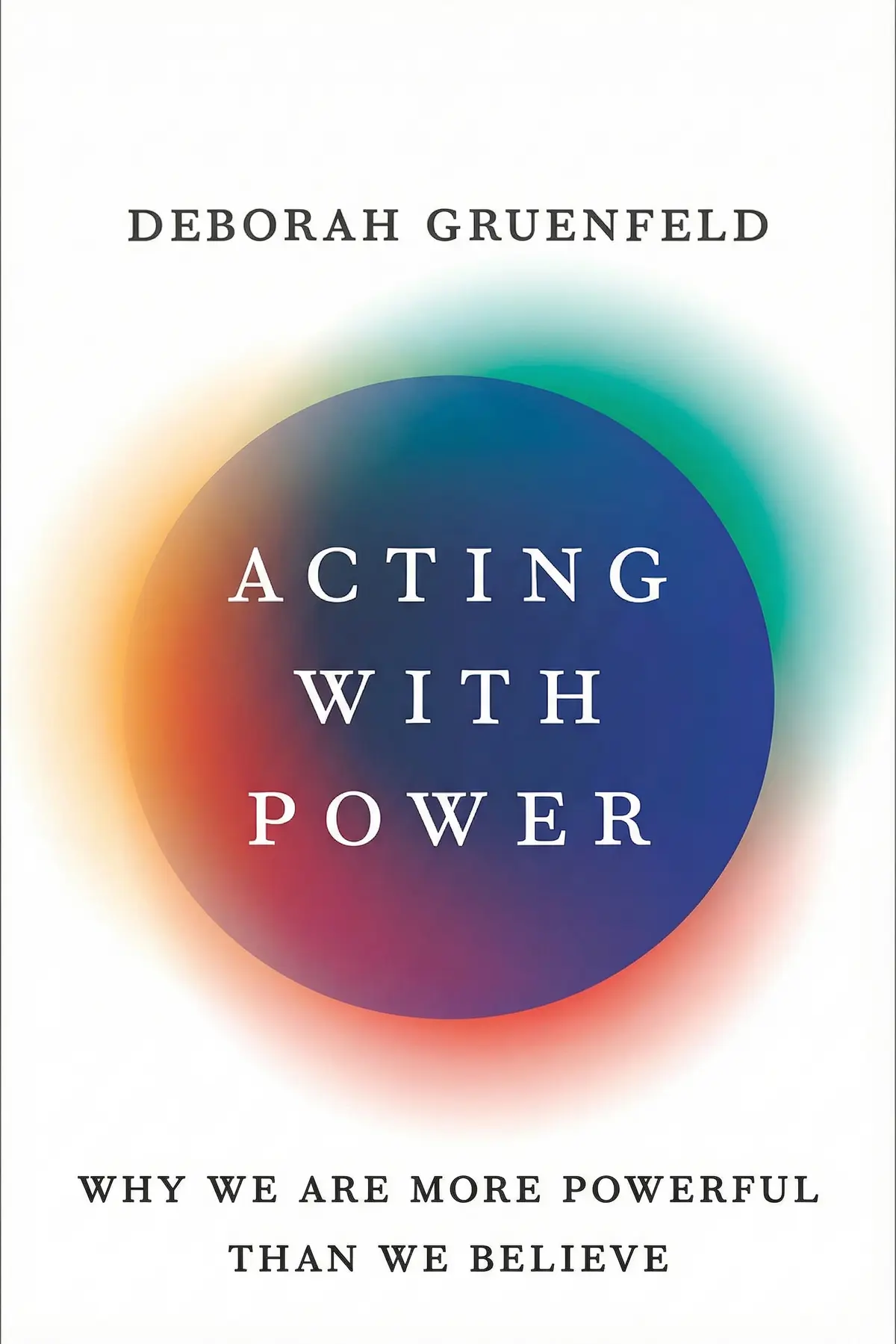
Acting with Power: Why We Are More Powerful Than We Believe
Deborah Gruenfeld
Age of Propaganda: The Everyday Use and Abuse of Persuasion
Anthony Pratkanis
Alcoholics Anonymous
Alcoholics Anonymous World Services
AUDIO SUMMARY AVAILABLE
Listen to No Bad Parts in 15 minutes
Get the key ideas from No Bad Parts by Richard C. Schwartz, plus 5,000+ more titles in English and Thai.
- 5,000+ titles
- Listen as much as you want
- 7-day free trial
- Cancel anytime







