
A Guide to the Good Life: The Ancient Art of Stoic Joy
William B. Irvine
Explore the profound connection between your mental landscape and physical well-being. This guide offers transformative tools for self-love, forgiveness, and positive affirmations to help you create a life of health and fulfillment.
1 min 48 sec
Imagine for a moment that every struggle you face—whether it’s a nagging pain in your back, a feeling of career stagnation, or a pattern of rocky relationships—could be traced back to a single source. Now, imagine that this source isn’t some external force or bad luck, but something entirely within your control: your own mind. This is the radical and empowering premise at the heart of the work by Louise Hay. She suggests that we aren’t just passive observers of our lives, but the very architects of our reality.
Louise Hay’s own life story serves as the ultimate proof of her philosophy. When she was confronted with a diagnosis of cervical cancer, she didn’t just look for a quick fix. She looked inward, believing her illness was the physical manifestation of a lifetime of trauma, anger, and resentment. By turning to holistic remedies and, more importantly, by learning how to truly love and forgive herself, she experienced a profound healing. This transformation set her on a path to show others how to do the same.
In this exploration of her timeless teachings, we are going to look at the throughline that connects our inner dialogue to our outer experience. We’ll learn why self-love is the master key that unlocks every other door to success. We will examine the ways we resist change, how we can perform a ‘mental housecleaning’ to clear out old, dusty beliefs, and how to use simple, present-tense affirmations to reprogram our subconscious.
This isn’t just about feeling better in the moment; it’s about a total shift in how you relate to yourself and the Universe. By the end of this journey, you’ll understand how to reclaim your power from the past and start building a life defined by health, abundance, and joy. It’s time to look at the patterns you’ve been repeating and realize that you have the permission—and the tools—to change them right now.
2 min 38 sec
Discover how your internal dialogue acts as a blueprint for your external world and why the Universe always says yes to your requests.
2 min 43 sec
Learn why most of your problems stem from a single root cause and how to begin the process of mental housecleaning.
2 min 27 sec
Uncover the strength of the current moment and how a simple mirror can become your most challenging yet effective healing tool.
2 min 40 sec
Explore the fascinating link between specific emotional states and physical ailments, and learn to decode what your body is trying to tell you.
2 min 43 sec
Learn to identify the many faces of resistance and how to nurture your inner child through the difficult process of change.
2 min 50 sec
Master the specific technique for creating powerful affirmations that can rewire your subconscious and attract abundance.
1 min 56 sec
As we conclude this journey through the transformative philosophy of Louise Hay, the most vital takeaway is that the power to change your life is already within you. We’ve explored the idea that our thoughts are the architects of our reality and that by taking responsibility for our mental atmosphere, we can shift from a state of victimhood to one of creation. We’ve seen how self-love serves as the primary engine for health and success, and how ‘mental housecleaning’ allows us to discard the heavy, outdated beliefs that no longer serve us.
We also touched on the profound connection between the mind and the body, realizing that our physical ailments are often messengers asking us to look at our emotional state. By decoding these signals and confronting our resistance through tools like mirror work and forgiveness, we break the cycles of pain and limitation. The final step is the consistent use of positive affirmations—speaking our desires into existence in the present tense and trusting the Universe to support our growth.
The throughline of all these teachings is simple: you are worth the effort it takes to heal. Peace, health, and abundance are not things you have to earn; they are your birthright. When you are out of sync with these things, it’s simply a sign that you have drifted away from your true self. By choosing to love and approve of yourself exactly as you are right now, you realign with the natural flow of life.
To put this into practice today, choose three positive affirmations that resonate with your current needs. Perhaps they are ‘I am whole and healthy,’ ‘I am worthy of great love,’ or ‘Abundance flows to me easily.’ Write them down twenty times each, and say them aloud with genuine enthusiasm. Carry those words with you like a shield and a compass. As you persistently water these seeds of thought, you will watch your world transform. Healing isn’t a destination you reach; it’s a way of living that you choose every single day. Start choosing it now.
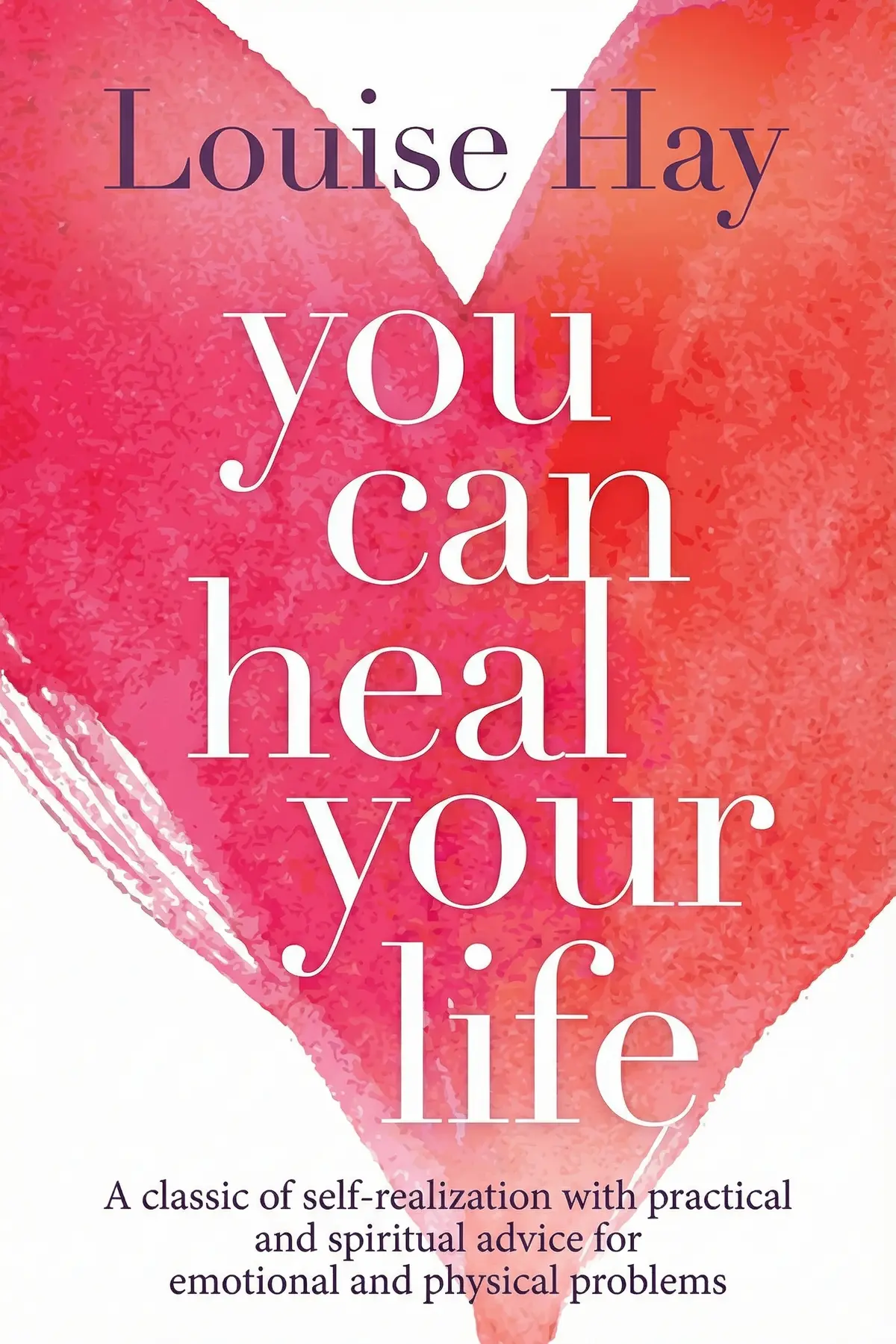
You Can Heal Your Life is a cornerstone of the self-help movement, presenting a powerful argument that our thoughts and beliefs are the primary drivers of our physical and emotional health. Louise Hay posits that most of our life's problems, from chronic illness to financial struggles, are rooted in a lack of self-worth and a refusal to forgive. The book provides a spiritual yet practical framework for redesigning one's reality through the mastery of thought. By following this summary, you will discover how to conduct a thorough mental housecleaning, identifying the limiting beliefs planted in childhood and replacing them with empowering affirmations. The promise of this journey is nothing less than total self-transformation. It guides listeners through the process of mirror work, body-mind mapping, and releasing the heavy weight of the past to embrace a present full of potential and healing.
Louise Hay was a pioneering motivational author, speaker, and the founder of Hay House publishing. She was deeply connected to the New Thought and Religious Science movements and spent time studying under Maharishi Mahesh Yogi. Her own journey toward becoming a global authority on self-healing was catalyzed by a diagnosis of cervical cancer, which led her to explore spiritual cleansing and the Science of Mind. She eventually became a world-renowned bestselling author and a leader in the field of personal growth.
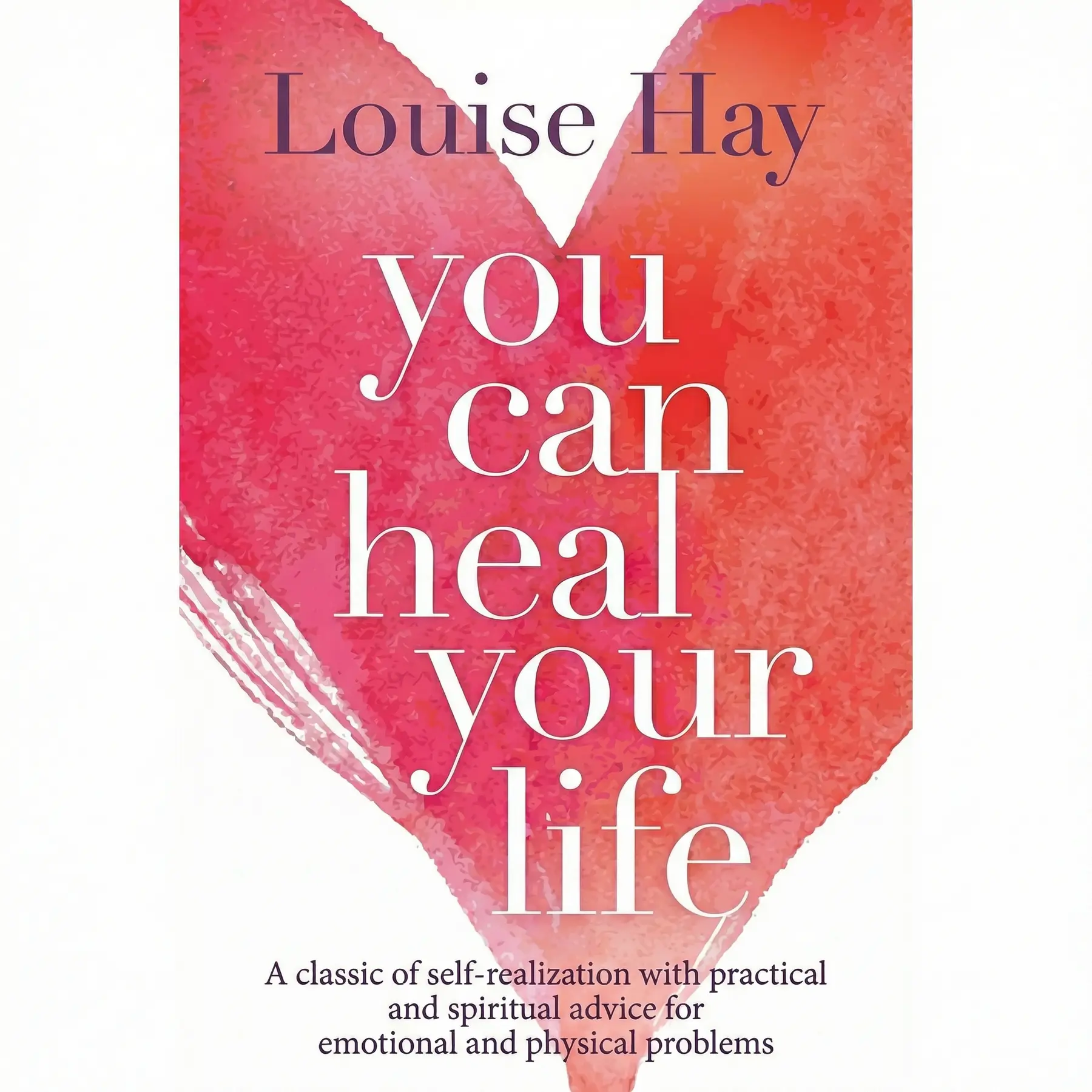
Listeners find this work both eye-opening and motivating, as it instructs them on adopting a positive mindset and shifts how they view the world. The guide offers practical activities and is viewed as transformative, with one listener noting it includes tangible steps to make changes. They enjoy how easy it is to digest, with several fans so fond of it they revisit it every day, and they admire the stunning artwork along with the uplifting themes regarding self-compassion.
Finally got around to reading this classic and it’s easy to see why it has stayed relevant for decades. The core message is simple: our thoughts create our reality, and by practicing self-love, we can physically heal ourselves. I love how Hay includes specific affirmations for every ailment, from minor headaches to chronic issues. Truth is, some of the correlations—like the idea that we choose our parents—felt a bit strange at first, but the overall shift in perspective is worth it. The exercises are practical and easy to follow, making this more than just a theoretical text. It’s a roadmap for anyone feeling stuck in negative patterns. I’ve started doing the mirror work every morning and the difference in my mood is undeniable. Highly recommended for those ready to do the inner work.
Show moreWow, I wasn't expecting this to hit so hard during my first read-through. This isn't just a book you read; it's a life-changing manual that requires active participation to get results. The way Louise Hay breaks down the link between mental resentment and physical illness is incredibly empowering for someone dealing with chronic pain. While the writing style is very much a product of its time, the beautiful illustrations and positive affirmations keep the energy high. Personally, I found the section on forgiveness to be the most transformative part of the entire experience. It helped me realize that holding onto old anger was only hurting my own body. Even if you don't believe you can cure every disease with your mind, the psychological benefits of these shifts are massive. It is truly a gift to yourself.
Show moreLouise Hay’s personal journey is nothing short of incredible, and her resilience shines through every single page of this book. After surviving childhood abuse and later healing herself from cancer, she speaks with an authority that few authors in this genre can match. The truth is, we spend so much time being our own worst critics without even realizing the damage it does to our nervous systems. I found the "What is the Problem?" section particularly enlightening because it forces you to look at the root causes of your unhappiness. The writing is accessible, warm, and feels like a hug from a wise grandmother who refuses to let you wallow. It’s a life-changer if you’re actually willing to do the exercises and change your vocabulary. I find myself reaching for it daily just to stay centered.
Show moreEver wonder if your internal monologue is actually shaping your physical world? This book argues that it is, and it provides the most comprehensive guide to flipping the script that I’ve ever seen. Louise Hay makes the case that every thought we think is creating our future. This might sound intimidating, but it’s actually the ultimate form of empowerment because it means we have the power to change everything. The way she links specific emotions to body parts—like "fat thighs" being a sign of held anger—is fascinating, even if it’s purely metaphorical. It’s a beautiful book that I keep on my nightstand for daily inspiration. Since I started using her techniques, my anxiety has dropped significantly. This is a must-read for anyone on a healing journey.
Show moreAs someone who has always been skeptical of self-help, I found Louise Hay’s approach surprisingly grounded in many ways. She doesn't just tell you to be happy; she gives you tangible steps to dismantle the negative internal structures we’ve built since childhood. The mind-body connection is a powerful concept that modern science is finally starting to validate, even if Hay’s specific charts feel a bit anecdotal. I did find myself rolling my eyes at the suggestion that we attract every single misfortune through "bad energy," because sometimes life just happens. However, the focus on self-approval over self-criticism is a message everyone needs to hear right now. It’s a very readable book that you can dip in and out of whenever you need a mental reset. A solid four stars for the sheer positivity.
Show moreThe chapter on how our childhood patterns dictate our current reality was a massive eye-opener for me. I’ve spent years wondering why I repeat the same mistakes, and Hay’s explanation of "mental housecleaning" gave me a new perspective. To be fair, some of the metaphors are a bit cheesy and the tone can be overly simplistic at times. But the core exercises, especially the ones involving mirror work, have genuinely helped me become less critical of my appearance. You have to be in a certain headspace to accept the more "woo-woo" elements, like the idea of the Universe listening to your thoughts. If you can get past the 80s vibes, there’s a lot of wisdom about how we hold tension in our bodies. It’s an empowering read that makes you feel like change is actually possible.
Show morePicked this up at a thrift store on a whim and ended up finishing it in two sittings. It's a very easy read, filled with beautiful affirmations and a layout that makes it feel very approachable. I appreciate that she doesn't push a specific religion, instead focusing on a general spiritual connection and the power of the individual mind. My only gripe is that it simplifies very complex systemic issues into "it’s all in your head," which isn't always fair. Still, the emphasis on forgiveness and letting go of the past is something I really needed to hear right now. It's a great tool for anyone looking to improve their self-talk. I’ve started giving copies to my friends who are going through rough patches.
Show moreTo be fair, there is some genuine wisdom buried under a lot of strange theories here. I really appreciated the focus on self-love as the foundation for everything else in life. The book is incredibly easy to navigate, and the affirmations are catchy enough to actually remember throughout the day. I’m still not sold on the idea that I "chose" my parents before I was born, but I can see how that mindset helps people take responsibility for their current lives. It's a polarizing text, for sure. You’ll either find it enlightened or totally eccentric. Personally, I think the benefits of the positive thinking exercises outweigh the weirdness of the more extreme claims. It’s a classic for a reason, even if it requires a bit of a "pick and choose" mentality from the reader.
Show moreLook, I have very mixed feelings about this one after finishing the last chapter. On one hand, the encouragement to treat yourself with kindness and use positive affirmations is lovely and genuinely helpful for mental health. On the other hand, the claim that we literally choose our parents and that cancer is caused by suppressed resentment feels like a dangerous form of victim-blaming. Not gonna lie, seeing her attribute specific body issues to things like "anger at your father" felt more like a parlor trick than actual medicine. If you can filter out the pseudo-science and focus on the parts about self-love and breaking old habits, there is value here. It’s a strange mix of profound psychological insight and total hokum. Take what works for you and leave the rest on the shelf.
Show moreThis book feels incredibly dated and, frankly, quite irresponsible in its claims regarding physical health. I struggle with the idea that individuals are responsible for attracting their own abusers or that chronic illness is simply a lack of self-love. While the affirmations are harmless enough, the historical context of Louise Hay preaching these ideas during the AIDS crisis makes me deeply uncomfortable. To suggest that a person could cure a terminal illness just by changing their thoughts is a heavy burden to place on someone who is already suffering. There are some okay tips on meditation and being kind to yourself, but the victim-blaming undertones are impossible for me to ignore. If you have a history of trauma, please approach this with caution. It feels more like a fantasy than a healing guide.
Show moreWilliam B. Irvine
Andrew D. Thompson
Deepak Chopra
Daniel Goleman
Eckhart Tolle
Marianne Williamson
AUDIO SUMMARY AVAILABLE
Get the key ideas from You Can Heal Your Life by Louise Hay, plus 5,000+ more titles in English and Thai.







