
17 min 40 sec
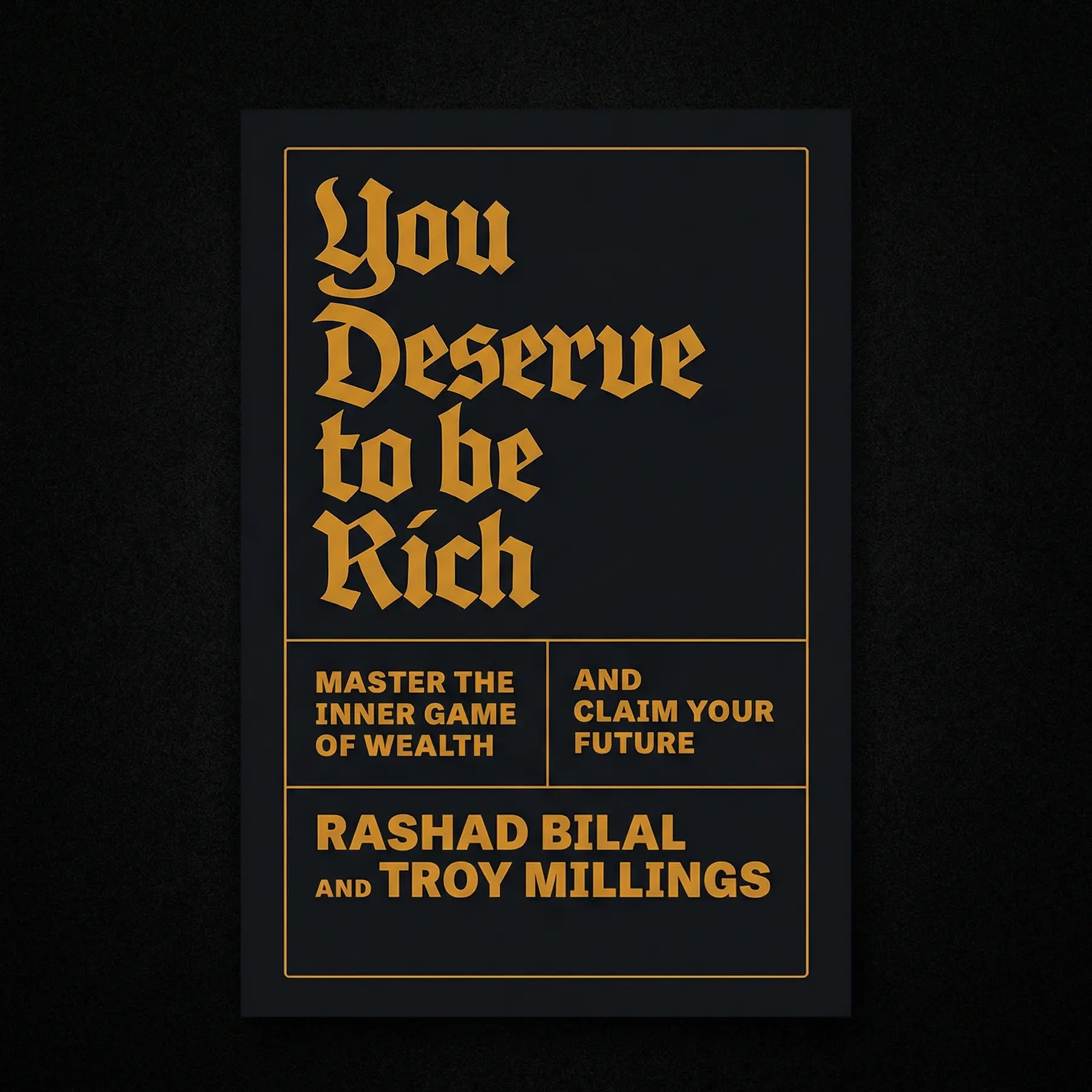
You Deserve to Be Rich: Master the Inner Game of Wealth and Claim Your Future
A comprehensive guide to financial literacy that helps you overcome mental barriers, build multiple income streams, and secure a lasting legacy through practical wealth-building strategies and disciplined money management.
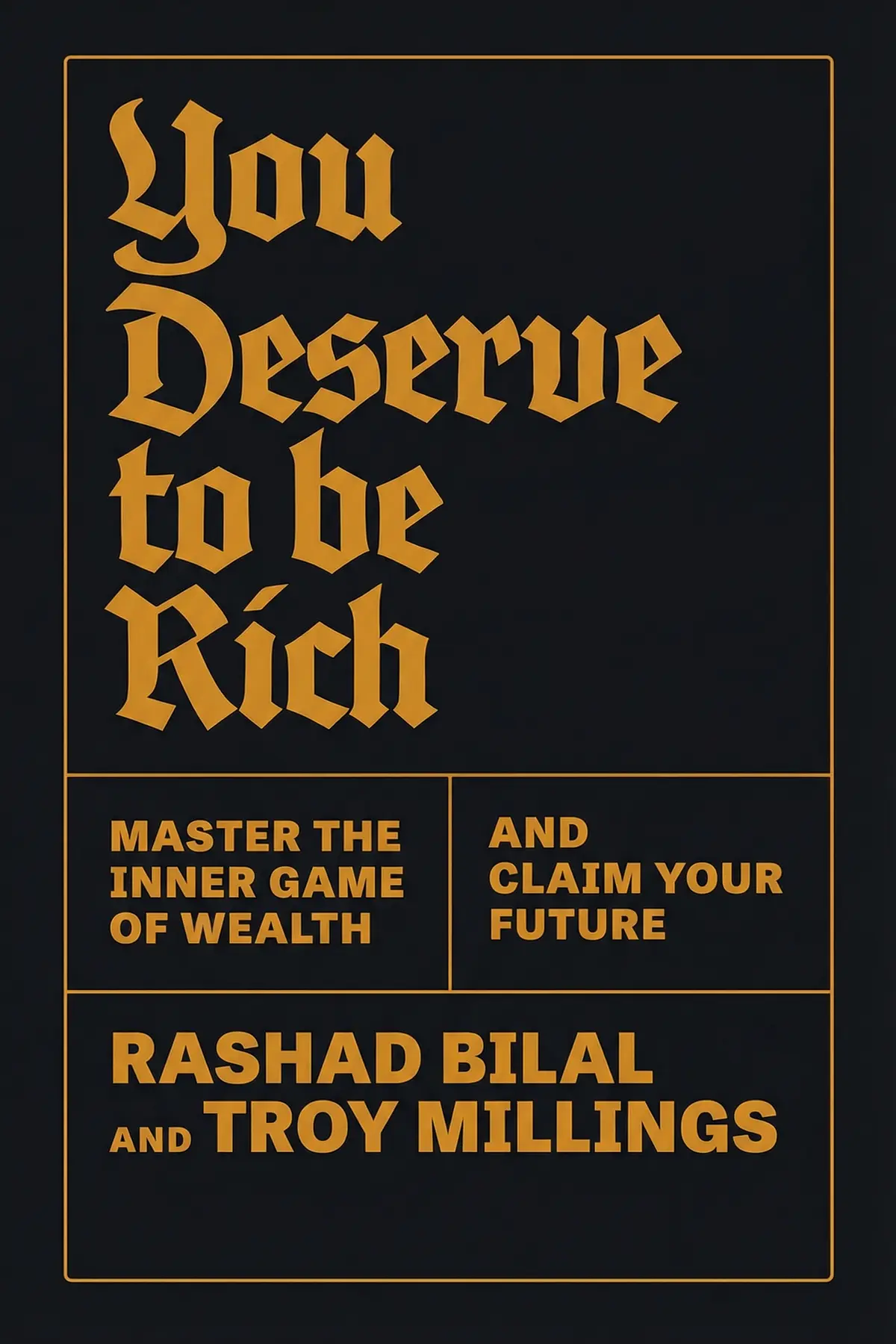
Table of Content
1. Introduction
1 min 42 sec
Imagine for a moment that financial freedom isn’t just a distant dream or a stroke of luck, but a carefully constructed reality that you have the power to design. Many people spend their lives feeling as though money is a force that happens to them, rather than a tool they can control. They feel trapped by the cycle of living from one paycheck to the next, burdened by systemic obstacles, or simply confused by the complexities of the modern financial world. But the truth is, true wealth starts with a fundamental shift in perspective. It begins with the realization that you have a right to be financially secure and the capacity to build a future that reflects your deepest values.
In the journey we are about to take, we will move past the superficial advice of just ‘saving more’ and dive into the mechanics of long-term prosperity. We’ll look at how your personal history and the environment you grew up in might be influencing your bank account today. We’ll explore the practical architecture of a life where money flows from multiple sources, and where your hard work today creates a foundation for your children and grandchildren tomorrow. This isn’t just about digits on a screen; it’s about claiming your time, your peace of mind, and your legacy.
The throughline of this discussion is simple yet profound: financial success is intentional. It requires a blend of emotional healing, strategic planning, and consistent action. Whether you are currently struggling to make ends meet or you are looking to manage a significant windfall, the principles of wealth remain the same. Over the next few chapters, we will break down exactly how to master the inner game of money and implement the strategies that turn aspirations into lasting wealth. Let’s begin by looking inward at the psychological barriers that might be standing in your way.
2. Healing the Psychological Roots of Money Management
2 min 24 sec
Uncover how past experiences and systemic challenges shape your financial habits today, and learn how to transform a scarcity mindset into one of abundance.
3. Architecting a Budget That Empowers Your Vision
2 min 19 sec
Shift your perspective on budgeting from a restrictive chore to a roadmap for freedom, and discover a flexible framework to organize your income.
4. The Strategy of Diverse Income Streams
2 min 34 sec
Learn why relying on a single paycheck is a significant risk and how to build a resilient portfolio through real estate, stocks, and business.
5. Taking the Leap into Entrepreneurship
2 min 23 sec
Discover how to turn your skills into a business, manage the risks of being your own boss, and use entrepreneurship as a vehicle for independence.
6. The Art of Creating a Lasting Generational Legacy
2 min 20 sec
Wealth is about more than your own lifetime; explore how to use estate planning, insurance, and trusts to empower your family for generations.
7. Mastering the Windfall and the First Million
2 min 19 sec
Reaching a major financial milestone is just the beginning; learn the essential strategies for managing significant wealth and building your expert team.
8. Conclusion
1 min 39 sec
As we conclude this exploration of wealth and financial literacy, it is important to reflect on the core message: your financial destiny is not written in the stars, but in your daily habits and your willingness to grow. We have seen that building wealth is a multi-dimensional journey. It starts with the internal work of healing financial trauma and adopting a mindset of abundance. It moves through the practical discipline of budgeting and the strategic expansion of your income through investments and entrepreneurship. And finally, it culminates in the thoughtful protection of your assets so that they can serve your family and community for generations to come.
Achieving financial freedom is not about greed; it is about empowerment. It is about having the resources to say ‘no’ to a toxic situation and ‘yes’ to your true passions. It is about the peace of mind that comes from knowing you are prepared for whatever life may throw at you. The path we’ve discussed—from your first five dollars in savings to your first million-dollar windfall—requires patience and consistency. There will be setbacks and challenges along the way, but the principles of intentionality and discipline are your constant guides.
Now is the time to take that first step, no matter how small it may seem. Audit your spending, set up that first automated transfer, or start researching that business idea you’ve been putting off. You have the tools, you have the roadmap, and most importantly, you have the right to a secure future. Remember that wealth is a marathon, not a sprint, and every wise decision you make today is a brick in the foundation of the life you deserve. Use this knowledge to claim your future and build a legacy that lasts.
About this book
What is this book about?
This book explores the intersection of mindset and financial mechanics, offering a roadmap for anyone looking to transition from living paycheck to paycheck to building sustainable wealth. It tackles the often-overlooked emotional and psychological blocks—referred to as financial trauma—that prevent people from making sound money decisions. By addressing these roots, the authors lay the groundwork for practical action. The promise of the book is that wealth is not an accident reserved for the lucky; it is a discipline that can be mastered. It covers the essentials of budgeting, the power of real estate and stock market investments, and the importance of entrepreneurship. Furthermore, it moves beyond individual success to discuss how to protect and pass on wealth to the next generation. Whether you are starting with five dollars or managing a million-dollar windfall, the guidance provides a framework for financial security and personal empowerment.
Book Information
About the Author
Rashad Bilal
Rashad Bilal is a financial advisor, co-founder of Earn Your Leisure, and a wealth management expert. He focuses on financial literacy and bridging gaps in underserved communities through his influential podcast. Troy Millings is an educator and co-founder of Earn Your Leisure. With a background in teaching, he specializes in making complex financial strategies approachable and practical for everyone.
Ratings & Reviews
Ratings at a glance
What people think
Listeners describe this work as an essential read that delivers direct insight into building wealth through an easy-to-follow approach. They praise the actionable advice supported by authentic examples, and one listener observes how it successfully integrates financial education with emotional intelligence. Listeners prize the book's effectiveness, specifically for how it addresses the mental toll of scarcity, and find it inspiring, with one review drawing attention to its focus on building wealth within communities. They view it as an excellent resource that reaches further than simple investment tips to help listeners truly respect money.
Top reviews
Jom
After hearing the Earn Your Leisure guys for months, I finally grabbed their book and it’s a game-changer for anyone tired of the scarcity mindset. Rashad and Troy don’t just talk about numbers; they talk about the psychological impact of growing up without resources. They breakdown how to respect your capital and start seeing yourself as an investor rather than just a consumer. I loved the focus on community wealth because it feels more inclusive than the usual "every man for himself" Wall Street vibe. Some of the goals are high—like living on 55% of your income—but the ambition is the point. It’s about shifting your horizon. This is first-hand knowledge delivered in a way that feels like a conversation with friends. Highly recommended for the culture.
Show moreMoon
This book provides a masterclass in respecting money while building community wealth, which is exactly the kind of energy we need right now. I’ve seen some critics complain about the "tithe 10%" or the "55% rule," but you have to look at the intention behind it. They are trying to push us toward a level of discipline that creates real, generational legacy. The real-world examples are grounded in the Black experience, which makes the advice feel much more attainable than a standard textbook. They touch on everything from vineyards to real estate, showing that the path to being wealthy isn't just a straight line through an index fund. If you want to break the cycle of scarcity, this is the blueprint.
Show moreWanida
Truth is, I’ve read a lot of finance books, but Bilal and Millings bring a unique flavor that focuses as much on emotional intelligence as it does on stocks. They don't just tell you to save; they explain why we feel the need to spend "excessively" when we don't have a plan. The section on relationships and money was particularly eye-opening for me and my partner. We’ve started having much more healthy conversations about our long-term legacy because of the prompts in this book. It’s empowering to see people who look like us talking about high-level investing in such an accessible way. It goes beyond the basics and challenges you to think bigger.
Show moreChamlong
Picked this up during a low point and found the real-world examples incredibly empowering for Black and Brown professionals trying to navigate a rigged system. The authors really understand the concept of financial trauma and how it affects our decision-making. I’ve never seen a finance book tackle the emotional side of money so effectively while still providing technical terms like the Treynor ratio. It’s a comprehensive guide that respects the reader's intelligence. Whether you’re learning about option contracts or just trying to get your first budget on paper, there is something here for you. It’s about more than just being "rich"—it’s about having the freedom to own your time and build something that lasts.
Show moreZoe
Wow. This isn't just a guide on saving; it’s a blueprint for anyone who wants to understand how to actually make their money work via multiple income streams. The authors make a compelling case that we all deserve to be wealthy and that the first step is changing our internal narrative about scarcity. I loved the practical content on things like setting up automatic payments and the breakdown of why certain stocks are better for long-term growth. It’s written in plain terms that don't make you feel dumb for not knowing the lingo. This book is an absolute must-read for the next generation of investors. It’s time we all start earning our leisure.
Show moreYaowares
The chapter on financial trauma really hit home for me because it's a conversation most finance experts completely ignore. It’s not just about the math; it’s about why we spend the way we do. Frankly, the authors provide a lot of solid advice on things like paying down high-interest debt and the importance of diversification. I did find the "Jay-Z dinner" debate a bit cliché, and I’m not sure I’d choose a conversation over half a million dollars, regardless of the networking potential! Also, some of the advanced metrics like the Treynor ratio might go over a beginner's head. Still, the core message of building multiple income streams is vital in today’s economy. It’s a great investment in your own education.
Show moreChai
Ever wonder why you're stuck in the same financial cycle even when you're working hard? This book attempts to answer that by blending financial literacy with high-level emotional intelligence. I appreciated the straightforward advice on things like CAGR and the need for more than one income stream. "One income is too close to no income" is a mantra I’ll be repeating to myself from now on. My only gripe is that some strategies, like flipping houses or starting food trucks, require a level of initial capital that the average person simply doesn't have. It feels a bit out of reach for someone making a teacher's salary. However, the mindset shift alone makes it worth the read.
Show moreYulia
Not what I expected from a standard 'get rich' book, as it dives deep into legacy building and the psychological barriers that keep us from investing. I really enjoyed the EYL podcast influence here; you can hear their voices in the writing. The advice on diversification is solid, and I appreciate them bringing up less traditional paths like entrepreneurship. I do think they oversimplify how easy it is to manage multiple income properties, though. Being a landlord isn't "passive" income! But overall, the blend of motivational content and financial strategy is well-balanced. It’s a great tool for anyone looking to step up from "just getting by" to actually building wealth.
Show moreSomporn
To be fair, there's some decent mindset stuff here, but the math on the tax brackets felt a bit sloppy and the 55% budget rule is totally unrealistic for most people. If you’re making $75,000 after tax, sure, you can probably save a ton, but for the average person using public transportation, these examples feel a bit out of touch. I also wasn't a fan of the Bitcoin recommendation given how volatile it is for someone just starting out. The authors have a lot of charisma and their podcast is great, but the book feels like it's trying to do too much at once. It’s a mix of basic budgeting and very high-risk entrepreneurship advice. It’s okay, but take the specific investment tips with a grain of salt.
Show moreChanida
Look, I wanted to love this, but suggesting that a reader should use ChatGPT to build an investment portfolio is dangerously irresponsible. AI hallucinates constantly, and following its "advice" for your life savings is a recipe for disaster. I also noticed some pretty basic errors regarding how marginal tax brackets work—you aren't taxed a flat rate on your entire income! For a book that claims to be a guide to wealth, these technical oversights are hard to ignore. They also suggest using a HELOC to pay off credit cards, which just moves debt around without fixing the underlying behavior. It’s flashy, sure, but the fundamentals are shaky. Run toward Dave Ramsey or the Budgetnista instead if you need actual debt help.
Show moreReaders also enjoyed
AUDIO SUMMARY AVAILABLE
Listen to You Deserve to Be Rich in 15 minutes
Get the key ideas from You Deserve to Be Rich by Rashad Bilal, plus 5,000+ more titles in English and Thai.
- 5,000+ titles
- Listen as much as you want
- 7-day free trial
- Cancel anytime







