
14 min 17 sec
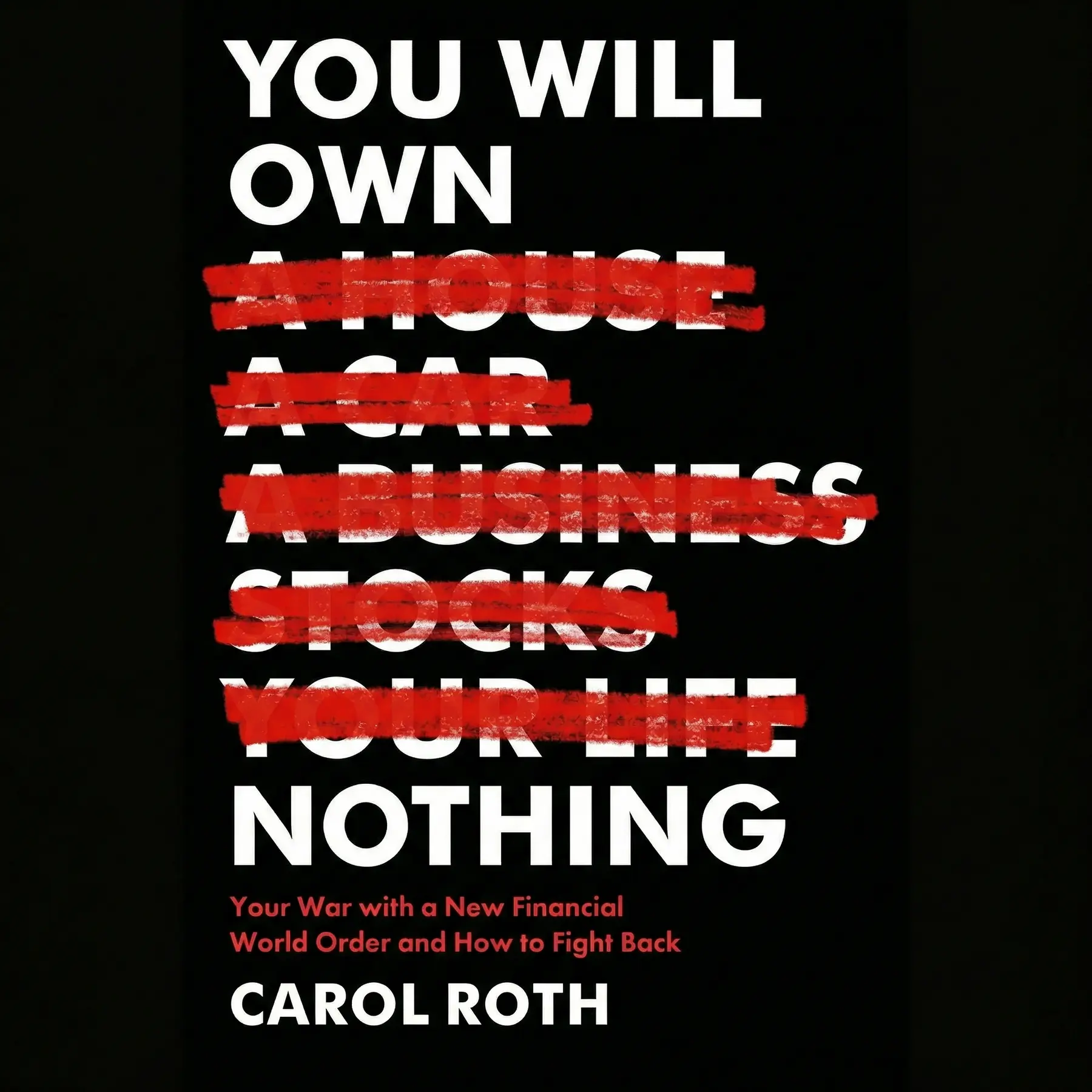
You Will Own Nothing: Your War with a New Financial World Order and How to Fight Back
By Carol Roth
Explore the systemic shifts threatening individual property rights and financial autonomy. Learn how global elites, technological advancements, and economic policies are ushering in a new era where ownership is becoming a luxury of the past.
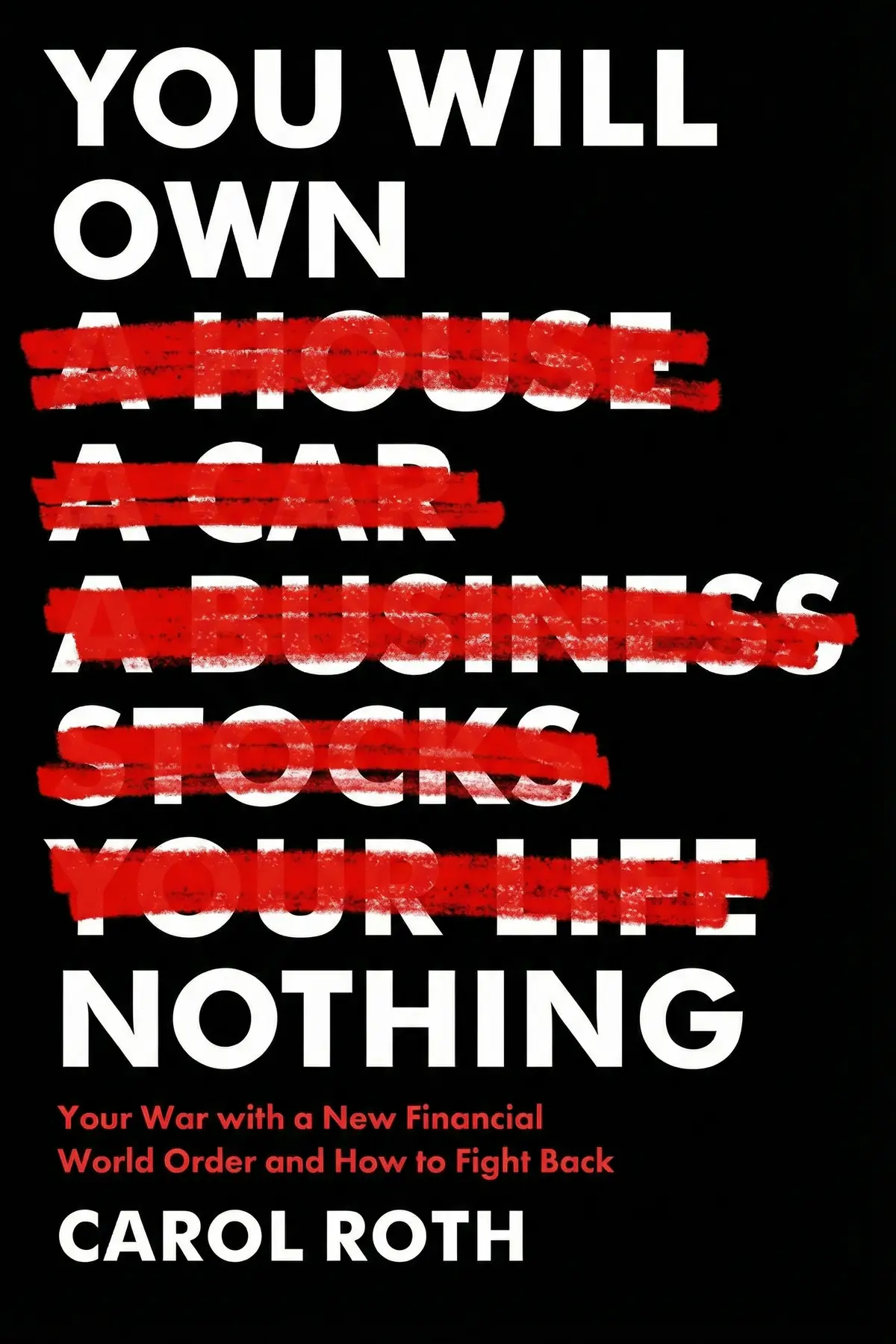
Table of Content
1. Introduction
1 min 31 sec
Have you ever felt like the ground beneath your feet is moving, yet you can’t quite pinpoint why? Across the globe, there is a subtle but profound transformation taking place in how we interact with the world, our money, and each other. We are witnessing a transition from a society built on the foundation of individual ownership to one where everything is offered as a service or a subscription. This isn’t just about the convenience of streaming movies or renting clothes; it’s a fundamental shift in the power dynamics of the modern world.
In this environment, the very concept of personal autonomy is under fire. Whether it’s through the rise of digital surveillance, the centralization of financial systems, or the increasing influence of global organizations, the message is becoming clearer: the era of the independent owner is being challenged by an era of the permanent renter. To navigate this new landscape, we must first pull back the curtain on the forces at play. This isn’t just about economics; it’s about a new kind of social contract being written without our explicit consent.
As we journey through these insights, we will look at how technology, government policy, and global elite agendas are converging to reshape your future. We will explore why traditional paths to wealth are being blocked and what you can do to reclaim your financial and personal sovereignty. By the end, you’ll have a clearer understanding of the maneuvers being made on the global stage and, more importantly, how you can build a fortress around your own rights and assets to ensure that you don’t just survive this transition, but thrive within it.
2. The Philosophical Shift from Ownership to Access
2 min 11 sec
Explore why the dream of owning property is being replaced by a model of permanent rental and shared access dictated by global agendas.
3. The Rise of Social Credit and Behavioral Control
1 min 54 sec
Investigate how digital tools and government policies are merging to monitor behavior and restrict access to the economy based on compliance.
4. Central Bank Digital Currencies and the End of Financial Privacy
1 min 51 sec
Learn why the transition to government-controlled digital money could mean the end of private transactions and the beginning of absolute financial surveillance.
5. The Destabilization of the Global Financial Order
1 min 45 sec
Examine the historical patterns of falling empires and how the weaponization of the dollar is signaling a shift in global power.
6. The Student Debt Trap and the Erosion of Wealth
1 min 47 sec
Uncover how the modern education system has transformed into a debt-loading machine that hampers the financial futures of young generations.
7. Strategies for Reclaiming Personal Sovereignty
1 min 54 sec
Discover actionable steps to protect your assets, diversify your holdings, and maintain your digital and physical independence.
8. Conclusion
1 min 24 sec
The world is changing in ways that were once unimaginable, but we are not helpless in the face of these shifts. The trend toward a society where you ‘own nothing’ is not an inevitability; it is a choice made by those in power, and it can be countered by the choices we make as individuals. We have explored the dangers of centralized digital currencies, the pitfalls of the student debt trap, and the rise of social credit-style surveillance. Each of these forces seeks to diminish your autonomy and make you more dependent on large institutions.
However, by arming yourself with knowledge, you have already taken the first step toward resistance. The path forward requires a return to the fundamentals: valuing ownership over access, prioritizing tangible assets over digital promises, and guarding your privacy as a precious right. It means being skeptical of the ‘convenience’ offered by global elites and asking who truly benefits when you trade your ownership for a subscription.
As you move forward, look for opportunities to build local resilience. Connect with your community, invest in your own skills, and strive to be a producer rather than just a consumer. The war for your financial and personal freedom is ongoing, but it is a war that can be won through vigilance, preparation, and a steadfast commitment to the principles of individual property and sovereignty. Remember, the future belongs to those who own it. Make sure you are one of them.
About this book
What is this book about?
This exploration dives into the disturbing trend toward a rental-based economy and the erosion of the middle class. It examines how international organizations and governments are utilizing digital currencies and social credit systems to consolidate power and limit personal freedom. The summary provides a roadmap for understanding these complex global maneuvers, from the weaponization of the U.S. dollar to the student debt crisis. It offers strategic advice on how individuals can protect their wealth and maintain sovereignty through tangible assets and diversified investments in a rapidly changing financial landscape.
Book Information
About the Author
Carol Roth
Carol Roth is a highly regarded entrepreneur, television host, and a New York Times bestselling author, recognized for her impactful work including the book The Entrepreneur Equation. Her professional background includes advising various Fortune 500 companies and sharing her business expertise as a contributor for major networks such as CNN, Fox Business, and MSNBC.
Ratings & Reviews
Ratings at a glance
What people think
Listeners find the work expertly crafted and accessible, with one review highlighting how the author translates complicated ideas into simple terms. Furthermore, the book is thoroughly documented through facts and figures, and one listener notes that it offers a vital analysis of the modern financial landscape. Listeners also value its genuineness and connection to present-day issues, with one review labeling it an essential read for the future of the United States.
Top reviews
Pakinee
This book should be required reading for every American concerned about their financial future and the erosion of individual liberties. Carol Roth has a magnificent way of taking mysterious financial concepts and turning them into plain-English explanations that anyone can understand. She exposes the 'Great Reset' agenda and the WEF's predictions with a level of detail that is both shocking and necessary. From the scam of student loans to the dangers of a digital dollar, she covers it all with authentic passion. I’ve read a lot of finance books, but few are this relevant to the current economic environment. We ignore these warnings about the new financial order at our own peril. It is a powerful call to action to reclaim our independence and our property.
Show moreDuang
Wow, I was not expecting such a deep dive into the historical cycles of rise and fall and how they relate to today. Roth outdid herself with this follow-up, providing a compelling and thoroughly-researched look at the forces trying to kill private ownership. The way she connects ESG scores to the potential for a Chinese-style social credit system in the US is brilliant and terrifying. Not gonna lie, I was a bit skeptical of the title at first, but the evidence she presents regarding BlackRock and Vanguard is hard to ignore. She makes a strong case for why we must stand up to central planners and corporate elites right now. This is a fantastic read that I’ve already recommended to several friends and family members. Ten out of ten.
Show moreSara
Look, you don't need an economics degree to realize things are shifting in a scary direction, but this book helps you understand why. Carol Roth explains how the alliance between government, Big Tech, and massive corporations is squeezing the life out of the middle class. The sections on how corporations compete against regular people for real estate were especially enlightening and frustrating to read. It’s a well-written, authentic critique of the current system that offers a much-needed perspective on where we are headed. While some reviewers call it conspiratorial, I found it to be a grounded analysis of public statements made by the WEF and others. Get this book, read it, and start planning for your own financial sovereignty immediately. It is an absolute must-read for the future.
Show morePraepimon
Finally got around to reading this after hearing Roth on a podcast, and I was pleasantly surprised by the depth of research. The book is well-written and avoids the dry, academic jargon that usually plagues finance books. I was particularly struck by the data regarding how institutional investors are buying up single-family homes and farmland. This is a very real threat to the middle class that most mainstream outlets are completely ignoring. My only real gripe is that the author sometimes gets sidetracked by culture war issues that detract from her economic arguments. Overall, it’s a sobering look at how the 'New Financial World Order' is being built right under our noses. Definitely a must-read for those who value private property and want to understand the forces at play. Recommended.
Show moreSupachai
As someone who follows economic trends closely, I still found plenty of new information here regarding the shift toward a subscription-based economy. Roth does an excellent job detailing how Big Tech and the government are colluding to erode our basic rights to ownership. The chapters on the history of empires and the cycle of rise and fall were particularly eye-opening for me. To be fair, the prose can be a bit repetitive at times, and she hammers home the same points over and over. But the core message—that we are moving toward a world where we rent our lives from corporations—is terrifyingly plausible. It’s a well-researched warning that we should all take seriously before it’s too late. The facts and figures she lays out are hard to argue with.
Show moreJun
The chapter on the debasing of the dollar really hit home for me because it explains why our purchasing power is disappearing. Carol Roth takes complex concepts like the Fed's cheap capital and explains them in a way that actually makes sense to a layman. It’s not just a book about theories; it’s a look at the actual mechanisms being used to strip wealth from the common person. I enjoyed the focus on actionable steps we can take to protect our assets while it is still allowed. Truth is, the book could have been about fifty pages shorter if she cut out some of the anecdotal political commentary. Despite that, the research on water rights and Bill Gates' farmland acquisitions makes this a very valuable resource for the curious reader. Great read.
Show moreBond
While Carol Roth is clearly a talented writer, this book feels like a mixed bag of genuine insight and extreme partisan rhetoric. On one hand, her explanation of the Bretton Woods agreement and the debasing of the dollar is incredibly clear. She has a gift for taking the 'dismal science' of economics and turning it into plain English for the average reader. On the other hand, the book leans heavily into 'New Financial World Order' theories that might alienate anyone who isn't already a fan of her media appearances. I appreciated the actionable advice on building wealth, but I had to sift through a lot of fluff to find it. It's worth a read if you can ignore the heavy-handed political bias. Not the best, but certainly not the worst thing out there.
Show moreRod
Frankly, the title is a bit clickbait-y, but the content inside does carry some weight if you are worried about digital currencies. Roth lays out a concerning case for how CBDCs could be used to monitor and control our personal spending habits. However, the tone often shifts from educational to alarmist in a way that feels designed to spark panic rather than provide solutions. I found the section on ESG and BlackRock to be the most compelling part of the entire narrative because it impacts everyday investors. Still, some of the connections she draws between corporate power and social media feel like a bit of a stretch. It is a decent primer on current economic anxieties, but don't expect a neutral presentation of the facts. It is definitely an interesting perspective though.
Show moreMan
Wait... what did I just read? I picked this up thinking it was a nuanced critique of late-stage capitalism, but I was legacy-misled. Carol Roth spends half the book warning us about the elite power-grabbers while simultaneously defending billionaires like Elon Musk and Joe Rogan. It’s hard to take the 'you will own nothing' warning seriously when the author seems to worship the very people who own everything. To be fair, she makes a few decent points about the student loan scam, but they are buried under layers of contradictory logic. The constant jumping between social credit systems and cancel culture felt disjointed and lacked the intellectual rigor I expected from the title. I finished it just to see the next absurd claim. It is clearly written for an echo chamber.
Show moreAraya
Just terrible. Although it touches a subject that I did want to know more about, it turned into a biased, preachy, and unoriginal mess. It’s essentially a collection of partisan talking points and conspiracy theories packaged as a serious economic critique. Roth loses credibility early on by veering into anti-mask tangents and vaccine mandate complaints that felt wildly out of place. I came here for a deep dive into the 'Great Reset' and instead got a political manifesto that treats the reader like an idiot. The narration on the audiobook didn't help either, as it sounded like pure fearmongering from start to finish. If you’re looking for a balanced view of our financial future, this isn't it. Save your money and buy something with actual data and fewer chips on the shoulder.
Show moreReaders also enjoyed

AUDIO SUMMARY AVAILABLE
Listen to You Will Own Nothing in 15 minutes
Get the key ideas from You Will Own Nothing by Carol Roth, plus 5,000+ more titles in English and Thai.
- 5,000+ titles
- Listen as much as you want
- 7-day free trial
- Cancel anytime







