
22 min 01 sec
Zone To Win: Organizing to Compete in an Age of Disruption
Explore a strategic framework for established companies to navigate digital disruption. Learn how to balance current revenue with future innovation by organizing operations into four distinct management zones for long-term survival.
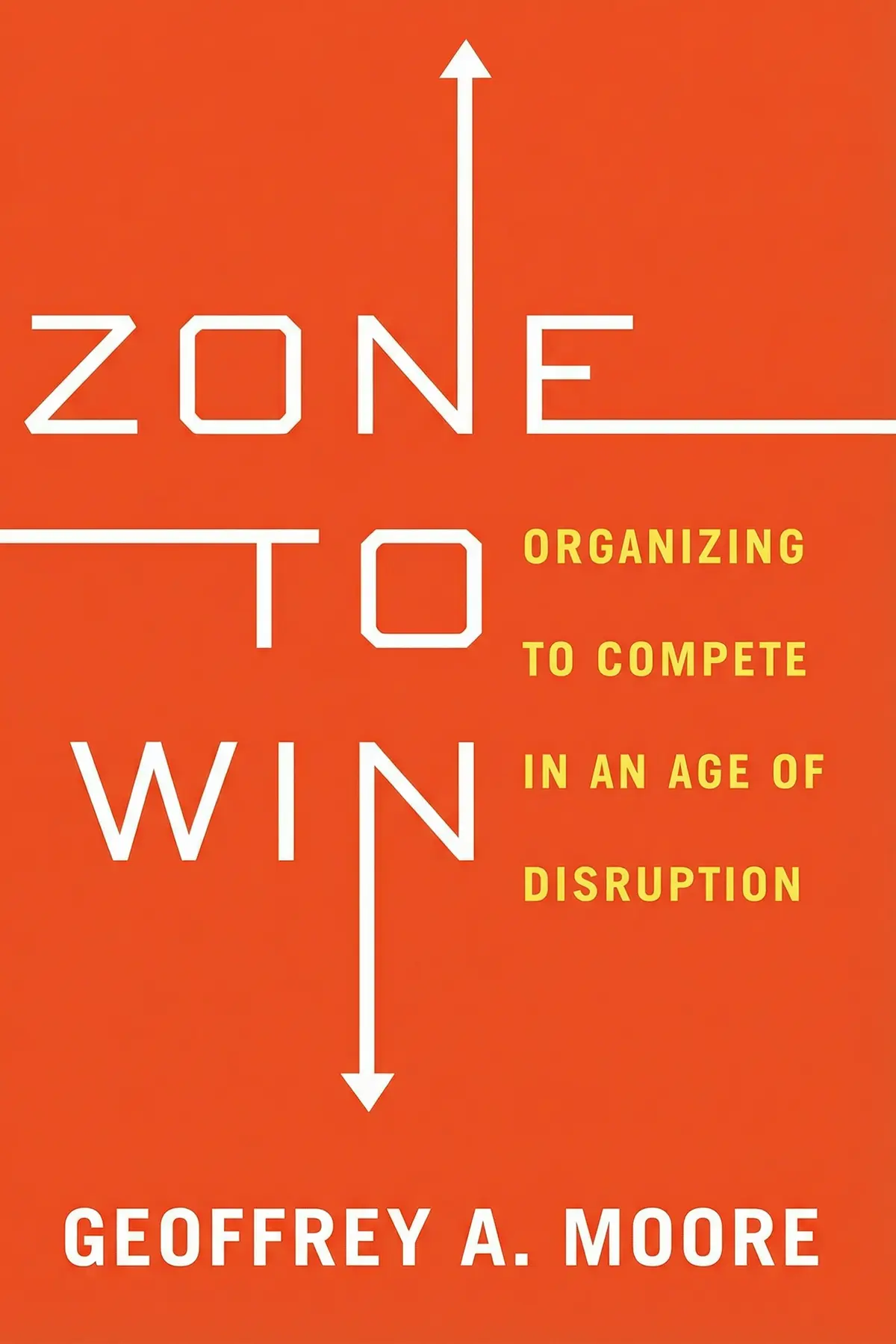
Table of Content
1. Introduction
1 min 32 sec
In the modern business landscape, the arrival of a single product can feel like a seismic event, shifting the very ground beneath the feet of global giants. Think back to 2007, when the introduction of the iPhone fundamentally altered how we interact with the world. Before that moment, names like Nokia and BlackBerry were the undisputed kings of mobile technology. Within a few short years, the landscape had changed so drastically that those formerly invincible leaders were struggling to stay relevant, while others, like Samsung, had to completely reinvent their approach to survive.
This phenomenon isn’t just about one gadget; it’s about the reality of constant, disruptive innovation. For an established company, this creates a dangerous paradox. You have a business that works—one that generates billions in revenue and employs thousands of people—but the very things that make it successful today might be the weights that pull it under tomorrow. How do you maintain your current success while simultaneously chasing the next wave that might disrupt your own core business?
Geoffrey A. Moore offers a solution to this dilemma through a system called the four zones of management. It is a framework designed to help large organizations move with the agility of a startup without losing the stability of an enterprise. Over the course of this summary, we will explore how to divide your company’s focus, when to prioritize innovation over immediate profit, and how leaders must adapt their strategy when a competitor threatens their territory. This is a guide for any organization that wants to do more than just survive disruption; it’s a guide for those who want to lead it.
2. The Necessity of Catching the Innovation Wave
2 min 19 sec
Discover why timing is everything in business and how missing a single cycle of innovation can lead to a permanent decline for even the strongest companies.
3. Restructuring for Survival with the Four Zones
2 min 08 sec
Learn how established enterprises can use a four-zone model to compete against nimble startups without abandoning their core business.
4. Prioritizing Innovation Over Performance
2 min 07 sec
Understand the difficult trade-offs required to foster growth and why long-term innovation must sometimes come at the expense of short-term revenue.
5. The Dual Role of the Productivity Zone
2 min 14 sec
Explore how internal systems and targeted programs can streamline operations and facilitate the difficult transition away from declining products.
6. Setting the Bar in the Incubation Zone
2 min 19 sec
Discover the rigorous standards a new idea must meet before it’s worth the risk of a full-scale investment.
7. Leading Through the Transformation Zone
2 min 12 sec
Learn why a market crisis requires the CEO to step out of daily management and into a role of strategic defense and reinvention.
8. The Strategic Implementation of Zones
1 min 58 sec
Master the art of organizational design by learning how to assign every employee and every dollar to its proper zone.
9. Microsoft’s Pivot: A Case Study in Transformation
2 min 15 sec
See how one of the world’s largest tech companies used the four zones to stay relevant in a mobile-first world.
10. The CEO as the Ultimate Balancer
1 min 43 sec
Understand why the success of the zone model rests entirely on the leader’s ability to manage conflicting priorities.
11. Conclusion
1 min 14 sec
Navigating the digital age requires more than just a good product; it requires a fundamental rethink of how a company is structured. As we have seen through Geoffrey A. Moore’s four-zone framework, the key to longevity is the ability to compartmentalize different business needs. You must protect your current revenue in the Performance Zone, ensure operational excellence in the Productivity Zone, nurture future breakthroughs in the Incubation Zone, and be ready to pivot the entire organization in the Transformation Zone.
The most important takeaway is that you cannot treat every part of your business the same way. A startup’s agility comes from its lack of baggage, but an established company’s strength comes from its resources—provided those resources aren’t tied up in the wrong places. By implementing the ‘End of Life’ programs to clear out the old and the ’10 percent rule’ to vet the new, you create a sustainable cycle of growth.
As you look at your own organization, ask yourself: are your innovation projects being strangled by the demands of current sales? Is your CEO personally leading the charge against your biggest competitors? Are you prepared for the next wave, or are you still trying to paddle for the one that has already passed? The four zones provide the map; it is up to you to lead the way to victory.
About this book
What is this book about?
In a world where technology moves at breakneck speeds, even the most successful corporations can find themselves obsolete overnight. Zone To Win addresses the fundamental challenge facing large enterprises: how to keep the current business running profitably while simultaneously building the next big thing that will eventually replace it. The book provides a clear, actionable roadmap for restructuring an organization to handle these conflicting priorities. Geoffrey A. Moore introduces the four-zone management framework, which separates a company’s activities into performance, productivity, incubation, and transformation. This structure allows leaders to protect their core revenue while aggressively pursuing new market opportunities. By the end of this summary, you will understand how to identify which zone a project belongs in, how to allocate resources effectively, and how a CEO must shift their leadership style during times of intense market upheaval.
Book Information
About the Author
Geoffrey A. Moore
Geoffrey A. Moore is a renowned consultant and author who specializes in technology-adoption cycles. He earned a doctorate in literature from the University of Washington, a background that informs his unique narrative approach to business strategy. Moore has worked with industry giants like Salesforce and Microsoft, helping them navigate complex market transitions. He is perhaps best known for his seminal work, Crossing the Chasm, which has reached a milestone of over one million copies sold.
Ratings & Reviews
Ratings at a glance
What people think
Listeners find the book highly insightful, with one noting it serves as a quality manual for managing tricky scenarios and another highlighting its superb framework for mandating objective conversations. Furthermore, the material is straightforward to digest, with one listener calling it an excellent read for comprehending intricate domain topics. Listeners also value its clear nature and business utility, with one emphasizing how it applies to both big and small companies. Finally, they appreciate how effective it is, with one listener characterizing it as a fantastic functional model for managing disruption.
Top reviews
Prayoon
Finally got around to Moore's latest, and the 'Horse, Rider, Trail' analogy alone made the purchase price worth it for me. It’s a brilliant way to diagnose failure: do we have the wrong product, the wrong leader, or are we simply targeting the wrong market segment? I’ve seen so many managers get swapped out when the 'trail' was the real problem. The book is remarkably clear on how to handle the Incubation Zone, treating internal startups like venture-backed units rather than just side projects. My only real gripe is that it feels a bit geared toward the massive, publicly-traded tech giants of the world. However, even for a smaller enterprise, the logic of not letting your current cash cow suffocate your future growth is universal. It’s an essential guide for anyone trying to navigate complex industry shifts.
Show moreAndrew
As someone who works in a massive tech legacy firm currently undergoing a 'digital transformation,' this book was a revelation. It explains exactly why our management makes the weird, seemingly contradictory choices they do. The idea that a company can only handle one major transformation at a time is a hard truth that many leaders refuse to accept. Moore’s playbook is specific: it tells you how to fund your new initiatives and when to shut them down if they don't hit their milestones. It's refreshing to see a business book that isn't just full of empty affirmations. Instead, you get a 3-to-5-year roadmap that feels grounded in reality. The Microsoft case study was particularly relevant to our current situation. If you’re in a leadership position, you need to read this to avoid the usual pitfalls of organizational inertia.
Show moreGin
This book provides a masterclass on navigating complex disruption for both big and small enterprises. I loved the analogy about chickens laying eggs one at a time—it perfectly captures why focus is the ultimate competitive advantage. Moore gives a very specific playbook for CEOs to compete in a world where the old rules of stability no longer apply. The structure of the Productivity Zone focusing on efficiency while the Incubation Zone explores the next wave is just brilliant. It's an excellent read for grasping complex domain subjects without getting bogged down in useless theory. Every leader in our company is now aligned with this transformation strategy, and it has cleared up so much confusion. If you want a plan that actually works, this is it.
Show moreKofi
The four-zone framework described here is exactly what my leadership team needed to stop the endless 'innovation theater' and get serious about scaling new tech. Moore uses the case studies of Salesforce and Microsoft to illustrate how a legacy giant can actually pivot without burning down the existing house. I found the distinction between the Performance Zone and the Transformation Zone particularly enlightening because it explains why our past attempts to scale failed so miserably. To be fair, some of the prose feels a bit dense, but the actual playbook is incredibly tactical. It’s not just theory; it’s a specific roadmap for how to survive being disrupted by the next big wave. If you are struggling with resource allocation or internal politics between your core business and new ventures, this is required reading.
Show moreArt
Ever wonder why big companies fail to innovate even when they have all the money and talent in the world? Zone to Win provides the clearest answer I’ve seen yet by explaining the inherent conflict between stability and disruption. The way Moore breaks down the four zones—Performance, Productivity, Incubation, and Transformation—creates a language that forces leadership to have much more objective discussions about priorities. I particularly liked the section on how Performance teams will always accidentally crush Incubation teams because their metrics are totally different. We are actually using this framework right now to restructure our Q3 planning. It is a very practical, no-nonsense roadmap for anyone who is tired of generalizations. It isn’t a fun read in the traditional sense, but it is an effective one.
Show moreBird
After hearing about this from my EO group, I decided to see if the hype was real. Moore succeeded in shaping my mind regarding how to segregate KPIs across different business units. The key takeaway for me was that you cannot give a manager KPIs from two different zones without causing a total loss of focus. That insight alone helped me resolve a major organizational bottleneck we were facing last month. The horse-rider-trail mnemonic is also a great tool for our weekly syncs. Not gonna lie, the tone can be a bit condescending at times, as if it’s written only for those who spend their lives in the boardroom. But the framework is too powerful to ignore. It’s a great working model for dealing with disruption in real-time.
Show moreChaiwat
If you spend your day in PowerPoint slides and corporate meetings, you'll feel right at home with the jargon in this book. Personally, I found the constant reuse of Malcom Gladwell-isms like 'the tipping point' a bit grating and repetitive. The core idea is essentially about focus and not trying to do too many things at once, which feels like common sense dressed up in fancy terminology. While the Salesforce and Microsoft examples are decent, I couldn't help but feel that the entire message could have been condensed into a thirty-minute podcast episode. It’s a bit light on hard data and heavy on frameworks that sound good in a boardroom but might be hard to implement on the ground. It’s okay, but there are better business books that offer more than just a slicker way to categorize your budget.
Show moreTong
To be fair, the concepts here are solid, but the delivery feels a bit dry and corporate-heavy for my taste. I appreciate the clarity Moore brings to the table, especially regarding how to 'win the war at the top line' vs 'win the peace at the bottom line.' But man, the language is tailored strictly for C-suite executives who love a good buzzword. The distinction between systems and programs was helpful for our internal ops, but I found myself skimming through the parts that felt like a rehash of his previous talks. It is a good business book because it offers a plan of action, which is rare. Most of these books are just fluff. Still, I wish there was more varied data beyond just the usual big-name tech suspects.
Show moreDuang
Look, this is a decent business read, but it’s definitely not Moore’s best work. The framework is compelling enough, but it lacks the statistical 'oomph' I was looking for. He is short on data throughout most of the book, relying instead on common sense and a few cherry-picked examples from the tech world. That said, the zoning principle is a useful mental model for anyone managing multiple projects. It helps prevent the 'youth soccer' effect where everyone just runs to the ball instead of playing their position. It’s a quick read, and it’s easy to understand, which is a plus. I just think it should have been more of a deep-dive research paper than a full-length book. Useful, but wait for the paperback or check it out from the library.
Show moreWatcharee
Not what I expected from the author of Crossing the Chasm, unfortunately. While Moore is clearly a brilliant guy, this particular volume felt like it was stretched thin to reach book length. Frankly, the content is extremely simple: keep your money-makers separate from your experiments so you don't kill the experiments. Do we really need 200 pages to say that? I missed the depth of data and the rigorous research that defined his earlier work. The writing style is very much for the golf-course-and-steak-dinner crowd, which isn't really my scene. I’ll give it two stars because the Transformation Zone concept is somewhat useful for understanding why big companies are so slow to move. But honestly, you could probably get the same value from reading a detailed summary online.
Show moreReaders also enjoyed

7 Powers: The Foundations of Business Strategy
Hamilton Helmer

A Bigger Prize: How We Can Do Better Than the Competition
Margaret Heffernan
A Year with Peter Drucker: 52 Weeks of Coaching for Leadership Effectiveness
Joseph A. Maciariello
AUDIO SUMMARY AVAILABLE
Listen to Zone To Win in 15 minutes
Get the key ideas from Zone To Win by Geoffrey A. Moore, plus 5,000+ more titles in English and Thai.
- 5,000+ titles
- Listen as much as you want
- 7-day free trial
- Cancel anytime







